Hai bisogno delle specifiche complete?
Scarica il nostro Catalogo prodotti 2025 per disegni dettagliati e parametri tecnici di tutti i componenti dei quadri elettrici.
Richiedi il catalogo
Scarica il nostro Catalogo prodotti 2025 per disegni dettagliati e parametri tecnici di tutti i componenti dei quadri elettrici.
Richiedi il catalogo Scarica il nostro Catalogo prodotti 2025 per disegni dettagliati e parametri tecnici di tutti i componenti dei quadri elettrici.
Richiedi il catalogo
A practical framework for specifying creepage and clearance in 12, 24 and 40.5 kV equipment: applicable IEC standards, insulation levels, altitude, pollution and acceptance evidence.
Ultimo aggiornamento: .
Creepage and clearance in 12 kV, 24 kV and 40.5 kV equipment must be selected as part of the complete insulation design. A voltage class alone does not determine a safe distance in millimetres. The required insulation level, the insulation system, the installation geometry and the service environment all belong in the specification.
This guide explains what to check when selecting medium-voltage insulators or reviewing a supplier’s drawings. It provides a procurement and acceptance framework; final dimensions and test requirements must come from the applicable equipment standard and the manufacturer’s verified design.
Standards scope: IEC 60664-1 addresses equipment connected to low-voltage supply systems, up to AC 1,000 V or DC 1,500 V. Its tables must not be extrapolated into general minimum-distance tables for the primary insulation of 12/24/40.5 kV switchgear.
Distanza di dispersione follows the insulating surface between conductive parts. Sgombero is the shortest distance through air between conductive parts. Surface contamination, moisture, insulator profile and material properties influence surface-insulation performance; air insulation also depends on the applied electrical stress, electrode geometry and atmospheric conditions.
Check both paths on the actual assembled equipment. A longer surface path does not establish that the air gap has sufficient dielectric strength. Likewise, an adequate air gap does not establish pollution performance. A vacuum interrupter’s internal insulation does not by itself validate the external insulation around its terminals; see Come funzionano gli interruttori automatici sottovuoto.
Start with the equipment type and the environment, rather than a universal voltage-to-distance lookup. For outdoor external insulation, IEC TS 60815-1:2025 provides a framework based on site pollution severity and the characteristics of candidate insulators. Its associated parts address different materials and AC/DC applications. An indoor enclosure needs its own assessment of contamination and condensation; an outdoor pollution classification is not automatically a specification for every internal component.
| Information to specify | Supplier evidence to request |
|---|---|
| Rated equipment voltage and the insulation path | Drawing identifying phase-to-earth, phase-to-phase and other relevant paths |
| Indoor or outdoor installation; salt, dust, industrial deposits and wetting | Documented pollution assessment and the design method used |
| Insulator material, profile and orientation | Material identification, dimensional drawing and applicable verification records |
| Enclosure ventilation, condensation control and maintenance access | Service-condition limits and installation/maintenance instructions |
The same checklist applies to 12, 24 and 40.5 kV equipment; the selected insulation levels and dimensions will differ. Do not assign a fixed epoxy material group or a generic pollution multiplier without the relevant material data and design basis.
IEC 60071-1:2019 covers selection of withstand voltages for three-phase AC systems with highest equipment voltage above 1 kV. IEC 60071-2:2023 supplies application guidance. These are used with the standard for the equipment being specified, rather than as a substitute for that standard.
For AC switchgear, check IEC 62271-1 and the relevant product part. For example, IEC 62271-200 addresses AC metal-enclosed switchgear above 1 kV and up to and including 52 kV. State the editions and amendments required by the project.
Altitude: IEC 62271-1 identifies altitude correction provisions above 1,000 m. Give the manufacturer the actual installation altitude and require confirmation of the applicable correction and resulting equipment rating. A correction to a withstand requirement must not be treated as an identical percentage increase in every physical gap. See also our high-altitude switchgear overview.
For a balanced three-phase system, phase-to-neutral operating voltage is line-to-line voltage divided by √3. That relationship alone does not establish the required phase-to-earth withstand level. System earthing, temporary overvoltages and the equipment standard must also be considered. Record the insulation path and required withstand level explicitly when reviewing valori nominali degli interruttori automatici sottovuoto.
“Indoor use” can describe a clean controlled room or a humid, dusty enclosure. Provide site altitude, temperature range, contamination, condensation exposure and installation orientation. Ask the supplier to state the assumptions behind the proposed creepage distance and any enclosure controls or maintenance measures on which the design relies.
If the installed arrangement differs from the approved drawing, document the discrepancy and obtain the equipment manufacturer’s disposition before energization. Do not assume that adding a coating, changing a barrier or fitting a higher-voltage component validates the assembly. Such changes can alter electric-field distribution, interfaces and the applicability of existing test evidence.
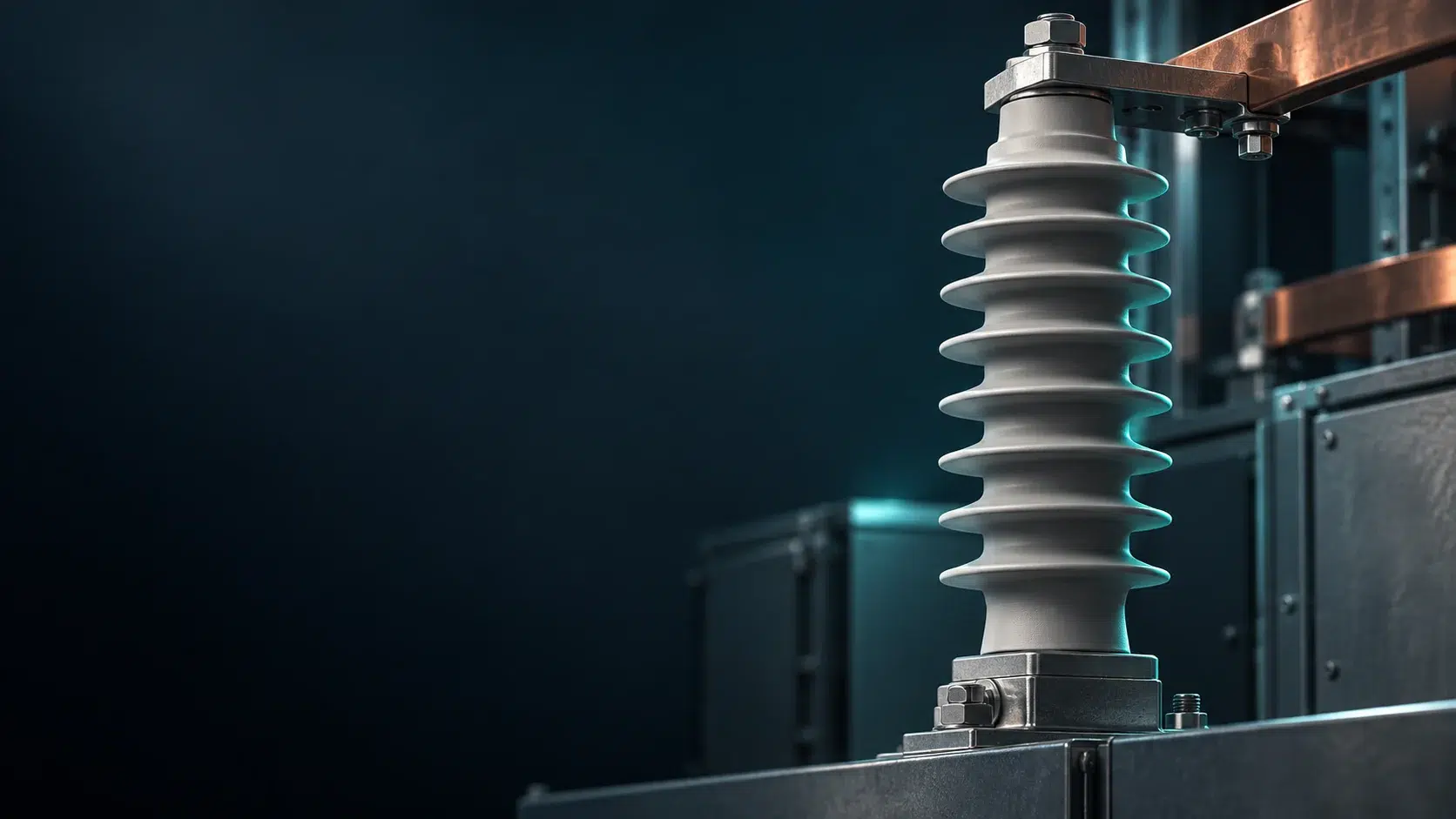
Ribs and sheds can lengthen the surface route between terminals, but geometric length is only one part of pollution performance. Profile, spacing, orientation, material and wetting conditions matter. For outdoor high-voltage insulators, use the applicable IEC 60815 selection process and the manufacturer’s evidence for the proposed profile.
Do not convert an insulator’s diameter into creepage distance or count arbitrary ribs using a universal shortcut. Request a dimensioned drawing showing the measured path and its endpoints. When comparing componenti per quadri elettrici, check mounting compatibility and the surrounding clearance as well as the insulator’s standalone dimensions.
Prepare an inspection and test plan before delivery. Dimensional inspection and dielectric testing provide different evidence; neither replaces the other. Physical access and measurements inside medium-voltage equipment require qualified personnel, isolation, verification of absence of voltage and the applicable grounding and site procedures.
A useful specification connects the system duty to the equipment insulation level, environmental conditions, approved dimensions and verification evidence. Require the supplier to identify those items together. That makes competing 12/24/40.5 kV offers comparable without relying on an unsupported minimum-distance table.
Q1: What is the difference between creepage and clearance?
Creepage follows an insulating surface; clearance is the shortest air gap. Both must satisfy the relevant design requirements. There is no universal ratio between them for medium-voltage equipment.
Q2: Can IEC 60664-1 provide the primary-insulation distances for 12 kV switchgear?
No. Its low-voltage scope does not provide a basis for extrapolating a 12 kV primary-insulation table. Use the applicable medium-voltage equipment and insulation-coordination standards.
Q3: Is a higher-altitude installation covered by the standard catalogue rating?
Confirm the catalogue’s stated service conditions. Supply the actual altitude and request the manufacturer’s documented rating and insulation assessment for that site.
Q4: Can phase-to-earth and phase-to-phase distances be calculated by a fixed √3 ratio?
No. The operating-voltage relationship does not replace the required withstand levels or the geometry assessment for each insulation path.
Q5: Will a coating fix insufficient creepage?
Do not assume it will. Material compatibility, application quality, ageing, pollution performance and the effect on the equipment’s verified design require manufacturer evaluation.
Q6: Do more sheds always mean a better insulator?
No. Compare the profile’s suitability for the environment and its verification evidence, as well as its surface length and mechanical interfaces.
Q7: What should I send with an insulator enquiry?
Send the equipment voltage and insulation level, installation drawing, insulation-path endpoints, site altitude and environment, material/interface requirements, and the specified standards and tests.