पूरी विशिष्टताएँ चाहिए?
सभी स्विचगियर घटकों के विस्तृत आरेखों और तकनीकी मापदंडों के लिए हमारा 2025 उत्पाद कैटलॉग डाउनलोड करें।.
कैटलॉग प्राप्त करें
सभी स्विचगियर घटकों के विस्तृत आरेखों और तकनीकी मापदंडों के लिए हमारा 2025 उत्पाद कैटलॉग डाउनलोड करें।.
कैटलॉग प्राप्त करें सभी स्विचगियर घटकों के विस्तृत आरेखों और तकनीकी मापदंडों के लिए हमारा 2025 उत्पाद कैटलॉग डाउनलोड करें।.
कैटलॉग प्राप्त करें
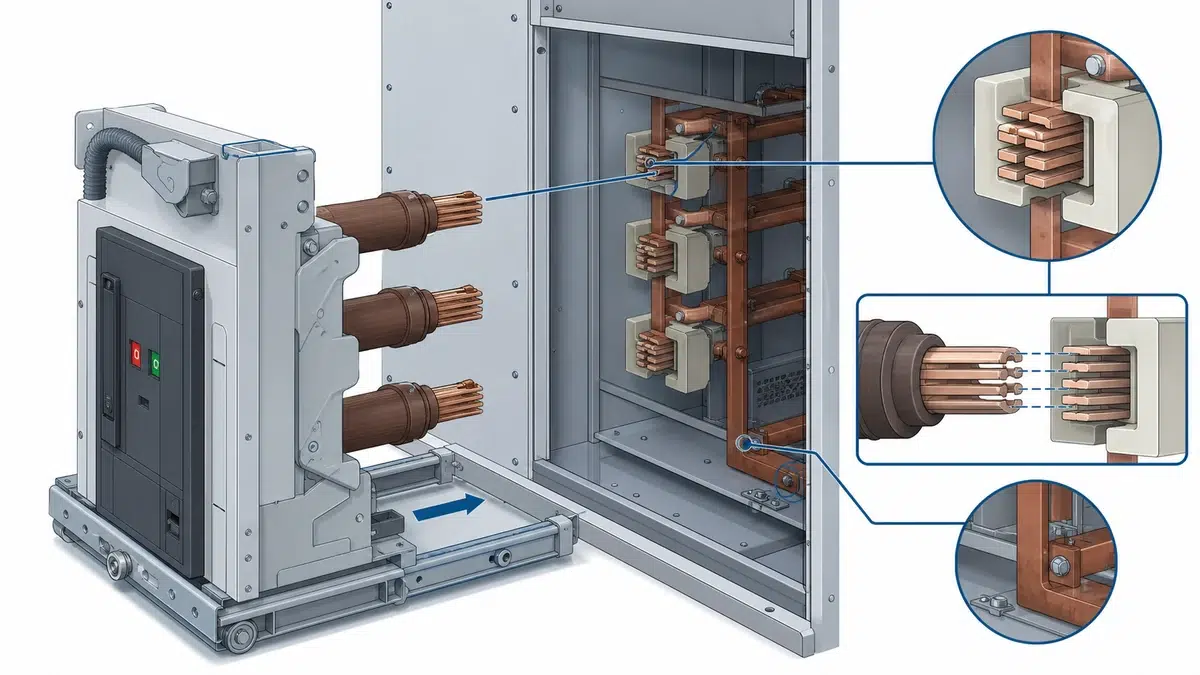
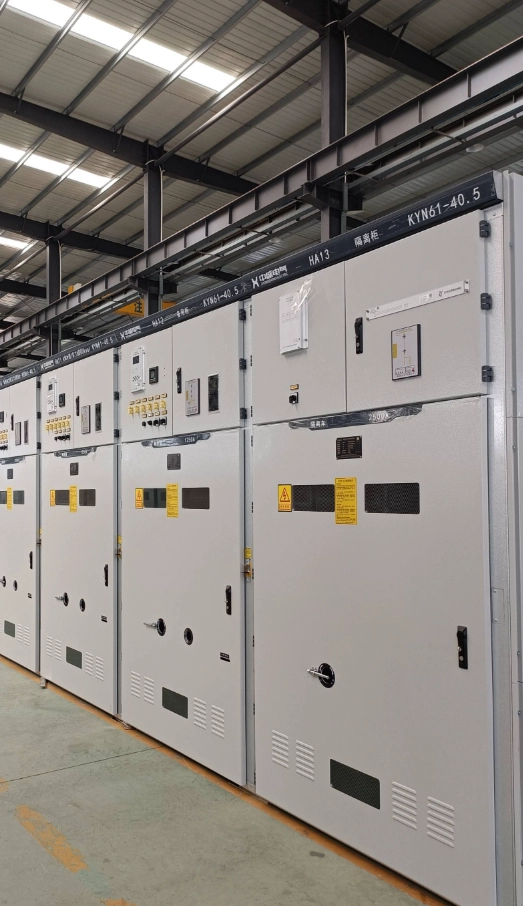
A disciplined vcb primary disconnect finger inspection focuses on the contact interface that carries load current between the withdrawable VCB and the switchgear primary conductors. In VCB maintenance, the primary disconnect fingers, clusters, or stabs are not just mechanical engagement parts; they are electrical contact surfaces. Their condition affects contact resistance, heating, insulation cleanliness, and reliable racking performance.
The inspection should confirm three things: the contact system is aligned, the correct contact surfaces are clean and properly lubricated, and there is no thermal evidence suggesting poor engagement or excessive resistance. OEM guidance from ABB, Siemens, and Schneider consistently points in this direction while also making one point clear: cleaning method, lubricant selection, adjustment detail, and maintenance schedule must come from the applicable breaker and switchgear manual.
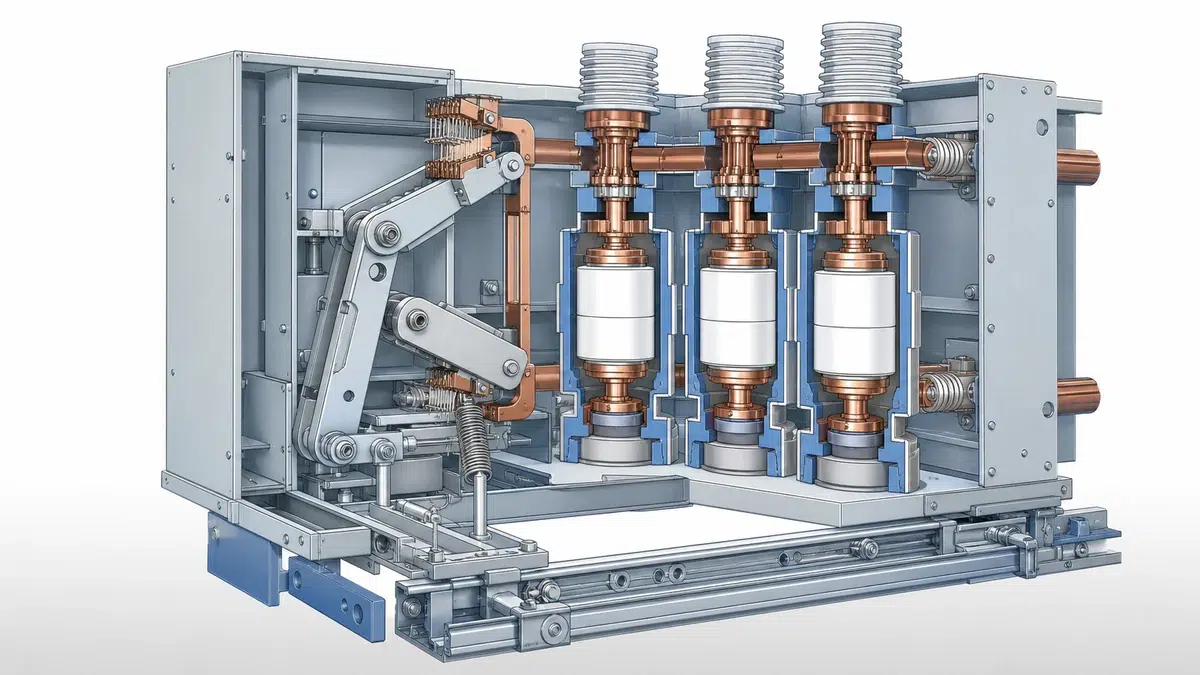
The purpose of inspecting VCB primary disconnect fingers is to verify that the primary current path remains mechanically secure and electrically sound. The inspection is not limited to looking for broken parts. It should also look for signs that the breaker is entering the cell off-center, that finger pressure is uneven, or that the contact surface has become contaminated by excess grease, dust, oxidation, or debris. Review the XBRELE VCB portfolio as a practical starting point for matching the required breaker format to the application.
ABB’s SecoVac documentation identifies primary stabs and clusters as electrical contact surfaces and distinguishes their lubrication from mechanism and rail lubrication. That distinction matters because a lubricant suitable for a moving mechanism or rail is not automatically suitable for a current-carrying primary contact surface.
Schneider’s switchgear maintenance guidance also identifies poor contact between a breaker finger cluster and primary contacts as an inspection concern. It directs users to the applicable breaker manual for cleaning, adjustment, and lubrication details rather than treating the switchgear inspection as a substitute for product-specific breaker instructions.
Alignment problems often appear before a visible failure occurs. During inspection, the VCB should be evaluated for smooth insertion and withdrawal, even engagement of all phases, and evidence that the primary disconnect fingers are landing squarely on the mating primary contacts.
A practical inspection looks for:
Siemens’ SION guidance describes centering and fitting of contact systems and requires a function test after work. Its procedure is product-specific, so the inspection should not copy dimensions or steps from one VCB design to another. The transferable lesson is that alignment, fitting, lubrication, and functional verification belong together.
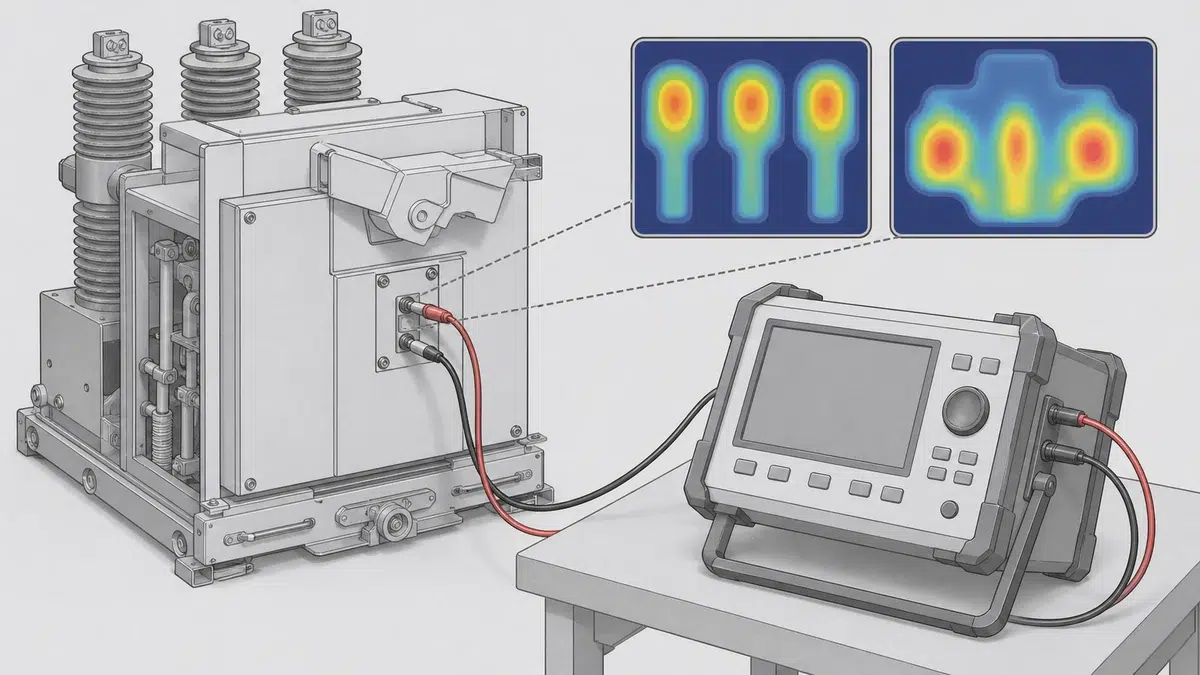
Lubrication of VCB primary disconnect fingers should be treated as an electrical contact maintenance task, not as general greasing. ABB’s SecoVac manual specifies that excess lubricant should be removed to avoid dirt or dust accumulation, and it separates primary-contact lubricant from mechanism and rail lubrication. Siemens’ SION manual requires the specified lubricant on the inside edge of contact fingers. Schneider’s EvoPacT maintenance guidance includes lubrication of primary high-voltage clusters while leaving the lubricant choice and schedule to the product manual. Use the breaker closing/opening fault guide to separate control-circuit, coil, interlock, and mechanism causes after a failed operation.
These sources support a conservative rule: apply only the lubricant specified by the applicable VCB manual, only where the manual requires it, and remove excess material that could trap contamination.
Inspection should check for:
The correct result is not “more grease.” The correct result is the OEM-specified contact condition.
Thermal evidence is one of the most important clues in vcb primary disconnect finger inspection because high-resistance contact can generate heat before the damage becomes obvious. Inspectors should compare phases and look for local heat patterns around the primary disconnect interface, not just general cabinet temperature.
Thermal evidence may include:
Thermal observations should be documented with the breaker identity, cubicle identity, phase location, operating condition, load condition when known, and comparison to the other phases. If evidence suggests overheating or poor contact, the applicable breaker and switchgear manuals should be used for the next cleaning, adjustment, lubrication, and testing steps. For witness planning and records, align the evidence with the VCB FAT and SAT acceptance checklist.
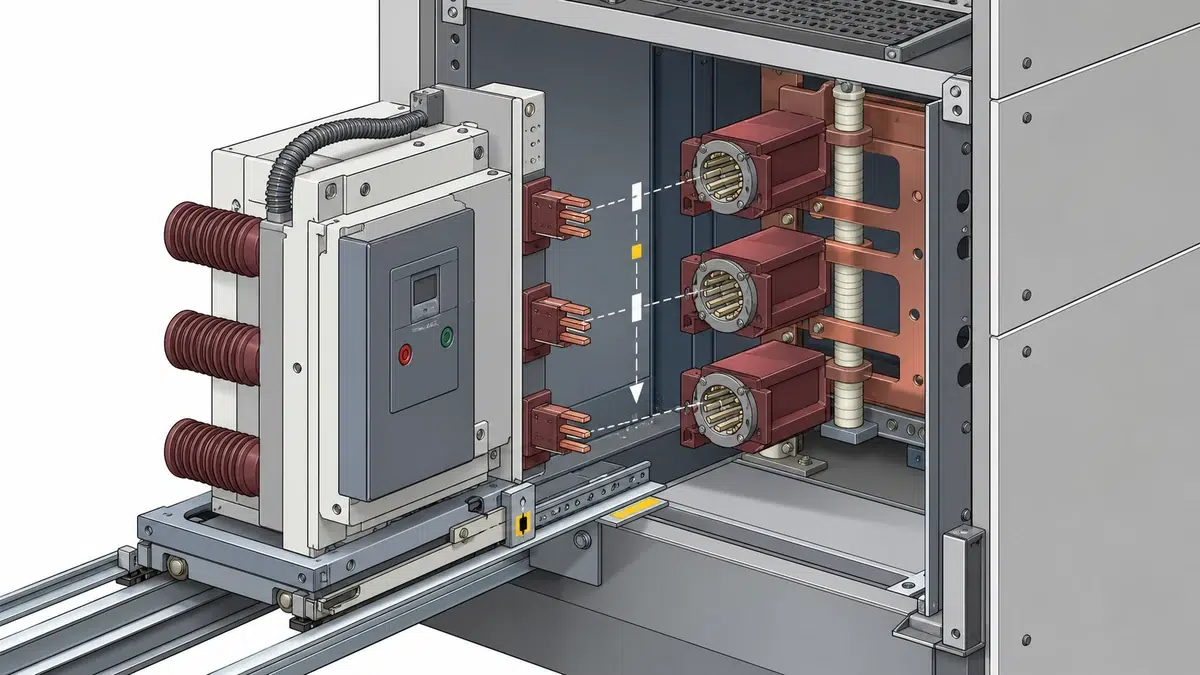
The primary disconnect interface should not be inspected in isolation. A VCB that racks poorly, fails auxiliary connection, or shows mechanical binding can create or mask primary contact problems.
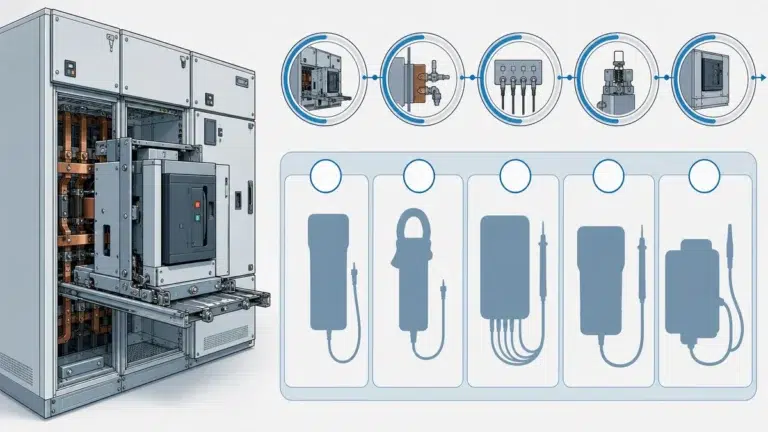
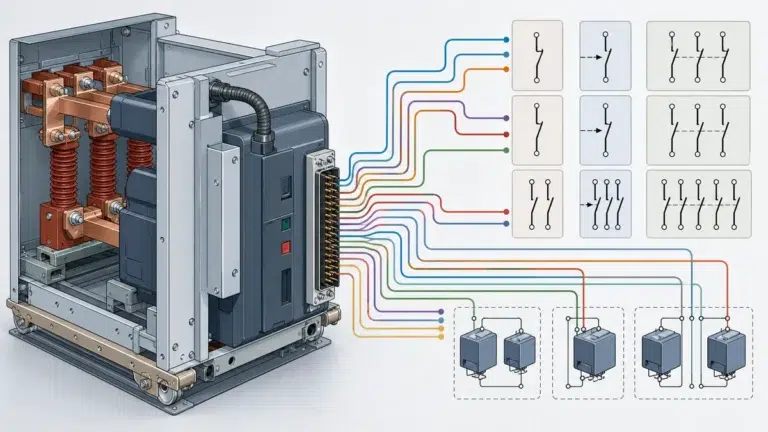
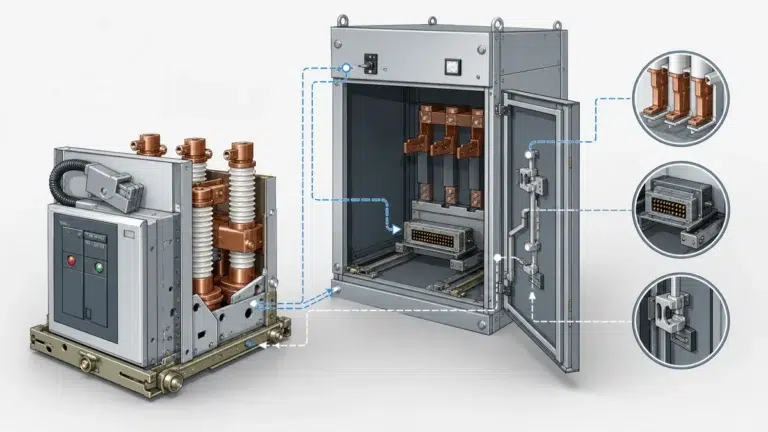
Schneider’s EvoPacT maintenance guidance includes checking the secondary disconnect plug and receptacle in addition to lubricating primary high-voltage clusters. This is a useful reminder that the breaker-to-cell interface includes both power and control connections. The secondary disconnect does not carry primary current, but poor secondary engagement can affect control, indication, charging, trip, close, and interlock behavior. The breaker rating selection guide helps translate the system duty into the breaker data that must be confirmed.
A complete maintenance window may include:
Any abnormal finding should be tied back to the product-specific instructions before adjustment or lubrication is performed.
Because product designs vary, acceptance criteria should be based on the applicable VCB and switchgear documentation, not generic assumptions. The inspection record should clearly separate observed condition from corrective action.
Useful documentation includes:
The most defensible inspection record avoids undocumented lubricant substitutions and avoids undocumented “adjustments by feel.” If the OEM procedure requires a specific lubricant, contact location, fitting method, or function test, the record should show that the work followed that procedure.
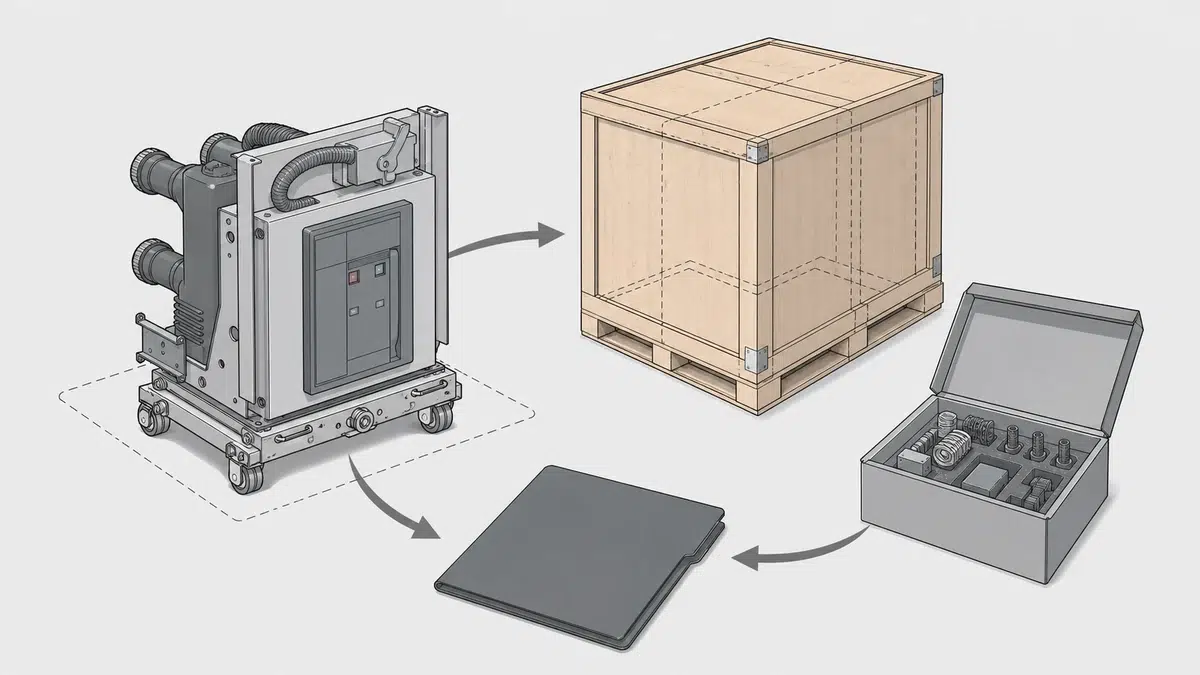
VCB primary disconnect finger inspection is the maintenance check of the withdrawable vacuum circuit breaker’s primary contact fingers, clusters, or stabs and their mating contacts in the switchgear cell. It verifies contact condition, alignment, cleanliness, lubrication, and evidence of overheating or poor engagement.
The main risk is increased contact resistance at the primary current path. This can create localized heating, discoloration, contact erosion, insulation damage, and unreliable service. Schneider’s switchgear maintenance guidance specifically identifies poor contact between a breaker finger cluster and primary contacts as an inspection concern.
The correct lubricant is the one specified in the applicable VCB manual for the primary contact system. ABB distinguishes primary-contact lubricant from mechanism and rail lubrication. Siemens specifies lubricant placement for its own SION contact fingers. Schneider’s EvoPacT guidance includes primary high-voltage cluster lubrication but leaves lubricant choice and schedule to the product manual.
Excess lubricant can collect dirt or dust on electrical contact surfaces. ABB’s SecoVac guidance specifically notes that excess lubricant should be removed to avoid dirt or dust accumulation. The goal is the specified contact condition, not a heavy grease coating.
Thermal evidence is any sign that the primary disconnect interface has been heating abnormally. Examples include discoloration, darkened residue, pitting, roughened contact surfaces, damaged nearby insulation, or infrared scan differences between phases under comparable loading.
After work on the contact system, the applicable manual may require functional verification. Siemens’ SION guidance requires a function test after work. In practice, post-work checks should confirm proper racking behavior, correct engagement, no abnormal binding, and successful breaker functions required by the product-specific procedure.