هل تحتاج إلى المواصفات الكاملة؟
قم بتنزيل كتالوج منتجاتنا لعام 2025 للحصول على رسومات تفصيلية ومعايير تقنية لجميع مكونات المفاتيح الكهربائية.
احصل على الكتالوج
قم بتنزيل كتالوج منتجاتنا لعام 2025 للحصول على رسومات تفصيلية ومعايير تقنية لجميع مكونات المفاتيح الكهربائية.
احصل على الكتالوج قم بتنزيل كتالوج منتجاتنا لعام 2025 للحصول على رسومات تفصيلية ومعايير تقنية لجميع مكونات المفاتيح الكهربائية.
احصل على الكتالوج
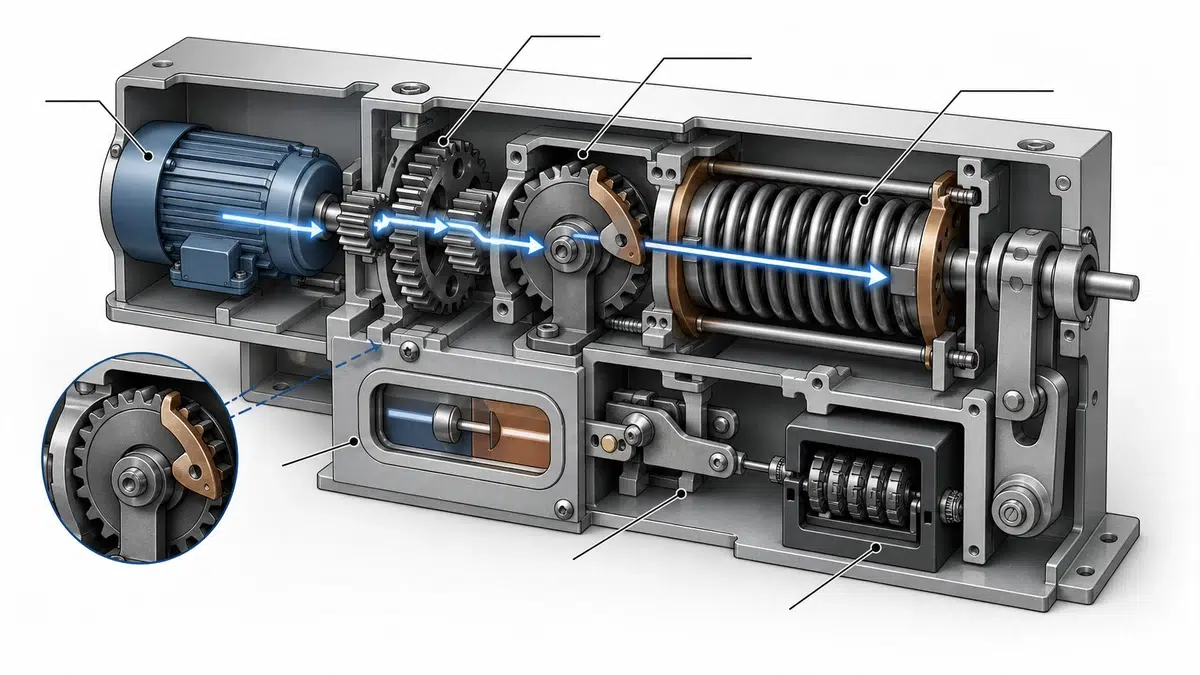
In a VCB, the spring-charged operating mechanism stores mechanical energy so the breaker can close and trip in the required sequence. When that mechanism starts to wear, the first signs are often not a complete failure. They are usually small changes in charging behavior, indication, mechanical sequence, sound, repeatability, or inspection condition. Recognizing these vcb spring charged mechanism wear indicators early helps maintenance teams act before a breaker fails to close, fails to trip, or becomes unsafe to service.
The most important point is that mechanism wear should be judged from the actual product documentation and site maintenance program, not from generic assumptions. ABB, for example, describes functional testing of its stored-energy spring mechanism after 5,000 operations or during specified service work, including visual lubrication condition, fastener condition, and mechanical/electrical sequence checks, with the work restricted to ABB or suitably trained specialists. ABB’s SecoVac manual also recommends periodic visual and operational inspection, including the operating-mechanism spring charging motor, and warns against work while the closing spring is charged. Schneider identifies the charging mechanism and motor, mechanical operation counter, spring-charged indicator, and auxiliary spring-charge contact as distinct mechanism items, while directing maintenance planning to the applicable product documentation.
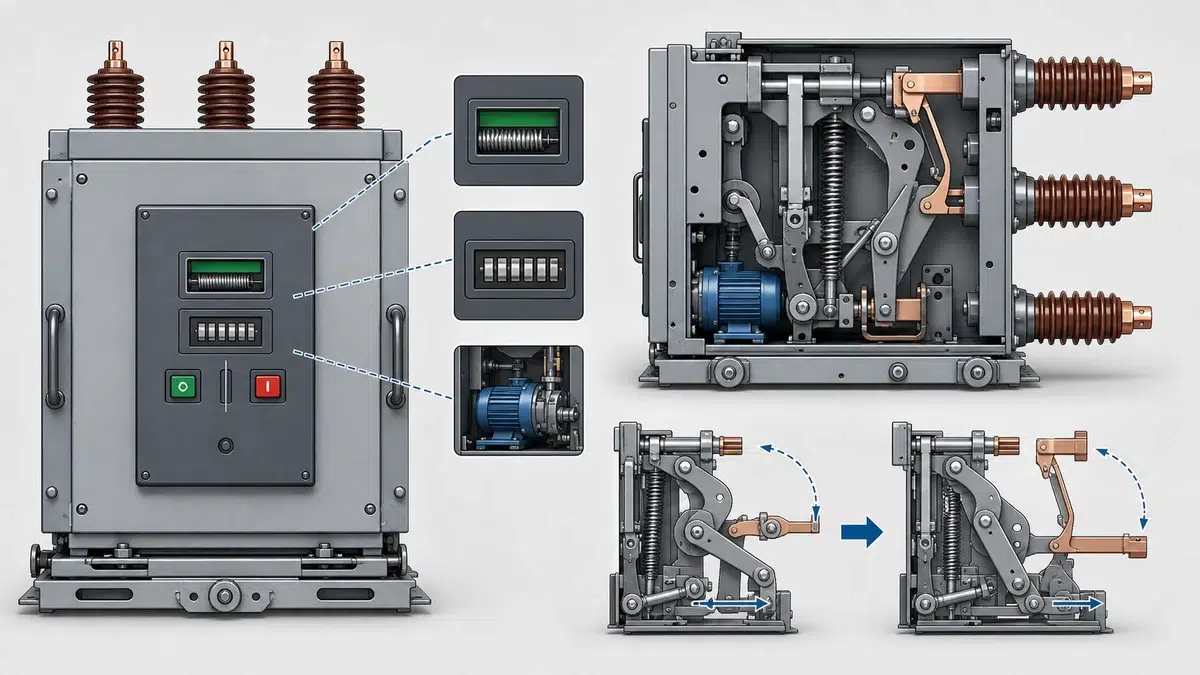
A vacuum circuit breaker interrupter may still be healthy while the stored-energy mechanism is becoming unreliable. This is why mechanism symptoms deserve attention before a trip failure occurs. The spring mechanism must charge, indicate charged status, release energy through the close and open sequence, and coordinate with electrical auxiliary contacts and control logic. Wear, looseness, poor lubrication condition, or inconsistent motor charging can disturb that sequence. For equipment and configuration options, compare the project duty with the XBRELE VCB portfolio.
A worn or deteriorating mechanism does not always announce itself as a hard fault. It may first appear as a longer charging time, a spring-charged indicator that does not align cleanly, an operation counter that shows high duty, a charging motor that sounds different, or a sequence that feels less consistent during approved testing. These signs do not prove one single failed part, but they do justify controlled inspection under the manufacturer’s instructions.
The practical vcb spring charged mechanism wear indicators are usually observable during inspection, routine operation, or functional testing. They include visible, audible, and sequence-related clues rather than one universal measurement.
Common indicators include:
None of these signs should be treated as permission to improvise repairs. They are triggers to isolate the breaker, follow the manual, and use trained personnel.
Manufacturer documentation gives the safest framework for interpreting wear indicators. ABB’s stored-energy spring mechanism guidance for VD4X refers to functional testing after 5,000 operations or during specified service work. That testing includes visual assessment of lubrication condition, fastener condition, and mechanical/electrical sequence checks. ABB also limits that work to ABB or suitably trained specialists, which is important because the mechanism stores hazardous energy. The ABB VD4X instruction manual is the primary source for the product-specific requirement stated here.
ABB’s SecoVac documentation recommends periodic visual and operational inspection and specifically includes the operating-mechanism spring charging motor. It also warns against work while the closing spring is charged. That warning matters because a charged spring can release energy unexpectedly if handled incorrectly.
Schneider’s EvoPacT user guidance separates the mechanism items into identifiable elements: the charging mechanism and motor, the mechanical operation counter, the spring-charged indicator, and the auxiliary spring-charge contact. This is useful for maintenance planning because it shows that wear monitoring should not focus only on the motor or only on the indicator. The charging system, indication system, and operation record all contribute to the condition picture.
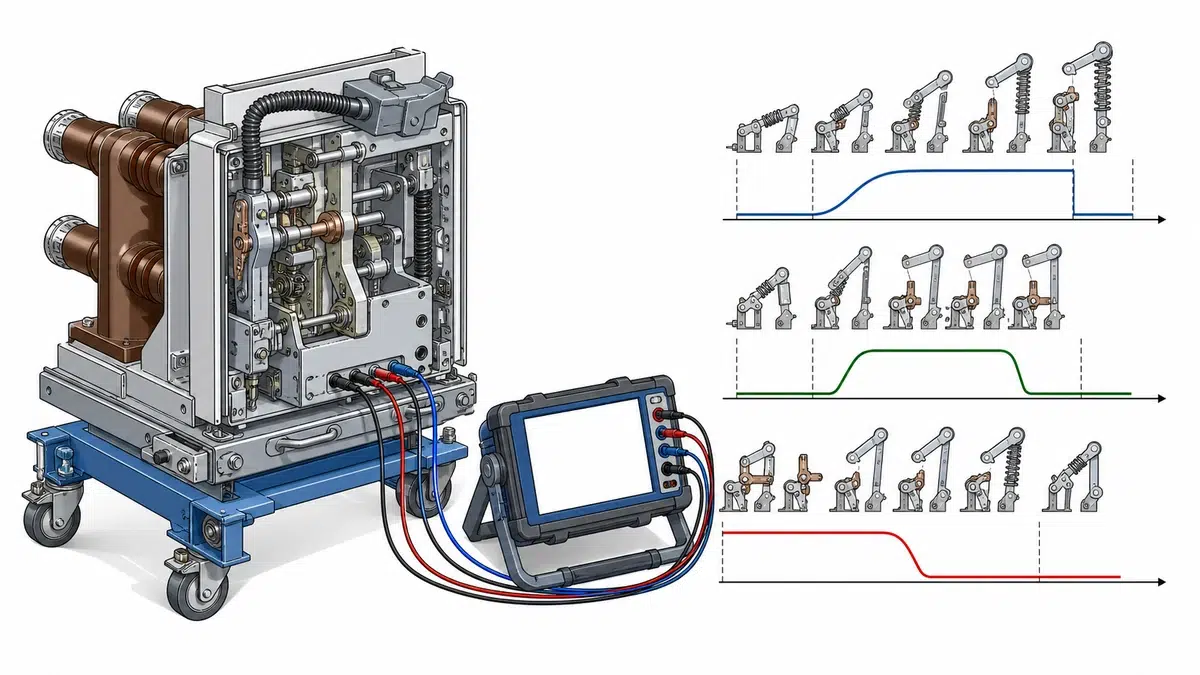
Operators should compare each VCB with its own normal behavior, not with a different breaker type. A mechanism that has always charged quickly and indicated positively, but now charges slowly or gives unclear indication, should be treated as a change in condition. A breaker that produces a new sound during charging also deserves attention, especially if the operating-mechanism spring charging motor is included in the periodic inspection scope.
The mechanical operation counter is also a practical clue. It does not diagnose wear by itself, but it tells maintenance teams how much operating duty the breaker has accumulated. When the count approaches the manufacturer’s recommended service or test interval, the counter becomes part of the evidence for planned maintenance. Cross-check the duty and nameplate fields against the breaker rating selection guide before acceptance.
Control-room indications can also reveal early issues. If the spring-charged signal is delayed, missing, or inconsistent with the local mechanical indicator, the auxiliary spring-charge contact, wiring, or mechanism state may need inspection. Because the spring-charged indicator and auxiliary spring-charge contact are distinct items in Schneider’s documentation, disagreement between indication channels should not be ignored.
Visual inspection should focus on condition, not adjustment guesswork. The most relevant visible clues are lubrication condition, fastener condition, contamination, displaced parts, and the clear movement of the spring-charged indicator. ABB’s maintenance evidence specifically includes visual lubrication and fastener checks, which supports using these as legitimate condition indicators.
Operational clues are equally important. If the breaker charges but the mechanism sequence is not repeatable, or if the closing and opening sequence behaves differently during approved functional checks, the issue may be developing before a complete trip failure. ABB’s reference to mechanical and electrical sequence checks is important here: the spring mechanism is not only mechanical hardware, but part of a coordinated mechanical-electrical operating system. An abnormal close or trip result should be carried into the VCB closing and opening troubleshooting guide instead of being cleared as a generic defect.
A useful pre-failure mindset is to ask whether the mechanism is still repeatable. Repeatability is often more meaningful than one successful operation. One successful close or trip does not prove that the mechanism is healthy if the next operation shows hesitation, unclear indication, or abnormal motor behavior.
A charged closing spring is a stored-energy hazard. ABB’s SecoVac manual warns against work while the closing spring is charged, and that principle should guide all troubleshooting. If wear is suspected, the correct response is not to remove covers, force linkages, or defeat interlocks. The correct response is to place the breaker in the safe condition specified by the product documentation and involve qualified personnel.
Safe handling priorities include:
Because ABB restricts certain stored-energy spring mechanism work to ABB or suitably trained specialists, a site team should define in advance which checks are operator-level and which checks require specialist maintenance.
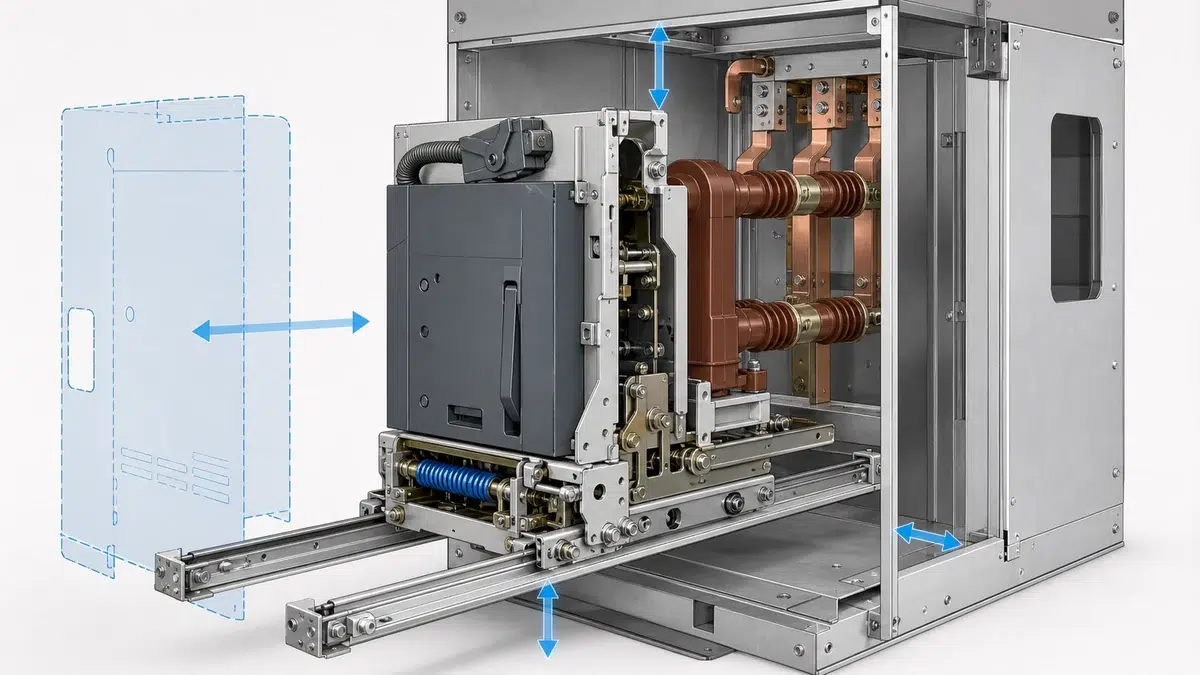
There is no responsible universal number that applies to every VCB spring-charged mechanism across all manufacturers and models. ABB’s evidence gives a specific example: functional testing after 5,000 operations or during specified service work for its referenced stored-energy spring mechanism. That should not be converted into a blanket rule for every VCB. Instead, it shows the type of maintenance trigger that manufacturers may define.
For maintenance planning, use these inputs together:
This approach keeps maintenance evidence-based. It avoids replacing parts only because of age, but it also avoids waiting until the breaker refuses to trip or close.
When a VCB shows spring mechanism wear indicators, the response should be planned and documented. First, record what changed: motor behavior, charging time impression, indication mismatch, counter reading, failed or inconsistent sequence, or visible condition. Then compare the observation with the applicable manual. If the condition involves stored energy, internal mechanism checks, lubrication work, fastener checks, or sequence testing beyond operator procedure, involve qualified personnel. For witness planning and records, align the evidence with the VCB factory and site acceptance checklist.
A practical action path is:
The goal is not simply to repair a charging motor or reset an indicator. The goal is to confirm that the complete spring-charged mechanism can charge, indicate, close, open, and reset in the sequence required by the VCB design.
A VCB spring-charged mechanism wear indicator is any observable sign that the stored-energy operating mechanism may be deteriorating before a close or trip failure occurs. Examples include abnormal spring charging motor behavior, unclear spring-charged indication, inconsistent auxiliary spring-charge contact status, poor lubrication condition, loosened fasteners, high operation count, or irregular close/open sequence during approved checks.
The spring-charged indicator shows whether the closing spring is in the charged condition according to the breaker’s mechanism design. It helps operators confirm readiness for a closing operation, but it should not be treated in isolation. If the local indicator, auxiliary contact, or control-room signal disagree, the breaker should be checked using the applicable product documentation.
The mechanical operation counter records breaker operations and supports maintenance planning. It does not diagnose a worn mechanism by itself, but it helps determine whether the breaker is approaching a manufacturer-defined service or functional test point. Schneider identifies the mechanical operation counter as a distinct mechanism item, and ABB provides an example of functional testing after 5,000 operations for a referenced stored-energy spring mechanism.
The safest response is to follow the manufacturer’s procedure and avoid work on the mechanism while the closing spring is charged. ABB’s SecoVac manual specifically warns against work while the closing spring is charged. If the mechanism condition is uncertain, do not force parts, bypass interlocks, or open mechanism areas without qualified support.
A charging motor issue concerns the device that charges the spring, while mechanism wear may involve the broader stored-energy system, including linkages, latches, lubrication condition, fasteners, indication parts, auxiliary contacts, and sequence behavior. ABB’s SecoVac inspection scope includes the operating-mechanism spring charging motor, while Schneider lists the charging mechanism/motor, spring-charged indicator, operation counter, and auxiliary spring-charge contact as separate items.
The best way is to combine periodic visual inspection, approved operational checks, operation counter review, and manufacturer-directed maintenance. Look for changes in motor behavior, indication accuracy, lubrication condition, fastener condition, and mechanical/electrical sequence repeatability. When internal functional testing or service is required, use ABB, the OEM, or suitably trained specialists as required by the applicable documentation.