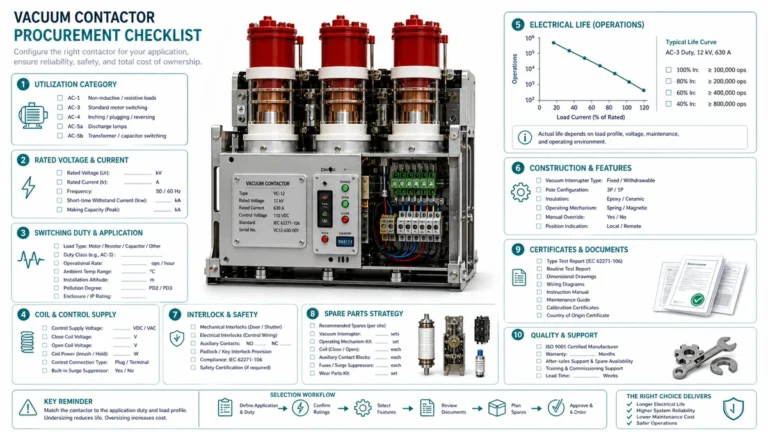
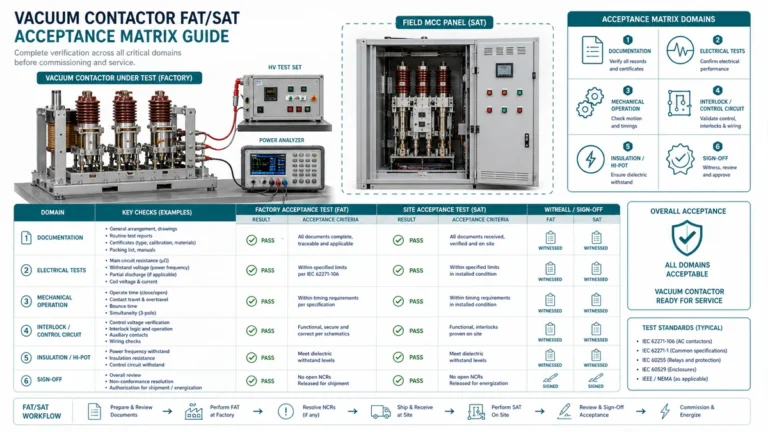
Нужны полные технические характеристики?
Загрузите наш каталог продукции 2025 года, чтобы ознакомиться с подробными чертежами и техническими параметрами всех компонентов распределительного устройства.
Получить каталог
Загрузите наш каталог продукции 2025 года, чтобы ознакомиться с подробными чертежами и техническими параметрами всех компонентов распределительного устройства.
Получить каталог Загрузите наш каталог продукции 2025 года, чтобы ознакомиться с подробными чертежами и техническими параметрами всех компонентов распределительного устройства.
Получить каталог
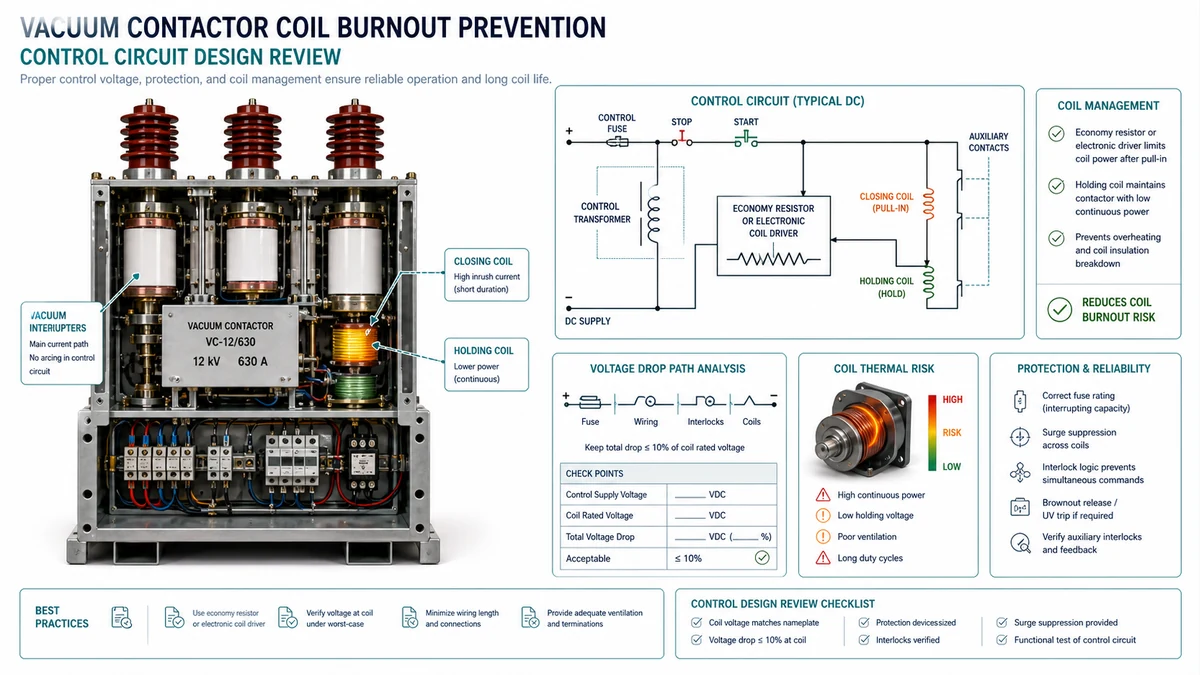
Перегорание катушки в вакуумных контакторах происходит по предсказуемому сценарию: тепло накапливается в обмотке до тех пор, пока не происходит пробой изоляции, не возникают межвитковые замыкания и катушка не выходит из строя. Причиной почти всегда является электрическое или механическое состояние, которое не было измерено, не было предусмотрено на этапе проектирования или не было устранено во время ввода в эксплуатацию. В данном руководстве рассматриваются вопросы выявления первопричин, анализа схемы управления, оценки тепловых условий, выбора архитектуры удерживающего тока, интеграции защитных реле и проверки закупок.
Используйте эту таблицу в качестве инструмента для первичного сортирования пациентов. Если симптом соответствует более чем одной строке, необходимо одновременно учитывать все соответствующие состояния.
| Симптом | Первое испытание | Вероятная первопричина | Следующее действие |
|---|---|---|---|
| Катушка перегорает через несколько дней после установки | Измерить управляющее напряжение на клеммах катушки во время подачи напряжения | Падение напряжения при включении ниже номинального значения 85% | Увеличить мощность управляющего трансформатора или снизить нагрузку на управляющую цепь |
| Катушка перегорает после нескольких месяцев нормальной эксплуатации | Регистрация управляющего напряжения в течение 24 часов | Длительное перенапряжение, превышающее номинальное значение 110% | Установите трансформатор с регулировкой напряжения или измените положение отвода |
| Катушка нагрета, но контактор замыкается нормально | Подсчитайте количество операций в час с учетом номинальной нагрузки, указанной производителем | Высокая частота переключения | Уменьшите частоту циклов или выберите катушку с более высокой рабочей нагрузкой |
| Катушка перегорает, на полюсах остаются видимые обломки | Осмотрите торцы опор и направляющие штифты | Арматура застряла в открытом положении | Очистить поверхности опор, заменить изношенные направляющие, уплотнить корпус |
| Периодическое выгорание без четкой закономерности | Измерить падение напряжения на каждом участке управляющей цепи под нагрузкой | Неплотно закреплённая контрольная проводка, приводящая к падению напряжения | Затяните клеммы с новым усилием, замените проводники управления, не соответствующие требуемому сечению |
| Перед полным выгоранием сопротивление спирали показывается заниженным | Измерить сопротивление катушки и сопротивление изоляции относительно земли | Деградация изоляции под воздействием термоциклирования | Замените катушку; перед повторным включением питания выясните первопричину перегрева |
| Прибор или эталон | Цель диагностики перегорания катушки |
|---|---|
| Токоизмеритель зажимного типа | Измерить ток в катушке при втягивании и удержании; проверить переход цепи экономичного режима |
| Мультиметр с измерением среднеквадратичного значения | Измерить напряжение на клеммах катушки под нагрузкой; проверить падение напряжения на соединениях |
| Анализатор качества электроэнергии или регистратор данных | Регистрация провалов напряжения при пусковом токе; ведение журнала качества питания в течение 24 часов |
| Тестер сопротивления изоляции (500 В или 1000 В постоянного тока) | Измерить сопротивление изоляции обмотки катушки относительно земли до и после предполагаемого перегрева |
| Тестер сопротивления контактов (диапазон микроом) | Проверить сопротивление вспомогательного контакта; отметить повышенное сопротивление в цепи управления |
| Калиброванная термопара или регистратор температурных данных | Измерять температуру окружающей среды в корпусе на уровне теплообменника в период пиковой нагрузки |
| Инфракрасная термографическая камера | Определите зоны повышенной температуры на соседних источниках тепла; данное устройство не заменяет непосредственного измерения температуры воздуха |
| Анализатор временных характеристик или осциллограф | Измерение времени замыкания якоря; обнаружение скачков контакта, вызывающих повторяющиеся всплески тока |
| Технические характеристики и руководство по эксплуатации контактора OEM | Уточните допуск по напряжению катушки, тепловой класс, коэффициент загрузки и технические характеристики схемы экономичного режима работы |
| Техническое задание проекта и однолинейные схемы | Сравнить проектные параметры с фактическим состоянием цепи управления |
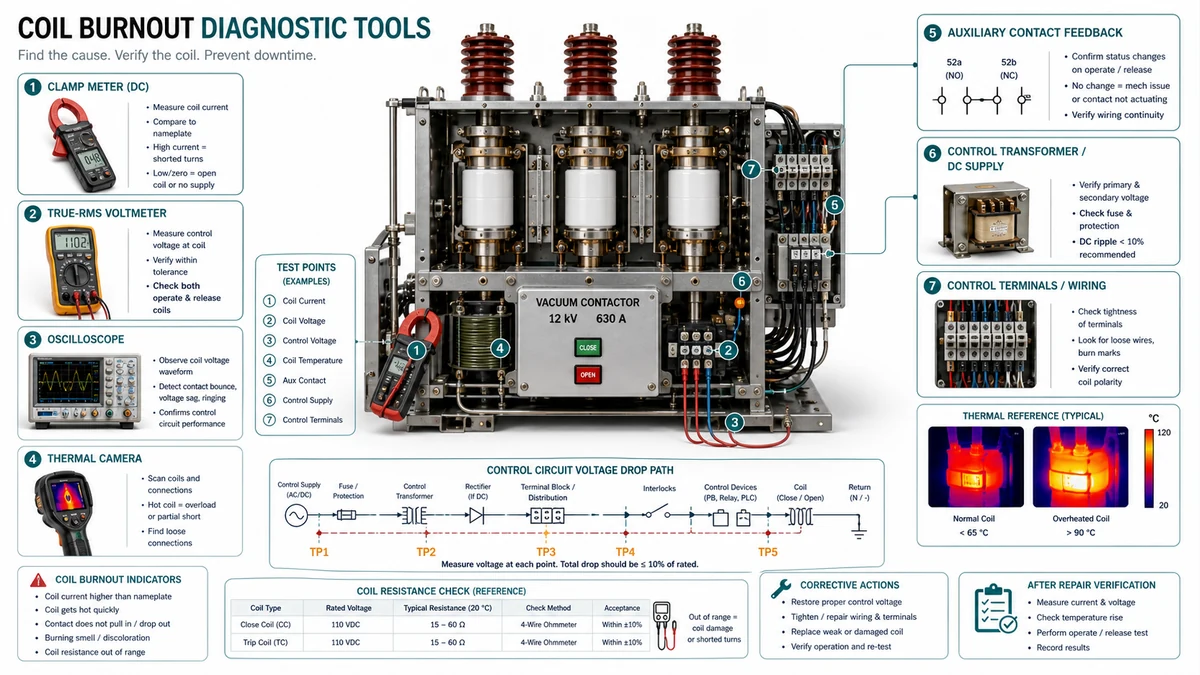
На эти четыре основные причины приходится большая часть отказов в полевых условиях.
Длительное перенапряжение. Катушка, рассчитанная на напряжение 120 В переменного тока, работающая при напряжении 115% от номинального, несет примерно на 32% большую тепловую нагрузку, чем в номинальных условиях, что в течение месяцев непрерывной работы постепенно сокращает срок службы изоляции.
Падение напряжения во время входа в режим. Если во время пускового тока напряжение питания опускается ниже примерно 85% от номинального значения, якорь может не зафиксироваться до конца. Частично зафиксированный якорь не позволяет закрыть воздушный зазор, поддерживает низкое сопротивление и позволяет току пускового уровня протекать бесконечно долго — это наиболее распространённый механизм выхода из строя в системах распределительного оборудования среднего напряжения.
| Состояние поля | Механизм | Типы отказов катушки |
|---|---|---|
| Длинные кабельные трассы до панели управления | Резистивное падение напряжения под нагрузкой | Хроническое пониженное напряжение на клеммах катушки |
| Трансформатор с общим управлением для нагрузок с высоким пусковым током | Падение напряжения при пуске двигателя | Периодические сбои при втягивании, длительный пусковой ток |
| Недостаточная мощность управляющего трансформатора | Недостаточная регулировка под нагрузкой | Прогиб при полной нагрузке, выпуклость при небольшой нагрузке |
| Ослабленные соединения клемм | Периодическое увеличение сопротивления | Падение напряжения и образование электрической дуги в точке соединения |
| Стареющий трансформатор с ухудшенной стабилизацией напряжения | Широкий диапазон выходного сигнала | Перенапряжение при малой нагрузке, пониженное напряжение при полной нагрузке |
| Нефильтрованный выпрямленный источник постоянного тока | Высокий уровень пульсаций | Повышенное среднеквадратичное значение тока, усиление нагрева |
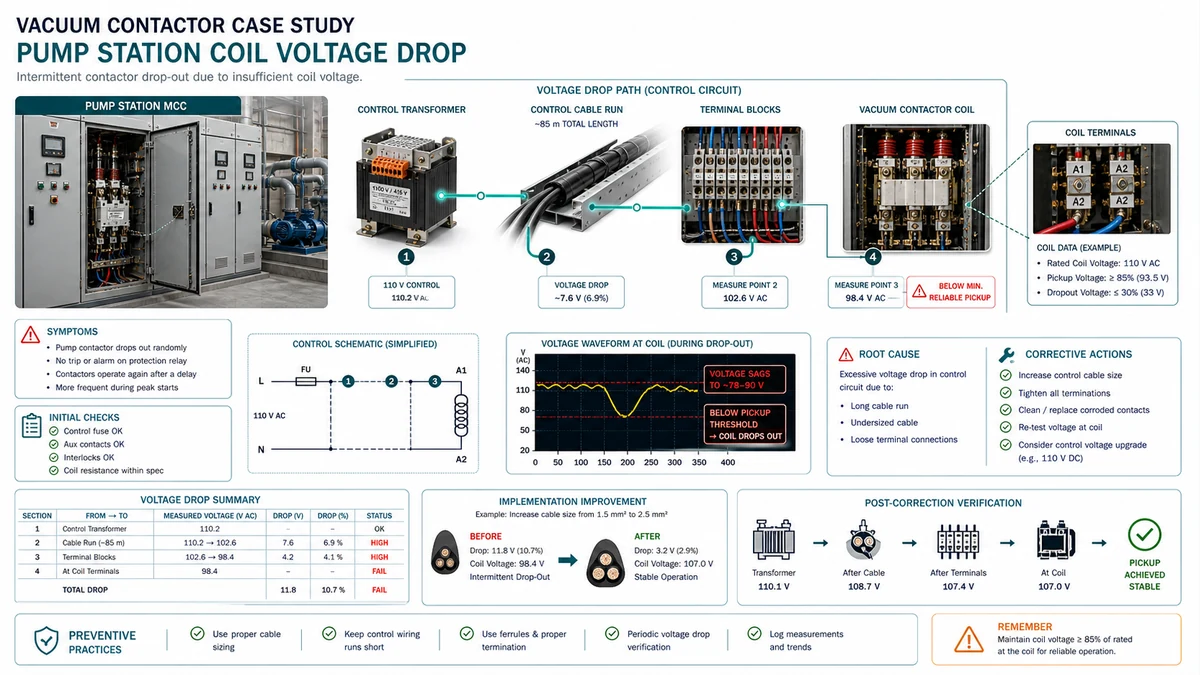
На водоочистной станции за 18 месяцев было зарегистрировано три случая выхода из строя катушек на одной и той же позиции вакуумного контактора. Каждая вышедшая из строя катушка имела изменения цвета, характерные для тепловой перегрузки.
Расследование: Управляющий трансформатор также питал ПЛК станции, интерфейс человека-машины (HMI) и несколько вспомогательных реле. При полной нагрузке станции напряжение на вторичной обмотке трансформатора упало до 101 В — что находится в пределах допуска. Однако измерения, проведенные непосредственно на клеммах обмотки, выявили корродированный клеммный блок, создававший переменное сопротивление примерно 4–6 Ом, в результате чего напряжение на клеммах обмотки в нормальных условиях снижалось до 94–98 В. В летние месяцы, когда температура окружающей среды в шкафу достигала 45 °C, сопротивление соединения ещё больше увеличивалось, в результате чего напряжение на клеммах обмотки падало до 81–84 В — что значительно ниже минимального значения для модели 85%. Контактор срабатывал, но не до конца прижимал якорь при каждом цикле, что удлиняло продолжительность пускового тока и приводило к перегреву обмотки.
Корректирующие меры: Замена клеммной колодки; установка реле контроля напряжения на DIN-рейке, обеспечивающего отключение цепи управления при напряжении ниже 88% и выше 112% от номинального значения; включение в график технического обслуживания ежеквартальной проверки сопротивления соединений. В течение последующих 24 месяцев о новых отказах катушек не поступало.
Проверка цепи управления с целью предотвращения перегорания катушки осуществляется в соответствии с установленной последовательностью действий. По итогам каждого этапа принимается решение: «пройден», «с отметкой» или «не пройден».
| Состояние | Допустимый диапазон | Действия в случае выхода за пределы диапазона |
|---|---|---|
| Змеевик кондиционера, номинальное напряжение 120 В | 108–132 В (+/- 10%) | Проверить регулирование подачи питания или отводы трансформатора |
| Катушка постоянного тока, номинальное напряжение 24 В | 21,6–26,4 В (+/- 10%) | Проверить напряжение на выходе выпрямителя и падение напряжения в кабеле |
| Напряжение при пусковом токе | Не должно опускаться ниже 85% от номинального значения | Установить реле удержания или схему усиления |
| Напряжение на клеммах катушки в зависимости от шины панели | В пределах номинального диапазона | Пересчитать сечение провода, если падение напряжения превышает 5% |
Критерий прохождения: При любой однофазной неисправности катушка может обесточиваться по крайней мере по одному независимому пути.
| Тип подавления | В чём его преимущество | Где возникает риск |
|---|---|---|
| RC-гаситель (катушки переменного тока) | Недорогой, эффективен в широком диапазоне частот | Неправильные значения RC могут привести к повторному срабатыванию или задержке отключения |
| Диод свободного хода (катушки постоянного тока) | Безопасно устраняет скачки напряжения | Увеличивает время отключения; недопустимо при отключении питания в системах, критичных с точки зрения безопасности |
| Устройство подавления переходных напряжений (TVS) | Быстрое зажатие, заданное напряжение зажима | Размер должен соответствовать повторяющейся мощности; TVS, выбранные с заниженным размером, со временем теряют свои характеристики |
| Варистор на основе оксида металла (MOV) | Обеспечивает защиту от высокоэнергетических переходных процессов | Состояние ухудшается с каждым событием; видимых признаков отказа нет |
| Комбинация диода и диода Зенера (постоянный ток) | Более быстрое отключение, чем при использовании одного только диода свободного хода | Более высокая стоимость; монтаж с учетом полярности |
Флаг: В цепи катушки постоянного тока подавление отсутствует.
| Защитное устройство | Функция | Проверка проекта |
|---|---|---|
| Контрольный предохранитель | Защищает проводку, а не катушку | Убедитесь, что номинальная сила тока предохранителя не превышает допустимую нагрузку по проводу |
| Термическая перегрузка в цепи катушки | Обнаруживает длительный перегрузочный ток | Убедитесь, что класс поездки соответствует тепловой постоянной катушки |
| Электронный драйвер катушки с ограничением тока | Снижает пусковой ток, удерживает ток на заданном уровне | Уточните номинальное выходное напряжение и номинальную температуру драйвера |
| Термистор PTC, включенный последовательно с катушкой | Ограничение силы тока при перегреве | Проверьте порядок сброса — некоторые PTC требуют ручного сброса |
| Вывод | Тяжесть | Необходимые действия |
|---|---|---|
| Напряжение на катушке на клеммах выходит за пределы диапазона +/- 10% | Высокий | Устранить неисправность перед подачей напряжения |
| Отсутствие подавления на катушке постоянного тока | Высокий | Установите перед подачей напряжения |
| Устройство переключения, рассчитанное на меньший пусковой ток | Высокий | Заменить до подачи напряжения |
| Использование в режиме непрерывной работы с катушкой, рассчитанной на прерывистый режим | Высокий | Замените катушку или контактор |
| Подавление присутствует, но в неправильном месте | Средний | Переподключить к клеммам катушки |
| Плавкий предохранитель, размер которого превышает допустимую нагрузку по току провода | Средний | Заменить предохранитель |
| Повышенное сопротивление вспомогательного контакта | Средний | Очистите или замените контактный блок |
| Отсутствует информация о дате последней замены катушки | Низкий | Зафиксировать и установить интервал проведения проверок |
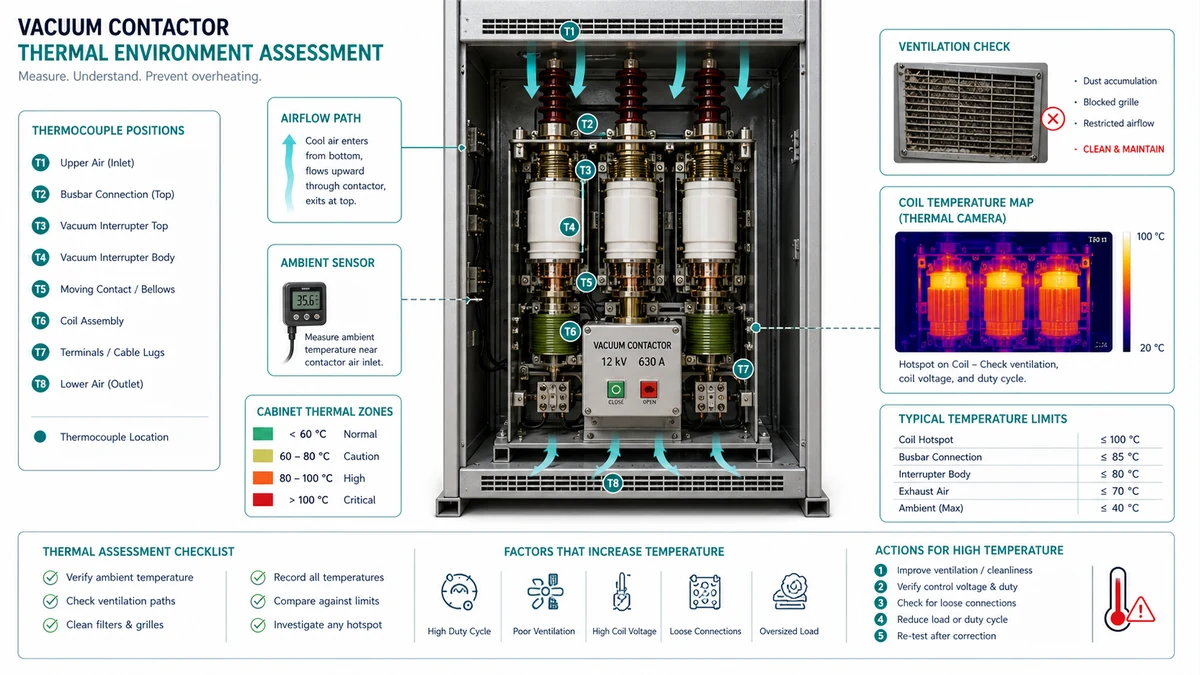
Согласно эмпирическому правилу Аррениуса, касающемуся старения изоляции, каждое повышение температуры на 10 °C сверх номинальной температуры сокращает срок службы изоляции вдвое. Для системы изоляции класса B (предельная температура 130 °C) срок службы катушки, работающей при температуре 140 °C, составляет примерно половину от расчетного.
| Термические условия | Измеримый показатель | Уровень риска | Корректирующие действия |
|---|---|---|---|
| Температура окружающей среды в корпусе <= 40 °C, надлежащая вентиляция | Термопара на уровне катушки | Низкий | Базовая версия документа; никаких действий не требуется |
| Температура окружающей среды в корпусе: 41–55 °C, только естественная конвекция | Температура воздуха внутри помещения в период пиковой нагрузки | Умеренный | Установите принудительную вентиляцию или уменьшите рабочий цикл |
| Температура окружающей среды в корпусе > 55 °C | Измеренная температура воздуха внутри помещения | Высокий | Переместить контактор, установить теплообменник или использовать вариант с высокотемпературным змеевиком |
| Смежные источники тепла на расстоянии до 150 мм | Инфракрасное сканирование или термопара на стенке корпуса | От умеренного до высокого | Увеличьте расстояние между элементами, добавьте тепловые барьеры |
| Катушка, постоянно находящаяся под напряжением в герметичном корпусе | Журнал рабочего цикла и рост температуры в корпусе | Высокий | Переключиться на катушку постоянного тока с экономичным резистором или установить принудительное охлаждение |
| Высота над уровнем моря > 2000 м | Рекорд по высоте установки | Умеренный | Коэффициент понижения мощности, установленный производителем с учетом высоты над уровнем моря |
| Циклическая нагрузка > 30 циклов в час | Счетчик операций и тепловизионная съемка | Умеренный | Уточните номинальную нагрузку катушки; проверьте наличие перегрева на клеммах катушки |
| Несоответствие класса изоляции катушки условиям эксплуатации | Номинальные условия и фактические условия окружающей среды | Высокий | Перед подачей напряжения замените на вариант с соответствующим классом изоляции |
Пасс: Измеренная температура окружающей среды в корпусе на уровне катушки составляет <= 40 °C в самых неблагоприятных условиях эксплуатации; в радиусе 150 мм отсутствует незащищенное тепловыделяющее оборудование; класс изоляции катушки превышает температуру окружающей среды плюс ожидаемый уровень самонагрева; при высоте над уровнем моря свыше 2000 м применяется поправка на высоту; коэффициент загрузки находится в пределах номинальной классификации.
Маргинальное — условное принятие: Температура окружающей среды в корпусе составляет 41–55 °C, однако подтверждено, что принудительная вентиляция позволяет снизить внутреннюю температуру до <= 40 °C; имеются соседние источники тепла, но подтверждено наличие экранирования. Установки, работающие в предельных условиях, требуют повторного теплового осмотра в течение 90 дней после ввода в эксплуатацию.
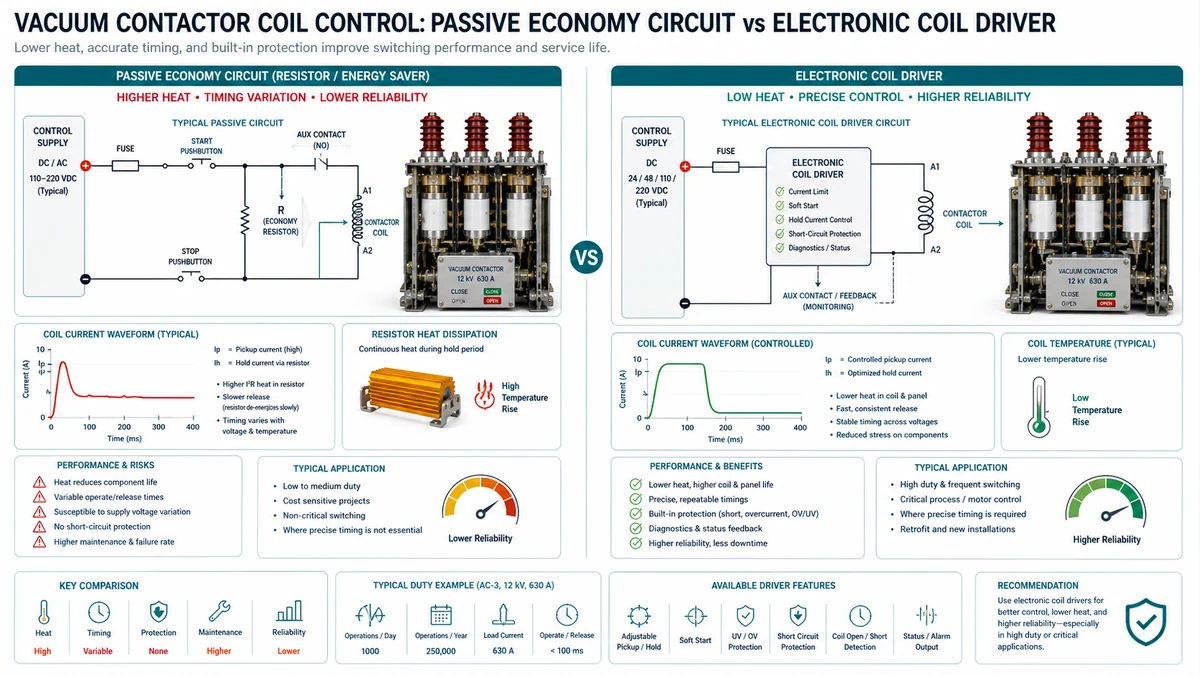
Снижение тока удержания после первоначального притяжения является одним из наиболее прямых способов предотвращения перегорания катушки. Вопрос заключается не в том, использовать ли архитектуру с током удержания, а в том, какой тип такой архитектуры сможет прослужить в конкретных условиях эксплуатации достаточно долго, чтобы оправдать свою стоимость и сложность.
| Критерий | Схема пассивного экономизатора | Электронный драйвер катушки |
|---|---|---|
| Частота переключений < 10 циклов/час | Приемлемый | Желательно, но не обязательно |
| Частота переключений > 30 циклов/час | Высокий риск (ношение в непосредственном контакте) | Предпочтительный |
| Колебания напряжения питания ± 15% | Риск недооценки в нижней части диапазона | Регулируемый выход обеспечивает управление диапазоном |
| Температура окружающей среды > 50 °C | Требуется понижение номинальной мощности резистора | Требуется снижение номинальной мощности драйвера с учетом тепловых ограничений |
| Высота над уровнем моря > 2000 м | Требуется понижение номинальной мощности резистора | Проверьте номинальные характеристики конденсаторов |
| Сильная вибрация | Низкий риск (небольшое количество компонентов) | Требуется нанесение конформного покрытия и соблюдение требований по вибрации |
| Запыленная или загрязненная среда | Контакты реле времени, подверженные риску | Предпочтительно герметичный модуль |
| Переходные процессы в качестве электроэнергии | В целом терпимый | Проверить степень устойчивости к перенапряжению |
| Уровень квалификации по техническому обслуживанию | Базовый | Требуется оригинальная запчасть |
| Первоначальная стоимость | Нижний | Выше |
Схемы пассивной экономии преимущество в условиях с низкой интенсивностью эксплуатации и чистой окружающей средой, где ресурсы на техническое обслуживание ограничены — пассивная схема с пониженной номинальной мощностью и герметичным реле времени может представлять меньший долгосрочный риск, чем драйвер, замененный на неоригинальный аналог при первом же аварийном отключении.
Электронные приводы катушек преимущество в условиях высокой частоты циклов, переменного напряжения или высокой влажности. Выбирайте драйверы с функцией контроля полного прилегания якоря, чтобы предотвратить снижение тока до того, как якорь полностью прижмётся. Подробные рекомендации по выбору драйверов для запуска двигателей см. в Подбор вакуумных контакторов для пуска электродвигателей — публикация на сайте XBRELE.
Интеграция защитных реле представляет собой основной уровень активной защиты. Архитектура должна пресекать опасные состояния до превышения тепловых пределов, не допуская при этом ложных срабатываний, которые могут замаскировать реальные неисправности.
| Функция | Предоставляемая первичная защита | В чём его преимущество | Где возникает риск |
|---|---|---|---|
| Реле контроля тока в катушке | Прямое обнаружение перегрузки по току в обмотке | Высокоцикловая нагрузка, неисправный экономичный резистор | Дрейф калибровки в условиях сильной вибрации |
| Реле тепловой перегрузки в цепи управления | Обнаружение накопления тепла | Частые переезды на небольшие расстояния или работа в режиме «пошагового движения» | Медленная реакция на единичное катастрофическое событие, связанное с перегрузкой по току |
| Реле пониженного напряжения (27) | Предотвращает заклинивание катушки при падении напряжения | Объекты с известными случаями провисания | Не защищает от повреждений, вызванных перенапряжением |
| Реле перенапряжения (59) | Обнаруживает напряжение питания, превышающее номинальное максимальное значение для катушки | Нерегулируемые системы или системы с питанием от генератора | Во время включения батареи конденсаторов возможны ложные срабатывания |
| Логика обратной связи с помощью вспомогательных контактов | Проверяет, соответствует ли фактическое механическое положение заданному состоянию | Обнаружение заклинивания якоря или сварки контактов | Требуется исправный вспомогательный контакт; изношенные контакты приводят к появлению ложных сигналов |
| Таймер предотвращения повторного срабатывания | Ограничивает операции закрытия в пределах заданного временного интервала | Применение пускателей двигателей в условиях высокой частоты повторных запусков | Слишком консервативные настройки задерживают законный перезапуск |
| Контрольное реле экономичного режима | Контроль перехода к пониженному току удержания | Все установки с двухступенчатым приводом змеевиков | В зависимости от состояния элементов схемы защиты |
Этап 1 — Аттестация по управлению: Прежде чем цепь питания катушки замкнётся, должны быть выполнены три условия, расположенные последовательно: напряжение питания системы управления должно находиться в заданном диапазоне (контакты реле 27 И реле 59 замкнуты); контакт таймера защиты от повторного срабатывания замкнут; вспомогательный контакт подтверждает открытое положение.
Этап 2 — Период пускового тока: На катушку подается полное напряжение; реле времени начинает отсчет максимально допустимого периода замыкания (обычно 50–200 мс). Если вспомогательный контакт не переключается в течение этого интервала, цепь катушки размыкается и срабатывает сигнал тревоги “не удалось замкнуть” — что непосредственно указывает на заклинивание якоря.
| Параметр | Допустимый диапазон | Основа |
|---|---|---|
| Порог срабатывания датчика пониженного напряжения (27) | 85–901 TP3T от номинального напряжения катушки | При значениях ниже 85% катушка удерживается ненадежно; при значениях выше 90% происходят ложные срабатывания при нормальных колебаниях |
| Задержка по времени при пониженном напряжении (27) | не менее 1,0–3,0 с | Предотвращает срабатывание защиты при кратковременных провалах напряжения во время пуска двигателя на той же шине |
| Порог срабатывания при перенапряжении (59) | 110–1151 TP3T номинального напряжения катушки | Характеристики изоляции обычно проверяются при температуре 110%; температура 115% обеспечивает запас прочности |
| Задержка по времени при перенапряжении (59) | 0,5–1,0 с | Напряжения восстановления после переходных процессов в конденсаторной батарее обычно затухают в течение 200 мс |
Приобретение вакуумного контактора без проверки схемы защиты его катушки является одной из наиболее распространённых причин преждевременного выхода катушки из строя. Проведение следующих проверок снижает вероятность получения устройства, защита которого полностью зависит от монтажной бригады, которая должна будет добавить меры защиты, которые изначально должны были быть предусмотрены при проектировании.
| Состояние поля | Что необходимо уточнить у производителя |
|---|---|
| Высота над уровнем моря свыше 1000 м | Коэффициент понижения номинальных значений с учетом охлаждения катушки и диэлектрических характеристик |
| Температура окружающей среды выше 40 °C | Термический класс катушки (для условий эксплуатации при высоких температурах требуется как минимум класс F или H) |
| Высокая частота переключения (> 30 операций в час) | Проверка теплового рабочего цикла при реальной частоте переключений |
| Коррозионная среда или помещение с высокой влажностью | Степень защиты катушки от влаги и наличие конформного покрытия |
| Напряжение управления постоянного тока от ИБП с аккумуляторной батареей | Совместимость катушки с источником постоянного тока, устойчивость к пульсациям, чувствительность к полярности |
| Вибрация или удары (насосы, компрессоры) | Механическая фиксация соединений катушки и виброизолирующее крепление |
Подтверждения на уровне каталога:
– [ ] Подтверждено, что экономайзер или двухступенчатый привод змеевиков входят в стандартную комплектацию поставляемых агрегатов
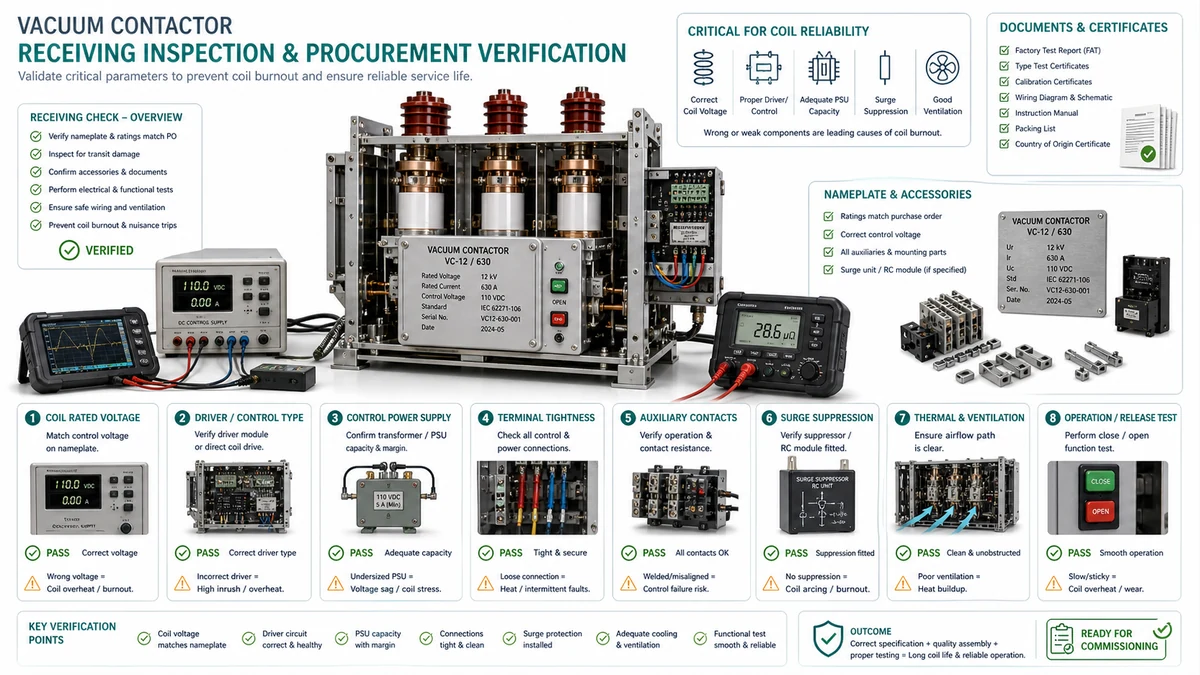
Используйте эти ссылки XBRELE, чтобы связать решение, принятое на месте, с правильным процессом производства, испытаний и закупок: Страница продукта XBRELE, Ассортимент вакуумных выключателей XBRELE, Руководство по рейтингам VCB, Серия вакуумных контакторов XBRELE.
Для внешнего контекста метода сравните процедуру сайта с публичной Страница стандартов IEEE C37.09 и затем применить точное руководство производителя и спецификацию проекта для поставляемого оборудования.
Пример из практики: во время сервисной проверки одна фаза измерялась вне базовой линии ввода в эксплуатацию, в то время как две другие фазы оставались стабильными. Команда повторила измерение с проверенными выводами, проверила время и ход контактов и использовала измеренное расхождение, чтобы отделить проблему контактного давления от общей проблемы очистки поверхности.
Наиболее распространённой причиной является неполное замыкание якоря, вызванное провалом напряжения во время пускового тока. Если в период пускового тока управляющее напряжение опускается ниже примерно 85% от номинального значения, якорь может не замкнуться полностью.
Ознакомьтесь с техническим паспортом производителя, чтобы найти два отдельных номинальных значения тока или напряжения: значение срабатывания (включения) и значение удержания (замыкания). Если указано только одно номинальное значение катушки, то, скорее всего, устройство не оснащено функцией экономичного режима.
Проводите измерения в следующей последовательности: (1) Напряжение на клеммах катушки под нагрузкой во время включения, регистрируемое в течение 200 мс для выявления провалов напряжения. (2) Сопротивление катушки по сравнению с номинальными значениями, указанными на паспортной табличке, для выявления межвитковых замыканий.