Нужны полные технические характеристики?
Загрузите наш каталог продукции 2025 года, чтобы ознакомиться с подробными чертежами и техническими параметрами всех компонентов распределительного устройства.
Получить каталог
Загрузите наш каталог продукции 2025 года, чтобы ознакомиться с подробными чертежами и техническими параметрами всех компонентов распределительного устройства.
Получить каталог Загрузите наш каталог продукции 2025 года, чтобы ознакомиться с подробными чертежами и техническими параметрами всех компонентов распределительного устройства.
Получить каталог
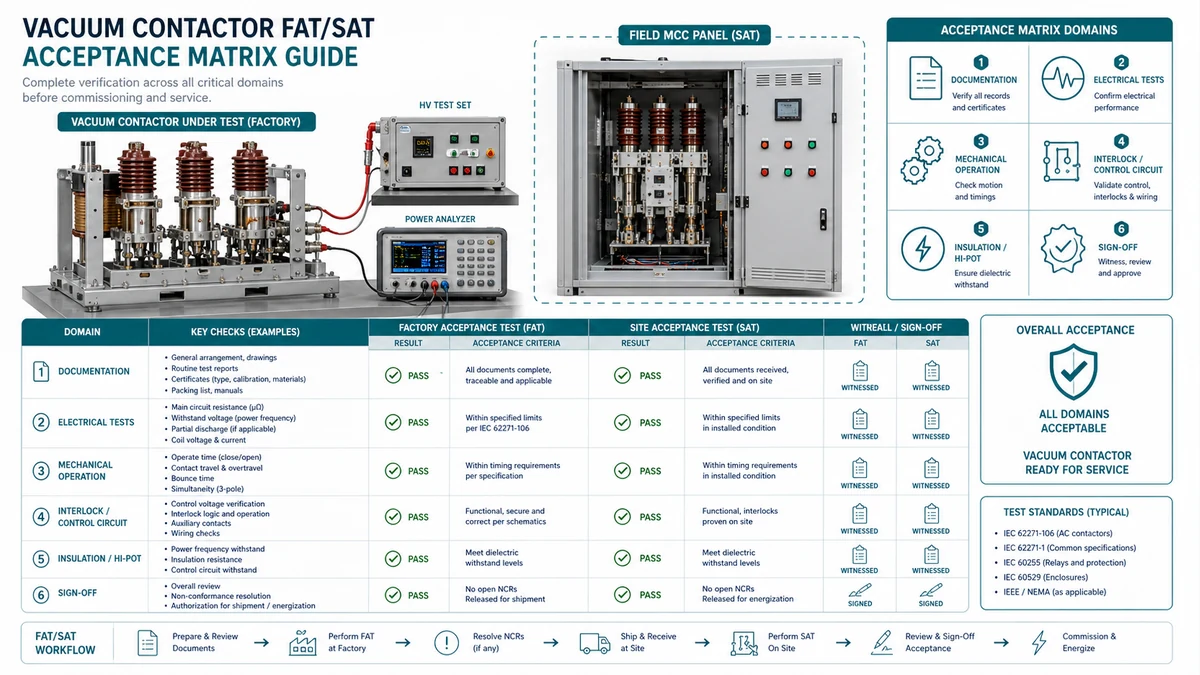
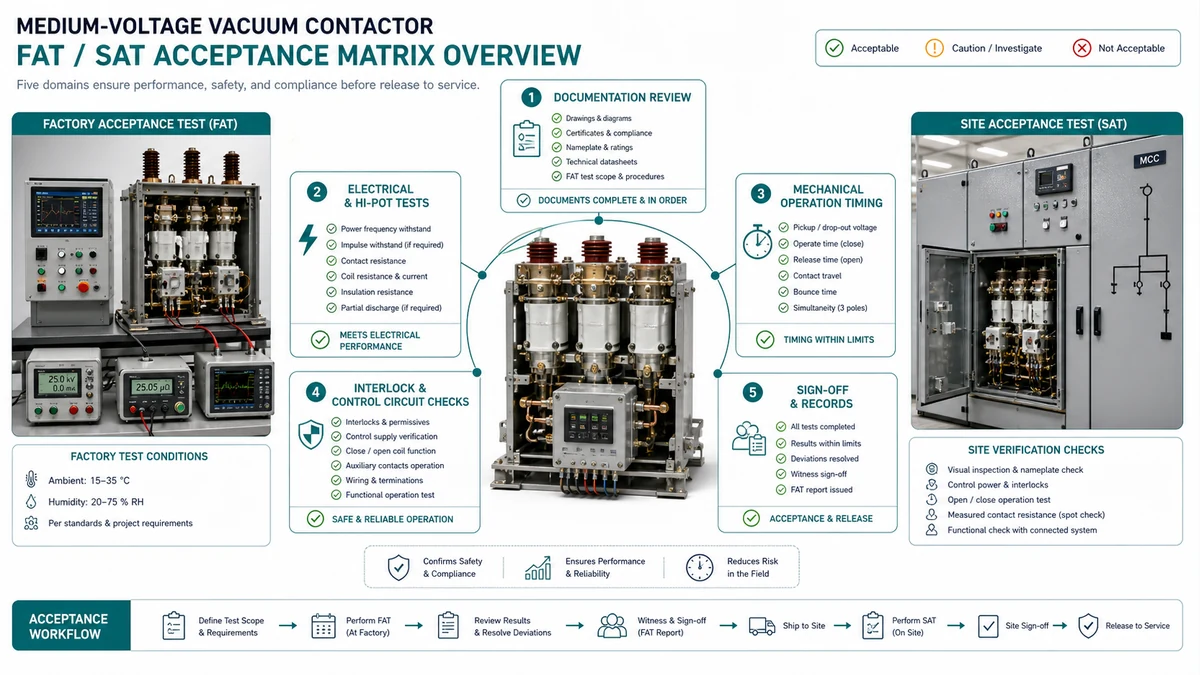
Матрица приемочных испытаний вакуумного контактора (FAT/SAT) представляет собой структурированный документ, составленный в виде списка, в котором построчно фиксируются все проверки, проводимые в отношении вакуумного контактора — сначала на предприятии изготовителя (заводские приемочные испытания), а затем на месте установки (приемочные испытания на объекте) — с указанием конкретных пороговых значений для признания результатов «пройден» или «не пройден», ответственной стороны и уполномоченного лица, утверждающего каждый пункт.
В данном руководстве рассказывается, что должно быть включено в матрицу, как оценивать предложения поставщиков и что должно входить в полный пакет документов по передаче проекта — от технического задания до окончательного утверждения.
| Симптом | Первое испытание | Вероятная первопричина | Следующее действие |
|---|---|---|---|
| Сопротивление изоляции ниже 100 МОм при приемочных испытаниях (FAT) | Повторить испытание после 30-минутной сушки при температуре 40 °C | Попадание влаги или загрязнение размыкателя | Проверить состояние уплотнений и целостность корпуса; заменить прерыватель, если инфракрасный сигнал не восстанавливается |
| Всплеск тока утечки при испытании высоким напряжением | Снизьте напряжение; постепенно восстановите его | Трещина в вакуумном прерывателе или недостаточная длинна пути утечки | Замените прерыватель; не проводите повторное тестирование до устранения первопричины |
| Сопротивление одного полюса в 2–5 раз выше, чем у остальных | Проверить усилие прижимной пружины с помощью калибра «гоу/но-гоу» | Неравномерный износ от контакта, несоосность или загрязненная поверхность | Разборка, осмотр контактных поверхностей, повторное тестирование |
| Контактор не замыкается при номинальном напряжении катушки 85% | Измеряйте напряжение на клеммах катушки, а не на входе панели питания | Недостаточный диаметр управляющего кабеля приводит к падению напряжения | Замените управляющий кабель на кабель указанного сечения; проведите повторные измерения |
| Асимметрия времени работы между полюсами > 3 мс | Проверить выравнивание механизма с помощью инструментов производителя | Механическая поломка или изношенный шарнир | Перенастроить механизм; повторно проверить синхронизацию |
| Слышимый повторный удар после прерывания загрузки на станции SAT | Проверка герметичности вакуумной системы с помощью высоковольтного испытания на открытых контактах | Снижение уровня вакуума в прерывателе | Замените прерыватель; не включайте питание |
| Температура на выводах фазы B на 20+ градусов Цельсия выше, чем на фазах A и C | Микроомметр на выводе фазы B | Соединение с недостаточным моментом затяжки или выполненное некорректно | Затяните болты с усилием, указанным в технических характеристиках; повторите термографическое сканирование после 30 минут работы |
В самом точном смысле матрица приемки представляет собой таблицу, состоящую из четырёх столбцов: конкретный тест или элемент документа, критерий приемки, взятый из стандартов IEC 62271-106 или ANSI/IEEE C37.66 либо из проектной спецификации, фактический результат измерения (не флажок) и подпись инспектора или инженера по вводу в эксплуатацию с указанием даты.
Отсутствие документов — наиболее частая причина задержки или аннулирования сессий FAT. В приведенной ниже таблице для каждого обязательного документа указаны: лицо, ответственное за его предоставление; этап, на котором он должен быть представлен; а также последствия его отсутствия.
| Документ | Владелец | Требуется в | Риск в случае пропажи |
|---|---|---|---|
| Утвержденные однолинейные и принципиальные чертежи | Поставщик | Запуск FAT | Не удается проверить соответствие проводки проектным требованиям |
| Технические характеристики вакуумного контактора (номинальное напряжение, ток, BIL, класс долговечности) | Поставщик | Запуск FAT | Отсутствует базовое значение для предельных значений электрических испытаний |
| Спецификация с номерами деталей и версией | Поставщик | Запуск FAT | Не удается подтвердить, что были установлены правильные компоненты |
| Сертификаты типовых испытаний (IEC 62271-106 или эквивалентные) | Поставщик | Запуск FAT | Нет никаких доказательств того, что концепция «дизайна» когда-либо была подтверждена |
| Сертификаты калибровки для всех испытательных приборов | Покупатель / Испытательная лаборатория | Запуск FAT | Результаты испытаний не принимаются без отслеживаемой калибровки |
| Процедура заводских испытаний с пределами приемлемости | Поставщик | Запуск FAT | Критерии «зачёт/незачёт» не согласованы; вероятны споры |
| Исследование по согласованию теплоизоляции | Заказчик / Инженер | Запуск FAT | Невозможно подтвердить, что выбор BIL и пропускных способностей соответствует условиям объекта |
| Технические требования к объекту / Техническое приложение к заказу на поставку | Покупатель | Запуск FAT | Поставщик может проводить испытания в соответствии с общим стандартом, а не с требованиями проекта |
| Технические условия упаковки и отгрузки | Поставщик | FAT end | Необходимо убедиться, что контактор выдержал транспортировку до проведения SAT |
| Данные обследования объекта (высота над уровнем моря, температура окружающей среды, влажность, степень загрязнения) | Покупатель | Начало экзамена SAT | Невозможно применить коэффициенты понижения номинальной мощности или подтвердить класс установки |
| Руководство по установке и вводу в эксплуатацию | Поставщик | Начало экзамена SAT | Отсутствуют указания на значения крутящего момента, зазоры или проверку блокировок |
| Протокол проверки транспортировки и хранения | Заказчик / Логистика | Начало экзамена SAT | Нет данных о состоянии пациента в период между выездом бригады скорой помощи и прибытием на место |
| Чертежи фактического исполнения (с поправками, внесенными после приемочных испытаний) | Поставщик | Начало экзамена SAT | При проверке проводки SAT используются чертежи версии до FAT, а не фактическая аппаратная конфигурация |
| Заключительный отчет по проекту FAT | Покупатель + Поставщик | Начало экзамена SAT | Процедура SAT не может быть запущена на оборудовании, для которого отсутствует утвержденный отчет о приемочных испытаниях (FAT) |
Каждое измерение, выполненное в ходе FAT, служит отправной точкой для сравнения в ходе SAT и ориентиром для будущего технического обслуживания.
Высоковольтное испытание на диэлектрическую прочность
| Номинальное напряжение (кВ) | Уровень высоковольтного испытания переменного тока (кВ, среднеквадратичное значение, 1 мин) | Уровень высоковольтного испытания постоянного тока (кВ) |
|---|---|---|
| <= 3,6 | 10 | 14 |
| 7.2 | 20 | 28 |
| 12 | 28 | 40 |
| 17.5 | 38 | 54 |
Проверка герметичности в вакууме
| Номинальные параметры контактора | Типичное допустимое сопротивление контакта |
|---|---|
| До 400 А | <= 100 микроом на полюс |
| 400 А – 800 А | <= 60 микроом на полюс |
| > 800 А | Согласно техническому паспорту производителя |
| Параметр | Типичный допустимый диапазон |
|---|---|
| Межконтактный зазор (класс 12 кВ) | 8–12 мм на один столб |
| Вытирание контактов | 2–4 мм на один столб |
| Изменение зазора между полюсами | <= 1 мм |
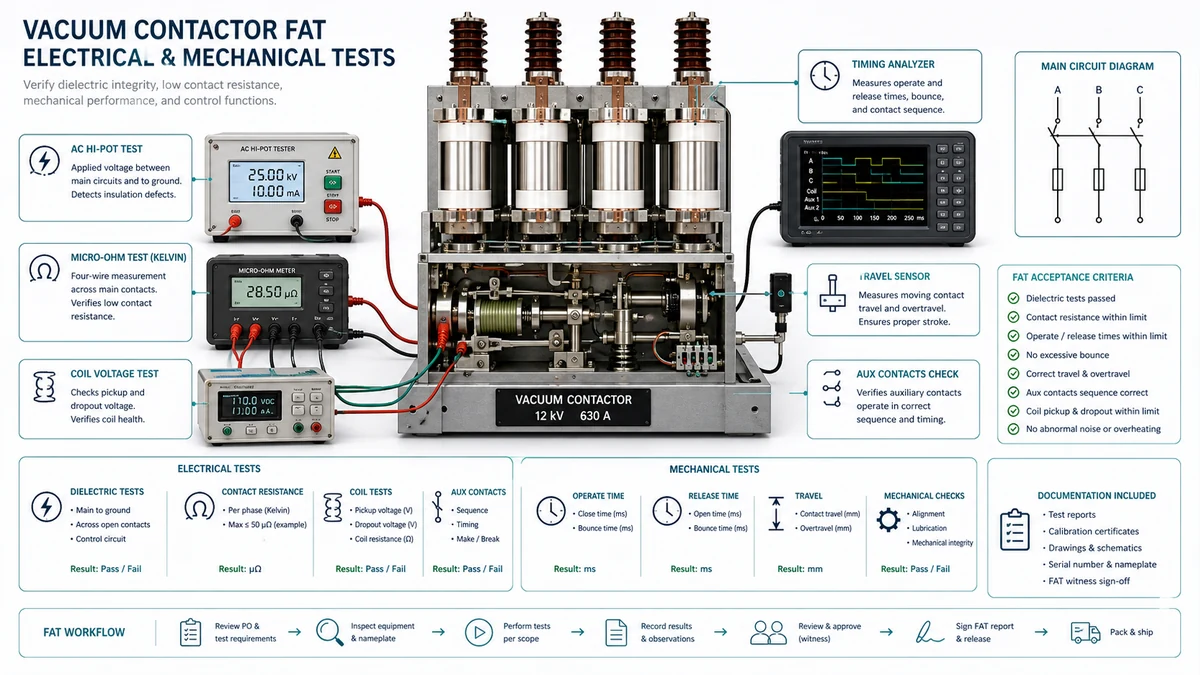
| Тест | Стандартный справочник | Критерий прохождения | Действия в случае сбоя |
|---|---|---|---|
| Высоковольтовая диэлектрическая прочность | МЭК 62271-106 | Неисправностей нет; утечка < предельного значения | Заменить прерыватель; проверить изоляцию |
| Вакуумная целостность | IEC 62271-106 / технические характеристики производителя | Отсутствие разрыва; давление < 10⁻³ Па | Перед отправкой заменить прерыватель |
| Контактное сопротивление | МЭК 62271-1 | В пределах допустимого; столбы расположены на расстоянии 10% друг от друга | Проверить контакты; проверить усилие пружины |
| Сопротивление изоляции | IEC 60060-1 | >= 1 000 МОм при напряжении 1 кВ | Проверить наличие влаги или загрязнений |
| Напряжение при включении/выключении катушки | Технические характеристики производителя | Закрытие на уровне 85%; открытие на уровне <= 75% (номинальное значение) | Отрегулируйте или замените катушку в сборе |
| Велоспорт на выносливость | МЭК 62271-106 | Ни одного отказа за 50–100 циклов | Определить точку соединения; провести повторное тестирование |
| Время работы | Технические характеристики производителя | В пределах +/-15% от базового уровня; асимметрия полюса <= 3 мс | Механизм перенастройки |
| Контактная поверхность и зазор | Технические характеристики производителя | В пределах допусков на размеры | Отрегулировать механизм; повторно измерить |
| Инструмент / Источник | Цель | Справка о приемке |
|---|---|---|
| Микроомметр постоянного тока (с током ввода ≥ 100 А) | Измерение контактного сопротивления | Технические характеристики производителя; IEC 62271-1 |
| Мегаомметр на 1 кВ / 2,5 кВ | Сопротивление изоляции | IEC 60060-1; техническое задание проекта |
| Комплект для испытаний высоким напряжением переменного тока (откалиброванный) | Диэлектрическая прочность | Таблицы напряжений по стандарту IEC 62271-106 |
| Анализатор фаз газораспределения | Измерение времени закрытия и открытия | Технические характеристики производителя: отклонение от базового значения FAT составляет +/-15% |
| Калиброванный динамометрический ключ | Момент затяжки соединений терминалов и шин | Руководство по установке от производителя |
| Щуп / контрольные приспособления типа «гоу/но-гоу» от производителя | Контактный зазор и очистка | Технические характеристики производителя |
| Инфракрасный термометр / тепловизионная камера | Повышение температуры при прекращении испытания SAT под нагрузкой | IEC 60529 / проектные тепловые пределы |
| Анализатор качества электроэнергии или осциллограф | Регистрация пускового тока при первом включении нагрузки | Исследование по координации мер защиты проекта |
| Комплект для проверки реле | Ввод сигнала отключения с сквозной защитой | График настроек реле проекта |
| Руководство по установке и вводу в эксплуатацию для OEM-производителей | Значения крутящего момента, зазоры, последовательности блокировки | Документация производителя |
| Техническое задание проекта / Техническое приложение к заказу на поставку | Пороговые значения приемлемости для конкретных объектов | Документ, выданный покупателем |
| МЭК 62271-106 | Уровни и процедуры тестирования FAT/SAT | МЭК (текущее издание) |
| ANSI/IEEE C37.66 | Требования к вакуумным контакторам (проекты в Северной Америке) | IEEE (текущее издание) |
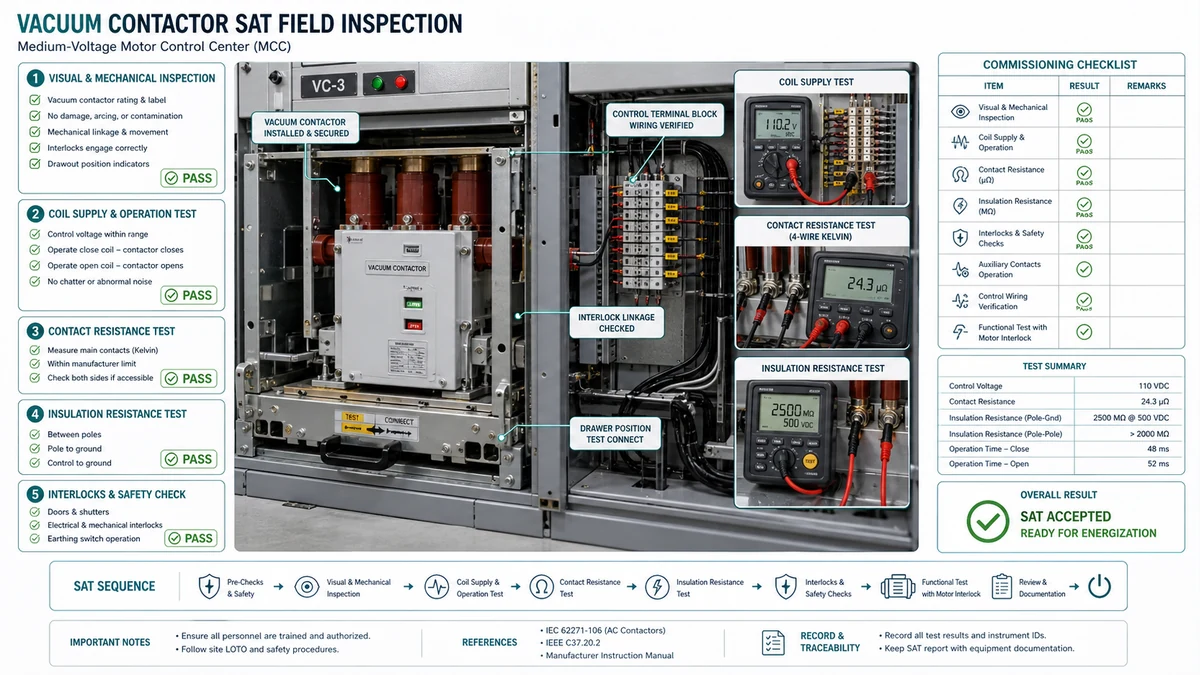
В ходе SAT подтверждается, что вакуумный контактор работает надлежащим образом в реальных условиях эксплуатации, что позволяет проверить правильность интеграции: прокладку кабелей, уровни управляющего напряжения, согласованность с предшествующими средствами защиты, тепловые характеристики корпуса и конкретные характеристики нагрузки.
Этап 1 — Проверки перед подачей напряжения (в обесточенном состоянии, с блокировкой)
Этап 2 — Проверка управляющей мощности и функциональная проверка
Оцените предложения каждого поставщика по приведенным ниже критериям. Начисляйте баллы только в том случае, если к предложению приложены подтверждающие документы — протоколы испытаний, сертификаты калибровки, акты приемки.
| Категория оценки | Максимальное количество баллов | Что позволяет получить максимальный балл | Распространенный недостаток |
|---|---|---|---|
| Испытания диэлектрических свойств и изоляции | 20 | Высоковольтное испытание при номинальном напряжении плюс импульс BIL, регистрация индивидуальных серийных номеров, указание пороговых значений для «прошел/не прошел» | Высоковольтное испытание проводилось только на выборочной партии; данных по отдельным единицам нет |
| Измерение зазора и хода | 15 | Разница измерена с помощью откалиброванного измерительного прибора, построена кривая хода, установлены минимальные и максимальные пределы в соответствии с техническими требованиями | Отклонение указано как “в пределах допуска” без указания числового значения |
| Проверка целостности вакуума | 15 | Выдерживаемость высокого напряжения или напряжения промышленной частоты на открытых контактах в соответствии с IEC 62271-106; дата получения результата для каждого устройства | Целостность вакуума предполагается на основании заводского кода даты; проверка не проводилась |
| Напряжение срабатывания/сброса катушки | 10 | Испытания проводились при номинальном управляющем напряжении 85% и 110% при фактической температуре окружающей среды на объекте | Испытания проводились исключительно при номинальном напряжении в лабораторных условиях |
| Пример механической выносливости | 10 | Результаты циклического подсчёта зафиксированы с указанием минимального порогового значения; усилие пружины проверено по итогам испытания | Данные о выносливости приведены исключительно из протокола типовых испытаний; они не относятся к серийной партии |
| Регистрация условий окружающей среды | 10 | Температура окружающей среды, влажность, высота над уровнем моря и вибрация, зарегистрированные во время проведения каждого испытания SAT | В формах SAT отсутствуют поля для ввода данных об окружающей среде |
| Прослеживаемость калибровки | 10 | Все приборы прослеживаются до национального эталона; сроки следующей калибровки указаны в сертификатах | Наклейки с данными калибровки имеются, но сроки их действия не сверены с датой проведения испытаний |
| Полнота цепочки утверждений | 10 | Подписи производителя, независимого инспектора и представителя заказчика на каждом протоколе испытаний | Бланк согласования с заказчиком отсутствует или был получен после включения питания |
| Работа с несоответствиями | 5 | Результаты, выходящие за пределы допуска, зафиксированные с указанием дальнейших действий: доработка, повторное испытание или приемка с отклонением | События NC, отсутствующие в записях (что статистически маловероятно для больших порядков) |
| Контроль за пересмотром и внесением изменений | 5 | Указаны номер версии Matrix, история изменений и применимость к конкретному заказу на поставку | Общий шаблон без идентификационных данных, относящихся к конкретному проекту |
| Всего | 110 |
Перевод:
– 95–110 баллов: матрица в основном заполнена. Можно приступать к заключению договора с небольшими уточнениями.
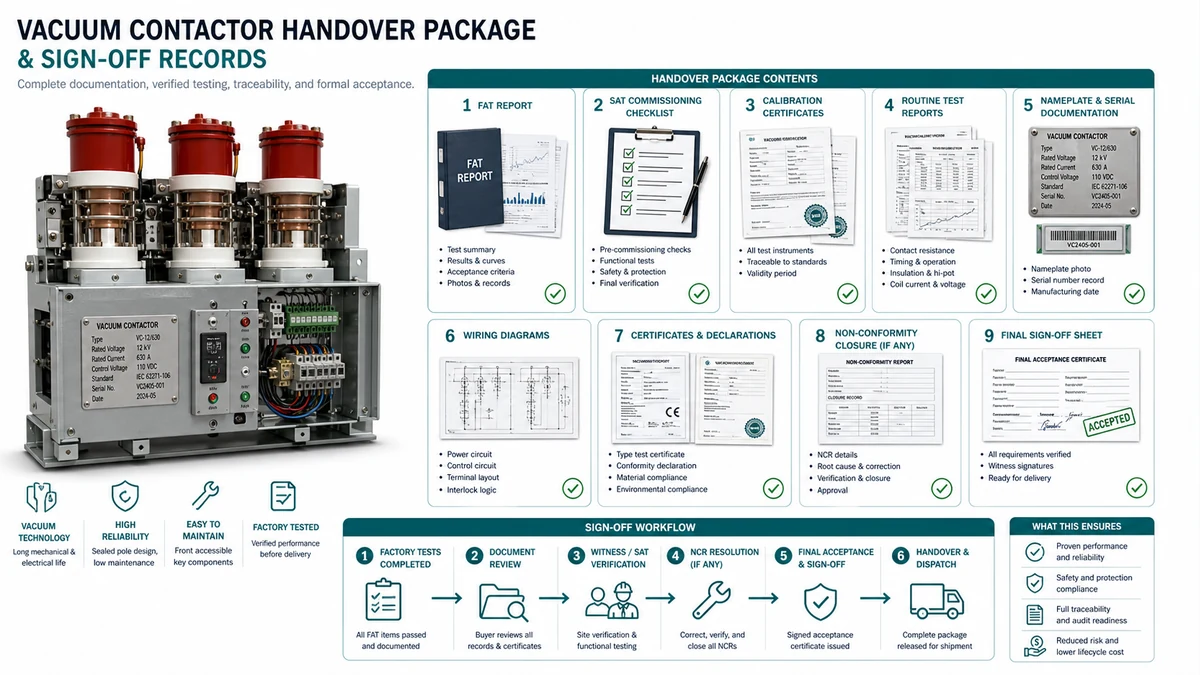
Окончательная приемка превращает протестированный контактор в введенный в эксплуатацию объект. Без четко определённого протокола приемки данные испытаний теряют свою ценность с точки зрения прослеживаемости.
| Уровень свидетеля | Определение | Типичная роль |
|---|---|---|
| W — Свидетель | Точка остановки; работа приостанавливается до тех пор, пока уполномоченный свидетель не поставит свою подпись | Инженер заказчика, независимый инспектор |
| R — Обзор | Документ рассмотрен и одобрен перед переходом к следующему этапу | Руководитель инженерного отдела, руководитель отдела контроля качества |
| I — Информация | Копия подана; отсрочка не требуется | Группа по вводу объекта в эксплуатацию |
| Документ | Обязательное поле | Полномочия на утверждение |
|---|---|---|
| Отчет по тесту FAT | Все результаты заводских испытаний, сертификаты калибровки приборов, журнал NCR с указанием принятых мер | Специалист по контролю качества производителя + инженер-наблюдатель |
| Отчет о вводе в эксплуатацию системы SAT | Результаты испытаний на объекте сопоставлены с исходными данными FAT и схемами электромонтажа в состоянии после установки | Руководитель ввода объекта в эксплуатацию + инженер заказчика |
| Журнал отчетов о несоответствии | Каждое выявленное отклонение, принятые корректирующие меры, результаты повторного тестирования, подпись о закрытии | Менеджер по контролю качества |
| Реестр калибровки приборов | Номер сертификата, срок действия и стандарт прослеживаемости для каждого используемого прибора | Руководитель экзаменационной комиссии |
| Запись базовых значений сопротивления изоляции | Значения ИК-показателей «фаза-фаза» и «фаза-земля» на момент передачи объекта для анализа динамики состояния в целях будущего технического обслуживания | Руководитель по вводу в эксплуатацию |
| Запись базовых значений контактного сопротивления | Значения сопротивления на каждой фазе при переключении | Руководитель по вводу в эксплуатацию |
| Отчет о времени работы | Измерение времени закрытия и открытия при передаче | Руководитель по вводу в эксплуатацию |
| Комплект чертежей фактического состояния | Окончательная однолинейная схема, схема управления, перечень клемм | Руководитель инженерного отдела |
| Форма активации гарантии | Серийные номера, дата заводских испытаний, дата завершения SAT, начало гарантийного срока | Менеджер по контрактам собственника |
Перед оформлением заказа на закупку или приглашением поставщика к участию в тендере воспользуйтесь данным контрольным списком.
Используйте эти ссылки XBRELE, чтобы связать решение, принятое на месте, с правильным процессом производства, испытаний и закупок: Страница продукта XBRELE, Ассортимент вакуумных выключателей XBRELE, Руководство по рейтингам VCB, Контрольный список для сдачи экзамена VCB FAT/SAT, серия вакуумных контакторов XBRELE.
Для внешнего контекста метода сравните процедуру сайта с публичной Страница стандартов IEEE C37.09 и затем применить точное руководство производителя и спецификацию проекта для поставляемого оборудования.
Пример из практики: во время сервисной проверки одна фаза измерялась вне базовой линии ввода в эксплуатацию, в то время как две другие фазы оставались стабильными. Команда повторила измерение с проверенными выводами, проверила время и ход контактов и использовала измеренное расхождение, чтобы отделить проблему контактного давления от общей проблемы очистки поверхности.
В ходе заводских приемочных испытаний (FAT) проверяется соответствие контактора проектным и производственным требованиям до его отгрузки с завода поставщика. В ходе приемочных испытаний на объекте (SAT) проверяется, что данное устройство поступило без повреждений, было правильно установлено и работает в пределах допустимых отклонений в реальных условиях эксплуатации — при заданном напряжении питания, температуре окружающей среды, высоте над уровнем моря и подключенной нагрузке.
Стандарт IEC 62271-106 является основным стандартом для контакторов переменного тока, рассчитанных на напряжение свыше 1 кВ. В нём определены требования к рутинным испытаниям (проводимым для каждого изделия), требования к типовым испытаниям (проводимым на образце конструкции), а также уровни испытаний на диэлектрическую прочность, герметичность вакуума и механическую стойкость.
Стандартный метод испытаний на месте заключается в испытании на выдерживаемое напряжение сетевой частоты, приложенное к открытому зазорному промежутку каждого прерывателя. Если зазор выдерживает заданное напряжение без пробоя, это означает, что вакуум является достаточным.
Для контакторов с номинальным током до 400 А типичное допустимое значение составляет <= 100 микроом на полюс, измеренное с помощью микроомметра постоянного тока с током входного сигнала не менее 100 А. Для номинальных значений от 400 А до 800 А обычным пороговым значением является <= 60 микроом на полюс.
Нет. Показатели FAT и SAT относятся к разным категориям риска.
Храните документацию в течение всего срока службы оборудования плюс период, предусмотренный действующими нормативными актами. Для распределительных устройств среднего напряжения обычно требуется хранение документов не менее 10 лет, однако в некоторых юрисдикциях и отраслях (энергетика, атомная энергетика, нефтехимия) предусмотрены более длительные сроки хранения.
Рассматривайте это как проблему системы качества, а не как положительный результат. Отсутствие несоответствий более чем в 10 единицах продукции статистически маловероятно, если матрица применялась строго.