Need Full Specifications?
Download our 2025 Product Catalog for detailed drawings and technical parameters of all switchgear components.
Get Catalog
Download our 2025 Product Catalog for detailed drawings and technical parameters of all switchgear components.
Get Catalog Download our 2025 Product Catalog for detailed drawings and technical parameters of all switchgear components.
Get Catalog
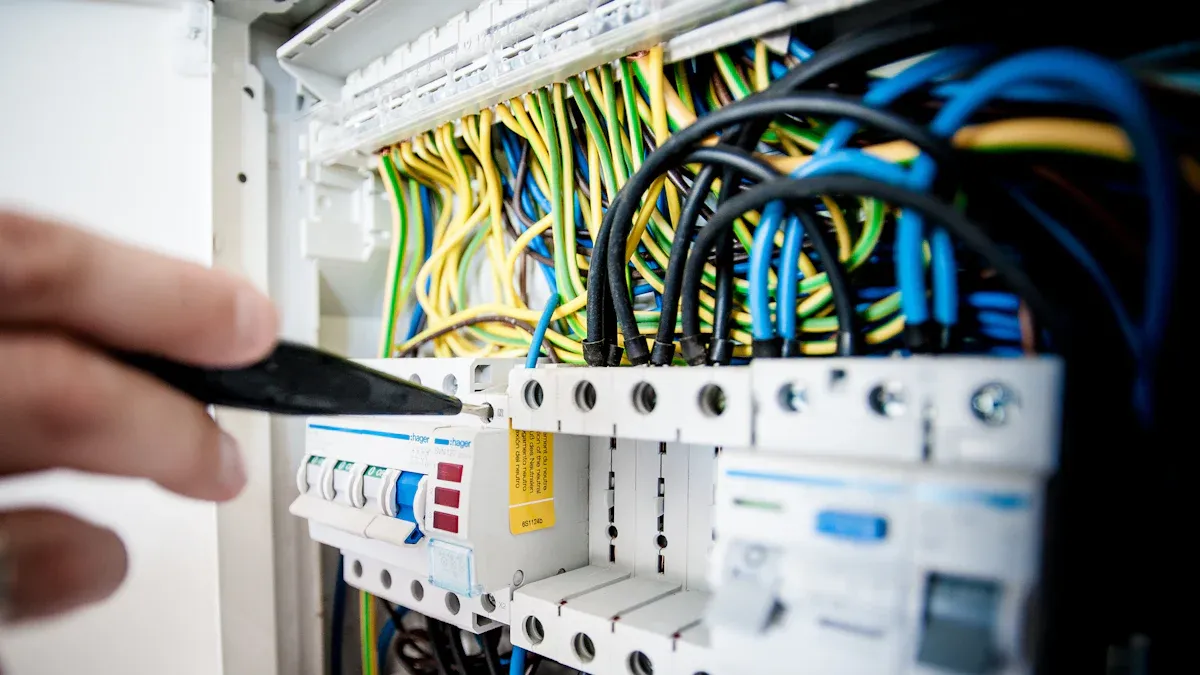
The difference between vcb and contactor lies in protection and switching: VCBs interrupt faults, while contactors handle frequent load switching.
You often need to understand the difference between vcb and contactor to make safe and efficient choices in electrical systems. A vacuum circuit breaker (VCB) interrupts high-voltage circuits and quickly extinguishes electrical arcs, which protects equipment and keeps power quality stable. A contactor controls electrical circuits and allows for frequent switching, making it reliable for everyday operations. Choosing the right device helps you avoid resource waste, lowers costs, and ensures easy maintenance.
VCBs improve safety by reducing equipment wear and extending lifespan.
Contactors support efficient control and safe operation in electrical panels.
The global market for these devices is growing, especially in Asia-Pacific, due to rapid industrialization.
VCBs protect electrical systems by interrupting fault currents, ensuring safety during overloads.
Contactors control electrical circuits, allowing for frequent on-off switching in automation systems.
Choose a VCB for high voltage applications and critical fault protection; use a contactor for regular load switching.
VCBs have a high interrupting capacity, making them suitable for medium to high voltage systems.
Contactors require more maintenance due to frequent operations, while VCBs have longer service intervals.
Understanding the differences helps you select the right device, improving safety and efficiency in your electrical system.
Always match the device to your system’s voltage and switching needs for optimal performance.
Regular maintenance is crucial; VCBs need checks every 1-3 years, while contactors require more frequent inspections.
A vacuum circuit breaker, or VCB, is a device you use to protect electrical systems from faults. It interrupts the flow of electricity when it detects problems like overloads or short circuits. VCBs use a vacuum to extinguish the arc that forms when the circuit breaks. This technology keeps your equipment safe and helps maintain stable power.
You rely on a VCB to stop the flow of electricity during dangerous situations. Its main function is to protect your system by quickly breaking the circuit when it senses a fault. This action prevents damage to your equipment and reduces the risk of fire or other hazards.
A VCB acts as a shield for your electrical network. It isolates faulty sections and stops the spread of electrical faults. You can trust a VCB to handle medium to high voltage levels, usually from 1 kV up to 38 kV. This makes it a key part of power distribution systems.
A contactor is a device you use to control the flow of electricity in a circuit. It works by opening and closing contacts with the help of an electromagnet. When you energize the coil, the contacts close, and electricity flows to the load, such as a motor or lighting system. When you de-energize the coil, the contacts open, stopping the current.
You use a contactor to switch electrical circuits on and off. This device is common in automation systems and industrial settings. It allows you to control large electrical loads safely and efficiently, especially when you need frequent switching.
A contactor acts as an actuator in your control system. It responds to signals from control devices and manages the flow of power to machines or equipment. This function keeps you safe by preventing direct contact with high-voltage circuits.
You need to understand the difference between vcb and contactor to choose the right device for your application. Here are the main distinctions:
A VCB protects your system by interrupting fault currents, while a contactor controls the regular switching of electrical loads.
Both devices may use vacuum technology, but their purposes differ. You use a VCB for safety and fault isolation, and a contactor for operational control.
VCBs handle medium to high voltages and operate during critical events. Contactors work with low to medium voltages and perform frequent switching.
Tip: Always match the device to your system’s voltage and switching needs to ensure safety and reliability.
Below is a table that highlights the operational roles and voltage ranges:
Device Type | Typical Role | Voltage Range |
|---|---|---|
Vacuum Circuit Breaker | Protection and fault isolation | Medium-voltage (1 kV to 38 kV) |
Vacuum Contactor | Switching and controlling power | Various industrial applications |
You will find VCBs in power distribution and fault protection, while contactors are common in motor control, building automation, and manufacturing.
The difference between vcb and contactor also appears in their arc interruption technology. VCBs use a vacuum interrupter for superior arc quenching, making them suitable for fault interruption. Contactors are not designed for fault interruption but excel in frequent switching with a simpler design.
You use VCBs for occasional, critical operations.
You use contactors for frequent on-off cycles in industrial and automation systems.
Understanding the difference between vcb and contactor helps you make informed decisions, protect your equipment, and keep your operations running smoothly.
You need to consider switching frequency when you choose between a VCB and a contactor. Switching frequency means how often you can open and close the device without causing damage. You use a contactor for applications that require frequent switching. For example, you might turn motors or lights on and off many times each day. Contactors can handle thousands of operations per hour. This makes them ideal for automation and control systems.
A VCB works differently. You use a VCB for occasional switching, usually during faults or maintenance. VCBs cannot handle frequent operations. If you try to use a VCB for regular switching, you will wear out the contacts quickly. You should use a VCB only when you need to interrupt high voltage or protect your system from faults.
Tip: Choose a contactor for frequent switching and a VCB for rare, critical interruptions.
Interrupting capacity tells you how much fault current a device can safely break. You need to know this value to protect your equipment. A VCB has a high interrupting capacity. You can use it to break large fault currents in medium-voltage systems. This feature makes VCBs important for power distribution and safety.
A contactor has a much lower interrupting capacity. You should not use a contactor to break fault currents. If you try, the contactor may fail and cause damage. You use a contactor to switch normal load currents, not to interrupt faults. This is a key difference between vcb and contactor.
Here is a simple table to help you compare:
Device | Interrupting Capacity | Typical Use |
|---|---|---|
VCB | High | Fault interruption |
Contactor | Low | Load switching (no faults) |
When you open a circuit, an electric arc forms between the contacts. You need to control this arc to prevent damage. A VCB uses a vacuum interrupter to extinguish the arc quickly. The vacuum removes air, so the arc cannot last long. This makes VCBs very effective at stopping arcs in high-voltage systems.
A contactor also interrupts arcs, but it does not use a vacuum. Most contactors use air or special materials to control the arc. This works well for low and medium voltages. However, contactors cannot handle the strong arcs that happen during faults. You should always use a VCB for arc interruption in critical situations.
Remember: VCBs excel at arc interruption during faults, while contactors handle everyday switching with less arc energy.
You may notice a unique behavior called “current chop” when you use a vacuum circuit breaker (VCB). Current chop happens when the breaker interrupts the current before it naturally reaches zero. This effect is much more common in VCBs than in contactors. The physics of vacuum circuit breakers allow them to break the current in a much smaller space. This means the arc inside the VCB can stop suddenly, even if the current has not reached its natural end.
When you use a VCB, the arc column inside becomes unstable. Factors like vapor pressure and the way electricity moves through the contact material can cause the arc to break early. This early interruption creates high-frequency transients and overvoltages. These sudden voltage spikes can stress your equipment and insulation. You do not see this effect as much with contactors. Contactors do not interrupt current in the same way, so they rarely cause current chop or the related overvoltages.
Vacuum circuit breakers can also interrupt high-frequency current components during events like pre-striking and current chopping. Their special dielectric properties make this possible. You should know that these behaviors can lead to different system responses compared to contactors. If you work with sensitive equipment or long cable runs, you need to consider the risk of overvoltages from current chop.
Note: Current chop is a key reason why you must match your breaker type to your system. Using a VCB in the wrong place can cause unwanted voltage spikes.
Here is a quick comparison:
Feature | VCB (Vacuum Circuit Breaker) | Contactor |
|---|---|---|
Current Chop | Common | Rare |
Overvoltage Risk | Higher | Low |
Arc Interruption | Sudden, at any point | At natural zero |
You control both VCBs and contactors using a control voltage. This voltage energizes the coil or actuator inside the device. When you apply the correct control voltage, the device operates—either opening or closing the contacts.
For VCBs, you usually need a higher control voltage. This is because the mechanism inside must move larger, heavier contacts and handle higher energy. You often see control voltages like 110V DC, 220V DC, or even higher in medium-voltage switchgear.
Contactors use lower control voltages. You might use 24V, 48V, or 110V AC or DC, depending on your control system. This makes contactors easy to integrate into automation panels and control circuits. You can safely operate them with standard control relays or programmable logic controllers (PLCs).
Tip: Always check the required control voltage before installation. Using the wrong voltage can damage the device or cause it to malfunction.
You should select the control voltage based on your system’s design and safety needs. Lower control voltages are safer for personnel and easier to manage in control rooms. Higher voltages may be necessary for heavy-duty switching, especially in VCBs.
You need to protect your electrical system from too much current. Overcurrent can damage equipment and cause fires. A vacuum circuit breaker (VCB) gives you strong overcurrent protection. It can handle both normal load currents and dangerous short circuit currents. You can trust a VCB to interrupt the flow when the current gets too high.
A vacuum contactor works differently. It can switch normal load currents, but it cannot protect against short circuits by itself. You must add extra devices, like fuses or relays, to give full protection when you use a contactor.
Here is a table that shows the main differences:
Feature | Vacuum Circuit Breaker (VCB) | Vacuum Contactor (VC) |
|---|---|---|
Overcurrent Protection | Yes, can handle both load and short circuit currents | Limited, requires additional devices for protection |
Fault Interrupting Capacity | High, designed for fault interruption | Low, not designed for short circuit interruption |
Protection Types | Overload, short circuit, control, interlock | Limited to load current interruption only |
Tip: Choose a VCB if you need full protection from overloads and faults. Use a contactor for simple switching, but always add extra protection.
Short circuits can cause huge currents to flow in your system. You need a device that can handle these dangerous events. A VCB is built for this job. It can interrupt very high fault currents and keep working safely after the event. You will see ratings like Icu (ultimate short-circuit breaking current) and Ics (rated short-circuit breaking current) on VCBs. These ratings tell you how much fault current the breaker can stop without damage.
Contactors do not have these ratings. They cannot break short circuit currents. They can only carry a short circuit current for a brief time, but they will not interrupt it. You must use a VCB or fuse to break the fault.
Here is a comparison:
Feature | Vacuum Circuit Breakers (VCBs) | Contactors (LBS) |
|---|---|---|
Icu (Ultimate Short-Circuit Breaking Current) | Yes | N/A |
Ics (Rated Short-Circuit Breaking Current) | Yes | N/A |
Icm (Making Capacity) | Yes | N/A |
Icw (Short-Time Withstand Current) | N/A | Yes |
Ipk (Peak Withstand Current) | N/A | Yes |
Note: Always use a VCB for short circuit protection. A contactor alone cannot keep your system safe from faults.
You want your equipment to last a long time. Mechanical endurance tells you how many times you can operate a device before it wears out. Most distribution-class VCBs can handle 10,000 to 20,000 operations. Some special VCBs can last for 100,000 operations or more. This means you can trust a VCB for many years if you use it for the right purpose.
Contactors usually have even higher endurance. They are made for frequent switching and can operate hundreds of thousands or even millions of times. This makes them perfect for jobs where you need to turn equipment on and off many times each day.
VCBs: 10,000 to 20,000 operations (standard), up to 100,000 (special types)
Contactors: Often hundreds of thousands to millions of operations
If you need frequent switching, choose a contactor. For occasional, critical operations, a VCB gives you long life and strong protection.
You need to think about maintenance when you choose between a vacuum circuit breaker (VCB) and a contactor. Good maintenance keeps your electrical system safe and reliable. Each device has different needs, so you must plan your schedule and resources.
A VCB has a sturdy design. You use it for critical protection, but it does not require frequent maintenance. The vacuum interrupter inside a VCB does not wear out quickly. You can expect long service intervals, sometimes several years between inspections. You should check the mechanical parts, clean the contacts, and test the insulation. Most manufacturers recommend a full inspection every 1 to 3 years. If you use the VCB in harsh environments, you may need to inspect it more often.
A contactor works differently. You use it for frequent switching, so it faces more wear and tear. The contacts inside a contactor can erode or pit after many operations. You should inspect contactors more often, especially in busy industrial settings. You may need to clean or replace the contacts every few months. You also need to check the coil and springs for signs of fatigue.
Tip: Make a maintenance checklist for each device. Regular inspections help you spot problems early and avoid costly downtime.
Here is a table to help you compare the maintenance needs:
Device Type | Maintenance Frequency | Common Tasks | Expected Lifespan |
|---|---|---|---|
Vacuum Circuit Breaker | Low (1-3 years) | Inspect, clean, test, lubricate | 10-20 years or more |
Contactor | High (3-12 months) | Inspect, clean, replace contacts | 5-10 years |
You should keep spare parts on hand for both devices. For VCBs, you may need replacement springs or lubricants. For contactors, you should stock extra contacts and coils. You can reduce downtime if you prepare ahead.
You must follow the manufacturer’s guidelines for maintenance. Each model has special requirements. You should read the manual and train your staff. Good records help you track service dates and spot trends.
Inspect contacts for signs of burning or pitting.
Clean dust and debris from the enclosure.
Test the operation of the coil and springs.
Lubricate moving parts as needed.
If you ignore maintenance, you risk equipment failure and safety hazards. You can prevent most problems with regular care. You save money and keep your system running smoothly.
Note: You should schedule maintenance during planned shutdowns. This keeps your system safe and avoids interruptions.
You make your electrical system safer and more reliable when you pay attention to maintenance needs. You protect your investment and support smooth operations.
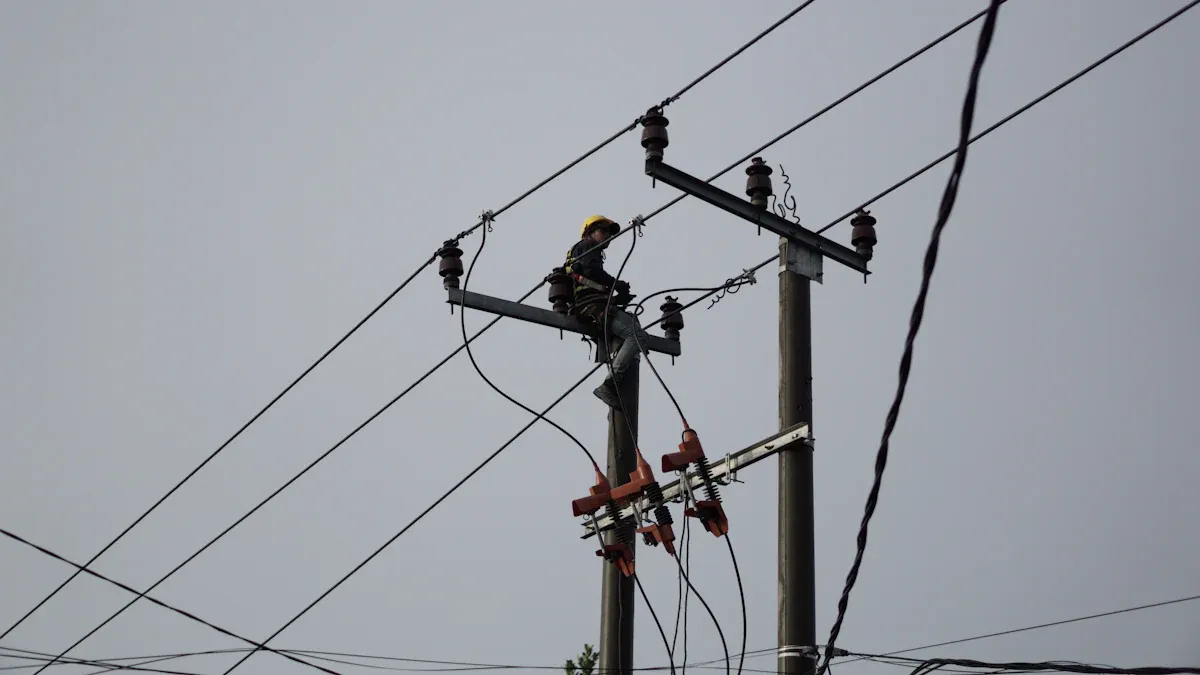
You often see vacuum circuit breakers in power distribution networks. They protect feeders, transformers, and capacitor banks in both urban and rural systems. You rely on VCBs to keep the power flowing safely and to prevent damage during faults. In industrial plants, you use VCBs to protect motors, furnaces, and other heavy electrical equipment. These breakers also play a key role in railway electrification, where they ensure the safe and reliable operation of traction power systems.
Here is a table that shows common application scenarios for VCBs:
Application Scenario | Description |
|---|---|
Power Distribution Networks | Protects feeders, transformers, and capacitor banks in distribution systems |
Industrial Plants | Protects motors, furnaces, and heavy equipment in factories |
Railway Electrification | Ensures reliable operation of traction power systems |
Wind Power Generation | Provides protection and switching in wind turbine systems |
Mining Operations | Handles demanding environments with high safety and reliability |
Utility Substations | Used for line, transformer, and busbar protection in substations |
VCBs give you reliable protection in harsh and high-demand environments.
You use VCBs in high voltage systems because they can interrupt large fault currents quickly. These systems include wind power generation, mining operations, and utility substations. In wind farms, VCBs protect turbines and switch circuits during maintenance. In mining, you trust VCBs for safety and reliability under tough conditions. Utility substations depend on VCBs for protecting lines, transformers, and busbars.
You use contactors most often for motor control. They let you start and stop motors automatically in manufacturing processes. In HVAC systems, contactors manage compressors, blower motors, and fans. You also use them for pumps, conveyor belts, and mixers. This makes contactors essential for automation and industrial control.
Here is a table of typical contactor use cases:
Application Type | Specific Use Cases |
|---|---|
Motor Control | Automated start/stop in manufacturing |
HVAC Systems | Managing compressors, blower motors, and fans |
Heating Equipment | Power for industrial ovens and boilers |
Industrial Lighting | Coordinated control of lighting circuits |
Pumps | Water circulation and chemical dosing |
Compressors | Refrigeration and air compression |
Conveyor Belts | Movement in packaging and assembly lines |
Mixers and Agitators | Food processing and industrial blending |
You can safely separate high-voltage and control circuits with contactors.
You choose contactors when you need frequent switching. They handle automated, repeatable operations, such as scheduled lighting control or running conveyor belts. You can expand your system easily by adding more contactors. This flexibility supports scalable industrial automation.
Motor starter contactors protect motors during startup and operation.
HVAC contactors manage temperature control by switching compressors and fans.
Lighting contactors enable scheduled control of large lighting systems.
You must consider your system’s needs before choosing between a VCB and a contactor. If you need to interrupt fault currents and protect high voltage equipment, you should select a VCB. If you need frequent switching and automation, a contactor is the better choice. Think about the voltage level, switching frequency, and protection requirements. The difference between vcb and contactor becomes clear when you match the device to your application.
Tip: Always review your system’s voltage, current, and control needs before making a final decision.
You need a clear comparison when you choose between a vacuum circuit breaker (VCB) and a contactor. The table below gives you a side-by-side look at the most important features. This helps you see how each device works and what you can expect in your system.
Feature | Vacuum Circuit Breaker (VCB) | Contactor |
|---|---|---|
Main Function | Fault protection and circuit isolation | Frequent switching and load control |
Interrupting Capacity | High (handles large fault currents) | Low (not for fault interruption) |
Arc Management | Minimal arcing, long contact life | More arcing, needs frequent maintenance |
Current Chop | Common, can cause voltage spikes | Rare, low risk of overvoltage |
Arc Interruption | Uses vacuum interrupter, fast arc quenching | Uses air or materials, slower arc control |
Voltage Range | Medium to high (1 kV to 38 kV) | Low to medium (up to 1.1 kV typical) |
Switching Frequency | Low (occasional operation) | High (thousands of cycles per hour) |
Operating Mechanism | Lower force, simple mechanism | Energy-consuming coil |
Overcurrent Protection | Yes, built-in | No, needs extra devices |
Short Circuit Capability | Yes, interrupts short circuits | No, cannot break faults |
Mechanical Endurance | 10,000–100,000 operations | 100,000–1,000,000+ operations |
Maintenance Needs | Low, long intervals | High, frequent checks |
Space Requirement | Compact, saves panel space | Larger footprint |
Contamination Resistance | High, no arc chutes needed | Lower, needs cleaning |
Control Voltage | Higher (110V–220V DC/AC) | Lower (24V–110V AC/ DC) |
Applications | Power distribution, high voltage systems | Motor control, automation, lighting |
You can use this table to match the right device to your needs. Look at the main function, voltage range, and maintenance needs before you decide.
You use a VCB when you need to protect your system from faults and high currents.
You choose a contactor for frequent switching and easy control of motors or lights.
VCBs interrupt arcs quickly and keep your equipment safe from damage.
Contactors handle many on-off cycles but need more maintenance because of arcing.
VCBs can cause voltage spikes due to current chop, so you must check your system for overvoltage risks.
Contactors rarely cause voltage spikes and work well in automation panels.
VCBs save space and resist dust or contamination better than contactors.
You need to add extra protection devices if you use a contactor for load switching.
VCBs last longer with less maintenance, but you should use them only for critical operations.
Contactors give you high mechanical endurance and fit best in systems with frequent switching.
If you want strong protection and low maintenance, pick a VCB. If you need fast, repeated switching, a contactor is your best choice.
When you select between a vacuum circuit breaker (VCB) and a contactor, you need to look at several important factors. Each system has unique needs, so you must match the device to your application. Here are the most critical points to consider:
Reliability: You want a device that works every time. VCBs give you high reliability because of their strong design and low maintenance needs. This is very important in high-voltage systems where outages can cause big problems.
Environmental Friendliness: VCBs use a vacuum instead of gases or oils. This makes them a better choice if you care about the environment. You avoid using harmful greenhouse gases.
Performance Characteristics: VCBs handle high-voltage arcs better than many other breakers. They quench arcs quickly and safely, which protects your equipment.
Rated Current and Voltage: You must check the rated current and voltage. The device should match your system’s load and voltage level.
Breaking Capacity: Make sure the device can safely interrupt the highest fault current your system might face.
Durability and Ease of Use: Choose a device that lasts long and is easy to operate. This reduces your maintenance costs and downtime.
Smart Features: Some devices can connect to automation or IoT systems. If you want remote control or monitoring, look for these features.
Installation Environment: Think about where you will install the device. Dust, humidity, and space can affect your choice.
Brand Reputation: Trusted brands like Siemens, Eaton, Schneider Electric, and Weisho Electric often provide better support and quality.
Tip: Always review your system’s needs and the environment before making a final choice. The right device keeps your system safe and efficient.
You can use expert advice to help you pick the best device for your building or project. The table below shows which type of breaker works best in different environments:
Environment | Best Circuit Breaker Type | Reason for Choice |
|---|---|---|
Dusty/Dirty | Vacuum Circuit Breaker | Sealed design keeps out dust and particles |
Humid/Corrosive | Vacuum Circuit Breaker | No oil or gas, strong resistance to corrosion |
Confined Space | SF6 or Vacuum Circuit Breaker | Compact size, easy to install |
High Safety Need | Vacuum Circuit Breaker | No fire or explosion risk |
You should also follow these steps when choosing between a VCB and a contactor:
Check the rated current and voltage for your system.
Look at the breaking capacity to make sure it can handle faults.
Think about how often you need to switch the circuit. Use a contactor for frequent switching, and a VCB for protection and rare operations.
Consider the environment. Use a VCB in harsh or dirty places.
Pick a device with a good reputation and strong support.
If you need smart features, choose a model that works with your automation system.
🛠️ Note: The right choice depends on your system’s needs, safety goals, and environment. Take your time to compare options and ask experts if you have questions.
You have learned that vacuum circuit breakers (VCBs) protect your system during faults, while contactors handle frequent switching. VCBs stop dangerous currents and reduce fire risks. Contactors give you reliable control and long service life. Choosing the right device keeps your electrical system safe and efficient.
VCBs interrupt faults and prevent hazards.
Contactors switch loads and support automation.
For best results, review your system’s needs or consult an expert before making your final choice.
You use a VCB for fault protection in medium to high voltage systems. You use a contactor for frequent switching of electrical loads. VCBs interrupt faults. Contactors control loads.
You should not use a contactor in place of a VCB. Contactors cannot interrupt fault currents. Only VCBs provide reliable protection during short circuits or overloads.
You install VCBs in power distribution panels, substations, and high-voltage equipment. You place contactors in motor control centers, automation panels, and lighting circuits.
You check VCBs every 1 to 3 years. You inspect contactors more often, usually every few months. Contactors need more frequent maintenance because they switch more often.
VCBs can cause voltage spikes due to current chop. You should check your system for overvoltage risks. Contactors rarely cause voltage spikes.
Contactors last longer in frequent switching applications. VCBs last longer when used for occasional, critical operations. You should match the device to your system’s needs.
You can control both VCBs and contactors remotely. Use control circuits, relays, or automation systems for remote operation.
Tip: Always follow the manufacturer’s instructions for installation and maintena