Request a Quote for High-Voltage Components&Equipment
Tell us your requirements — rated voltage, model, quantity, and destination — and our XBR Electric team will prepare a detailed quotation within 24 hours.
Introduction: The “Invisible” Spec That Determines Reliability
In our decade of experience at XBRELE, we’ve seen perfectly good switchgear fail for one simple reason: the wrong standard in the wrong place.
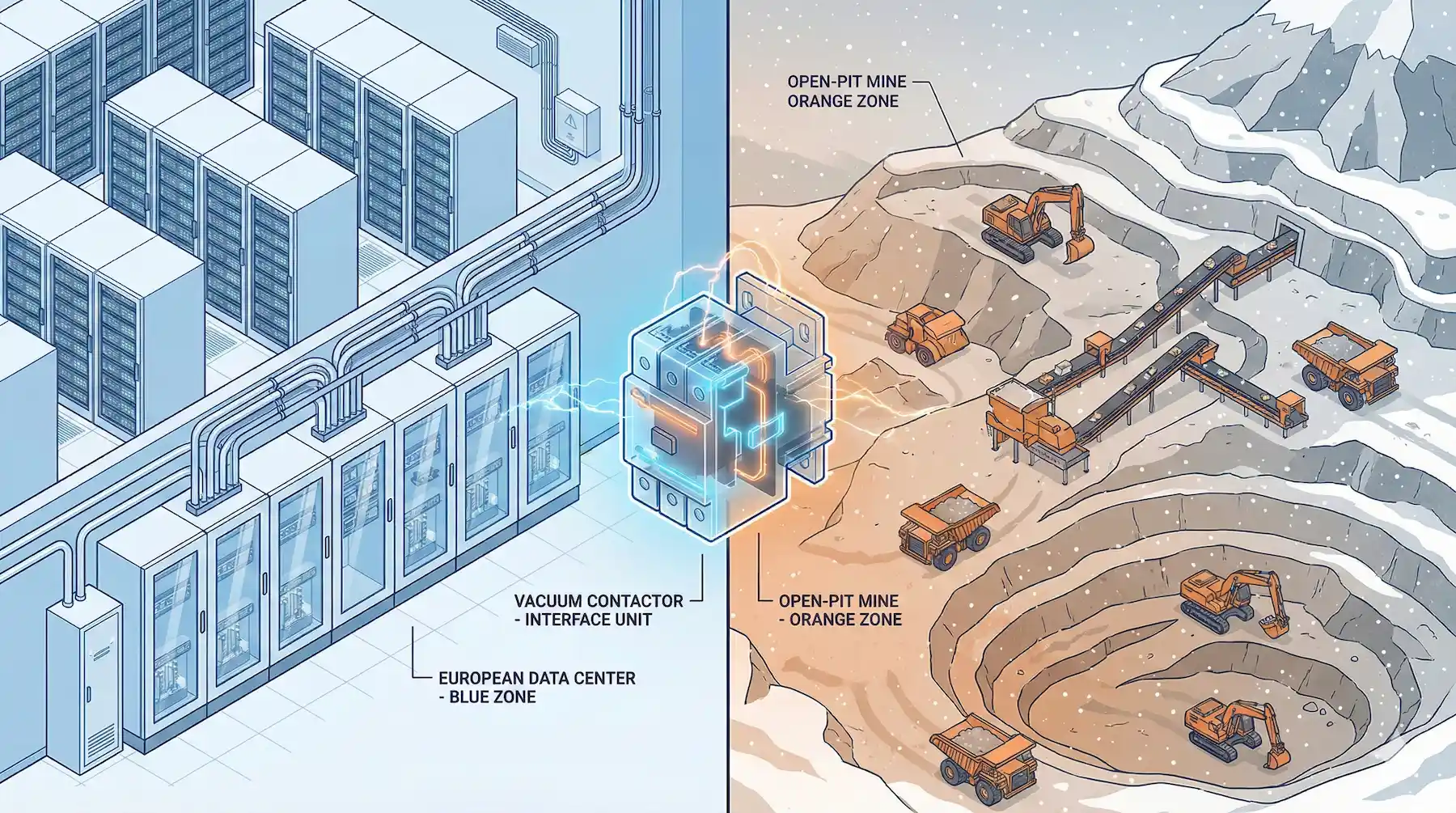
It’s not just “fine print”—it’s physics. We often tell our clients: Don’t bring a sea-level contactor to a Tibetan mine. A vacuum contactor engineered for the stable grids of Western Europe (IEC design) may face immediate dielectric failure when deployed in the thin, dusty air of Western China’s mining plateaus (GB design).
2026 Update Note
Updated for 2026: This article keeps the original IEC vs GB engineering comparison framework and refreshes year-specific context for current specification and procurement use.
While standards like IEC and GB look similar on a spec sheet, the reality in the field is unforgiving. Whether you are an EPC contractor looking for a Vacuum Contactor Manufacturer or a facility manager retrofitting a panel, XBRELE’s engineering team wrote this guide to help you navigate these invisible traps and ensure your next project—be it in Frankfurt or Qinghai—stays online.
Why Standards Are the Genetic Code of Electrical Safety
Standards do more than suggest dimensions; they define the physics of failure. They serve three critical functions in electrical engineering:
1. Defining Safety Margins
Standards dictate exactly how much stress a device must withstand before it becomes dangerous to personnel or infrastructure.
Thermal Stress Limits: How many Kelvin can the busbar temperature rise before the insulation degrades? IEC 62271 strictly limits temperature rise (e.g., max 65K for silver-coated contacts) to prevent thermal runaway.
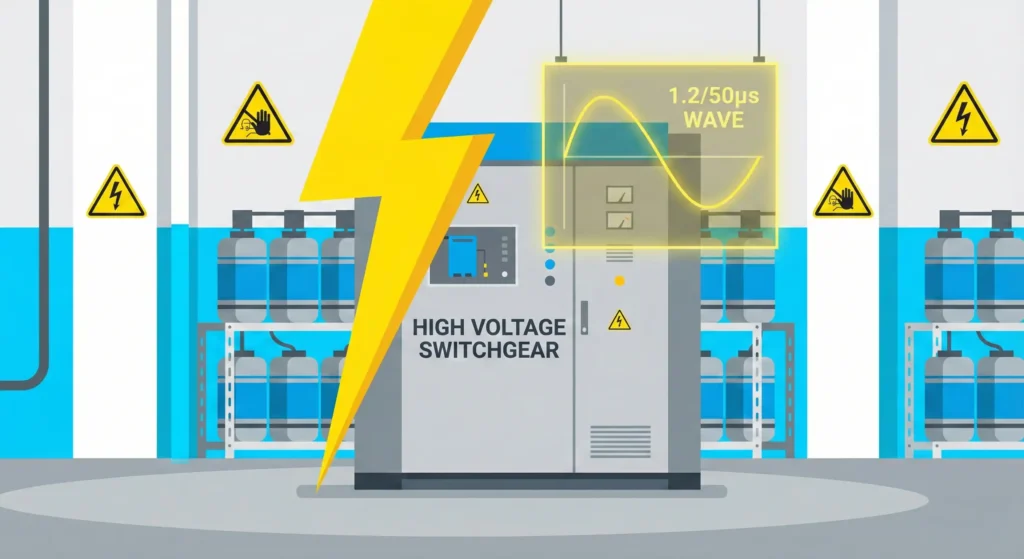
Dielectric Resilience: Can the vacuum interrupter survive a 60kV lightning strike (1.2/50µs wave) without internal flashover? This “Basic Insulation Level” (BIL) is the primary defense against grid switching surges.
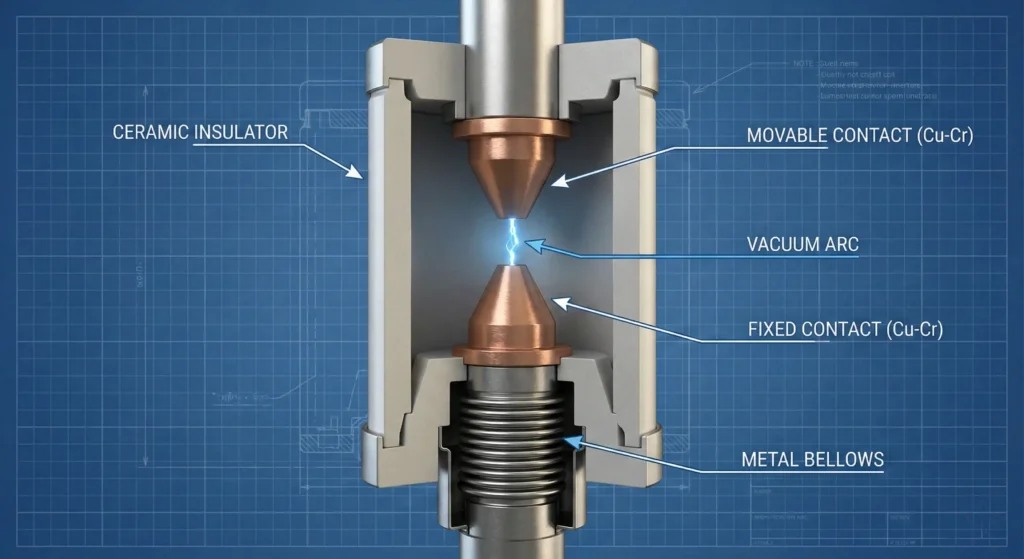
Mechanical Fatigue: Will the metal bellows inside the vacuum bottle rupture after 300,000 cycles, or is it guaranteed for 1,000,000? Standards define the statistical probability of mechanical failure.
2. Guiding Interoperability (Type-2 Coordination)
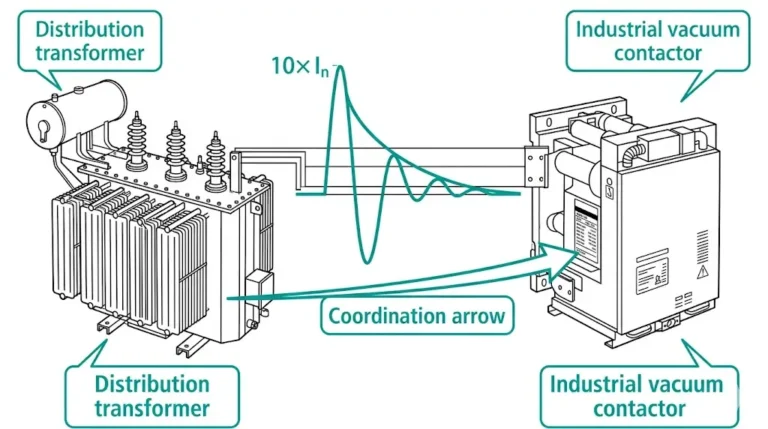
In a fault scenario, your protection system acts as a team. Standards ensure Type-2 Coordination, meaning that after a short circuit is cleared by a fuse (SCP), the contactor remains functional and safe to use. Without strict adherence to a unified standard, a fuse might clear the fault, but the contactor contacts could weld shut, leading to prolonged downtime and expensive replacements.
3. Risk Mitigation & Compliance
Using non-compliant equipment is a liability nightmare. In the event of an electrical fire or industrial accident, insurance investigators will first verify if the equipment met the local jurisdiction’s mandated standards.
In China:GB compliance is non-negotiable for grid access. Equipment without a GB type test report will effectively be rejected by the State Grid Corporation of China (SGCC).
Global Export: IEC compliance is the baseline for insurance validity (e.g., FM Global, AXA). Installing non-IEC equipment in an EU project can void fire insurance policies.
Deep Dive: IEC Standards (The Global Passport)
The International Electrotechnical Commission (IEC) represents the consensus of global engineering best practices. It is the dominant standard for Europe, South America, Southeast Asia, and the Middle East.
Key Regulations Framework
IEC 62271-106: The “bible” for high-voltage alternating current contactors (>1kV). This standard specifically addresses the unique physics of vacuum switching.
IEC 60947-4-1: Governing low-voltage electromechanical contactors and motor starters.
IEC 60071: Insulation coordination fundamentals, defining the relationship between voltage and distance.
The IEC Philosophy: Predictability & Universal Performance
IEC standards aim to create a “Universal Product” that performs consistently in standard environments.
Strict Utilization Categories: IEC classifies loads precisely. For example, AC-3 covers starting squirrel-cage motors and switching off only after the motor is up to speed, while AC-4 covers inching and plugging. A contactor must prove it can handle the specific arc energy of these loads for a defined number of cycles.
High Impulse Immunity: IEC grids are often interconnected and prone to switching transients. Therefore, Basic Insulation Level (BIL) requirements are high (e.g., 60kV peak for 7.2kV equipment) to ensure grid resilience.
Personnel Safety: Stringent limits on “Accessible Part Temperatures” ensure that operators are safe from burns during maintenance.
Deep Dive: GB Standards (The Environmental Specialist)
China’s GB (Guobiao) standards are mandatory laws within the People’s Republic. While roughly 80% harmonized with IEC, the remaining 20%—the “Chinese Deviations”—are critical for survival in China’s harsh industrial geography. This is where our specialized series, like the LCZ High Voltage Vacuum Contactors, truly shine.
Key Regulations Framework
GB/T 14808: The direct Chinese counterpart to IEC 62271-106 for high-voltage AC contactors.
GB 311.1: Insulation coordination for high-voltage transmission and distribution equipment.
GB 50150: Standard for hand-over test of electric equipment installation engineering.
The GB Philosophy: Hardening for Reality
GB standards are pragmatic. They acknowledge that China has some of the world’s highest operational altitudes (Tibet, Qinghai) and most industrial pollution.
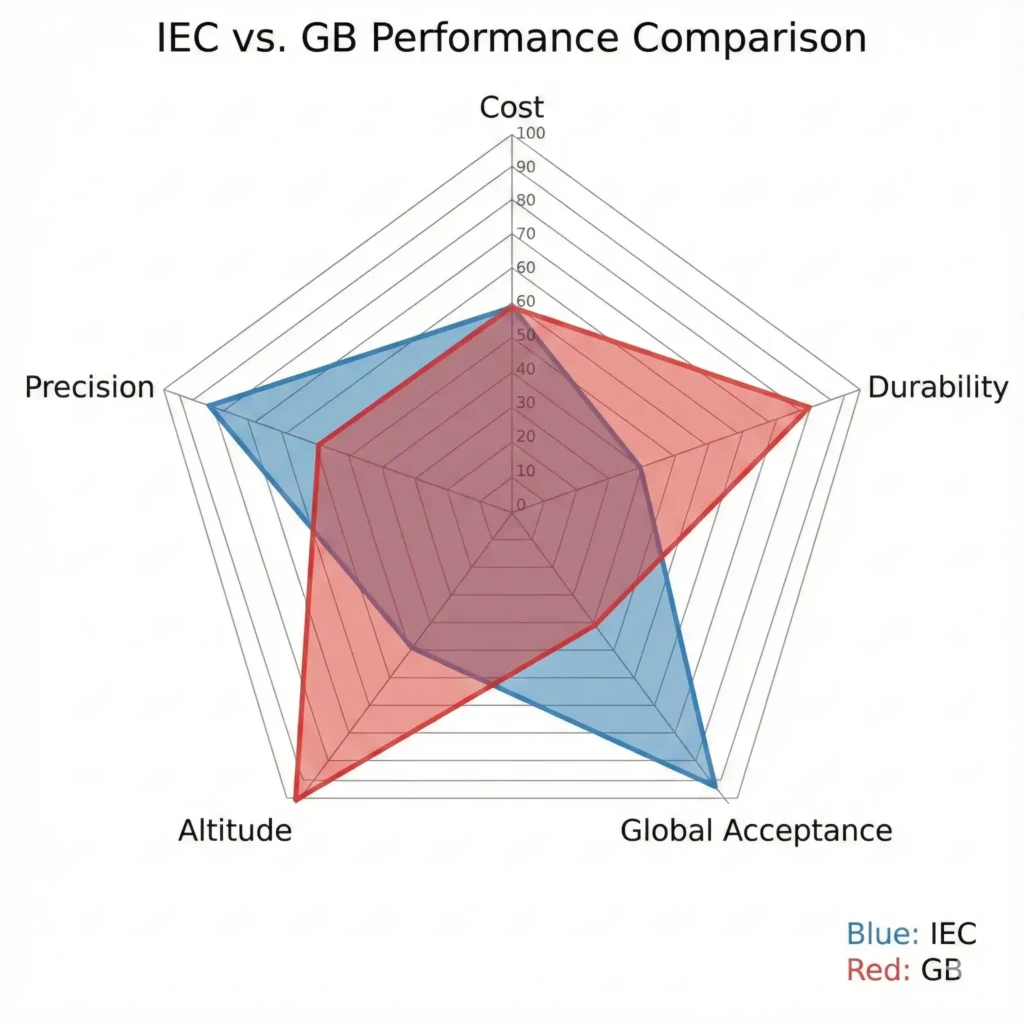
The “Plateau” Requirement: Unlike IEC (which assumes <1000m as standard), GB explicitly defines “High Altitude Products” for 2000m, 3000m, and 4000m. Our LCZ Series is specifically engineered with increased Clearance (air gap) to combat Paschen’s Law, which states that the breakdown voltage of air decreases as pressure decreases.
Vibration & Transport: Recognizing rough logistics in remote mining areas, GB standards often include stricter mechanical vibration tests to ensure the latching mechanism doesn’t loosen during transport on non-paved roads.
Frequency Precision: Optimized strictly for 50Hz, allowing for highly efficient coil designs. This optimization means a GB coil might overheat if connected to a 60Hz grid (e.g., in the Philippines or Americas) due to impedance differences.
Technical Deep Dive: Vacuum Interrupters and Material Science
The heart of any vacuum contactor is the Vacuum Interrupter (VI), or “bottle.” At XBRELE, we customize the internal metallurgy based on the standard to meet specific operational goals.
1. Contact Material Composition (CuCr)
Both IEC and GB generally favor Copper-Chromium (CuCr) contacts, but the specific metallurgy can differ based on the target application defined by the standard.
IEC Preference (Low Chop): For our CKG Series, we use high-purity, vacuum-cast CuCr contacts. This design minimizes “chopping current” (the phenomenon where current is abruptly cut before natural zero). This protects sensitive downstream motors in automated industries from voltage spikes.
GB Preference (Anti-Weld): For our mining-ready CKJ Series, we prioritize anti-welding properties. GB standards for heavy industry allow for sintering methods that enhance arc-erosion resistance. This makes the contactor robust enough for the brutal “jogging” or “inching” applications found in heavy industry (steel and cement mills).
2. Bellows and Mechanical Life
The bellows (the flexible metal seal that allows the contact to move while maintaining a vacuum) define the mechanical life.
IEC Protocol: We validate our bellows to meet strict Class C2 fatigue life requirements under clean conditions. IEC 62271 requires statistical proof for claims of 1 million cycles.
GB Nuance: For GB units, we often reinforce the bellows shield to prevent dust accumulation. GB standards require verification for reliability under dusty and vibrating conditions, ensuring the bellows won’t fail prematurely in a coal mine.
To truly understand the difference, we must look at how we torture our equipment in the XBRELE labs.
1. Dielectric Tests (The Lightning Simulation)
IEC Approach: Applies a standard 1.2/50µs lightning impulse wave. For a 7.2kV contactor, this is typically 60kV. The focus is on the steepness of the wavefront and the consistency of the insulation recovery.
GB Approach: For our LCZ Plateau models, we increase the test voltage (e.g., to 75kV at sea level) to simulate performance at 3500m altitude. We must prove that the safety margins aren’t compromised by the thin air at high elevations.
2. Temperature Rise Tests
IEC: Tests are conducted until thermal equilibrium is reached (temperature change <1K per hour). The ambient temperature is usually assumed to be max 40°C in open air.
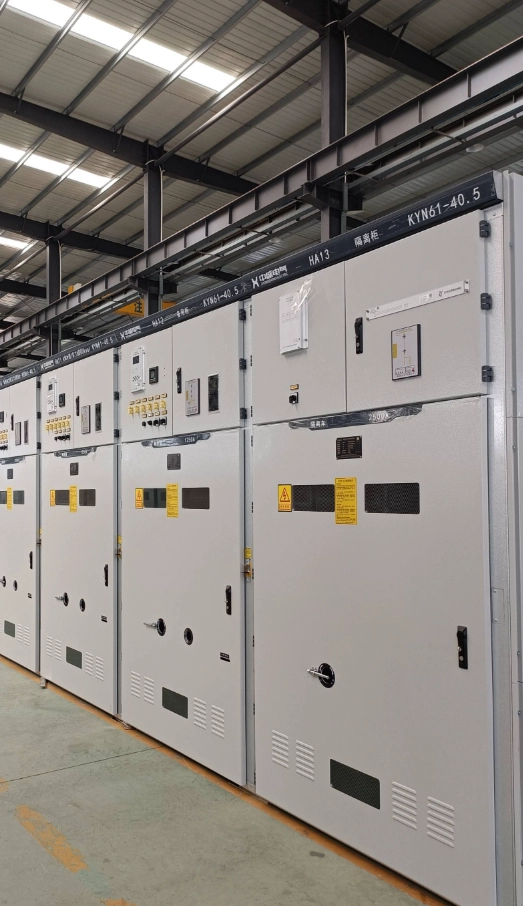
GB: We test our GB units inside enclosed Switchgear Components (specifically the KYN28 switchgear cabinet). This reflects the real-world “heat trap” effect of compact Chinese switchgear, ensuring the contactor won’t overheat when packed tightly with other components.
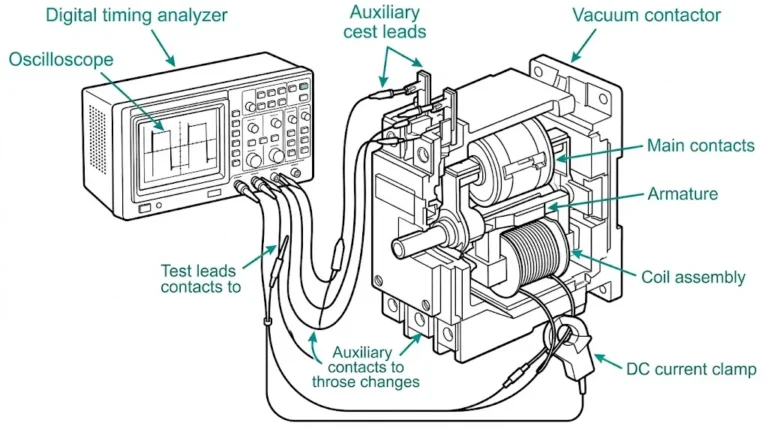
3. Mechanical Endurance (The “Torture” Test)
IEC Class M2: Requires a very low probability of restrike during capacitor switching. The focus is on precision and consistency over 1,000,000 operations.
GB Mining Grade: Emphasizes the robustness of the auxiliary contacts and latching mechanisms under heavy dust conditions. The test might involve functional checks after exposure to simulated coal dust.
Comparison Table: IEC vs. GB Standards at a Glance
The standard you choose dictates your maintenance schedule and Total Cost of Ownership (TCO).
IEC Equipment: “Fit and Forget”
Philosophy: Designed for minimal intervention.
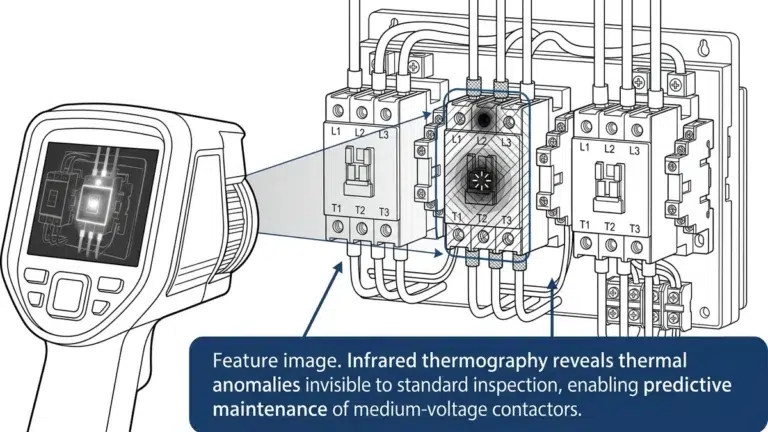
Routine: Visual inspection annually. Resistance checks (Micro-ohm) every 3-5 years. The vacuum bottle is often sealed for life.
Risk: If installed in a dirty environment without a proper IP-rated enclosure, the precise operating mechanisms can jam. IEC units often have tighter tolerances that are less forgiving of grit.
GB Equipment: “Rugged Monitoring”
Philosophy: “Rugged but requires monitoring.”
Routine: GB protocols in industrial zones often mandate quarterly cleaning of insulation barriers due to conductive dust accumulation.
Benefit: The larger Creepage Distances on our LCZ Series make them more forgiving of missed cleaning cycles in dirty environments compared to compact IEC units.
Parts Availability: GB spare parts (coils, auxiliary switches) are widely available and cost-effective in Asia.
Procurement Guide (The XBRELE Method)
We see it on RFQs every day: vague requests that leave the door open for cheap, unsuitable components. Don’t let that happen to you.
When you specify XBRELE vacuum contactors, we encourage you to be ruthlessly specific. If your project is in a dirty industrial zone, don’t just ask for “standard”. Use the templates below to demand exactly what you need.
Option A: The “Global Export” Specification (IEC)
“Vacuum Contactors shall be strictly type-tested to IEC 62271-106. Rated voltage 7.2kV, BIL 60kV. Mechanical endurance Class M2 (1,000,000 operations). Equipment must carry a Type Test Certificate from an ILAC-accredited laboratory (e.g., KEMA, CESI). Contacts shall be low-chop CuCr alloy suitable for frequent motor switching. Recommended: XBRELE CKG / JCZ Series.”
Option B: The “High Altitude / Mining” Specification (GB)
“Vacuum Contactors must comply with GB/T 14808. Installation site altitude is 3,500m. Vendor must provide external insulation correction verification (Plateau Report). Product must have valid CQC certification and test report from XIHARI. Design Pollution Degree IV. Recommended: XBRELE LCZ / CKJ Series.”
XBRELE Project Spotlights
Case Study 1: Cement Plant in Sichuan (High Vibration)
Challenge: A large motor starter for a rock crusher. High vibration, conductive dust, altitude 1200m.
Why: Unlike standard units, the CKJ series features solid-embedded poles and heavier latching springs. This prevented false trips from vibration and eliminated flashover risks from the cement dust. The slight altitude (1200m) is also natively handled by GB designs without complex derating calculations.
Case Study 2: Data Center in Frankfurt (High Reliability)
Why: The project demanded strict IEC compliance for insurance purposes. The JCZ5’s Class M2 rating guaranteed the 1 million operations needed for frequent pump cycling, ensuring the servers stayed cool without interruption. Using a GB contactor here would have failed the facility’s insurance audit.
Q1: Can I legally use a GB contactor in Europe? Generally, no. Unless the GB contactor also holds a CE mark and an IEC type test report, it cannot be legally installed in the EU. Most XBRELE export models are dual-certified to solve this.
Q2: Why are IEC contactors often smaller than GB ones? IEC designs optimize for compact Gas Insulated Switchgear (GIS) or standard panels using advanced insulation materials. GB designs, like our LCZ series, often remain physically larger to naturally satisfy high-altitude clearance requirements without relying solely on potting or gas.
Q3: What is “Creepage Distance” and why does it vary? Creepage is the shortest path along the surface of the insulation material between two conductive parts. GB standards typically demand longer creepage distances (e.g., 20mm/kV vs IEC’s 16mm/kV) to account for higher pollution levels (dust/humidity) often found in industrial China.
Q4: How do I verify a certificate? Always verify the certificate number. At XBRELE, we provide transparent access to our Type Test Reports upon request. Never accept a simple PDF without verification.
Q5: Are coils interchangeable between IEC and GB units? Rarely. While the voltage might match (e.g., 220V), the physical dimensions and power consumption profiles often differ. GB coils are optimized for 50Hz and might burn out on 60Hz grids.
Summary Checklist for Buyers
Before finalizing your technical agreement, tick these boxes to protect your investment:
[ ] Standard Version: Is it the latest IEC 62271-106?
[ ] Altitude Correction: Is BIL adjusted for >1000m? (Check our LCZ Series)
[ ] Control Voltage: Is the coil range sufficient (85%-110% Un)?
[ ] Spare Parts: Are coils and bottles proprietary?
[ ] Certification: Have you verified the Type Test Report authenticity online?
Ready to standardize your safety?Contact XBRELE Engineering Team today. Whether you need the global compliance of IEC or the rugged durability of GB, we have the right switch for the job.
Hannah
Hannah is the Administrator and Technical Content Coordinator at XBRELE. She oversees website structure, product documentation, and blog content across MV/HV switchgear, vacuum breakers, contactors, interrupters, and transformers. Her focus is delivering clear, reliable, and engineer-friendly information to support global customers in making confident technical and procurement decisions.