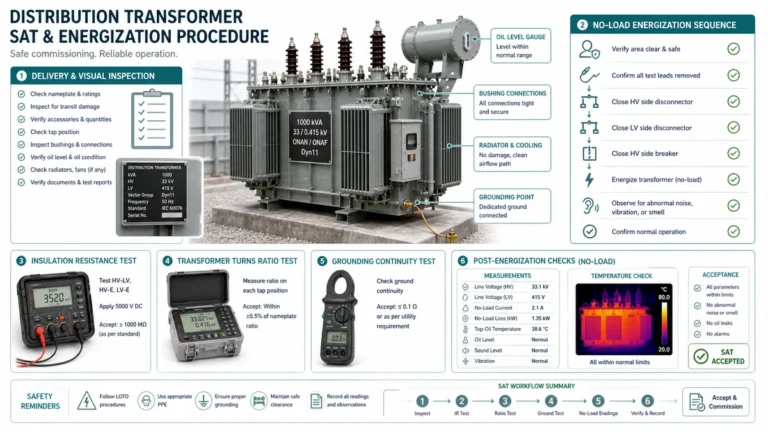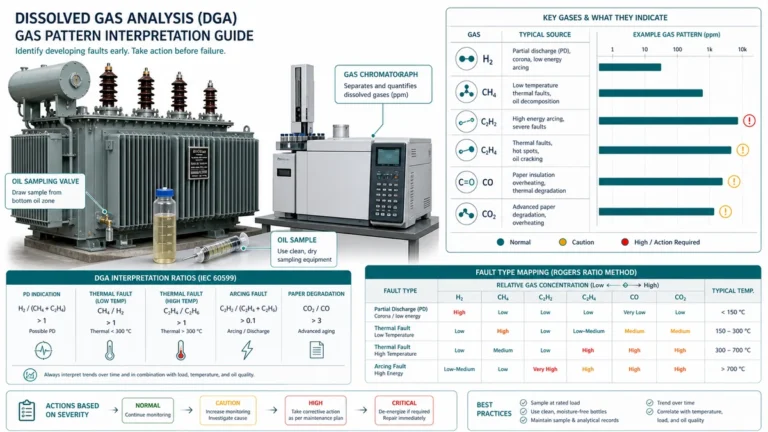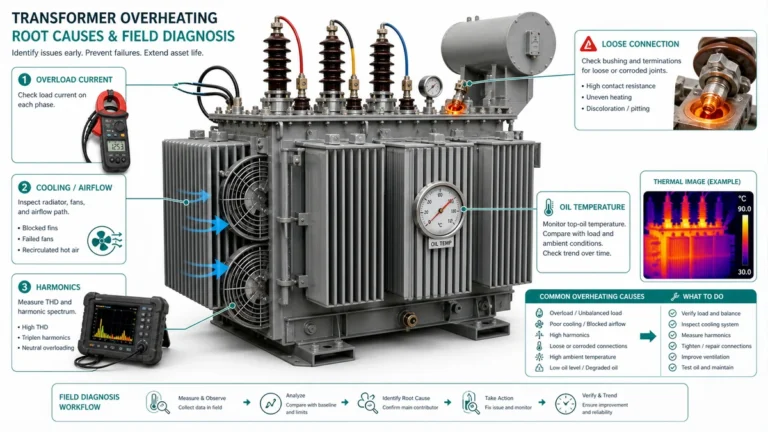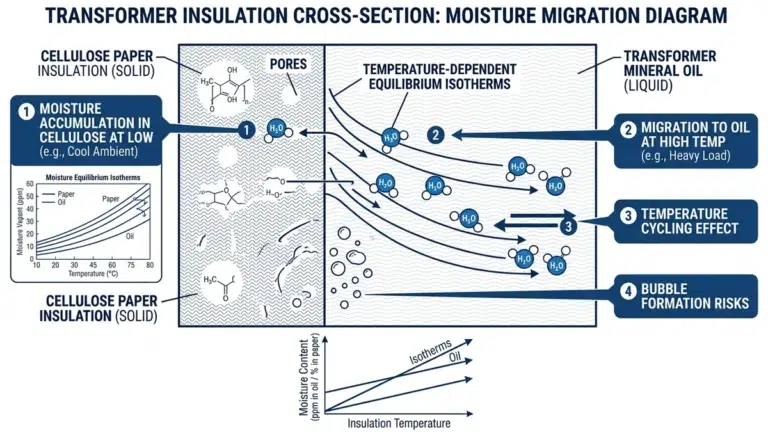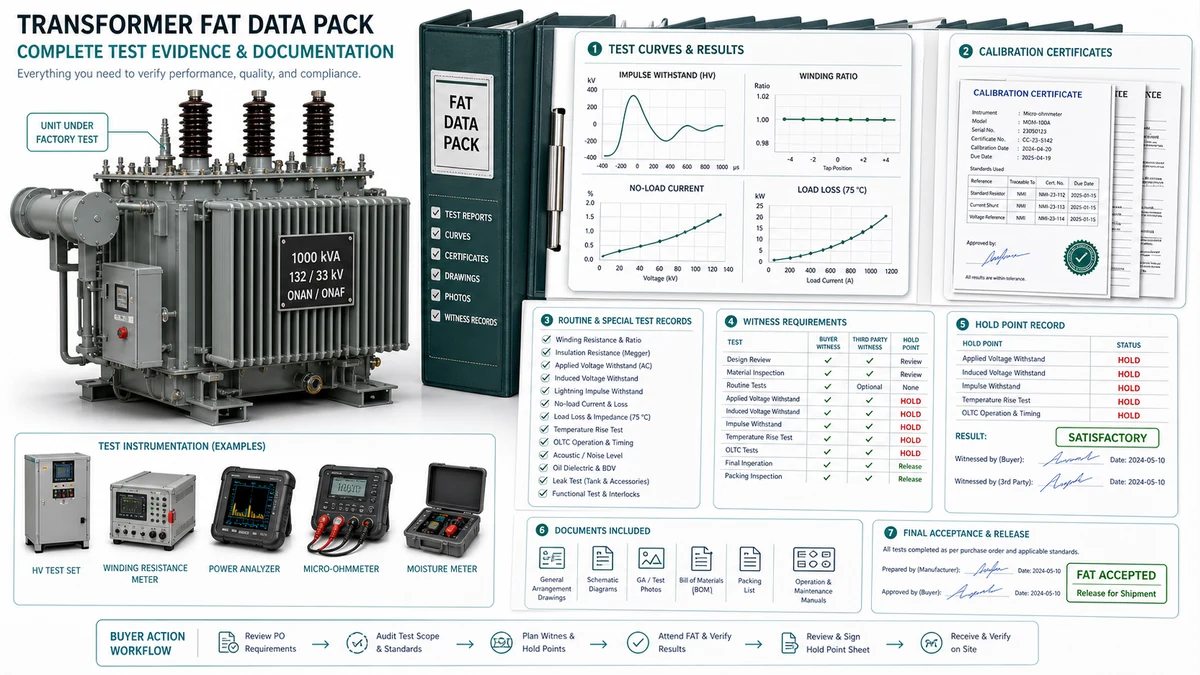
Пакет данных по заводским приемочным испытаниям (FAT) трансформатора представляет собой полный набор протоколов испытаний, кривых измерений, сертификатов калибровки и документов с подписями свидетелей, которые производитель формирует в ходе заводских приемочных испытаний (FAT) силового трансформатора перед отгрузкой. Он служит основным техническим подтверждением того, что изготовленное устройство соответствует договорным техническим условиям, применимым стандартам (как правило, серии IEC 60076 или IEEE C57) и любым согласованным заранее отклонениям, характерным для конкретного проекта.
Краткий ответ: Пакет данных FAT трансформатора представляет собой печатное или электронное досье, содержащее результаты плановых и типовых испытаний, измеренные кривые характеристик, сертификаты на материалы и компоненты, а также подписи свидетелей, подтверждающие, что трансформатор прошел все договорные приемочные испытания перед отгрузкой с завода.
Экспресс-диагностика: анализ рисков, связанных с пакетом данных FAT трансформатора
Перед подписанием любого разрешения на сдачу оборудования в эксплуатацию воспользуйтесь данной таблицей по устранению неисправностей. В ней недостатки в документации преобразуются в первоначальную проверку, вероятную причину и дальнейшие действия, чтобы покупатель мог направить запрос на принятие корректирующих мер, пока трансформатор еще находится на заводе.
| Симптом | Первый тест | Вероятная первопричина / вероятная причина | Следующее действие |
|---|---|---|---|
| В пакете данных есть страницы с результатами «прошел/не прошел», но нет кривых измерений | Сравните индекс со списком записей о плановых испытаниях | Страницы с сводными данными, экспортированные с завода, вместо исходных данных измерений | Перед выпуском запросите исходные файлы кривых, подписанные PDF-файлы и серийные номера приборов |
| Сроки действия сертификатов калибровки истекли до даты FAT | Сверьте идентификационные номера всех приборов со сроком действия сертификата | Испытательное оборудование не проходило аккредитованный цикл калибровки в соответствии со стандартом ISO/IEC 17025 | Приостановить отгрузку и потребовать повторного тестирования или письменного технического обоснования |
| Серийные номера на сертификатах и на заводской табличке различаются | На каждой странице укажите серийный номер, номер чертежа и номинальные характеристики трансформатора | Документация, связанная с дочерними подразделениями, или неконтролируемое повторное использование документов | Отклонить соответствующий документ и потребовать предоставления исправленных данных по конкретному подразделению |
| Отсутствуют записи о PD, SFRA или повышении температуры | Ознакомьтесь с техническим заданием проекта и согласованной процедурой приемочных испытаний (FAT) | В ходе выполнения проекта объем работ был сокращён, либо тестирование не было проведено | Передать вопрос на рассмотрение как случай несоответствия условиям договора и определить порядок повторного тестирования или утверждения отклонения |
| Протокол о даче показаний не подписан или датирован задним числом | Сравнить журнал посещаемости, исходные временные метки тестов и список подписавшихся | Анализ документов был представлен в качестве тестирования в присутствии свидетелей | Требуется предоставить пересмотренный отчет о проверке и заметку о корректирующих мерах, утвержденную покупателем |
| Перед отгрузкой отсутствуют исходные данные по маслу/DGA | Проверить сертификат на масло, время отбора проб после прогрева двигателя и дату составления отчета по газоанализу (DGA) | Масло для заполнения было принято без эталонных показателей ввода в эксплуатацию | Запросить исходные данные DGA и сохранить их в комплекте документов по техническому обслуживанию |
Что должен содержать пакет данных FAT, соответствующий требованиям
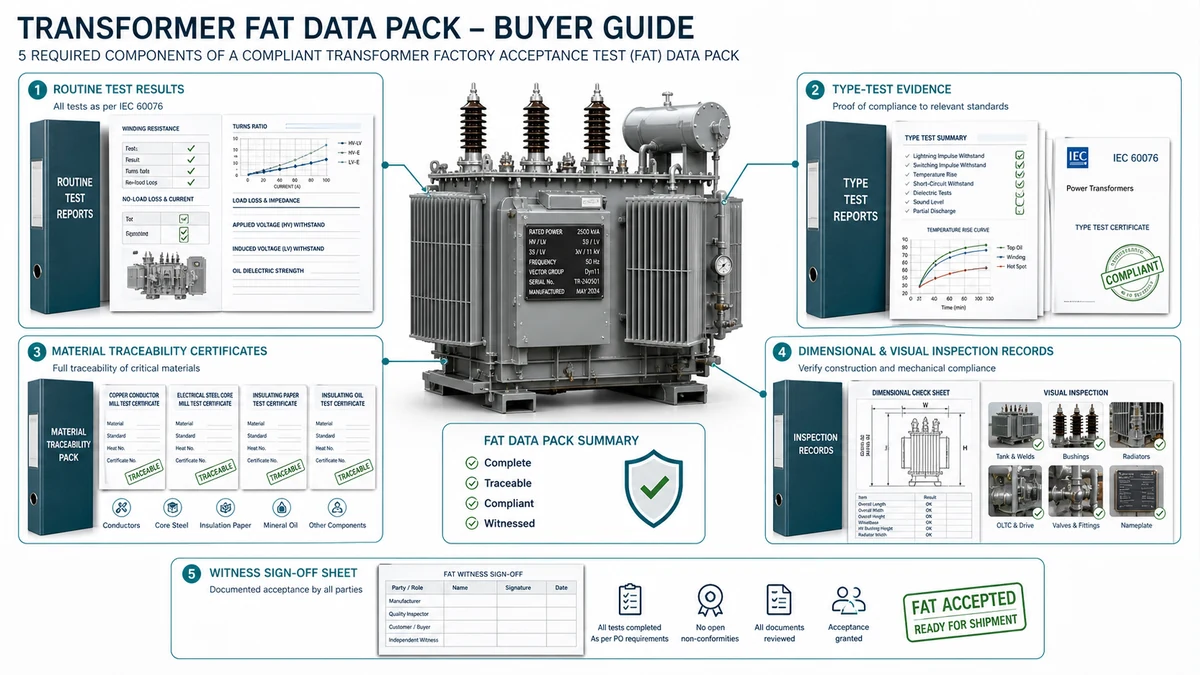
Пакет данных по приемо-сдаче (FAT) трансформатора, соответствующего требованиям, должен содержать документы из пяти различных категорий. Отсутствие документов какой-либо категории является несоответствием требованиям пункта 10 стандарта IEC 60076-1 или эквивалентным требованиям к приемочной проверке стандарта IEEE C57.12.00.
1. Результаты плановых испытаний с кривыми измеренных значений
2. Сертификаты типовых испытаний или эквивалентные документы, подтверждающие соответствие конструкции
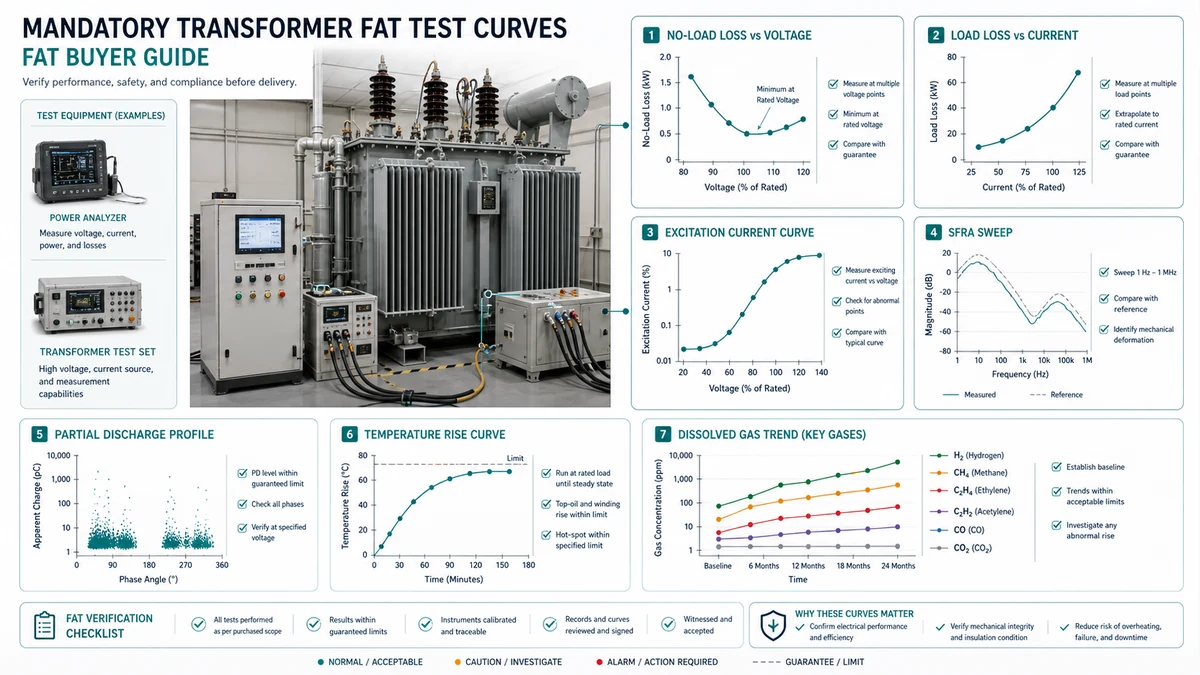
Обязательные кривые, которые должны содержаться в каждом наборе данных
Неоткалиброванные отметки «прошел/не прошел» подтверждают, что устройство достигло порогового значения в течение одного дня; откалиброванные кривые позволяют выявлять дрейф, сравнивать устройства в рамках всего парка и устанавливать базовые показатели для мониторинга состояния.
| Кривая | Стандарт испытаний | Минимальное количество точек данных | Критерий «зачет/незачет» | Риск в случае потери |
|---|---|---|---|---|
| Потери в холостом ходу в зависимости от напряжения | IEC 60076-1 / IEEE C57.12.00 | 7 ступеней напряжения, номинальные значения 90%–112% | В пределах ±10% от гарантированного значения | Невозможно определить риск перевозбуждения или дефекты ядра |
| Зависимость потерь нагрузки от силы тока | IEC 60076-1 / IEEE C57.12.00 | 5 фаз, номинальные параметры 25%–100% | В пределах согласованного допуска не наблюдается аномальной нелинейности | Скрытые зоны с высокими потерями; невозможность снижения номинальной мощности из-за гармоник |
| Зависимость импеданса от частоты | МЭК 60076-1 | Полная кривая при номинальной частоте; по отдельным отводам, если установлен переключатель OLTC | В пределах ±7,51 TP3T от заявленного значения (±101 TP3T для многообмоточных устройств) | Отсутствует эталон для выявления деформации обмотки после транспортировки |
| Зависимость тока возбуждения от напряжения | МЭК 60076-1 | Те же шаги, что и при построении кривой потерь в холостом ходу | Плавная, монотонно возрастающая; без перегиба ниже 100% V | Частичные разломы в керне скрыты |
| Базовые показатели SFRA | IEC 60076-18 / CIGRE TB 342 | Полный диапазон, 20 Гц–2 МГц; трехфазный комплект | Фазовая симметрия; эталон для сравнения после транспорта | Деформация при транспортировке не поддается обнаружению без заводских эталонных данных |
| Кривые роста температуры | IEC 60076-2 / IEEE C57.12.91 | Записи велись каждые 15 минут до достижения теплового равновесия; нагрузка 100% и 110% | Повышение температуры в «горячей точке» ≤ заявленного предела (обычно 78 К для ONAN класса A) | Не удается проверить термическую модель для системы SCADA |
| Зависимость содержания растворенного газа от времени (термоцикл) | IEC 60599 | Не менее двух проб масла: в начале и в конце теплового цикла | Постепенное повышение концентрации H₂ < 10 ppm; ацетилен не обнаружен | Скрытый дефект изоляции, который оставался незамеченным до момента выхода оборудования из строя во время эксплуатации |
| Диэлектрические потери (tan-delta) в зависимости от напряжения | IEC 60250 / IEC 60270 | шаги по 0,2 U, 0,5 U, 1,0 U, 1,5 U | Тан-дельта < 0,51 TP3T при номинальном напряжении; отсутствие нарастания кривой по мере увеличения напряжения | Изоляция с незначительным увлажнением была принята без возражений |
| Частичные разряды в зависимости от напряжения | IEC 60076-3 | Непрерывная запись во время испытания с наведенным напряжением 1,5 U и 1,1 U | PD ≤ 300 пК при 1,5 Е; ≤ 100 пК при повышении напряжения генератором (уточните технические характеристики) | Дефекты, которые приведут к утечке во время эксплуатации, остаются незамеченными |
| Осциллограммы выдержки при коротком замыкании | IEC 60076-5 (при наличии типовых испытаний) | Графики формы тока и напряжения по всем трём фазам; наложение результатов FRA до и после испытания | После испытания не наблюдалось устойчивых искажений FRA; импеданс остался неизменным в пределах 1% | Соответствие конструкции требованиям эксплуатации в условиях землетрясения не подтверждено |
Использование этой таблицы при проверке комплекта: Перед подписанием протокола присутствия свидетелей сверьте каждую строку с индексом пакета данных. Убедитесь, что потери нагрузки скорректированы с учетом эталонной температуры 75 °C (IEC) или 85 °C (IEEE), а значения импеданса соответствуют измеренному положению отвода. Сохраните результаты сканирования SFRA, профиль частичных разрядов (PD) и результаты газоанализа (DGA) вместе с документацией по вводу в эксплуатацию; они не будут иметь ценности для анализа парка оборудования, если их невозможно будет восстановить через пять лет.
Необходимые сертификаты и способы их проверки
В протоколах испытаний фиксируются исходные измеренные значения; в сертификатах содержится заявление о соответствии указанному стандарту или договорному пределу. Оба документа должны быть в наличии — протокол планового испытания, в котором указано сопротивление обмотки, не заменяет заявление о соответствии стандарту IEC 60076-1.
| # | Сертификат | Руководящий стандарт | Минимальный объем содержания | Отклонить, если |
|---|---|---|---|---|
| 1 | Декларация о соответствии | Серия IEC 60076 | Серийный номер устройства, номинальные параметры, применимые стандарты, уполномоченное лицо, имеющее право подписи | Серийный номер отсутствует или не совпадает |
| 2 | Сертификат испытаний диэлектрического типа | IEC 60076-3 | Уровни приложенного напряжения, форма сигнала, продолжительность, результат (прошел/не прошел), лабораторный идентификатор | Дата предшествует дате выпуска данного экземпляра; выпущен для аналогичного экземпляра |
| 3 | Сертификат испытаний на повышение температуры | IEC 60076-2 | Класс охлаждения, номинальные потери, температура окружающей среды, температура масла на верху и градиент температуры обмотки по сравнению с предельными значениями | Результаты приведены при пониженной нагрузке; поправка на условия окружающей среды не применялась |
| 4 | Сертификат на устойчивость к короткому замыканию | МЭК 60076-5 | Импеданс до и после, сравнение результатов FRA до и после испытаний, механический осмотр | Сравнение с FRA отсутствует; расчет производится только в том случае, если была указана испытанная выдерживаемая нагрузка |
| 5 | Сертификат системы теплоизоляции | IEC 60076-1 / стандарт по тепловым классам | Класс изоляции, тепловой индекс, совместимость с указанной средой | Сертификат общего класса, не связанный с изоляционными материалами данного агрегата |
| 6 | Сертификат качества нефти | IEC 60296 / ASTM D3487 | Номер партии, BDV, влажность (ppm), тангенс дельта при 90 °C, кислотность | Отсутствует возможность отслеживания конкретной бочки или объема наполнения |
| 7 | Сертификаты калибровки испытательного оборудования | ISO/IEC 17025 | Идентификационный номер прибора, дата калибровки, срок действия, штамп аккредитованной лаборатории | Срок действия калибровки истек до даты FAT; калибровка проводится только собственными силами без аккредитации |
| 8 | Сертификаты прослеживаемости материалов | EN 10204, тип 3.1 или 3.2 | Номер партии/серии, химический состав, механические свойства, подпись инспектора | Был поставлен тип 2.2, хотя по договору требовался тип 3.1 |
| 9 | Сертификат о проверке краски и покрытия | ISO 12944 / техническое задание проекта | Степень подготовки поверхности, показатели толщины сухого слоя (DFT) по зонам, результаты проверки на наличие дефектов | ДФТ записывается в виде единого среднего значения, а не в виде минимальных значений по каждой зоне |
| 10 | Сертификат точности, указанной на заводской табличке | IEC 60076-1, приложение A | Данные на заводской табличке соответствуют заводским чертежам и результатам испытаний | Опубликовано до появления окончательных результатов испытаний |
Специальные сертификаты, выдаваемые в зависимости от объема проекта: Сейсмостойкость (IEEE 693), огнестойкость (с указанием типа рабочей жидкости — сертификаты для эфирных жидкостей не распространяются на агрегаты с минеральным маслом), сертификаты ATEX/IECEx (любые изменения, внесённые после сертификации, аннулируют её действие, если не получено повторное подтверждение), а также сертификаты по уровню шума (IEC 60076-10 — прогноз, сделанный на этапе проектирования, не является сертификатом).
В случае отсутствия сертификата: Выдайте официальное уведомление о несоответствии документа, наложите условное приостановление приемки и установите срок ответа в 5 рабочих дней для переоформления (10–15 дней, если требуется повторное лабораторное тестирование). Независимо проверьте исправленный сертификат и зафиксируйте результаты устранения несоответствия в сопроводительном письме к пакету данных с указанием даты пересмотра каждого замененного документа.
Как проходят проверки «Witness» и чего должны требовать покупатели
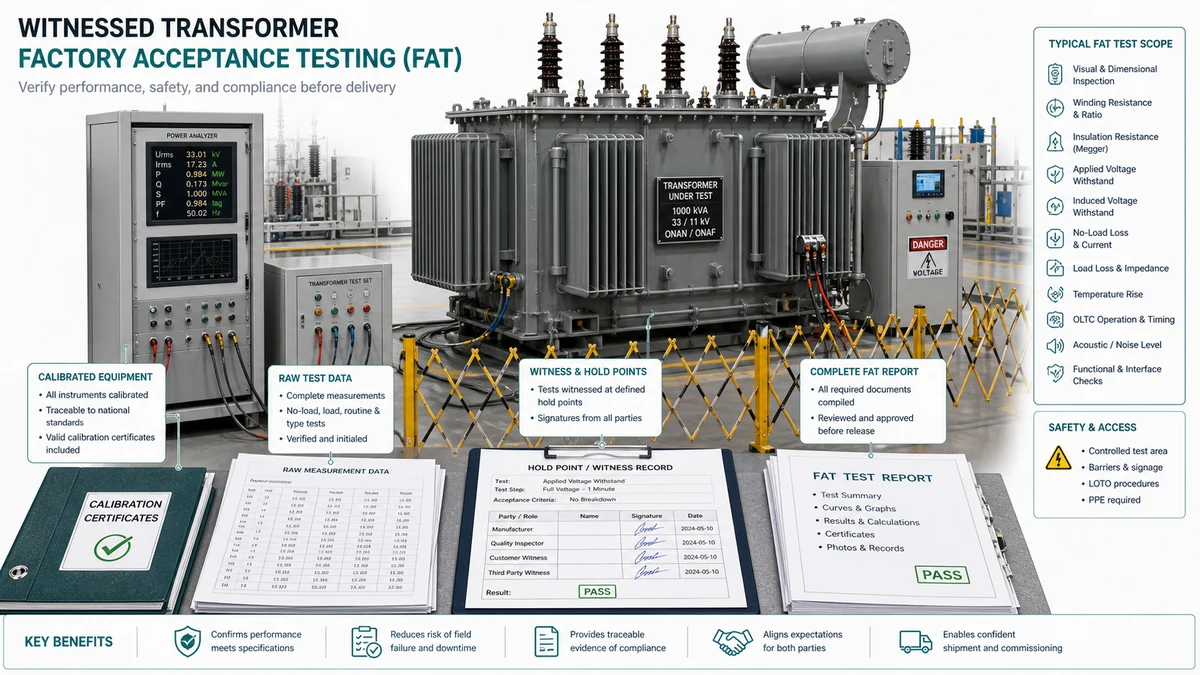
Испытание в присутствии свидетеля — это заводские приемочные испытания, проводимые при физическом присутствии представителя заказчика на объекте, который наблюдает за каждым измерением и подтверждает его в режиме реального времени, а не проверяет ранее записанные данные. Пакет данных, сформированный по результатам испытаний в присутствии свидетеля, имеет цепочку ответственности, которую невозможно воспроизвести в отчете, прошедшем только документальную проверку.
Подготовка к тесту: Сверьте данные на заводской табличке прибора с информацией в заказе на поставку, убедитесь в актуальности сертификатов калибровки и проверьте, соответствует ли конфигурация испытаний согласованному плану испытаний. Если срок действия калибровки истек или серийные номера приборов не совпадают с указанными в представленных сертификатах, приостановите работу и дождитесь устранения проблемы, прежде чем продолжать.
Последовательность тестирования и контрольные точки: Стандарты IEC 60076-1 и IEEE C57.12.00 определяют стандартную последовательность испытаний, которая не является произвольной — проведение диэлектрических испытаний в неправильной последовательности может подвергнуть изоляцию нагрузкам, которые повлияют на результаты последующих измерений. Условия приостановки испытаний должны быть прописаны в договоре купли-продажи, а не согласованы устно.
Оценка и сравнение пакетов данных FAT в рамках конкурирующих предложений
Толстая папка с сертификатами — это исходный материал, а не доказательство качества. Приведенная ниже схема позволяет преобразовать задачу сравнения документов в структурированное решение о рисках.
Шаг 1 — Составьте перечень обязательных документов, которые необходимо проверить перед вскрытием упаковок. Заранее определите документы, не подлежащие обсуждению: сертификаты типовых испытаний со стандартной ссылкой и датой, результаты плановых испытаний для конкретного серийного номера, кривые измерения потерь, подписанные свидетелем, отчет о повышении температуры с указанием режима охлаждения, протоколы диэлектрических испытаний, включая измерение частичных разрядов, осциллограммы импульсных испытаний с указанием критериев приемки, подтверждение коэффициента трансформации и векторной группы, потери в холостом ходу при номинальном напряжении 90%–110%, отчет о качестве масла с базовыми показателями DGA, протокол работы переключателя отводов (при наличии OLTC), сертификаты калибровки со сроком действия, охватывающим дату испытаний, а также листы с подписями свидетелей. Любая заявка, в которой отсутствуют какие-либо элементы из данного списка, получает статус «условная».
Шаг 2 — Оцените каждую упаковку по категориям рисков, связанных с использованием в полевых условиях.
| Категория риска | Основной документ | Состояние повышенного риска | Вес |
|---|---|---|---|
| Тепловые характеристики | Кривая повышения температуры, режим охлаждения | Высокая температура окружающей среды, ограниченная вентиляция, высокий коэффициент загрузки | Высокий |
| Целостность изоляции | Уровни PD, осциллограммы импульсов | Влажный климат, соленый прибрежный воздух, высота над уровнем моря более 1 000 м | Высокий |
| Состояние диэлектрической жидкости | Содержание масла (BDV), влажность (ppm), базовые показатели DGA | Длительная транспортировка, хранение в тропических условиях, неоднократные задержки с подключением к источнику питания | Высокий |
| Потери в холостом ходу и под нагрузкой | Кривые потерь при различных уровнях напряжения | Высокие затраты на электроэнергию, штрафные условия в договорах с коммунальными службами | Средний |
| Надежность устройства переключения выводов | Журнал эксплуатации OLTC, сопротивление контакта по каждому отводу | Высокая степень заполнения, сеть с нестабильным напряжением | Средний |
| Механическая целостность | Фотографии осмотра сердечника/катушки, вибрационные испытания | Участки с сейсмическим риском, перевозки по пересеченной местности | Средний |
| Отслеживаемость документации | Серийный номер на каждом листе, валюта калибровки | Обязательства по аудиту, полномочия по таможенному контролю импорта | Высокий |
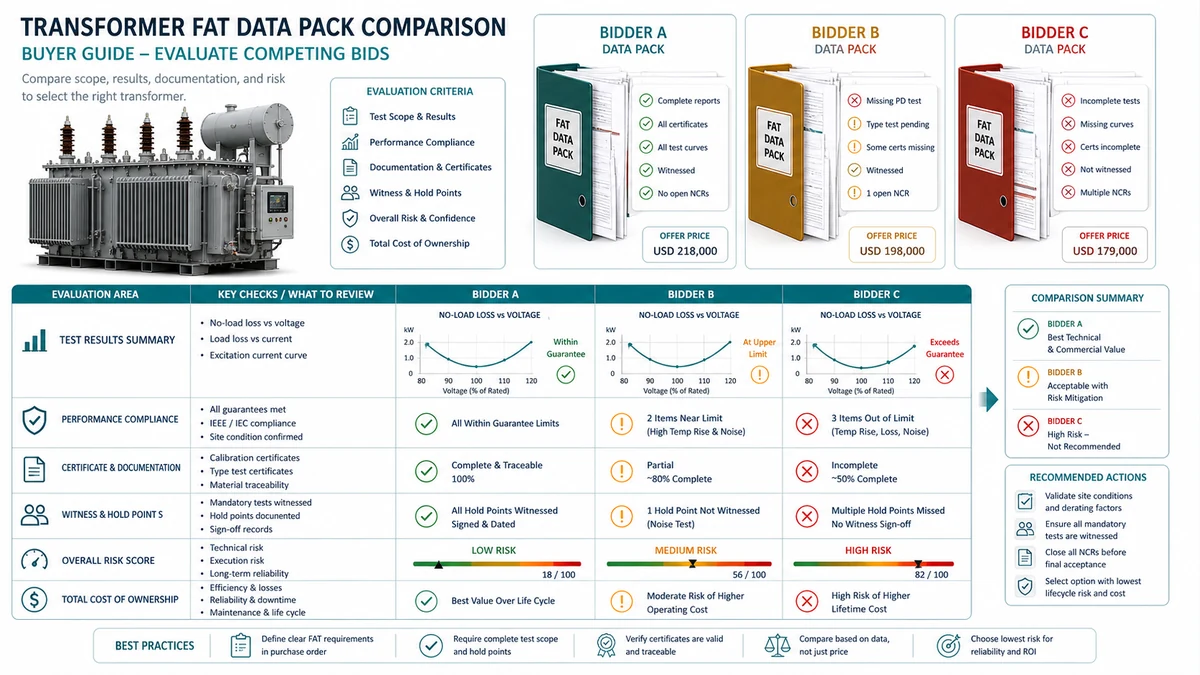
График закупок: запрос необходимых документов на соответствующем этапе
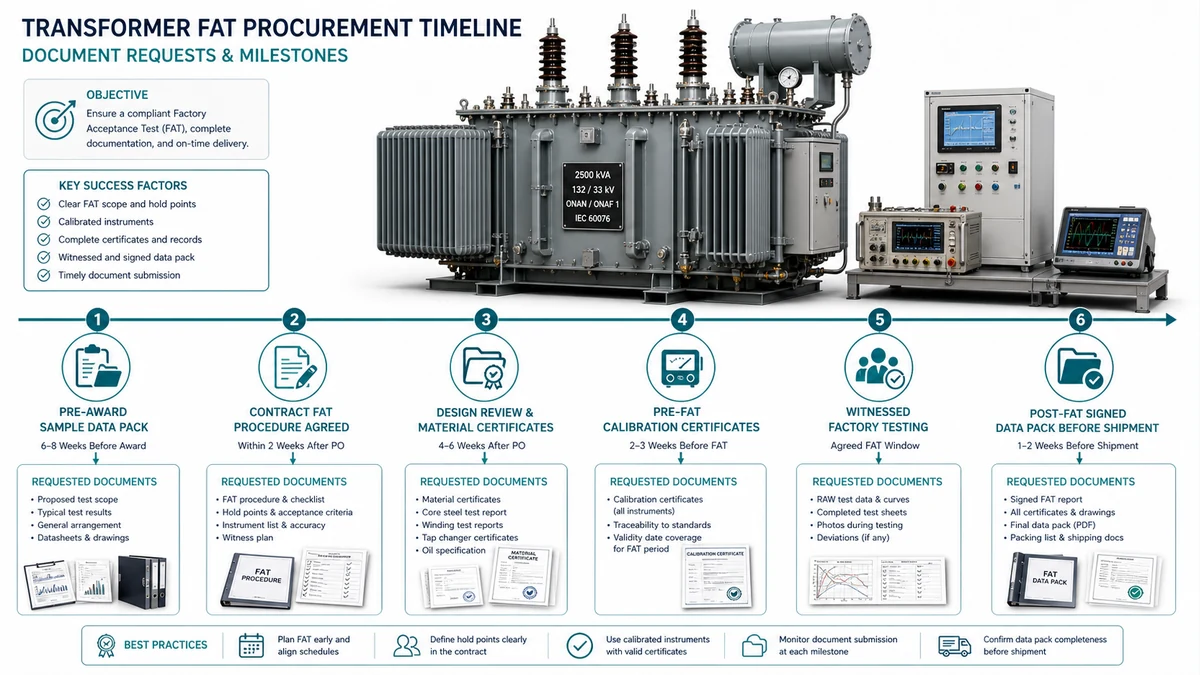
Пакет данных FAT по трансформатору теряет большую часть своей ценности, если поступает после того, как ключевые решения о закупках уже утверждены. В приведенной ниже таблице для каждой категории документов указан этап заключения контракта, на котором их необходимо запросить и рассмотреть до перехода к следующему этапу.
| Сцена | Триггер | Необходимые документы | Последствия в случае отсутствия |
|---|---|---|---|
| Предварительное решение о присуждении гранта | Оценка тендерных предложений | Образец пакета данных по предыдущему модулю, график испытаний, список наблюдающих организаций | Невозможно оценить возможности завода по проведению испытаний |
| Выполнение договора | Размещение заказа (в течение 30 дней) | Согласованная процедура FAT, объем тестирования, сроки уведомления свидетелей | Сокращение объема работ под давлением сроков сдачи |
| Анализ проекта | 40%–60% — срок изготовления | Сертификаты на материалы сердечника и обмоток, входные данные для тепловой модели, уровни импульсов | Незаметная замена материала |
| Pre-FAT | За неделю до тестирования | Сертификаты калибровки всех приборов, последовательность заключительных испытаний | Недостоверные тестовые данные, риск приостановки испытаний |
| Свидетель FAT | Во время тестирования | Необработанные результаты измерений, пошаговый сбор данных | Сглаженные аномалии остаются незамеченными |
| После FAT | Перед утверждением отгрузки | Полный комплект подписанных данных, включающий все графики, сертификаты и результаты анализа масла | Потеряно преимущество в области платежей; проблемы остаются нерешенными |
Этап, предшествующий присуждению гранта: Производитель, который не может предоставить пакет данных по предыдущим единицам продукции, представляет повышенный риск при поставке. Неполные исторические пакеты данных указывают на вероятность неполных пакетов данных по вашей единице продукции.
Выполнение договора: Сроки уведомления о даче показаний в качестве свидетеля — как правило, не менее 10–15 рабочих дней — должны носить обязательный характер в соответствии с договором, а не рекомендательный.
Связанные с XBRELE инженерные ссылки
Используйте эти ссылки XBRELE, чтобы связать решение, принятое на месте, с правильным процессом производства, испытаний и закупок: Страница продукта XBRELE, Ассортимент вакуумных выключателей XBRELE, Руководство по рейтингам VCB, Контрольный список для сдачи экзамена VCB FAT/SAT, Ассортимент силовых распределительных трансформаторов XBRELE.
Контекст стандартов
Для внешнего контекста метода сравните процедуру сайта с публичной Страница стандартов IEEE C37.09 и затем применить точное руководство производителя и спецификацию проекта для поставляемого оборудования.
Пример поля
Пример из практики: во время сервисной проверки одна фаза измерялась вне базовой линии ввода в эксплуатацию, в то время как две другие фазы оставались стабильными. Команда повторила измерение с проверенными выводами, проверила время и ход контактов и использовала измеренное расхождение, чтобы отделить проблему контактного давления от общей проблемы очистки поверхности.
Часто задаваемые вопросы
Регулярные испытания и типовые испытания: в чём разница?
Каждое устройство проходит плановое испытание, в ходе которого проверяется соответствие конкретного трансформатора заданным номинальным параметрам — например, сопротивлению обмотки, потерям в холостом ходу, потерям под нагрузкой и сопротивлению изоляции. Типовые испытания проводятся один раз для каждой конструкции с целью подтверждения того, что она соответствует эксплуатационным требованиям в самых суровых условиях эксплуатации — например, в отношении повышения температуры, молниевого импульса и выдержки короткого замыкания.
Может ли пакет данных «Sister-Unit» заменить протоколы типовых испытаний?
Производитель вправе предоставить сертификаты типовых испытаний, выданные для аналогичного изделия, только в том случае, если конструкция данного изделия доказано идентична по всем параметрам, влияющим на испытуемую характеристику, и только при наличии письменного заявления о сходстве. Протоколы плановых испытаний должны всегда относиться к конкретному серийному номеру приобретаемого изделия.
Как долго следует хранить пакет данных FAT трансформатора?
Пакет данных следует хранить в течение всего срока эксплуатации трансформатора с учетом любого применимого установленного законом срока исковой давности. На практике для силовых трансформаторов это означает как минимум 25–40 лет.
Что делать, если тест PD завершится неудачей во время FAT в присутствии свидетелей?
Результат PD, превышающий договорной предел приемлемости, является точкой остановки. Испытание необходимо прекратить, зафиксировать результат в полном объеме, включая измеренное значение в пикокулонах и испытательное напряжение на момент превышения предела, а также зафиксировать отказ в пакете данных.
Имеет ли цифровой пакет данных в формате FAT такую же юридическую силу, как и бумажный?
Пакет цифровых данных считается юридически действительным при условии, что все записи содержат отслеживаемые электронные подписи уполномоченных лиц, формат файла не поддается редактированию или использует систему контролируемых ревизий с аудиторским следом, а покупатель имеет неограниченный доступ, не зависящий от проприетарной платформы производителя. Широко признаны файлы PDF со встроенными цифровыми подписями в соответствии со стандартом ISO 32000.
Следует ли покупателям давать разрешение на отгрузку до того, как пакет FAT будет полностью сформирован?
Покупатель должен отказаться выдавать разрешение на отгрузку до тех пор, пока не будет получен и проверен полный комплект документов. Если коммерческие обстоятельства вынуждают осуществить частичную отгрузку, покупатель должен выдать письменное условное подтверждение приемки, в котором будут перечислены все недостающие документы с указанием их названий, оговорен сроки поставки и указано, что соответствующий этап оплаты не будет произведен до устранения всех пробелов.
Как высота над уровнем моря влияет на пределы допустимого содержания жира?
Заводские испытания проводятся на высоте, характерной для места производства, которая может отличаться от высоты места установки. В стандартах IEC 60076 и IEEE C57 определены поправочные коэффициенты для зазоров внешней изоляции и характеристик охлаждения на высотах свыше 1 000 м.
Следующие шаги для отделов закупок
Если ваш цикл закупок уже начался и вы не уверены, охватывает ли ваш текущий контракт полный объем пакета данных FAT, описанный в данном руководстве, целенаправленный анализ несоответствий контракта положениям стандартов IEC 60076 или IEEE C57.12.00 позволит выявить, какие категории испытаний и требования к документации отсутствуют, до того как завод приступит к испытаниям. Принятие мер на этапе рассмотрения проекта сохраняет все возможности для исправления ситуации; если же действовать после завершения FAT, останется только вести переговоры.