Benötigen Sie die vollständigen Spezifikationen?
Laden Sie unseren Produktkatalog 2025 herunter, um detaillierte Zeichnungen und technische Parameter aller Schaltanlagenkomponenten zu erhalten.
Katalog anfordern
Laden Sie unseren Produktkatalog 2025 herunter, um detaillierte Zeichnungen und technische Parameter aller Schaltanlagenkomponenten zu erhalten.
Katalog anfordern Laden Sie unseren Produktkatalog 2025 herunter, um detaillierte Zeichnungen und technische Parameter aller Schaltanlagenkomponenten zu erhalten.
Katalog anfordern
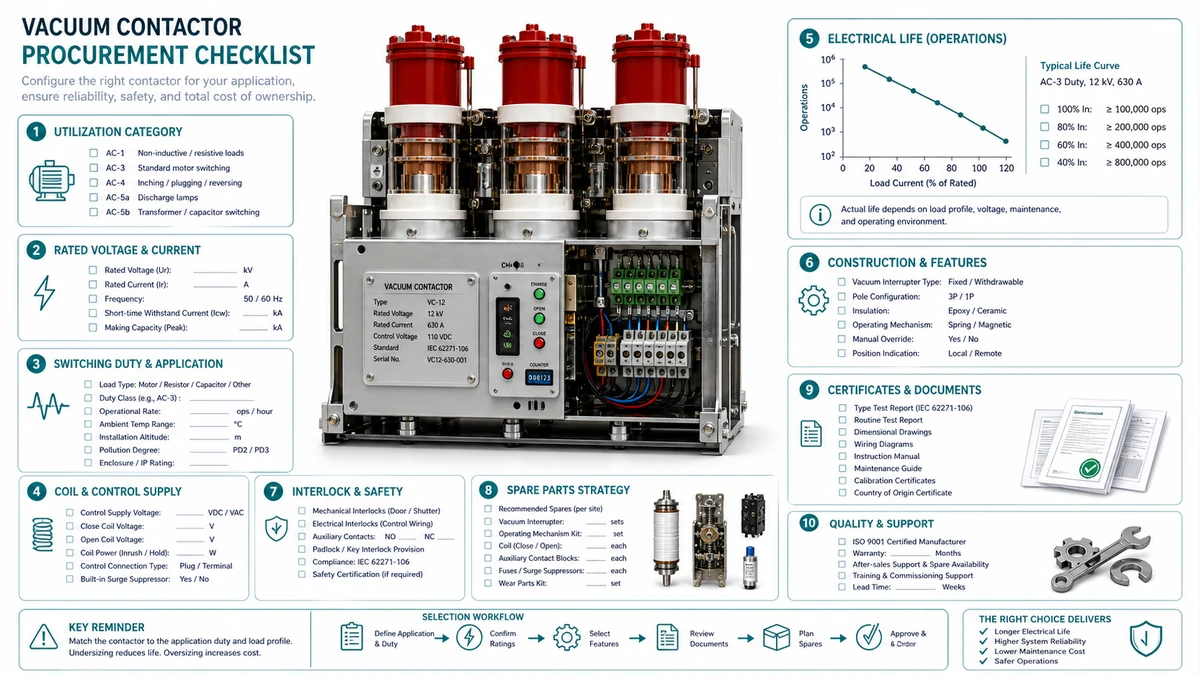
Die Auswahl des richtigen Vakuumschützes erfordert mehr als nur den Abgleich von Nennspannung und Nennstrom mit den Angaben auf dem Typenschild. Eine strukturierte Beschaffungscheckliste ordnet jede Kaufentscheidung einem bestimmten Betriebsrisiko zu und stellt sicher, dass Einsatzkategorie, elektrische Lebensdauer, Umgebungsbedingungen, Ersatzteilstrategie und Lieferantenkapazitäten vor der Erteilung eines Auftrags überprüft werden. Einkäufer, die diesen Prozess überspringen, sehen sich regelmäßig mit vorzeitigem Kontaktverschleiß, falsch abgestimmten Spulenspannungen und Lücken in der Ersatzteilversorgung konfrontiert, wodurch aus einer zweistündigen Reparatur ein zweiwöchiger Ausfall wird.
Kurzübersicht: Eine vollständige Checkliste für die Beschaffung von Vakuumschützen muss sieben Kernbereiche abdecken: (1) Einsatzkategorie und Lastart, (2) Nennspannung und Isolationsklasse, (3) elektrische Lebensdauer im Betrieb bei Volllaststrom, (4) mechanische Lebensdauer im Betrieb, (5) Schaltleistung im Verhältnis zur tatsächlichen Fehlerbelastung, (6) Kompatibilität der Spulenstromversorgung und Spannung des Steuerkreises sowie (7) Ersatzteilstrategie einschließlich Lieferzeit, Austauschbarkeit und Lagerbestand. Fehlt auch nur einer dieser Punkte, entsteht eine Diskrepanz zwischen der Spezifikation und der betrieblichen Realität.
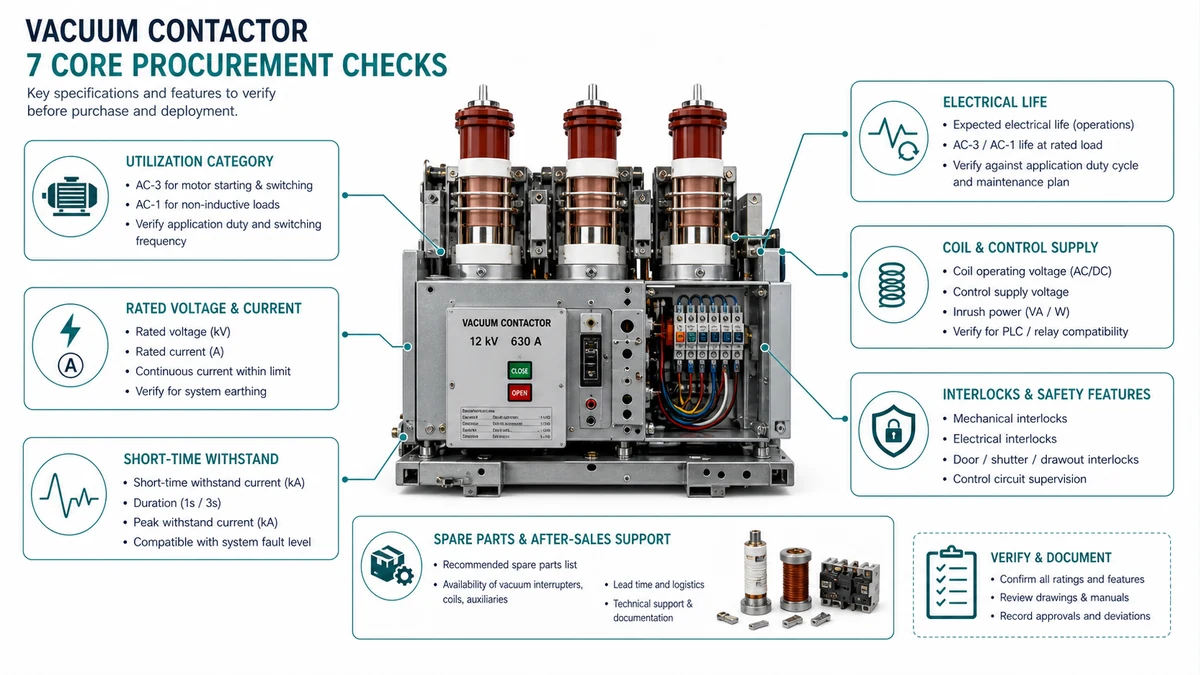
Jeder Punkt der Checkliste dient der Behebung eines bestimmten Fehlermodus. Die Einsatzkategorie legt fest, ob das Schütz für den Betrieb mit ohmschen, induktiven oder kondensatorischen Lasten ausgelegt ist.
| Punkt auf der Checkliste | Beschluss, in dem Folgendes beschlossen wird | Risiko bei Unterlassung |
|---|---|---|
| Einsatzkategorie (AC-3, AC-4, AC-6b usw.) | Übereinstimmung der Ladungsart | Vorzeitige Kontakterosion oder Verschweißung |
| Systemspannung und BIL | Koordination der Isolierung | Dielektrisches Versagen bei Überspannungsereignissen |
| Elektrische Lebensdauer (Nennbetrieb) | Planung der Wartungsintervalle | Ungeplanter Ausfall aufgrund von Kontaktverschleiß |
| Mechanische Lebensdauer (Leerlaufbetrieb) | Lebensdauer von Stellantrieben und Mechanismen | Mechanismus des Festfressens unabhängig von Lichtbogenerosion |
| Herstellungs- und Ausschaltvermögen | Fehlerstromverträglichkeit | Zerstörung des Schützes beim ersten Fehlerfall |
| Spulenspannung und Art der Ansteuerung | Integration von Steuerkreisen | Fehlgeschlossener Schalter oder unerwünschter Ausfall |
| Umgebungsbedingungen (Temperatur, Höhe, Luftfeuchtigkeit) | Anforderungen an die Leistungsreduzierung | Thermischer Durchbruch oder Verschlechterung der Isolierung |
| Lieferzeit und Austauschbarkeit | Machbarkeit der Ersatzteilstrategie | Längere Ausfallzeiten aufgrund von Beschaffungsengpässen |
| Zertifizierungen (IEC 62271-106, UL 347) | Einhaltung gesetzlicher Vorschriften und Versicherungsauflagen | Ablehnung bei der Prüfung oder Ablehnung des Anspruchs |
Die Belastungsklasse ist die einzige Angabe, auf die sich die meisten Fehler bei der Beschaffung zurückführen lassen. Zwei Schütze mit identischen Nennspannungen und Nennströmen können sich hinsichtlich ihrer Schaltlebensdauer um den Faktor zehn unterscheiden, je nachdem, für welche Art von Last sie ausgelegt sind.
| Pflichtenkategorie | Ladungsart | Typische Anwendung | Wo es punktet | Wo es riskant wird |
|---|---|---|---|---|
| AC-2 | Schleifringmotoren: Anlaufen, Abschalten während des Betriebs | Brecher, Förderbänder mit Wickelrotorantrieben | Geringere Einschwingintensität; mäßige Kontakterosion | Falsche Anwendung bei Käfigläufermotoren mit höherem Einschaltstrom |
| AC-3 | Käfigläufermotoren: Anlaufen, Abschalten während des Betriebs | Pumpen, Ventilatoren, Kompressoren | Bewährtes Standardmodell für den industriellen Einsatz; weit verbreitet | Nicht geeignet für Stop-and-Go-Betrieb, Schrittschaltbetrieb oder Ruckbetrieb |
| AC-4 | Käfigläufermotoren: Anfahren, Kriechbetrieb, Umkehren | Walzwerke, Kräne, Hebezeuge, Prüfstände | Ausgelegt für hochfrequentes Ein- und Ausschalten unter Rotorblockierstrom | Überdimensioniert und teurer, wenn tatsächlich AC-3-Bedingungen gelten |
| AC-6a | Transformatoren | Transformator-Zuleitungen, Ofentransformatoren | Bewältigt Magnetisierungs-Einschaltmultiplikatoren von bis zu 8–12-fachen des Nennstroms | Falsche Wahl der Motorlasten; das Kontaktabnutzungsmuster weicht ab |
| AC-6b | Kondensatorbänke | Blindleistungskompensation, Filterbänke zur Unterdrückung von Oberschwingungen | In einigen Fällen für kapazitive Einschaltströme ohne Vorwiderstände ausgelegt | Falsche Anwendung bei Motorlasten; die Physik der Lichtbogenunterbrechung unterscheidet sich |
Frage 1: Um welche Art von Last handelt es sich? Stellen Sie fest, ob es sich bei der angeschlossenen Last um einen Motor, einen Transformator, eine Kondensatorbank oder eine ohmsche Last handelt. Ein Schleifringmotor in der Betriebsart AC-2 und ein Käfigläufermotor in der Betriebsart AC-4 können zwar denselben Nennstrom aufweisen, erfordern jedoch grundlegend unterschiedliche Kontaktabstandsgeometrien und Maßnahmen zum Lichtbogenenergiemanagement.
Frage 2: Wie sieht das Schaltmuster aus? Ermitteln Sie die zu erwartende Anzahl der Schaltvorgänge pro Stunde und pro Jahr unter den ungünstigsten Produktionsbedingungen. Ein Schütz mit einer Nennleistung von AC-3 und 500.000 Schaltvorgängen kann diese Grenze bei einer Stoßbetrieb-Anwendung, die eigentlich AC-4 erfordert, bereits in weniger als drei Jahren erreichen.
Die elektrische Lebensdauer ist die Anzahl der Lastschaltvorgänge, die ein Schütz ausführen kann, bevor die Leistung aufgrund von Kontaktverschleiß unter einen akzeptablen Schwellenwert sinkt. Diese Zahl gilt nur bei einem bestimmten Prüfstrom, einer bestimmten Prüfspannung, einem bestimmten Leistungsfaktor und einer bestimmten Einsatzkategorie.
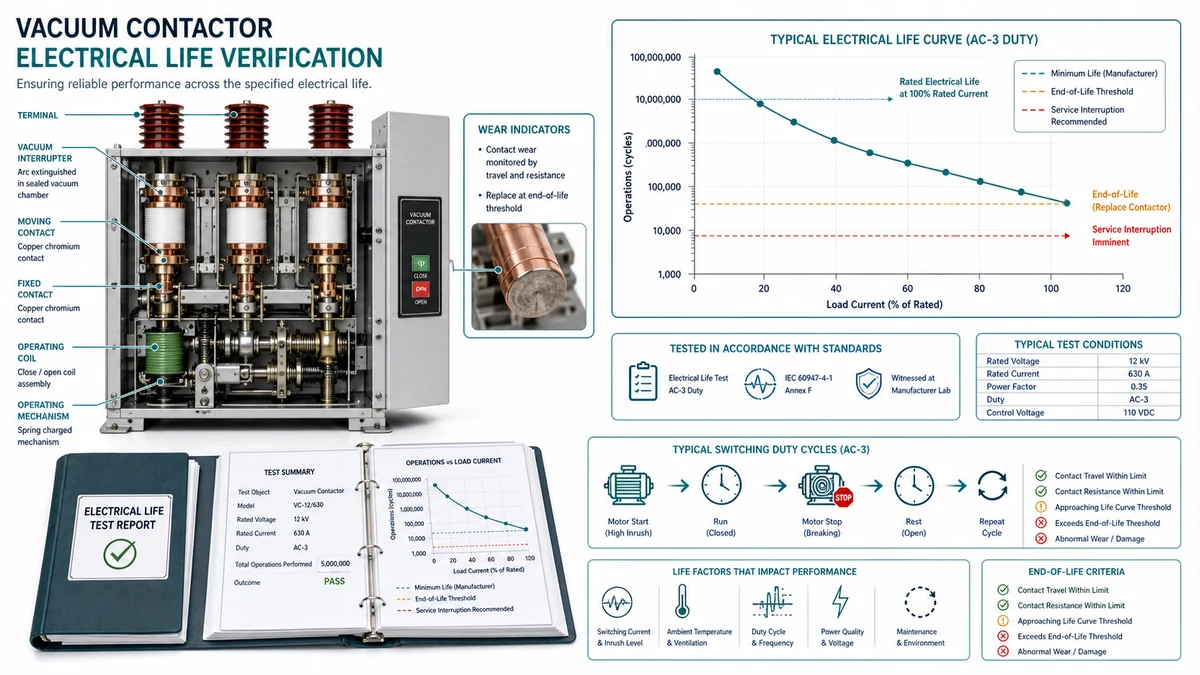
| Mitgelieferte Dokumentation | Konfidenzniveau | Maßnahmen bei fehlenden oder unvollständigen Angaben |
|---|---|---|
| Vollständiger Typenprüfbericht gemäß IEC 62271-106 von einem akkreditierten Labor | Hoch – Nennlebensdauer direkt verwenden | Vor der Bestellung ablehnen oder eine Prüfung durch einen unabhängigen Dritten beantragen |
| Hersteller-eigener Dauerprüfbericht, keine unabhängige Begutachtung durch Dritte | Medium – 20%-Lebensdauer-Derating anwenden | Beantragen Sie einen beglaubigten Test oder akzeptieren Sie die Leistungsreduzierung im Wartungsplan |
| Nur Datenblatt, kein Prüfbericht verfügbar | Niedrig – Hauptzahl nicht überprüfbar | Proben für die Wareneingangskontrolle anfordern; Austauschintervall verkürzen |
| Datenblatt mit widersprüchlichen oder fehlenden Testbedingungen | Nicht verwendbar | Nicht akzeptieren; korrigierte Unterlagen anfordern |
| Überholtes oder wiederaufbereitetes Gerät ohne ursprüngliche Prüfdaten | Nicht für den Einsatz unter kritischen Bedingungen geeignet | Nur auf nicht kritische Standby-Anwendungen beschränken |
Bevor Sie Wartungsmaßnahmen planen, gehen Sie die nachstehende Diagnosetabelle durch, um die Ursache schnell zu ermitteln.
| Symptom | Erster Test | Wahrscheinliche Grundursache | Nächste Aktion |
|---|---|---|---|
| Das Schütz schließt auf Befehl nicht | Messung der Spulenanschlussspannung bei Auslösesignal | Spule-Spannung unterhalb der Ansprechschwelle (unter dem Nennwert von 85%) | Ausgang des Steuertransformators und Verdrahtungswiderstand prüfen |
| Das Schütz schließt, löst aber sofort aus | Messung des Kontaktwiderstands zwischen den geschlossenen Hauptpolen | Übermäßiger Kontaktwiderstand aufgrund von Erosion oder Verschmutzung | Kontaktverschleiß messen; Vakuumunterbrecher austauschen, wenn die Verschleißgrenze erreicht ist |
| Störungsbedingter Spannungsabfall während des Motorlaufs | Spannung der Spule unter Last mit einem Oszilloskop überwachen | Spannungseinbruch in der Steuerspannungsversorgung während des Motoreinschaltvorgangs | Die Nennleistung des Steuertransformators erhöhen oder einen Haltekondensator einbauen |
| Hörbares Summen oder Rauschen bei geschlossenem Schütz | Überprüfen Sie die Unversehrtheit des Abschirmrings der Klimaanlagen-Wärmetauscher | Beschädigter oder fehlender Schattierungsring an der Vorderseite der Wechselstromspule | Spulenbaugruppe austauschen; sicherstellen, dass die Spulenspannung innerhalb des Nennbereichs liegt |
| Phasenüberschlag beim Öffnen | Umgebungstemperatur und Schadstoffbelastung messen | Isolationsverschleiß durch leitfähige Verunreinigungen oder Überschreitung der thermischen Belastungsgrenze | Isolatoroberflächen reinigen; die IP-Schutzart des Gehäuses unter Berücksichtigung der örtlichen Gegebenheiten überprüfen |
| Kontaktverschweißung beim Schließen | Überprüfen Sie, ob der Einschaltstrom der Nenn-Einschaltleistung entspricht | Der Einschaltstrom überschreitet den Nenn-Einschaltstrom oder es wurde die falsche Betriebskategorie gewählt | Betriebskategorie neu bewerten; Fehlerstufe am Installationsort bestätigen |
| Geringere elektrische Lebensdauer im Vergleich zum Nennwert | Protokollierung der Vorgänge pro Stunde im Vergleich zur auf dem Typenschild angegebenen Schaltfrequenz | Schaltfrequenz über dem Nenn-Einschaltzeit-Referenzwert | Zykluszähler einbauen; bei erhöhter Auslastung eine thermische Leistungsreduzierung vornehmen |
| Instrument | Zweck | Akzeptanz Quelle |
|---|---|---|
| Multimeter (True-RMS) | Messung der Spulenspannung während des Betriebs und bei Ausfall | Hersteller-Datenblatt: Pickup = 20% (Nennwert) |
| Prüfgerät für Kontaktwiderstände im Mikroohm-Bereich | Hauptkontaktwiderstand bei geschlossenem Schütz | OEM-Wartungshandbuch: in der Regel <= 100 Mikroohm pro Pol bei einem neuen Gerät |
| Isolationswiderstandsmessgerät (1 kV Gleichstrom) | Isolierung zwischen den Polen sowie zwischen Pol und Erde | IEC 62271-106: ≥ 1.000 MOhm bei der Inbetriebnahme |
| Hochspannungsprüfgerät (Hipot-Prüfgerät) | Prüfung der Funktionsfähigkeit des Vakuumunterbrechers | Spannungsfestigkeitswert gemäß OEM-Handbuch oder IEC 62271-106, Anhang F |
| Oszilloskop oder Netzqualitätsanalysator | Spannungsverlauf der Spule beim Motorstart | Projektspezifikation: Kein Absinken unter den Nennwert Uc von 85% während des Einschaltstroms |
| Fühlerlehre-Set | Messung des Hauptkontaktabstands und des Hubs | OEM-Wartungshandbuch: Kontaktabstand und Toleranz für den Nachlauf |
| Zyklus- oder Betriebszähler | Gesamtzahl der Make-Break-Zyklen | OEM-Handbuch: Mit der Nennlebensdauer bei der angegebenen Betriebsweise vergleichen |
| Timing-Analysator | Messung der Schließ- und Öffnungszeiten | OEM-Spezifikation: Schließzeit typischerweise 40–80 ms; bitte anhand der Relaiskoordinierungsstudie überprüfen |
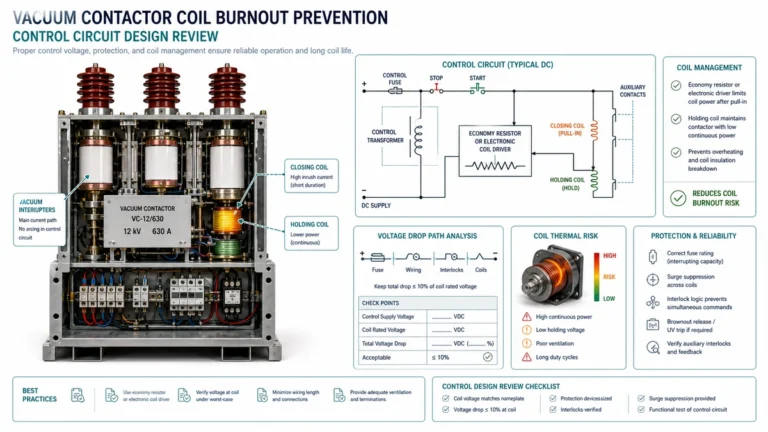
Situation: Ein 6,6-kV-Vakuumschütz, der einen 630-kW-Saugzugventilator steuerte, verzeichnete etwa 18 Monate nach der Installation Fehlauslösungen, die jeweils innerhalb der ersten 30 Sekunden nach jedem Startversuch des Motors auftraten.
Durchgeführte Messungen: Die an der Spule gemessene Spannung betrug unter stationären Bedingungen 88 V AC (Nennspannung 110 V AC). Während des Motorstarts zeigte die Oszilloskopaufzeichnung, dass die Spulenspannung für etwa 400 ms auf 61 V (55% der Nennspannung) abfiel, was zeitlich mit dem Einschaltstrom des Motors zusammenfiel. Die Ansprechschwelle lag laut OEM-Datenblatt bei <= 85% des Nennwerts (93,5 V). Der Spannungsabfall auf 61 V führte dazu, dass das Schütz ausschaltete, bevor der Motor den Einschaltstrom überwunden hatte.
Die Veröffentlichung einer Angebotsanfrage ohne Festlegung der vollständigen Spezifikationen zwingt die Lieferanten dazu, ihre Angebote auf der Grundlage von Annahmen zu erstellen, was zu Angeboten führt, die schwer zu vergleichen sind. Kennzeichnen Sie jede Zeile vor der Einreichung mit „Bestätigt“, „Ausstehend“ oder „Nicht zutreffend“.
| # | Parameter | Erforderliche Eingabe | Risiko durch versehentliche Auslassung |
|---|---|---|---|
| 1 | Nutzungskategorie | AC-3, AC-4, AC-3e oder anwendungsspezifisch gemäß IEC 60947-4-1 | Standardmäßig AC-3 bei Lasten mit hoher Trägheit oder Stecklasten |
| 2 | Nennbetriebsspannung (Ue) | Nennspannung zuzüglich Toleranz für den schlimmsten Fall bei Spannungsabfall/-anstieg | Angabe nur der Nennspannung; Nichtberücksichtigung des Spannungsabfalls beim Motorstart |
| 3 | Nennbetriebsstrom (Ie) | Vollaststrom bei der festgelegten Spannung Ue und der Einschaltdauerklasse | Verwendung der Kabelbelastbarkeit anstelle des tatsächlichen Nennstroms des Motors (FLA) |
| 4 | Nenn-Isolationsspannung (Ui) | Muss die höchste Spannung, die an offenen Kontakten auftritt, einschließlich transienten Spannungen, erreichen oder übersteigen | Nur Anpassung von Ui an Ue; Klasse für kurzzeitige Überspannung wird ignoriert |
| 5 | Nenn-Stoßspannungsfestigkeit (Uimp) | Überspannungskategorie für die Installation gemäß IEC 60947-1 | In den technischen Daten für Niederspannungsschaltanlagen vollständig weggelassen |
| 6 | Elektrische Lebensdauer | Erforderliche Zyklen bei Ie und Einsatzkategorie; bitte den garantierten Mindestwert oder den typischen Wert angeben | Akzeptierung der im Katalog angegebenen typischen Lebensdauer ohne vertraglich festgelegte Mindestlebensdauer |
| 7 | Mechanische Lebensdauer | Zählung der Leerlaufzyklen zur Beurteilung des Verschleißes von Spule und Mechanismus | Wird standardmäßig mit der elektrischen Lebensdauer gleichgesetzt |
| 8 | Steuerspannung (Uc) | Wechselstrom oder Gleichstrom, Spannungspegel, Toleranzband | Abweichung zwischen der Spannung der SPS-Ausgangskarte und der Nennspannung der Spule |
| 9 | Leistungsaufnahme der Spule | Einschalt-VA und Nenn-VA für Wechselstromspulen; Dauerleistung in Watt für Gleichstromspulen | Unterdimensionierung der Kontakte von Steuertransformatoren oder Relaisausgängen |
| 10 | Konfiguration der Hilfskontakte | Anzahl der NO- und NC-Kontakte, Nennstrom, Bauform | Ausgehend von der Standardkonfiguration 1NO+1NC, wenn das Projekt 2NO+2NC erfordert |
| 11 | Kurzschlussstromfestigkeit | Koordinierungstyp (Typ 1 oder Typ 2 gemäß IEC 60947-4-1); voraussichtlicher Fehlerstrom | Angabe eines Schützes ohne vorgelagerte SCPD-Daten |
| 12 | Verschmutzungsgrad | PD2 (Innenbereich), PD3 (leitfähiger Staub oder Kondenswasser) oder PD4 (Außenbereich oder Nassreinigung) | Standardmäßige Einstufung als PD2 in Umgebungen mit Zement, Getreide oder Chemikalien |
| 13 | Umgebungstemperaturbereich | Maximale Betriebstemperatur im Gehäuseinneren | Bei Raumtemperatur; die Temperatur im Gehäuseinneren kann 10–20 °C höher sein |
| 14 | Flughöhe Derating | Aufstellungshöhe in Metern; Leistungsreduzierung ab 2.000 m gemäß IEC 60947-1 erforderlich | Bei Projekten in Bergregionen oder auf Hochebenen außer Acht gelassen |
| 15 | Zertifizierungen und Normen | IEC 62271-106, UL 508, CSA C22.2, ATEX/IECEx-Zonenklassifizierung, falls zutreffend | Anerkennung der CE-Kennzeichnung als Ersatz für die UL-Zulassung bei nordamerikanischen Projekten |
| 16 | Rückverfolgbarkeit von Vakuumunterbrechern | Herstellername, Artikelnummer und verbleibende Mindestlebensdauer bei Auslieferung | Durch Dritte bereitgestellte Unterbrechungsdienste wurden ohne entsprechende Angabe ersetzt |
| 17 | Verpflichtung zur Verfügbarkeit von Ersatzteilen | Mindestanzahl der Jahre, in denen Ersatzteile nach der Auslieferung verfügbar sind; Teilenummern für Spule, Unterbrecher und Kontaktsatz sind aufgeführt | Lieferant stellt die Herstellung einer Unterbrecher-Variante 18 Monate nach der Auslieferung ein |
| 18 | Schaltfrequenz / Tastverhältnis | Vorgänge pro Stunde oder pro Schicht zur thermischen Leistungsreduzierung von Coils | Angegeben als AC-4-Betrieb ohne Angabe der Zyklen pro Stunde |
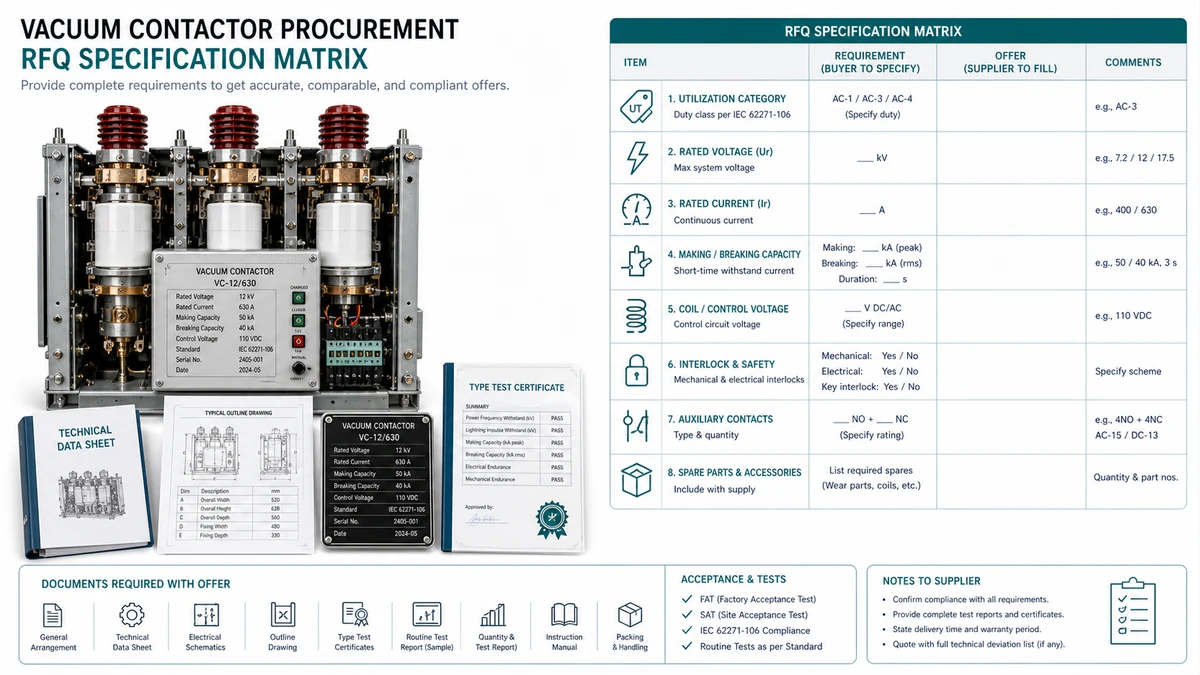
Umgebungstemperatur und elektrische Lebensdauer: Bei erhöhten Temperaturen beschleunigt sich die Kontaktabnutzung. Sollte die Innentemperatur Ihres Gehäuses 55 °C überschreiten, fordern Sie bitte Daten zur elektrischen Lebensdauer bei dieser Temperatur anstelle der Standardreferenz von 40 °C an.
Höhe und Isolationsspannung: Bei 3.000 m Höhe sind Ui und Uimp gegenüber den Nennwerten auf Meereshöhe um ca. 20% zu reduzieren oder es ist ein Schütz mit einem höheren Nenn-Uimp vorzusehen.
Der Unterschied zwischen einem glaubwürdigen und einem zweitklassigen Lieferanten lässt sich selten anhand eines Datenblatts erkennen – er zeigt sich vielmehr darin, was diese liefern können und was nicht, wenn man konkrete Fragen stellt. Fragen Sie jeden potenziellen Lieferanten nach folgenden Unterlagen: Typprüfberichte mit Prüfdaten und Angabe des Prüflabors, Daten zu elektrischen Dauerbelastungsprüfungen mit Kurven zum Betriebsverhalten bis zum Ausfall, Zertifikate für dielektrische Festigkeits- und Impulsprüfungen, Prüfberichte zur Temperaturerhöhung bei Nennstrom, Prüfprotokolle der Produktionscharge aus einer kürzlich erfolgten Lieferung sowie Daten zur Ausfallrate im Feld mit Angabe der zugrunde liegenden Basis.
| # | Bewertungskriterium | Gewicht | Bewertung (1–5) | Gewichtete Punktzahl | Erforderliche Nachweise |
|---|---|---|---|---|---|
| 1 | Konformität mit der Typprüfung (IEC 62271-106 oder gleichwertig) | 20% | Vollständiger Prüfbericht mit Laborakkreditierung | ||
| 2 | Daten zur elektrischen Lebensdauerprüfung für Ihre Einsatzkategorie | 20% | Dauerbetriebskurve oder tabellarisch aufgeführte Betriebszahlen bei Nennstrom Ie | ||
| 3 | Prüfprotokolle zur Serienfertigung | 10% | Beispiel für einen Prüfbericht aus einer aktuellen Produktionscharge | ||
| 4 | Umgebungsbedingungen (Höhe, Luftfeuchtigkeit, Korrosion, Vibration) | 15% | Leistungsreduzierungstabellen oder spezifische Prüfzertifikate | ||
| 5 | Daten zur Ausfallrate im Einsatz oder zur mittleren Betriebsdauer zwischen Ausfällen (MTBF) | 10% | Angegebene Flottengröße und Betriebsdauer | ||
| 6 | Verfügbarkeit von Ersatzteilen und Lieferzeitzusage | 10% | Schriftlich vereinbarte Lieferzeit für Vakuumunterbrecher und Spulen | ||
| 7 | Technischer Support | 5% | Benannter Ansprechpartner, Reaktionszeit gemäß SLA | ||
| 8 | Werksaudit oder Qualitätszertifizierung durch eine unabhängige Stelle | 5% | Geltungsbereich nach ISO 9001, Datum des letzten Audits | ||
| 9 | Rückverfolgbarkeit und Maßnahmen zur Eindämmung des Fälschungsrisikos | 5% | Rückverfolgbarkeit anhand der Seriennummer, autorisierte Vertriebskette |
Bewertungsanker: 5 = vollständige Dokumentation vorgelegt, unabhängig überprüft, keine Lücken; 4 = Dokumentation vorgelegt, mit geringfügigen Lücken, die innerhalb von 5 Werktagen geschlossen werden können; 3 = teilweise Dokumentation mit einem vom Lieferanten zugesagten Zeitplan; 2 = fehlendes Schlüsselkriterium mit vager Antwort des Lieferanten; 1 = keine Dokumentation verfügbar oder der Lieferant weigert sich, diese vorzulegen.
Mindestschwelle: Ein gewichteter Gesamtwert unter 3,0 sollte zum Ausschluss des Lieferanten führen, unabhängig vom Preis. Ein Wert zwischen 3,0 und 3,5 rechtfertigt eine bedingte Zulassung mit dokumentierter Risikoakzeptanz. Ein Wert über 4,0 wird für kritische Anwendungen oder Anwendungen mit hoher Zykluszahl bevorzugt.
Eine Ersatzteilstrategie, die für ein Zementwerk geeignet ist, in dem Schütze mit einer Auslastung von 80% ihrer Nennleistung betrieben werden, ist für einen Lebensmittelverarbeitungsbetrieb ungeeignet, der dasselbe Gerät mit einer Auslastung von 30% und vierteljährlichen geplanten Stillständen betreibt. Das nachstehende Schema verknüpft Bestandsentscheidungen mit drei Variablen: der Kritikalität der angesteuerten Last, der tatsächlichen Schaltfrequenz und der für Ihren Standort akzeptablen mittleren Zeit bis zur Wiederherstellung (MTTR).
| Klasse | Definition | Bestandsziel | Trigger „Neu anordnen“ |
|---|---|---|---|
| A – Kritisch | Lastausfälle führen zu einer Prozessabschaltung, einer Sicherheitsabschaltung oder zu Umsatzverlusten von mehr als 4 Stunden | Mindestens 1 kompletter Ersatz vor Ort; Vakuumflasche separat aufbewahren | Der Lagerbestand fällt unter 1 Einheit |
| B – Wichtig | Lastverluste beeinträchtigen die Leistung, es gibt jedoch eine Reserve- oder Bypass-Lösung | 1 Ersatzteil pro 4–6 installierte Geräte; Verschleißteile im Set | Der Kurs fällt unter 50% des Nennwerts |
| C – Unkritisch | Für das geplante Wartungsfenster tolerierbarer Lastverlust (>72 Stunden) | Gemeinsamer Lagerbestand oder Konsignationsware beim Lieferanten akzeptabel | Jährlicher Überprüfungszyklus |
| Schalthandlung | Typische Taktfrequenz | Bewertung von Thermosflaschen | Prüfpunkt für Spulen und Federn |
|---|---|---|---|
| Leicht (<= 30% der Nennlast) | Weniger als 10.000 Zyklen pro Jahr | Bei Erreichen von 50% der Nennlebensdauer oder nach Ablauf von 5 Jahren, je nachdem, was zuerst eintritt | 10 Jahre oder Generalüberholung |
| Mäßig (30–60%) | 10.000–50.000 Zyklen/Jahr | Bei 40% der Nennlebensdauer oder nach 3 Jahren | 6 Jahre oder Generalüberholung |
| Schwer (>60%) | Mehr als 50.000 Zyklen pro Jahr | Bei 25% der Nennlebensdauer oder bei der jährlichen Inspektion | 3 Jahre oder je nach Zustand |
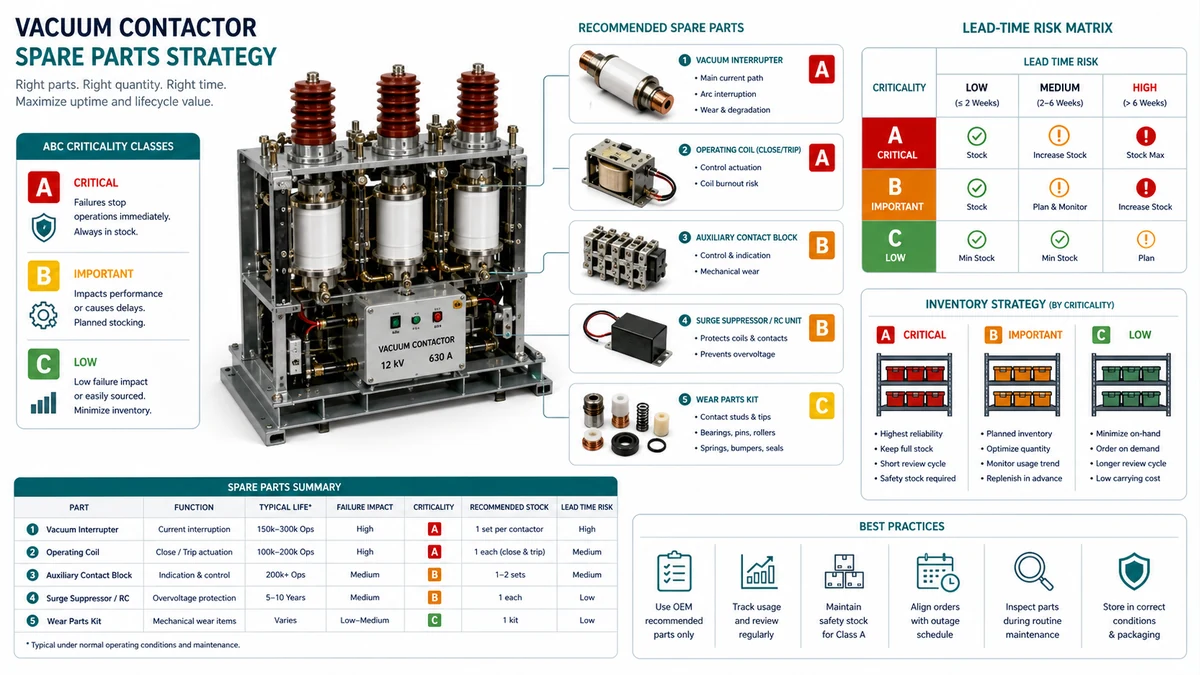
Für ein passgenaues Angebot sind strukturierte technische Daten erforderlich, nicht nur Nennspannung und Nennstrom. Die Übermittlung vollständiger technischer Daten bereits in der Anfragephase verkürzt den Bewertungszyklus und verringert das Risiko, dass ein ungeeignetes Produkt an den Einsatzort geliefert wird.
System- und Lastparameter
– Nennsystemspannung (kV) und Isolationsniveau (BIL, kV)
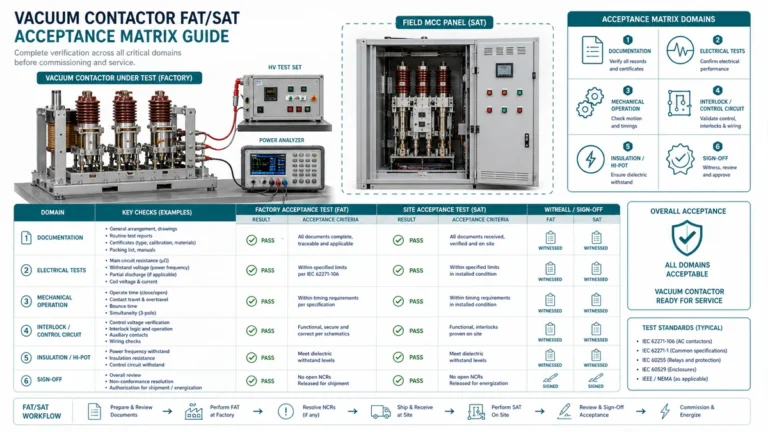
Verwenden Sie diese XBRELE-Referenzen, um die Feldentscheidung mit dem richtigen Produkt-, Test- und Beschaffungsablauf zu verbinden: XBRELE Produktseite, XBRELE Vakuum-Leistungsschalter-Programm, VCB-Rating-Leitfaden, VCB FAT/SAT Annahme-Checkliste, XBRELE-Vakuumschütz-Baureihe.
Für externen Methodenkontext vergleichen Sie die Site-Prozedur mit der öffentlichen IEEE C37.09 Normen Seite und wenden Sie dann das genaue OEM-Handbuch und die Projektspezifikation für die gelieferte Ausrüstung an.
Beispiel aus der Praxis: Bei einer Wartungsinspektion wurde bei einer Phase eine Abweichung von der Inbetriebnahme-Basislinie gemessen, während die beiden anderen Phasen stabil blieben. Das Team wiederholte die Messung mit verifizierten Leitungen, überprüfte das Timing und den Kontaktweg und nutzte die gemessene Abweichung, um ein Kontaktdruckproblem von einem allgemeinen Oberflächenreinigungsproblem zu unterscheiden.
AC-3 gilt für Käfigläufermotoren, bei denen das Schütz bei Blockierstrom schließt, aber nur den Betriebsstrom unterbricht. AC-4 umfasst zusätzlich die Betriebsarten „Plugging“, „Inching“, „Jogging“ und „Reversing“, bei denen das Schütz sowohl bei Blockierstrom schließen als auch unterbrechen muss.