¿Necesita las especificaciones completas?
Descargue nuestro Catálogo de productos 2025 para obtener planos detallados y parámetros técnicos de todos los componentes de los equipos de conmutación.
Obtener catálogo
Descargue nuestro Catálogo de productos 2025 para obtener planos detallados y parámetros técnicos de todos los componentes de los equipos de conmutación.
Obtener catálogo Descargue nuestro Catálogo de productos 2025 para obtener planos detallados y parámetros técnicos de todos los componentes de los equipos de conmutación.
Obtener catálogo
Specify dry-type transformer E, C and F performance from site exposure, temperature duty and fire requirements, then check the standard edition and report scope.
A dry-type transformer specification often arrives with a single line such as “environmental class E2, climatic class C2, fire behaviour F1” and nothing else. That line is a starting requirement or declaration. To review it, tie each code to the applicable standard edition, defined conditions and evidence for the offered configuration.
The practical consequence for a specifier is that you cannot buy “environmental performance” as one attribute. You have to decide, separately, what the insulation surfaces will actually be exposed to, what temperature history the unit will live through, and what the installation expects the unit to do if something catches fire nearby. Then you ask for evidence that matches those three decisions.
The distinctions that carry the most weight in practice are these: the environmental class is not an IP rating; the climatic class is not a winter minimum; and the fire behaviour class F1 has nothing to do with thermal insulation class F. Everything below builds on those three points.
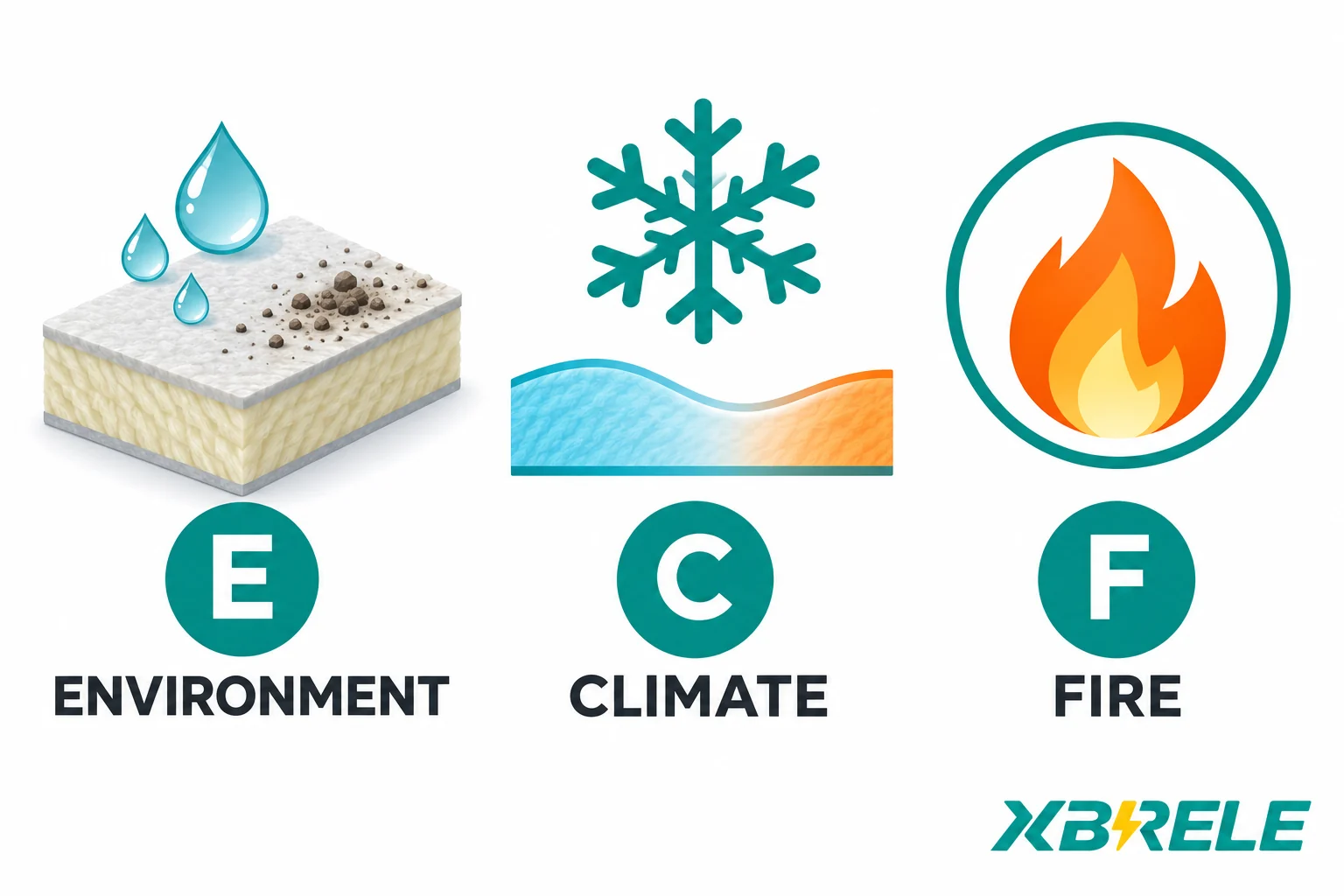
Three letters appear in dry-type transformer declarations, and they answer three separate questions.
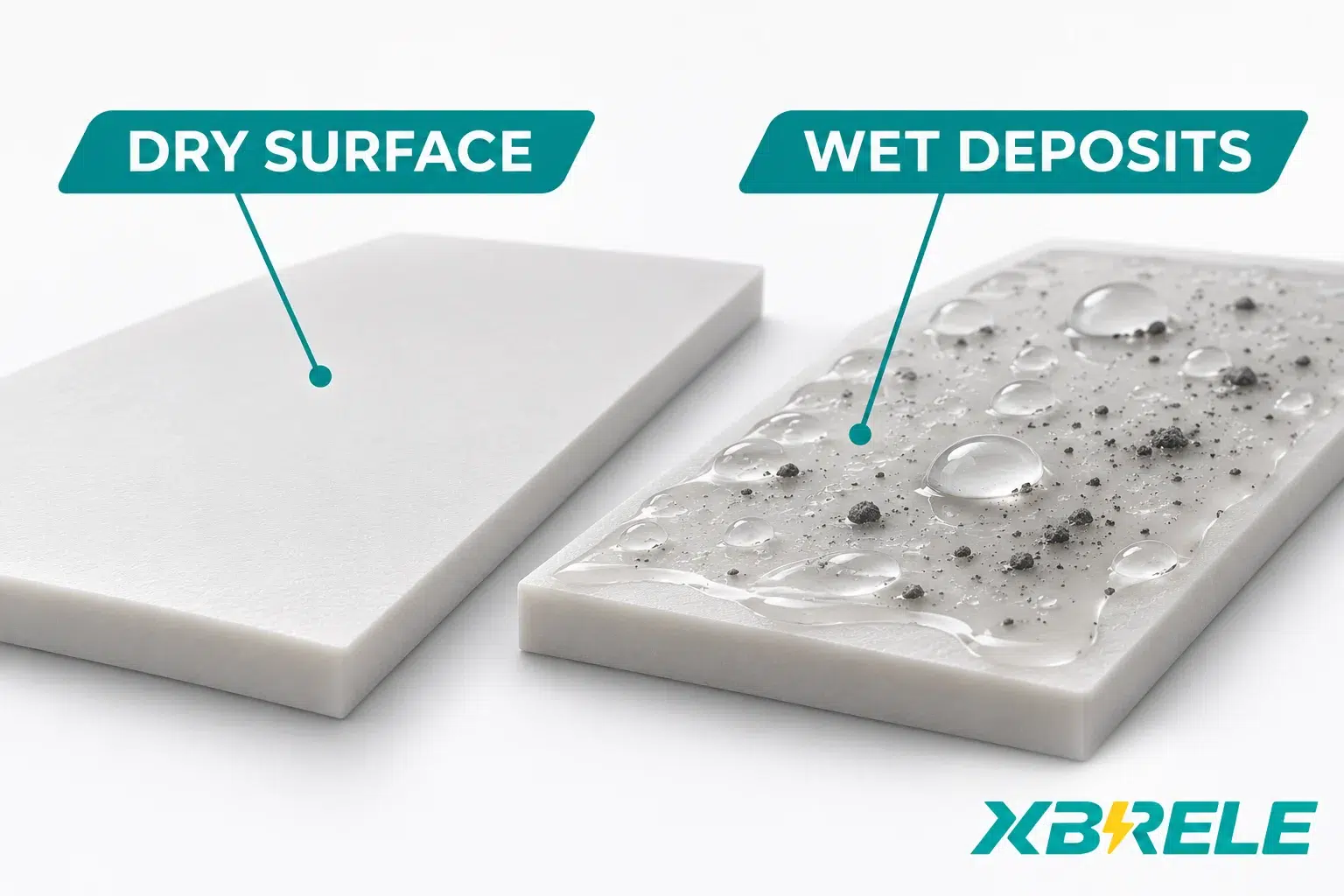
E describes the environment at the insulation surface. It is a statement about how the transformer behaves when humidity, condensation and airborne pollution are present. The physical concern is a wet, contaminated film bridging the creepage path across an insulator or between winding sections. A wet deposit can reduce the surface insulation performance even when the air clearance itself is unchanged.
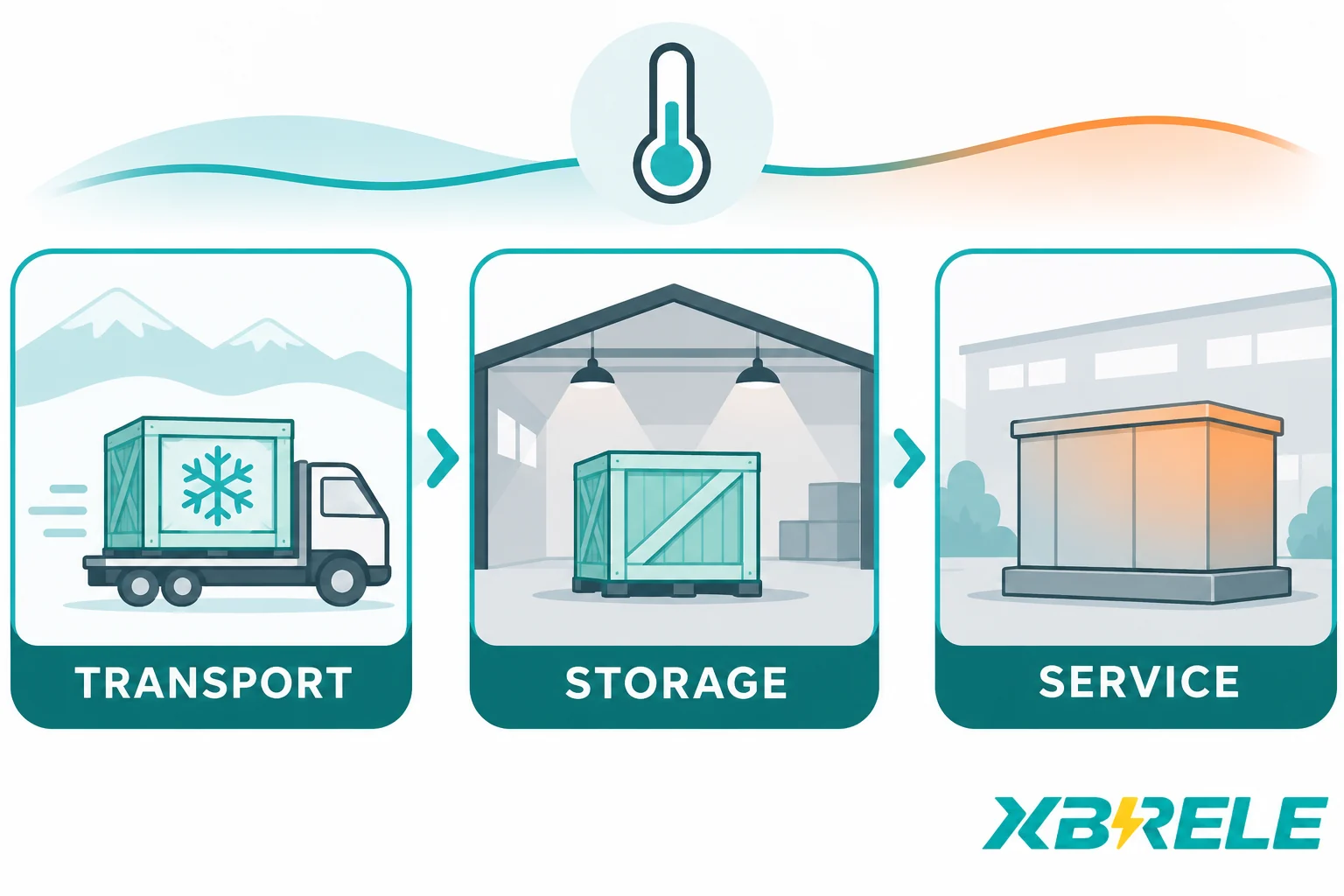
C describes climate as a temperature history. It addresses the declared cold-temperature and associated thermal-shock conditions. Specify transport, storage and service temperature requirements separately as well; a C code is not a complete hot-ambient thermal rating. A transformer does not experience one temperature; it experiences a sequence.
F describes fire behaviour. It is a statement about how the equipment responds when it is exposed to a defined fire test condition. It is about the unit’s contribution to a fire and its behaviour under fire exposure, judged by a defined test process.
Ask for the required axes separately. The IEC 60076-11:2018 publication abstract identifies revisions to climatic classes, the relationship between location and environmental class, and fire testing. The incorporated corrigendum and interpretation are also identified there. The abstract establishes the edition’s scope; the actual class definitions and assessment methods must be checked in the applicable standard and reports.
A worked example of the separation is visible in supplier catalogues. Hitachi Energy’s RESIBLOC product page lists environmental, climatic and fire codes as distinct feature bullets — E2, E3, E4 and C2, C3, C4 and F1 — and lists insulation-system temperature class F separately from all of them. That is a catalogue statement about one supplier’s product family, not a definition and not something that transfers to any other manufacturer, but it demonstrates the practical point: the letters are not interchangeable and F appears twice in the vocabulary for two different reasons.
What follows from this is a rule about tables. There is no universal table in which you look up your site and read off a class. The class definitions, the conditions attached to each class, and the test methods that establish them belong to a specific edition of the standard and to the specific report that was issued against it. This article therefore does not reproduce a normative class table, and any specification that relies on one copied from a website should be treated as unverified until the numbers are traced back to the edition in force for the project.
Environmental class selection goes wrong most often because the specifier substitutes a general impression of the site for the specific mechanism that damages insulation. “It is humid here” and “it is a coastal site” are useful starting descriptions, but incomplete inputs. What matters is where moisture condenses, what it condenses onto, and what is already sitting on that surface.
Relative humidity is a property of the air. Condensation is an event. Moisture damages dry-type insulation when it forms a film on a surface, and that happens when a surface drops below the dew point of the surrounding air — which can occur during shutdown or when warm humid air reaches equipment that remains cold. Overnight temperature changes do not automatically cause condensation; the surface and local dew-point temperatures must cross.
This is why hours-de-energised matters as much as humidity. Operating losses can keep some surfaces warmer than the air. During standby, that heat source disappears and surfaces follow the room and weather history. Whether or when condensation occurs depends on surface temperature and dew point, not simply on the number of idle months. Two rooms with identical annual average humidity can produce completely different insulation risk depending on whether the equipment inside is warm or cold.
For the surface-insulation assessment, identify whether the deposit is conductive as deposited or becomes conductive when damp. Even relatively non-conductive dust can obstruct cooling, so it still matters to the installation. Carbon dust from brushgear, steel dust from nearby fabrication, cement dust, and salt from marine air behave very differently from inert mineral filler, but several of them share the property of absorbing moisture and forming a conductive path where dry material would have been harmless. Salt is particularly stubborn because it is hygroscopic: it pulls moisture out of air that is not itself near saturation.
The combination is what the class is about. A dry contaminated surface may still withstand its rated voltage. A wet contaminated surface may not. That is why the two panels below are deliberately shown together rather than as separate hazards.
This is the single most common conflation in environmental specifications. An IP code describes an enclosure’s protection against the ingress of solid foreign objects and water, assessed on the enclosure. An environmental class describes a transformer’s performance under humidity, condensation and pollution conditions, assessed on the equipment. They are declared by different tests and they answer different questions.
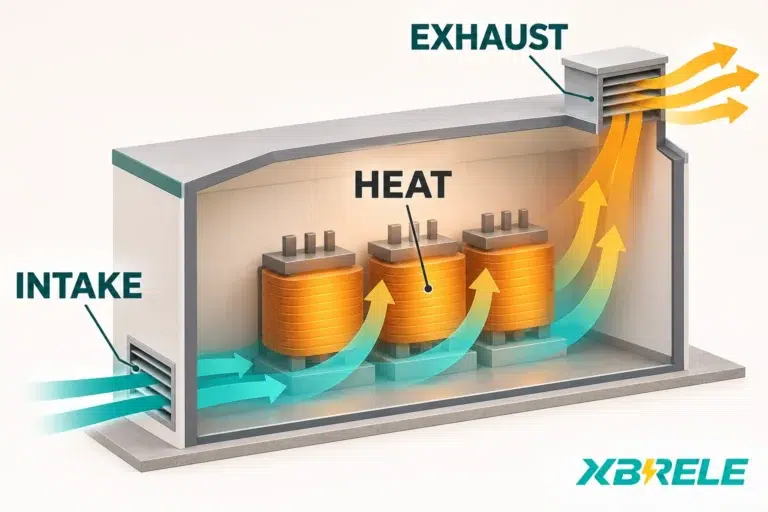
There are two practical ways this distinction bites. First, two transformers can carry the same IP code on their enclosures and have completely different environmental class performance, because the enclosure ingress test says nothing about what happens to a winding surface when moisture condenses inside a sealed box. Second, an enclosure can retain moisture already inside it; if internal surfaces fall below the local dew point, condensation can occur. Whether sealing or ventilation helps depends on air exchange, humidity and the temperature history. Breathing, drainage and anti-condensation heating are design decisions, not by-products of an IP number.
Two further things E does not mean: it is not flood resistance, and a coastal location does not automatically require the highest available code. A coastal site with a sealed, conditioned, positively pressurised electrical room and continuous duty presents a very different exposure from an open coastal yard, and a blanket “highest class” instruction hides that difference rather than resolving it.
The table below is a recording tool for the specification file. It is not a class table and it does not map any row to a class code; it exists so that the class conversation happens against observed conditions rather than adjectives.
| What you observe on site | What to record | Why it changes the environmental discussion | What it does not establish |
|---|---|---|---|
| Long de-energised periods in humid air | Hours or months de-energised per year; whether space heating or anti-condensation heaters exist | Cold surfaces at or below dew point hold a moisture film; operating heat may reduce condensation at some surfaces | Which class code to write |
| Visible dust on ledges, windings or floor | Dust colour, source, stickiness, deposition rate, cleaning interval | Conductive or hygroscopic deposits bridge creepage distances once damp | Whether the deposit is conductive — that needs a source description, not a look |
| Salt mist or chemical spray | Distance to shoreline, prevailing wind, wash-down practice, airborne chemical source | Salt stays conductive at humidities well below saturation and is difficult to remove | That a marine-class unit is required |
| Enclosure and ventilation arrangement | Declared IP, filter type, fan or louvre arrangement, cable entry sealing, drain points | Filters stop particles but not vapour; a sealed box can trap moisture | That the arrangement is adequate for the site |
| Cleaning method and access | Water jet, hose, dry cloth, vacuum, solvent; who does it and how often | Cleaning may exceed the offered assembly’s approved water exposure and may introduce moisture | That the enclosure is unsuitable |
| Altitude and air density | Altitud del emplazamiento sobre el nivel del mar | Cooling and insulation coordination are affected; usually handled as a separate correction in the standard | Any class substitution |
The output of that exercise is a paragraph of prose in the specification, not a letter. “The transformer is installed in an unheated room, is de-energised for approximately [n] months per year, is exposed to [dust description] at a deposition rate requiring cleaning every [period], and is cleaned by [method]” is a usable input. A class code is the conclusion someone reaches from that paragraph, and the supplier should be asked to state which conditions their declared class actually covers.
The second letter is usually handled as a cold-climate checkbox: the site reaches minus something in January, so a cold-weather class is selected. That misses most of what the climatic axis is about.
The climatic specification must address temperature history across the life of the equipment; the selected C class addresses its defined cold/thermal-shock conditions, and the life of a dry-type transformer includes three distinct phases that are not the same installation.
Transport. The unit leaves a factory in a crate, travels by road, rail or sea, and may sit on a quay or in an unheated container for weeks. A container in direct sun in a tropical port reaches temperatures far above any site ambient; the same container crossing a winter route reaches temperatures well below it. Neither extreme is a service condition, but both act on the insulation, the resin, gaskets, cable insulation and any accessory already fitted.
Storage. Site storage is the phase most often left out of the specification. A transformer stored in a shaded warehouse, one stored in a site container with no ventilation, and one stored on an open yard under a tarpaulin are three different exposures. Condensation during storage is a real mechanism, and it interacts with the environmental axis: a unit that sat damp for a year starts service with a different surface condition than one that was kept dry.
Service. Once energised, the transformer’s own losses raise its temperature above ambient. That is helpful in a cold climate and unhelpful in a hot one. Rated output is tied to a reference ambient, and a unit selected for a moderate ambient will not deliver the same output at a higher one — that derating conversation belongs in the offer, together with the cooling class and the agreed losses at the declared reference temperature.
Two temperatures define a range; the movement between them defines the stress. Consider a cast-resin unit that has stabilised at a low ambient overnight and is energised at full load in the morning. The conductor heats within minutes; the resin around it heats more slowly. The two materials have different expansion behaviour, and at low temperature the resin is less able to accommodate the differential. Repeated cold starts are a different duty from continuous operation at the same average temperature.
Cold also changes material behaviour in less obvious places. Lubricants in fan bearings stiffen. Some elastomers lose elasticity. Electronic temperature controllers and displays typically publish their own ambient range on the datasheet, and it is frequently narrower than the transformer’s. That last point deserves its own warning: a declared climatic class for the transformer does not automatically extend to every accessory fitted to it. If the unit is specified for a cold site, the fan motors, thermostats, RTDs, tap-link hardware and any monitoring electronics should be checked individually against the same extremes, and the specification should say so.
Before a climatic class is written into a purchase document, four things should be agreed in writing:
Once those four are agreed, the class code becomes a check rather than a guess. And if the answers differ between phases — for example, storage down to a lower figure than service — the specification should carry both, because a class agreed only for service may leave the storage phase unaddressed.
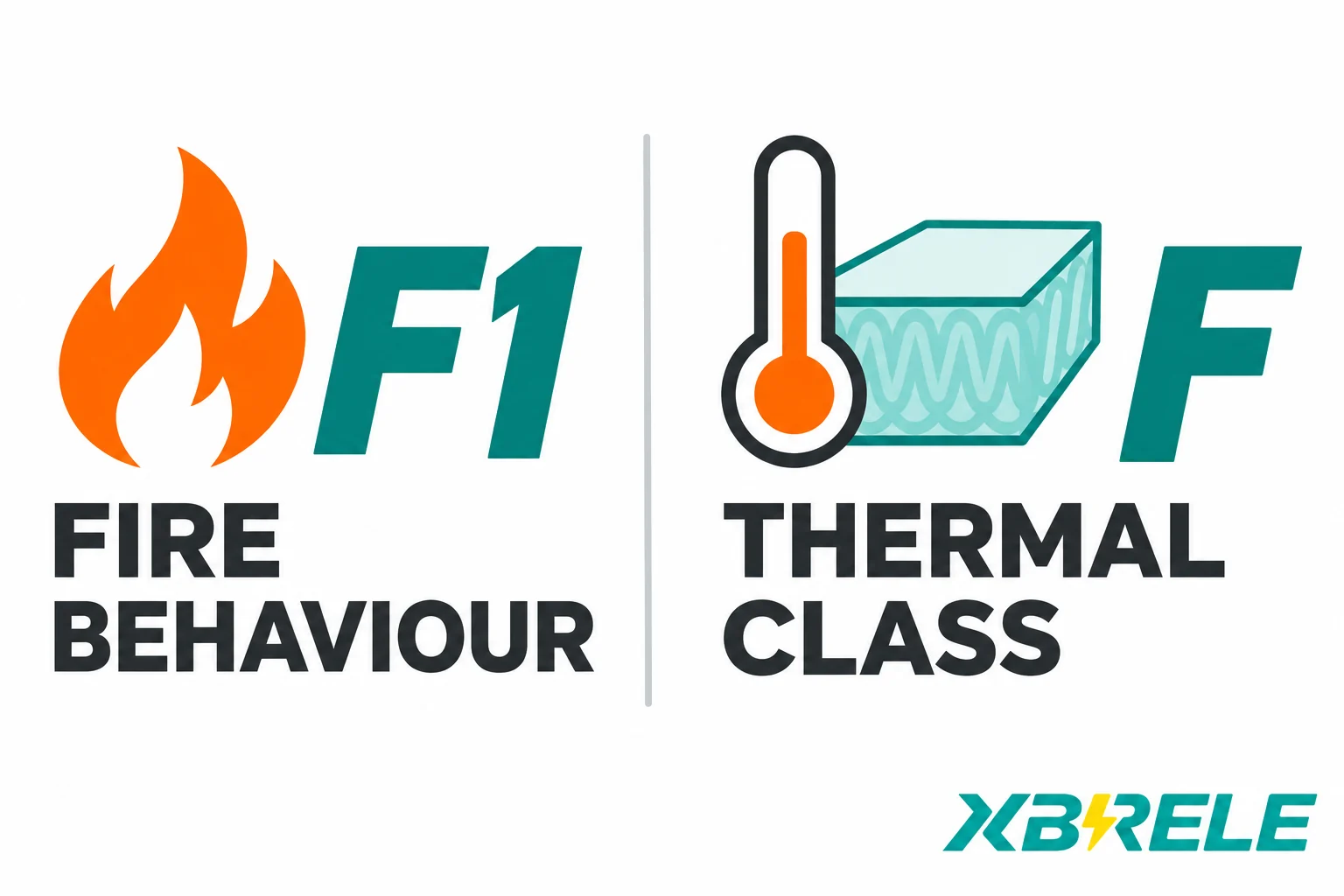
Two different “F” designations sit close together in dry-type transformer documentation, and they are routinely mixed up in specifications.
F1 is a fire behaviour classification. It is a statement about how the equipment responds under a defined fire test, produced by a test process. The IEC 60076-11:2018 abstract records that the revision revised the fire-test process, which is a reminder that the method itself is edition-specific: a result obtained under an earlier process is not the same evidence as a result obtained under the current one.
Thermal class F is an insulation system temperature classification. It belongs to the long-established family of insulation classes — A, E, B, F, H and others — where the letter identifies a defined thermal class. It describes the thermal endurance of the insulation system: at what temperature the materials can operate for the intended life without degrading faster than the design allows. It is a statement about ageing, not about fire.
The distinction is easiest to hold onto if you ask what each one is for. F1 tells a building designer something about what the equipment does when there is a fire. Thermal class F informs the insulation-system design; the permissible operating temperatures also depend on the transformer thermal design and specified duty. Neither is a substitute for the other, and neither is a property you can convert into the other.
Three things are commonly expected from these letters and are not supplied by either.
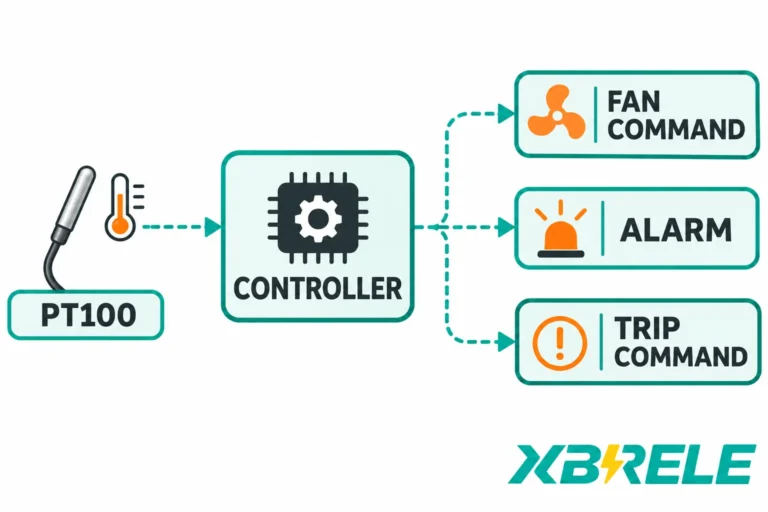
Neither supplies a trip temperature. Winding temperature protection is a separate design decision. It depends on where the sensors are placed, what they are set to, what they command — alarm, trip, or fan control — and how the settings relate to the insulation system’s limits under the actual duty. The letters describe classifications; the settings come from the protection design agreed for the project, and they should be stated explicitly in the offer rather than inferred from a class code.
Neither makes the installation fireproof. A fire behaviour classification is a description of tested behaviour under defined conditions. It is not a waiver of the surrounding fire strategy. Room construction, fire resistance of boundaries, penetration sealing, the fire performance of connected cables, separation from combustibles, detection and extinguishing arrangements are all separate decisions made by the building designer, and a transformer cannot compensate for any of them.
Neither is a maintenance statement. Both letters describe performance under test conditions. Neither says anything about how often filters need changing, how often connections should be re-torqued, or whether the room needs a heater.
For an indoor installation, the honest way to handle it is to write down the fire question before touching class codes. Is the transformer inside a building that people occupy? What separates it from occupied space? What is the escape route? Is the room sprinklered or otherwise protected? What cables leave the room and where do they go? Are there combustible materials stored nearby?
Those answers determine whether the fire behaviour classification is a design input at all, or whether the building strategy already dominates. In some installations the room is the answer and the equipment classification is secondary; in others, the equipment behaviour is what makes a compact indoor installation acceptable. The specification should show which case the project is in, because otherwise the class code is decoration.
A class declaration is only worth what it can be traced to. Four traceability items should appear in every offer that carries E, C and F claims.
Class definitions and test methods change between editions. A declaration that says only “to IEC 60076-11” is ambiguous, and ambiguity in a purchase document turns into a dispute later. The declaration should name the edition applied, including any corrigendum or interpretation incorporated at the date of the order — the 2018 edition of IEC 60076-11 with its 2019 corrigendum and 2020 interpretation is the reference structure here, and an older edition is a different reference. Naming an edition is not the same as asserting compliance with it; it is stating which rulebook the evidence was produced under, which is what a reviewer needs.
Ask for three separate entries, not one string. A combined line such as “E2/C2/F1” hides which axis was actually tested and which was assumed. If the answer to one axis is “not applicable to this configuration” or “not declared”, that is a useful answer and should be recorded as such rather than filled in from the neighbouring axis.
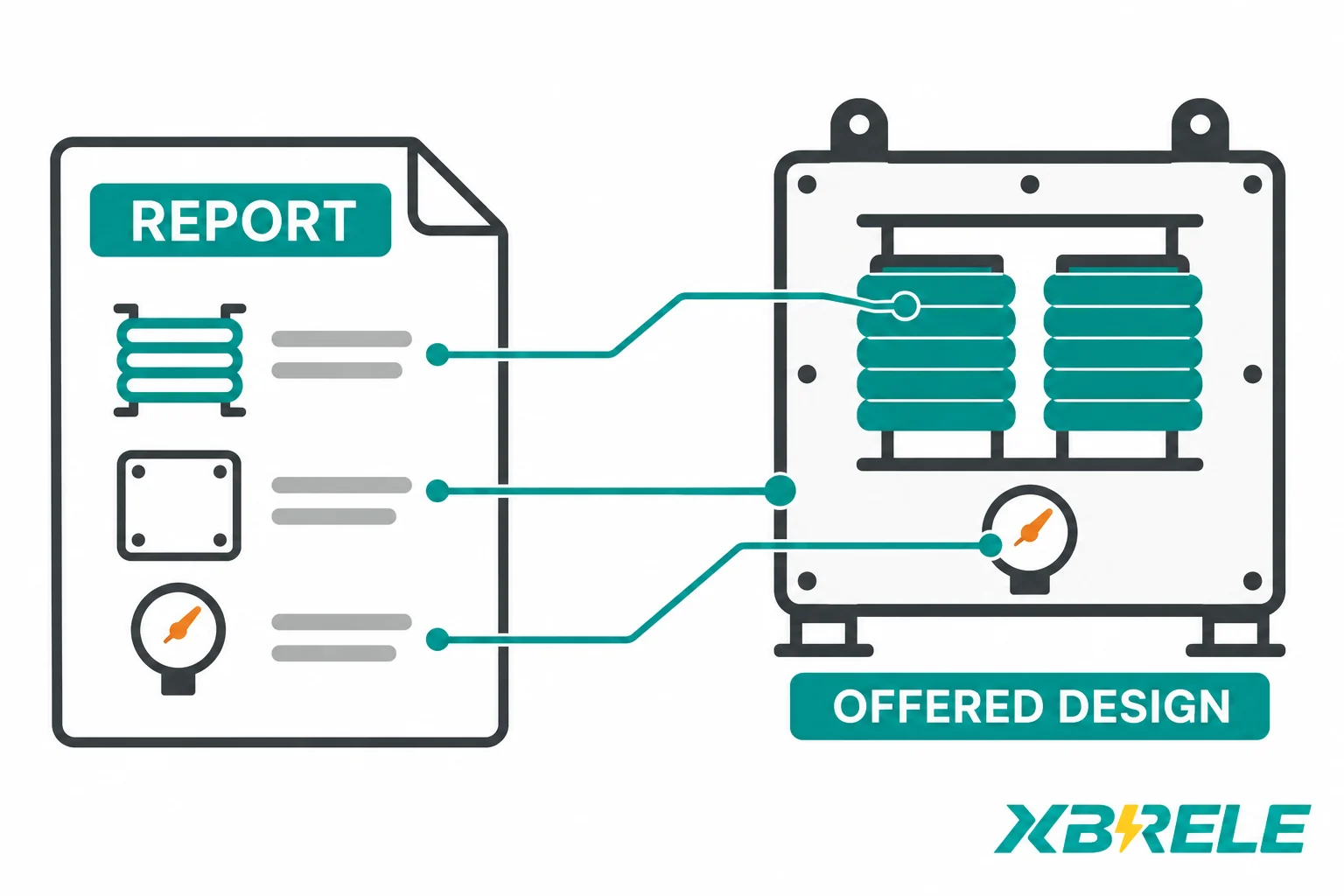
A test report covers a specific design: winding construction and material system, insulation materials, conductor material and size, rating, cooling arrangement, enclosure type and dimensions, fan arrangement, and accessory set. Change the enclosure from open to a sheet-steel enclosure with filters and a different fan, and the tested configuration no longer matches what is being offered. This does not automatically invalidate the class, but it does mean someone has to do a similarity assessment and put it in writing.
Routine factory tests are performed on every unit and are essential, but they demonstrate something different. They verify that the delivered unit matches its design in the ways the routine test schedule checks — they do not demonstrate behaviour under humid, contaminated or fire conditions. If a supplier answers a request for environmental or fire class evidence with a routine test certificate, the request has not been answered.
The table below sets out what to ask for and what a usable response looks like. It is a procurement aid, not a reproduction of any standard clause.
| Evidence item | Por qué es importante | What a usable answer looks like |
|---|---|---|
| Standard edition and amendments | Class definitions and test processes differ between editions | “IEC 60076-11:2018, corrigendum 2019, interpretation 2020” written explicitly |
| Environmental, climatic and fire classes | One combined string conceals which axis was tested | Three separate entries, each with its own supporting reference |
| Tested configuration | Enclosure, ventilation, winding system, accessories and rating all bound the report | A description of the tested object specific enough to compare with the offer |
| Report identification | A class claim without a report is an assertion | Report number, testing laboratory, date of issue, ratings covered |
| Result and conditions | The class alone does not say what conditions produced it | The class obtained plus the test conditions recorded in the report |
| Similarity assessment | Most offers differ from the tested object somewhere | A written comparison of differences and their effect on each declared class |
For XBRELE’s cast-resin dry-type range, the catalogue page should be treated as the starting point for a project-specific request rather than as a class declaration. The published catalogue discusses ventilation and enclosure arrangements and lists loss values at several reference temperatures, but those tables are not a statement of environmental, climatic or fire class performance for any particular configuration, and loss figures must be agreed for the actual rating, cooling class and reference temperature in the offer. The right request to send is the offered rating, cooling arrangement, enclosure description and general arrangement, so that the classes and losses come back tied to the configuration you are buying.
The value of separating the three axes shows up when two projects that look superficially similar resolve in opposite directions. Both cases below are conditional illustrations — the requirements drive the answer, not the adjectives.
A distribution room 400 m from the shoreline houses a transformer that is energised for roughly two months a year and sits de-energised for the rest. The room is unheated, has louvred ventilation, and is cleaned annually with a hose. Summer air is warm and humid; winter nights drop below freezing.
Read against the axes, this is not simply “severe”. The environmental question is dominated by the de-energised cold-surface condensation mechanism combined with salt and dust on the insulation surfaces, plus a cleaning method that introduces water. The climatic question is dominated by the storage and de-energised extremes and by the cold-start transient when the unit is energised in winter, not by the summer maximum. The fire requirements still need the responsible designer’s assessment of the detached room, adjacent hazards and applicable rules. Its location alone does not settle the required class.
The resulting requirements are a mix. Anti-condensation heating or a sealed enclosure with a controlled breathing path, because the surface temperature problem is real. Corrosion-resistant hardware and a realistic inspection interval, because salt will be present regardless of class. A written statement of which humidity, condensation and pollution conditions the declared environmental class covers, because that is the axis carrying the risk. Cold-start capability at the agreed minimum ambient, extended to the fan motors and any controller. And a cleaning instruction that does not involve a hose, because the maintenance practice as described would defeat several of the other measures.
Note what is not in that list: an instruction to buy the highest code available on every axis. The required fire class must follow the project fire assessment; it cannot be inferred from the condensation or cold-temperature requirements.
A second project places a transformer in a filtered, air-conditioned electrical room inside an occupied building. Duty is continuous, ambient is stable and dry, and the room is cleaned by vacuum. The building is sprinklered and the room has a fire-rated boundary, but the unit sits close to a cable route serving occupied floors.
Here the environmental axis is easy, and honesty about that is worth more than a high code: the described measures reduce the expected surface exposure, subject to loss of conditioning, shutdowns and maintenance. The climatic axis is dominated by the room’s conditioned range and by cooling performance at the declared ambient, not by cold. The fire axis is the one carrying the design weight, because the installation is inside a building and the fire strategy has to be coherent across the equipment, the room and the cables. The evidence request follows the same shape as case one, but the emphasis moves to the fire-behaviour test basis and to how the classification fits with the room’s protection concept.
Running both cases through the same three questions, and getting different answers, is the whole method. A single blanket instruction to a supplier — “give us the highest environmental class” — does not explain which service condition or evidence requirement each code is intended to satisfy.
The following wording can be adapted directly into a purchase specification. The bracketed entries are descriptive fields to be completed for the project; they are not optional.
The dry-type transformer shall be rated [rating] kVA, [voltage] kV, with [cooling arrangement], installed in [room description, including heating, ventilation and cleaning regime]. The manufacturer shall declare separately, and in writing, the environmental class, the climatic class and the fire behaviour class claimed for the offered configuration, and shall state the edition of the standard against which each is declared, including any corrigendum or interpretation incorporated at the date of order. Where the offered configuration differs from the configuration covered by the supporting report in enclosure, ventilation, winding construction, accessory set or rating, the manufacturer shall provide a written similarity assessment identifying each difference and its effect on each declared class. Evidence for class declarations shall be identified by report number, testing laboratory and date of issue. Routine factory tests shall not be submitted in place of type-test evidence for class declarations. The offer shall state agreed no-load and load losses at the declared reference temperature, the cooling rating, the ambient temperature basis for the rating, and shall be accompanied by a general arrangement drawing showing the enclosure and ventilation arrangement.
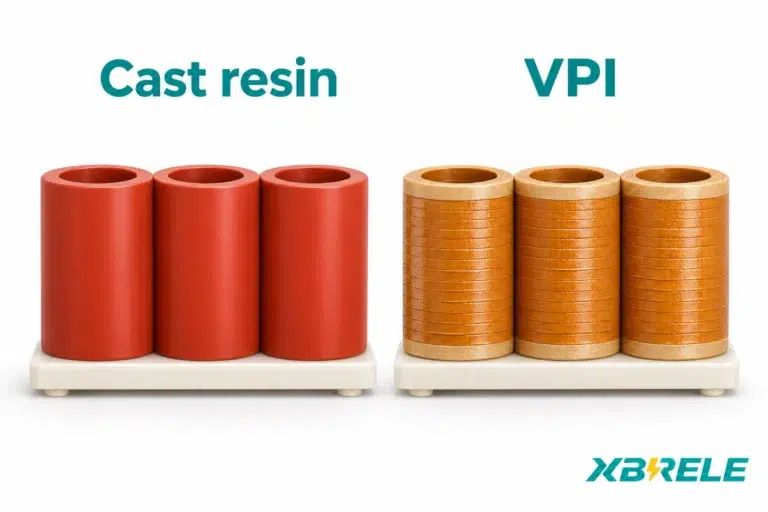
For a cast-resin dry-type project, start from the dry-type transformer catalogue page to confirm the range and the available enclosure and ventilation arrangements, then send the completed brief — rating, cooling arrangement, enclosure description, site exposure paragraph and the climatic extremes — through the contact page. Requests that arrive with those four items attached can be answered against a specific configuration; requests that arrive as a class code alone cannot.
No, and the two are declared by different tests. An IP code is an enclosure property: it describes protection against solid foreign objects and water ingress, assessed on the enclosure. The environmental class is an equipment-level declaration about how the transformer behaves with humidity, condensation and pollution present at its insulation surfaces. A high IP rating does not demonstrate environmental class performance, because condensation can form inside an enclosure if its internal surfaces are below the local dew point. Sealing, ventilation and moisture control influence that risk in different ways. An IP rating also says nothing about whether the dust that does get in is conductive. Specify both if both matter, but do not treat either as evidence for the other.
They use the same letter for two unrelated vocabularies. F1 is a fire behaviour classification: it states how the equipment responds under a defined fire test, and the test process itself is edition-specific, which is why the edition has to be named. Thermal class F is an insulation system temperature classification describing thermal endurance of the insulation system. Actual operating limits also depend on the transformer thermal design and duty. One is about behaviour in a fire, the other about thermal endurance in normal service. Thermal class F does not imply any fire behaviour classification, F1 does not imply any thermal class, and neither supplies a winding temperature trip setting — that comes from the protection design agreed for the project.
No. Class codes describe tested performance under defined conditions; they say nothing about the maintenance work a specific installation requires. Cleaning intervals are set by the actual deposition rate on site, filter changes by the dust loading, and inspection of connections and anti-condensation heaters by the environment and the duty cycle. A higher environmental class may give more margin against a given exposure, which can be valuable where access for cleaning is difficult, but it does not remove the cleaning, the inspection or the heater checks. Where a room is conditioned and continuous duty keeps the winding warm, the declared class and the maintenance plan must both suit the specified exposure; neither replaces the other.
No. A report covers a specific tested design — winding construction and material system, insulation materials, rating, cooling arrangement, enclosure type and dimensions, fan arrangement and accessory set. A family claim that spans several ratings is a claim about a family; Its applicability may extend beyond the tested unit under the standard’s permitted assessment rules, but that coverage must be demonstrated. When the configuration you are ordering differs from those, the supplier should provide a written similarity assessment identifying each difference and its effect on each declared class. That is why an offer should arrive with the report identification, the tested configuration description and the similarity statement, rather than with a class code alone.