Precisa das especificações completas?
Faça o download do nosso Catálogo de Produtos 2025 para obter desenhos detalhados e parâmetros técnicos de todos os componentes do quadro elétrico.
Obter catálogo
Faça o download do nosso Catálogo de Produtos 2025 para obter desenhos detalhados e parâmetros técnicos de todos os componentes do quadro elétrico.
Obter catálogo Faça o download do nosso Catálogo de Produtos 2025 para obter desenhos detalhados e parâmetros técnicos de todos os componentes do quadro elétrico.
Obter catálogo
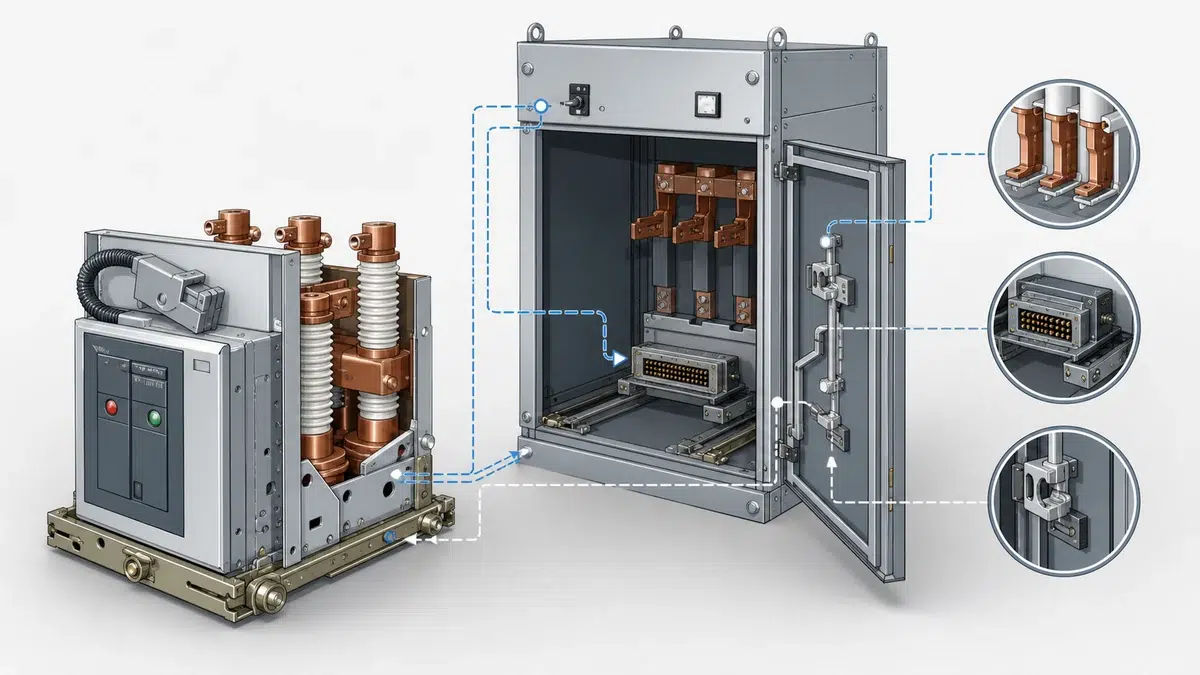
Uma folha de dados RFQ para VCB não deve tratar o circuito de controle como uma lista genérica de acessórios. Em disjuntores a vácuo de média tensão, a bobina de fechamento, as bobinas de disparo, os contatos auxiliares, a função antipumping, o motor de carregamento, os contatos de bloqueio, os intertravamentos de extração e os intertravamentos do lado do conjunto de manobra determinam se o disjuntor pode ser fechado, aberto, testado, extraído e integrado com segurança à lógica do painel.
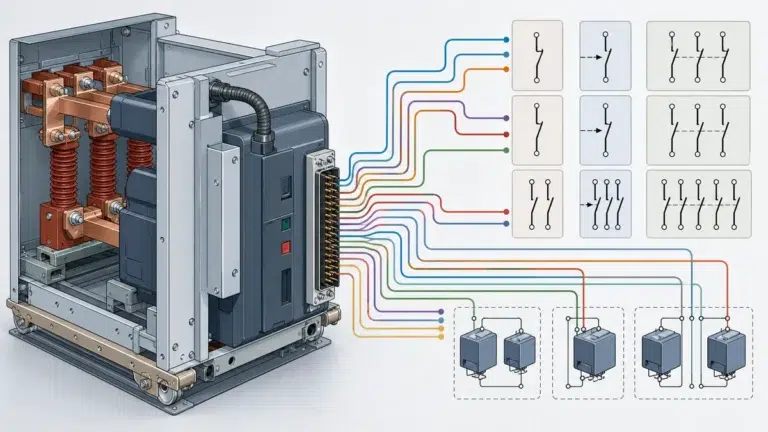
Para especificar claramente os intertravamentos do circuito de controle do VCB na RFQ, o comprador deve exigir que os fornecedores identifiquem cada dispositivo do circuito, cada contato permissivo ou de bloqueio e cada interface entre o disjuntor e o conjunto de manobra. A RFQ não deve presumir que todas as marcas de VCB usam nomes de terminais ou arranjos de intertravamento idênticos. A documentação da ABB para VD4X e SecoVac, as orientações da Schneider para auxiliares elétricos EvoPacT e a documentação Siemens de VCB mostram que as funções de controle e intertravamento se distribuem entre auxiliares montados no disjuntor, disparadores, motores, circuitos antipumping, travas mecânicas, interfaces do carro ou de extração e lógica de posição do conjunto de manobra.
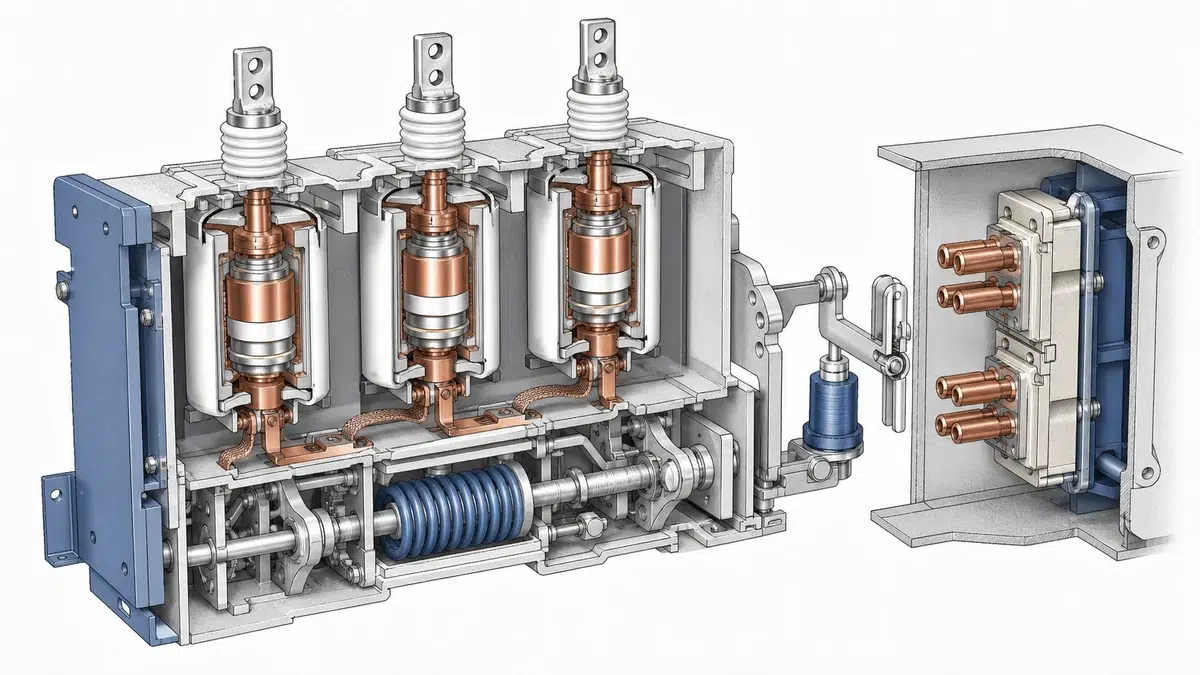
A folha RFQ deve exigir uma tabela dedicada ao circuito de controle do VCB. No mínimo, o fornecedor deve declarar se cada item está incluído, como é identificado no diagrama e onde termina.
| Campo da RFQ | O que o fornecedor deve declarar | Por que isso é importante |
|---|---|---|
| Disparador de fechamento / bobina de fechamento | Identificação do dispositivo, referências dos terminais, caminho do comando de operação e contatos de bloqueio em série | A documentação ABB VD4X e SecoVac identifica disparadores ou bobinas de fechamento como elementos centrais do circuito de controle. |
| Disparador em derivação / bobina de disparo | Quantidade, identificações dos dispositivos, referências dos terminais e caminho do comando de disparo | A ABB VD4X distingue disparadores em derivação, enquanto a SecoVac descreve bobinas de disparo no circuito de controle. |
| Relé ou função antipumping | Identificação do dispositivo, localização lógica e interação com o comando de fechamento | ABB VD4X e SecoVac mencionam relés antipumping; a Schneider alerta que certas opções de fiação podem anular a função mecânica antipumping. |
| Motor de carregamento | Terminais do motor, caminho de alimentação, contatos de proteção ou controle e interface de indicação de mola carregada | ABB VD4X e SecoVac identificam o motor de carregamento como parte do circuito de controle do disjuntor. |
| Contatos auxiliares do mecanismo | Quantidade de contatos, estado normal, função e referências dos terminais | A ABB VD4X distingue os contatos auxiliares do mecanismo; a SecoVac menciona a chave auxiliar 52. |
| Contatos do ímã de bloqueio | Informar se são usados, sua posição no circuito e a condição controlada | A ABB VD4X distingue os contatos do ímã de bloqueio no circuito de controle do disjuntor. |
| Contatos auxiliares de intertravamento de botões | Informar se são fornecidos, sua função e interação com os botões locais de fechar e abrir | A ABB VD4X identifica separadamente os contatos auxiliares de intertravamento de botões. |
| Contato de bloqueio de fechamento | Identificação do contato, condição operacional e informação se bloqueia o fechamento elétrico | A ABB SecoVac descreve um contato de bloqueio de fechamento no circuito de fechamento/intertravamento. |
| Intertravamentos do carro, de extração ou da posição extraível | Contatos ou interfaces mecânicas relacionados às posições de teste/serviço/desconectado | A ABB SecoVac descreve componentes opcionais de intertravamento do carro e intertravamentos de disparo positivos e negativos relacionados à extração. |
| Intertravamentos do lado do conjunto de manobra | Interface de intertravamento com seccionadora, chave de aterramento ou painel | A Siemens documenta o intertravamento de VCB por mecanismos de seccionadora ou chave de aterramento no lado do conjunto de manobra. |
A RFQ deve solicitar o diagrama real do fornecedor, não apenas uma declaração de catálogo como “circuito de controle padrão”. A folha também deve exigir que o fornecedor identifique quais contatos são montados no disjuntor, no carro e no conjunto de manobra.
O circuito de fechamento é a parte do esquema de controle do VCB em que a ambiguidade da RFQ costuma criar riscos de aquisição. A documentação ABB SecoVac descreve um circuito de fechamento/intertravamento que inclui bobina de fechamento, relé antipumping, contato de bloqueio de fechamento, chave auxiliar 52, motor de carregamento, bobinas de disparo e componentes opcionais de bloqueio e intertravamento do carro. A documentação ABB VD4X também distingue o disparador de fechamento, contatos auxiliares, contatos do ímã de bloqueio, contatos auxiliares de intertravamento de botões, motor de carregamento, disparadores em derivação e relé antipumping. Consulte as opções de disjuntores a vácuo como ponto de partida prático para associar o formato de disjuntor necessário à aplicação.
A RFQ deve, portanto, incluir estes campos do circuito de fechamento:
| Campo do circuito de fechamento | Entrada exigida na RFQ |
|---|---|
| Origem do comando elétrico de fechamento | Local, remoto ou ambos, conforme exigido pelo projeto |
| Identificação do disparador / bobina de fechamento | Código exato do dispositivo do fornecedor e referência do diagrama |
| Caminho de contatos do comando de fechamento | Todos os contatos em série com o comando de fechamento, incluindo os contatos permissivos e de bloqueio |
| Dispositivo antipumping | Função por relé ou mecanismo, com localização no diagrama |
| Contato de bloqueio de fechamento | Informar se está incluído e sua condição de operação |
| Permissivo de mola carregada | Informar se o fechamento depende de energia armazenada ou da indicação de mola carregada |
| Interação da chave auxiliar | Explicar como a chave auxiliar 52 ou os contatos do mecanismo são usados no caminho de fechamento |
| Intertravamento de botões | Informar se os contatos de intertravamento dos botões locais estão incluídos |
| Interface do terminal | Números dos terminais para a fiação do comando de fechamento do cliente |
| Requisitos dos desenhos do fornecedor | Apresentar o diagrama elementar completo e o diagrama de terminais com a proposta |
A folha de dados deve evitar especificar uma topologia de circuito não documentada. Em vez disso, deve exigir que o fornecedor mostre a topologia real e identifique cada elemento permissivo ou de bloqueio.
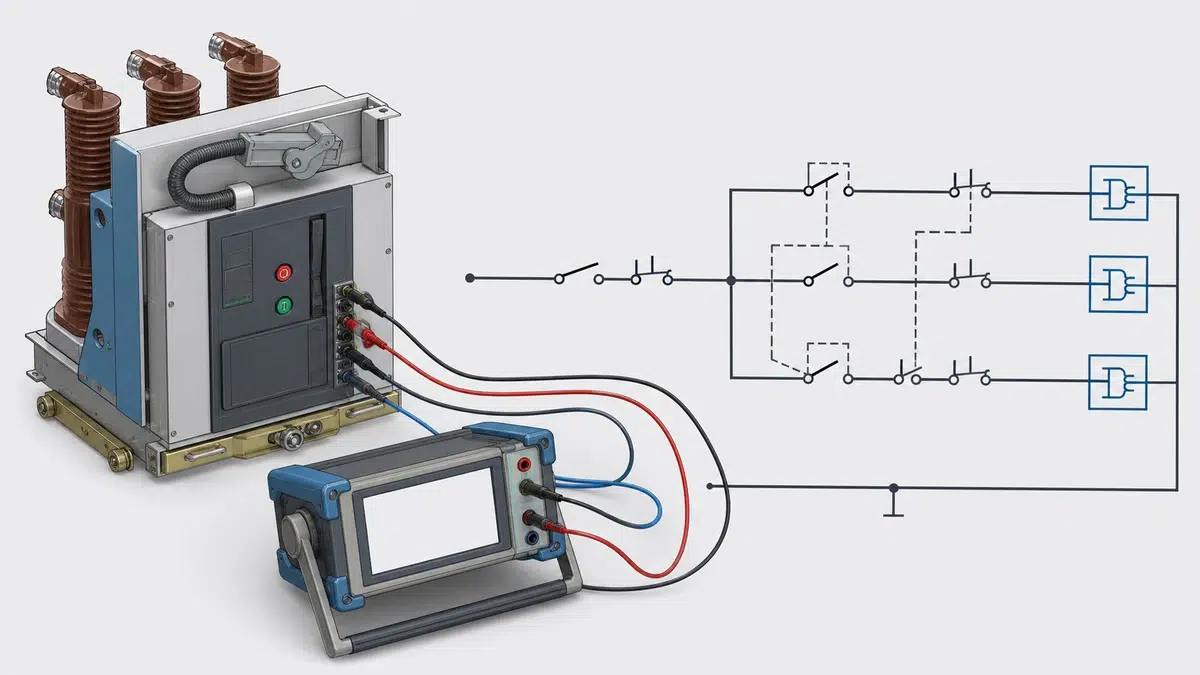
Antipumping não é apenas o nome de um relé em uma lista de peças. É um requisito funcional destinado a impedir tentativas repetidas de fechamento quando o comando permanece ativo após um disparo ou uma sequência de fechamento malsucedida. As documentações ABB VD4X e SecoVac mencionam relés antipumping no circuito de controle do disjuntor. As orientações da Schneider acrescentam uma importante cautela de fiação: os contatos auxiliares do próprio disjuntor não devem ser ligados em série com o disparador e o contato de fechamento de forma a anular o sistema mecânico antipumping. A Schneider diferencia esse arranjo inseguro do intertravamento por contatos auxiliares de outros disjuntores. O guia de classificação e seleção de VCB ajuda a traduzir o serviço do sistema nos dados do disjuntor que têm de ser confirmados.
Na RFQ, isso significa que o comprador deve incluir uma declaração específica sobre antipumping, em vez de presumir que seja padrão.
| Campo RFQ de antipumping | Declaração exigida |
|---|---|
| Método antipumping | O fornecedor deve identificar o relé, a função do mecanismo ou o arranjo combinado utilizado |
| Localização do antipumping no diagrama | O fornecedor deve mostrar a função no desenho de controle |
| Comportamento com comando de fechamento mantido | O fornecedor deve descrever como o fechamento repetido é impedido |
| Restrição dos contatos auxiliares próprios | O fornecedor deve confirmar que os contatos auxiliares do disjuntor não são usados de forma a anular o antipumping |
| Intertravamento por outro disjuntor | O fornecedor deve identificar qualquer intertravamento por contatos auxiliares de outros disjuntores, se exigido pelo projeto |
| Referência de ensaio | Quando solicitado, o fornecedor deve incluir a verificação antipumping no procedimento FAT ou de teste funcional |
Este é um campo obrigatório para intertravamento de circuito de controle na RFQ de VCB, pois a inclusão formal de um relé antipumping não prova, por si só, que a fiação final preserve o comportamento antipumping previsto.
Os circuitos de disparo devem ser documentados separadamente do circuito de fechamento. A documentação ABB VD4X distingue disparadores em derivação, enquanto a ABB SecoVac descreve bobinas de disparo no circuito de controle. A SecoVac também descreve intertravamentos de disparo positivos e negativos relacionados à extração; por isso, uma RFQ de VCB extraível não deve tratar a extração apenas como característica mecânica do painel.
A RFQ deve solicitar estes campos:
| Campo de disparo e extração | Entrada exigida na RFQ |
|---|---|
| Quantidade de bobinas de disparo | O fornecedor deve informar quantidade e identificações dos dispositivos |
| Referências dos terminais das bobinas de disparo | O fornecedor deve fornecer números dos terminais e referências dos diagramas |
| Identificação do disparador em derivação | O fornecedor deve identificar os disparadores em derivação, quando aplicável |
| Fontes dos comandos elétricos de disparo | Fontes de comando locais, remotas, por relé de proteção ou outras definidas pelo projeto |
| Intertravamento de disparo relacionado à extração | O fornecedor deve informar se estão incluídos intertravamentos de disparo positivos ou negativos |
| Componentes de intertravamento do carro | O fornecedor deve identificar componentes opcionais de bloqueio ou intertravamento do carro, se aplicável |
| Dependência da posição | O fornecedor deve informar se os permissivos de disparo ou fechamento dependem das posições serviço, teste ou desconectado |
| Procedimento de teste | Quando solicitado, o fornecedor deve incluir verificações funcionais do disparo e do intertravamento de extração |
A RFQ não deve impor quantidades não verificadas de bobinas de disparo ou números de terminais. Deve exigir que o fornecedor os declare e forneça os diagramas elementares e de terminais reais.
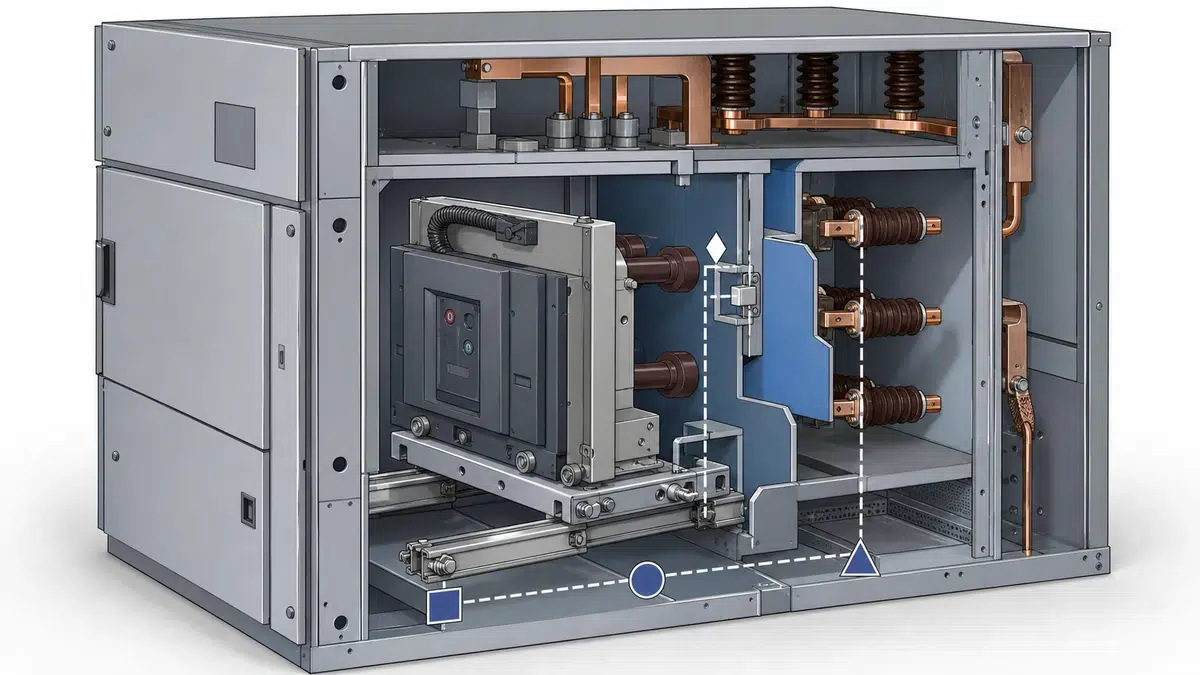
A documentação Siemens descreve intertravamentos elétricos e mecânicos para VCB, inclusive intertravamento do seccionador ou da chave de aterramento no lado do conjunto de manobra por mecanismos de bloqueio magnético e prevenção de fechamento mecânico e elétrico dependente da posição. Essa evidência é importante, pois uma RFQ que solicite apenas “intertravamento elétrico incluído” pode não considerar a interface entre o VCB e o conjunto de manobra. Para planejar testemunhos e registros, alinhe as evidências à lista de verificação de aceitação de fábrica e em campo do VCB.
A folha de dados deve dividir os intertravamentos em funções montadas no disjuntor, no carro e no conjunto de manobra.
| Categoria de intertravamento | Campos obrigatórios da RFQ |
|---|---|
| Intertravamentos elétricos montados no disjuntor | Ímãs de bloqueio, contatos de bloqueio de fechamento, contatos de intertravamento de botões e contatos auxiliares |
| Intertravamentos mecânicos montados no disjuntor | Prevenção mecânica de fechamento, bloqueio de botões locais ou funções de travamento baseadas no mecanismo |
| Intertravamentos do carro ou de extração | Contatos de posição, componentes de intertravamento do carro e intertravamentos de disparo relacionados à extração |
| Intertravamentos do lado do conjunto de manobra | Interfaces de seccionador, chave de aterramento, porta do painel ou bloqueio magnético, quando necessário |
| Prevenção de fechamento dependente da posição | O fornecedor deve informar quais posições permitem ou impedem o fechamento mecânico e elétrico |
| Responsabilidade pelos terminais | O fornecedor deve definir se os contatos terminam no bloco de terminais do disjuntor, do carro ou do conjunto de manobra |
| Responsabilidade de coordenação | O fornecedor deve identificar quais intertravamentos estão incluídos no fornecimento do VCB e quais são responsabilidade do fabricante do painel |
Para a aquisição do VCB, a abordagem mais segura é exigir uma matriz de intertravamento preenchida. O fornecedor deve marcar cada condição como permissivo de fechamento, bloqueio de fechamento, iniciador de disparo, apenas indicação ou não aplicável.
Os contatos auxiliares não são intercambiáveis sem a definição de sua função, estado normal e temporização. A documentação ABB VD4X diferencia contatos auxiliares do mecanismo, contatos do ímã de bloqueio e contatos auxiliares de intertravamento de botões. A documentação ABB SecoVac menciona a chave auxiliar 52. As orientações Schneider também destacam que os contatos auxiliares do próprio disjuntor exigem cuidado quando usados próximos ao disparador e ao contato de fechamento. O manual de instruções ABB VD4X é a fonte primária para o requisito específico do produto mencionado aqui.
A RFQ deve exigir uma tabela de contatos com estes campos:
| Campo do contato auxiliar | Entrada exigida na RFQ |
|---|---|
| Identificação do contato | Identificação do fornecedor, como auxiliar do mecanismo, chave auxiliar 52, contato de bloqueio ou contato de intertravamento de botão |
| Função | Indicação, permissivo, bloqueio, função relacionada a antipumping ou intertravamento |
| Definição do estado normal | Estado definido em relação ao disjuntor aberto/fechado e, quando relevante, à posição do carro |
| Quantidade disponível | O fornecedor deve declarar o número de contatos de reserva e utilizados |
| Localização do contato | Disjuntor, mecanismo, carro ou conjunto de manobra |
| Destino da fiação | Circuito interno, terminal do cliente ou interface do conjunto de manobra |
| Restrições | O fornecedor deve declarar quaisquer restrições ao uso do contato no circuito de fechamento |
| Referência do desenho | Referência exata da linha do diagrama e do terminal |
A RFQ não deve apenas solicitar “contatos auxiliares NA/NF”. Deve exigir o mapeamento funcional dos contatos para que o esquema de controle não seja mal interpretado durante a engenharia do painel.
Uma tabela RFQ prática pode reunir os campos obrigatórios de circuito de controle e intertravamento em uma única programação preenchida pelo fornecedor. O comprador pode emitir a tabela com campos “a preencher pelo fornecedor” em vez de inserir valores presumidos.
| Não. | Campo da folha de dados | Resposta exigida do fornecedor |
|---|---|---|
| 1 | Diagrama de controle do VCB | Enviar o diagrama elementar completo |
| 2 | Diagrama de terminais | Enviar referências dos terminais do cliente |
| 3 | Disparador de fechamento / bobina de fechamento | Identificar identificação, terminais e caminho do circuito |
| 4 | Disparador em derivação / bobina de disparo | Identificar identificação, terminais e fontes de comando |
| 5 | Relé ou função antipumping | Identificar o método e a localização no diagrama |
| 6 | Motor de carregamento | Identificar terminais e contatos de controle |
| 7 | Contatos auxiliares do mecanismo | Fornecer tabela de contatos e funções |
| 8 | Chave auxiliar 52 | Identificar os contatos usados nos circuitos de disparo, fechamento, indicação ou intertravamento |
| 9 | Contatos do ímã de bloqueio | Informar se está incluída e qual condição bloqueia |
| 10 | Contatos auxiliares de intertravamento de botões | Informar se estão incluídos e como afetam a operação local |
| 11 | Contato de bloqueio de fechamento | Identificar o contato, a condição operacional e a posição no circuito |
| 12 | Contato auxiliar próprio no caminho de fechamento | Confirmar que a fiação não anula a função antipumping |
| 13 | Intertravamento por contato auxiliar de outro disjuntor | Identificar se o projeto exige intertravamento por outros disjuntores |
| 14 | Componentes de intertravamento do carro | Informar se está incluído e fornecer referências dos diagramas |
| 15 | Intertravamentos de disparo relacionados à extração | Informar o arranjo de disparo positivo ou negativo, se aplicável |
| 16 | Prevenção de fechamento dependente da posição | Definir o comportamento nas posições serviço, teste, desconectado e durante a extração, conforme aplicável |
| 17 | Intertravamento de seccionador ou chave de aterramento | Definir a interface elétrica ou mecânica do lado do conjunto de manobra |
| 18 | Mecanismo de bloqueio magnético | Informar se é usado no intertravamento do lado do conjunto de manobra |
| 19 | Prevenção mecânica de fechamento | Definir as condições que impedem fisicamente o fechamento |
| 20 | Prevenção elétrica de fechamento | Definir contatos ou circuitos que impedem o fechamento elétrico |
| 21 | Verificações funcionais FAT | Listar verificações de fechamento, disparo, antipumping, intertravamento de posição e funções de bloqueio |
| 22 | Limites do fornecimento | Definir o que é fornecido com o VCB e o que é fornecido pelo fabricante do conjunto de manobra |
Esta tabela mantém a RFQ baseada em fatos. Ela solicita ao fornecedor VCB a declaração dos dispositivos, funções e desenhos reais, em vez de impor uma filosofia genérica de controle a diferentes projetos de disjuntores.
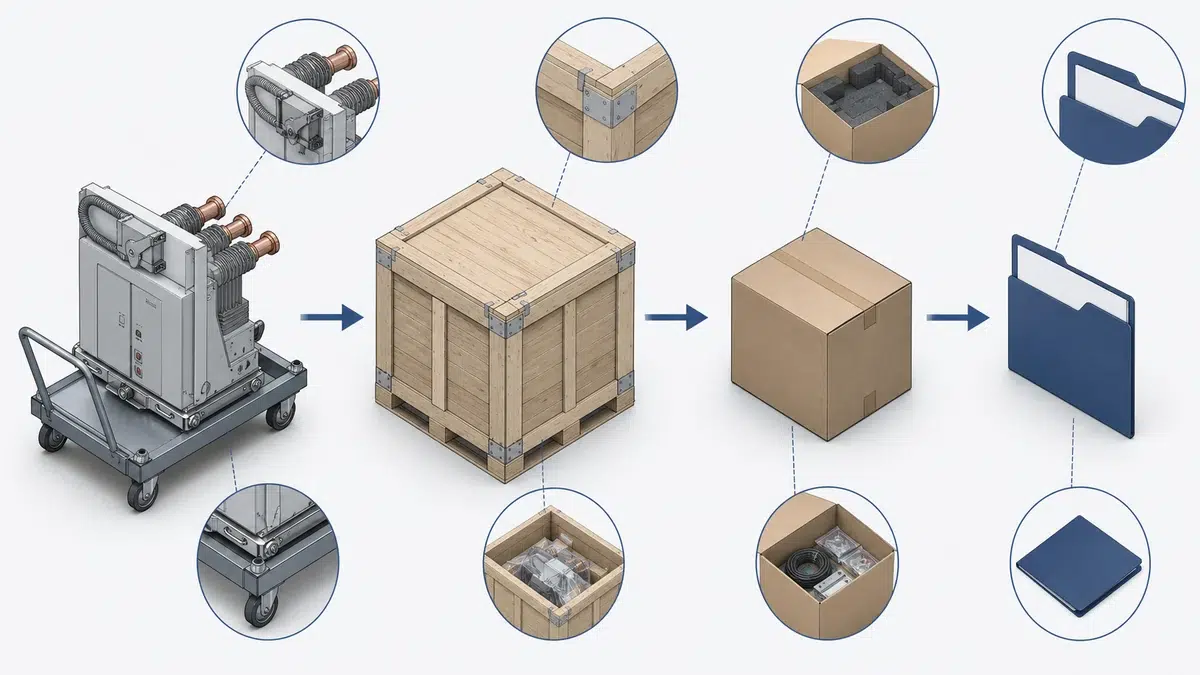
A RFQ pode incluir a seguinte redação:
“O fornecedor do VCB deverá fornecer uma folha de dados completa de circuito de controle e intertravamento para o disjuntor ofertado. A documentação deverá identificar o disparador ou a bobina de fechamento, o disparador em derivação ou as bobinas de disparo, o relé ou a função antipumping, o motor de carregamento, os contatos auxiliares do mecanismo, os contatos do ímã de bloqueio, os contatos auxiliares de intertravamento de botões, os contatos de bloqueio de fechamento, os contatos da chave auxiliar 52, os intertravamentos do carro ou de extração e quaisquer interfaces de intertravamento do lado do conjunto de manobra necessárias à coordenação com seccionador ou chave de aterramento. O fornecedor deverá fornecer diagramas elementares, diagramas de terminais e uma tabela de contatos que mostre a função, localização, estado normal e destino da fiação de cada contato de controle ou intertravamento. O fornecedor também deverá confirmar que os contatos auxiliares próprios do disjuntor não estão ligados de forma a anular a função antipumping prevista.” Use o guia de diagnóstico de falhas operacionais do VCB para distinguir causas relacionadas com o circuito de comando, a bobina, o encravamento ou o mecanismo após uma operação falhada.
Essa redação permanece dentro dos conceitos documentados de circuitos de controle VCB e exige que a proposta revele os detalhes importantes para a análise de engenharia.
É uma programação preenchida pelo fornecedor que identifica as funções de fechamento, disparo, antipumping, carregamento, contatos auxiliares, bloqueio, extração e intertravamento com o conjunto de manobra. Deve incluir referências de diagramas e terminais, funções dos contatos e limites de fornecimento para que o comprador possa verificar como o VCB será controlado e intertravado no conjunto de manobra.
O campo mais importante é a declaração do fornecedor sobre como o antipumping é implementado e protegido contra fiação incorreta do circuito de fechamento. A documentação ABB VCB identifica relés antipumping como parte do circuito de controle, e as orientações Schneider alertam que os contatos auxiliares próprios do disjuntor não devem ser ligados em série com o disparador e o contato de fechamento de forma a anular o sistema mecânico antipumping.
Os contatos auxiliares geralmente indicam ou acompanham o estado do mecanismo do disjuntor, como a chave auxiliar 52 ou os contatos auxiliares do mecanismo. Os contatos de intertravamento são usados para permitir, bloquear ou coordenar operações como fechamento, disparo, operação por botão, extração, operação do seccionador ou coordenação da chave de aterramento. Alguns contatos podem aparecer no mesmo diagrama de controle, mas a RFQ deve exigir que o fornecedor declare a função real de cada contato.
É um contato usado no circuito de fechamento ou de intertravamento para impedir o fechamento elétrico em condições definidas. A documentação ABB SecoVac descreve um contato de bloqueio de fechamento junto com a bobina de fechamento, o relé antipumping, a chave auxiliar 52, as bobinas de disparo, o motor de carregamento e componentes opcionais de bloqueio e intertravamento do carro. A RFQ deve exigir que o fornecedor identifique o contato, a condição operacional e sua posição no circuito de fechamento.
Significa que o fechamento do VCB pode ser impedido mecanicamente ou eletricamente dependendo de sua posição ou da posição dos dispositivos associados do conjunto de manobra. A documentação Siemens descreve intertravamentos elétricos e mecânicos de VCB, incluindo intertravamento de seccionador ou chave de aterramento por mecanismos de bloqueio magnético e prevenção de fechamento mecânico e elétrico dependente da posição. A RFQ deve exigir que o fornecedor defina quais posições permitem ou bloqueiam o fechamento.