Нужны полные технические характеристики?
Загрузите наш каталог продукции 2025 года, чтобы ознакомиться с подробными чертежами и техническими параметрами всех компонентов распределительного устройства.
Получить каталог
Загрузите наш каталог продукции 2025 года, чтобы ознакомиться с подробными чертежами и техническими параметрами всех компонентов распределительного устройства.
Получить каталог Загрузите наш каталог продукции 2025 года, чтобы ознакомиться с подробными чертежами и техническими параметрами всех компонентов распределительного устройства.
Получить каталог
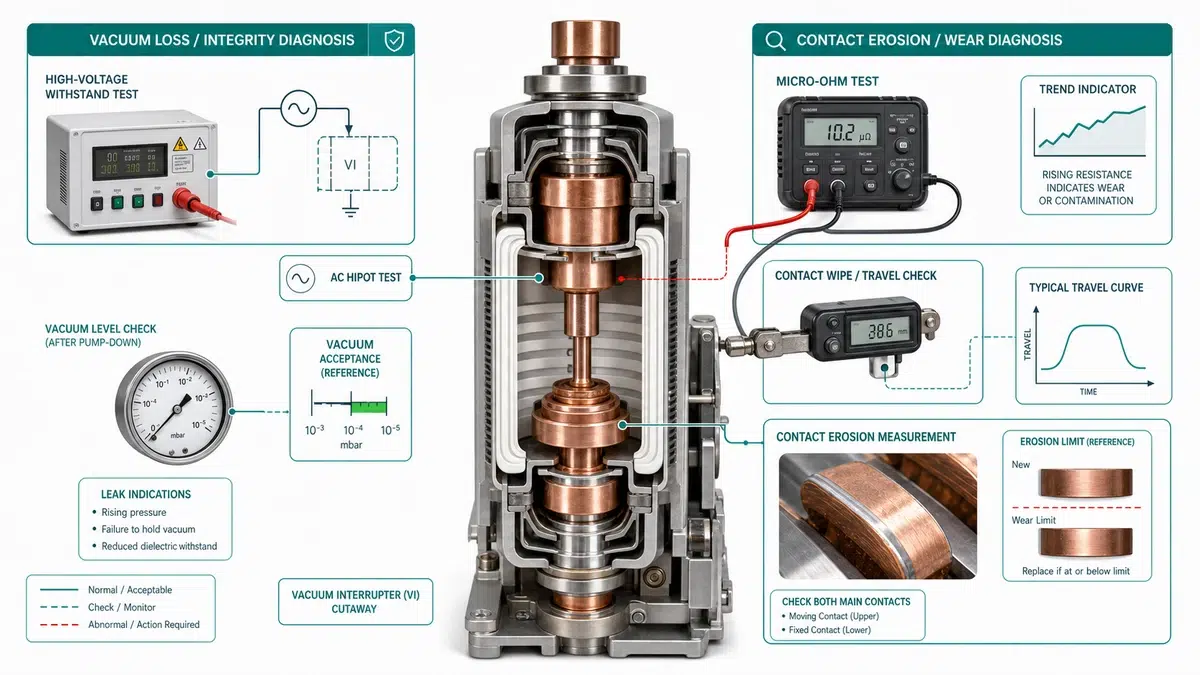
Потеря вакуума и эрозия контактов могут вызывать схожие симптомы в вакуумном выключателе, но это не одна и та же неисправность. Потеря вакуума - это потеря диэлектрической целостности внутри герметичного корпуса прерывателя. Эрозия контактов - это механический и электрический износ контактных поверхностей после коммутации тока нагрузки или тока повреждения.
Практическое правило простое: неудачный тест на целостность вакуума указывает на замену прерывателя; эрозия контактов должна быть подтверждена перемещением, стиранием, индикатором эрозии и сопротивлением контактов. Не заменяйте прерыватель в сборе, пока не разделите эти два вида отказа.
Используйте эту таблицу поиска и устранения неисправностей перед разборкой полюсного узла. В ней указаны первая проверка, вероятная первопричина и последующие действия для наиболее распространенных симптомов на местах.
| Симптом | Первый тест | Вероятная первопричина | Следующее действие |
|---|---|---|---|
| Hi-pot не работает при разомкнутых контактах | Вакуумная проверка герметичности | Потеря вакуума внутри прерывателя | Выведите из эксплуатации и замените прерыватель |
| Hi-pot проходит, но сопротивление контактов растет | Микроомный тест на 100 А | Эрозия контактов, загрязнение или низкая контактная сила | Проверьте ход и протирание, прежде чем принимать решение о замене |
| Индикатор эрозии находится на пределе | Механическая проверка | Контактная эрозия в конце пособия | Замените прерыватель или узел полюса |
| Открытый зазор короче, чем значение OEM | Измерение путешествий | Износ контактов или ошибка в механизме навески | Сравните с пределом обслуживания OEM и отрегулируйте или замените |
| Перезапуск или прерывание тока с задержкой | Hi-pot плюс рекорд времени | Потеря вакуума или прогрессирующая эрозия | Выполните полную диагностическую последовательность и просмотрите данные о событиях реле |
| Горячий полюс во время работы под нагрузкой | Тепловое изображение и контактное сопротивление | Высокопрочное соединение или контактная эрозия | Сначала затяните/очистите внешнее соединение, затем повторно проверьте контактный путь |
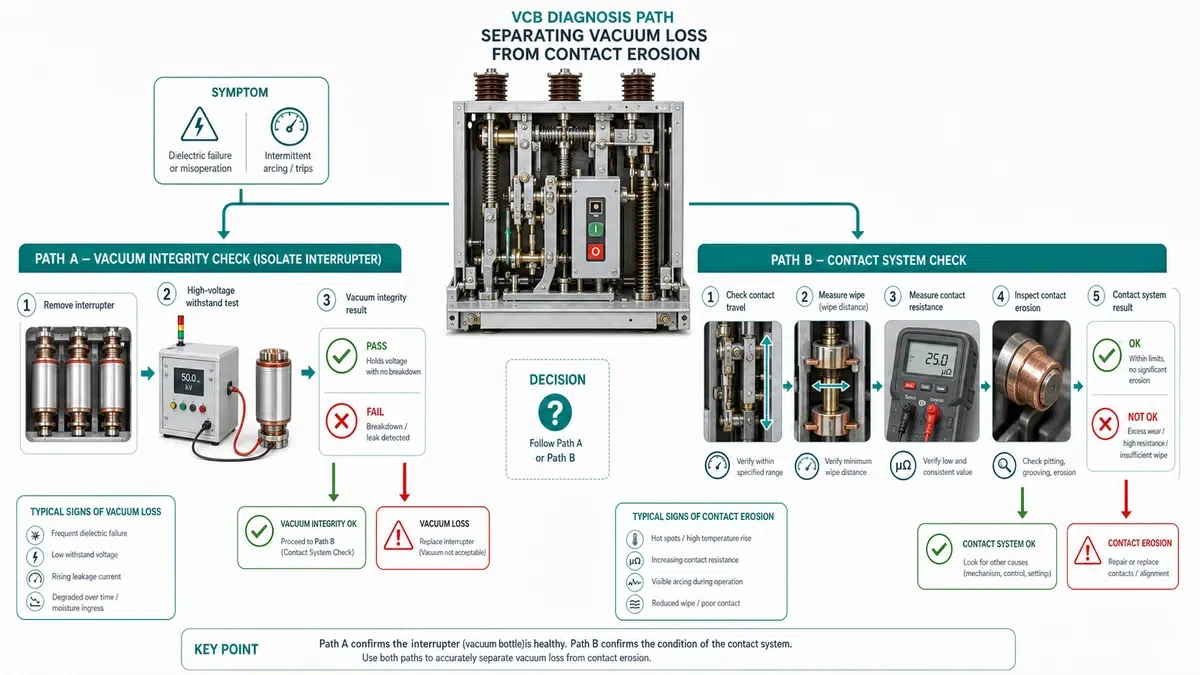
Потеря вакуума означает, что баллон прерывателя больше не может поддерживать диэлектрическую среду, необходимую для гашения дуги при нулевом токе. Полевая бригада не может повторно залить газ или отремонтировать вакуумный баллон на месте. Как только потеря вакуума подтверждена, правильным действием является замена прерывателя или всего полюсного узла в соответствии с конструкцией производителя оборудования.
Типичными причинами являются повреждение уплотнения, усталость сильфона, разрушение соединения керамики с металлом, механический удар или длительный срок службы в сочетании с большим количеством операций. Отказ может оставаться незаметным до тех пор, пока испытание на прочность или коммутационное событие не выявят снижение диэлектрического запаса.
Потеря вакуума не является автоматическим доказательством износа механизма или необходимости замены всех трех полюсов. Если только один полюс не прошел вакуумный тест и OEM-производитель разрешает замену одного полюса, остальные полюса могут оставаться в эксплуатации только после того, как они пройдут те же проверки на наличие высокого давления, сопротивления и хода.
Значение "прошел/не прошел" должно быть взято из руководства производителя, спецификации испытаний проекта или из контекста применимых стандартов. IEEE C37.09 и IEC 62271-100 обеспечивают контекст методов испытаний, но значение приемки в эксплуатацию для конкретного выключателя должно быть подтверждено данными производителя.
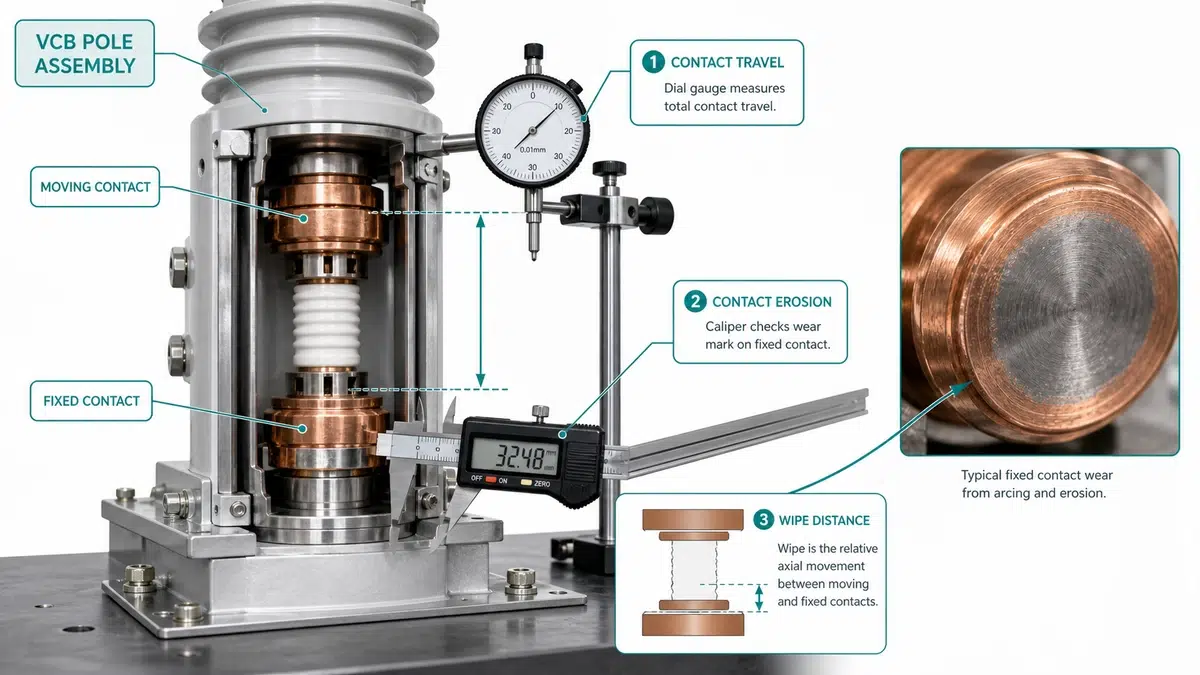
Эрозия контактов - это постепенная потеря материала контактов, вызванная дугой при переключении нагрузки и прерывании замыкания. При этом уменьшается стирание контактов, сила прижима и остаточный ход. Прерыватель может сохранять хорошую вакуумную целостность, если его контакты близки к пределу износа.
Самое полезное полевое свидетельство - это не одно число. Сочетайте сопротивление контактов, перемещение, стирание, видимый индикатор эрозии, счетчик операций и историю прерывания неисправностей. Одно высокое показание в микроом может быть вызвано неплотными внешними соединениями или загрязненными поверхностями, поэтому прежде чем осуждать прерыватель, убедитесь в правильности пути измерения.
| Доказательства | Сигнал эрозии контактов | Сигнал потери вакуума |
|---|---|---|
| Высокий уровень напряжения через разомкнутые контакты | Обычно проходит до серьезных повреждений | Неисправность или резкое увеличение утечки |
| Контактное сопротивление | Часто имеет тенденцию к росту | Может быть нормальным, если не поврежден контакт |
| Путешествие и вытирание | Снижение по сравнению с исходным уровнем | Обычно нормальный |
| Индикатор эрозии | В зоне предупреждения или замены | Может выглядеть нормально |
| Запись времени | Возможны отскок или задержка движения | Возможен повторный удар или прерывание работы |
Самая безопасная последовательность - сначала подтвердить целостность вакуума, затем проверить износ контактов и состояние механизма. Это позволяет не тратить время на детальные проверки в пути, когда прерыватель уже не прошел базовое диэлектрическое испытание.
Каждое измерение нуждается в источнике подтверждения. Общие значения статьи являются только контрольными показателями.
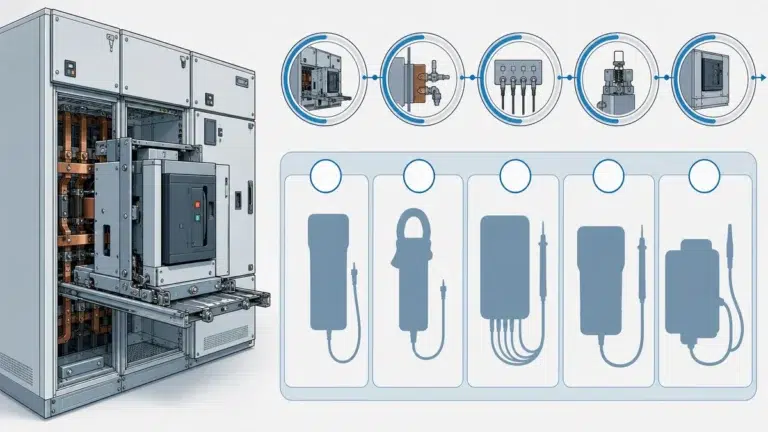
| Инструмент или запись | Что он проверяет | Источник акцепта |
|---|---|---|
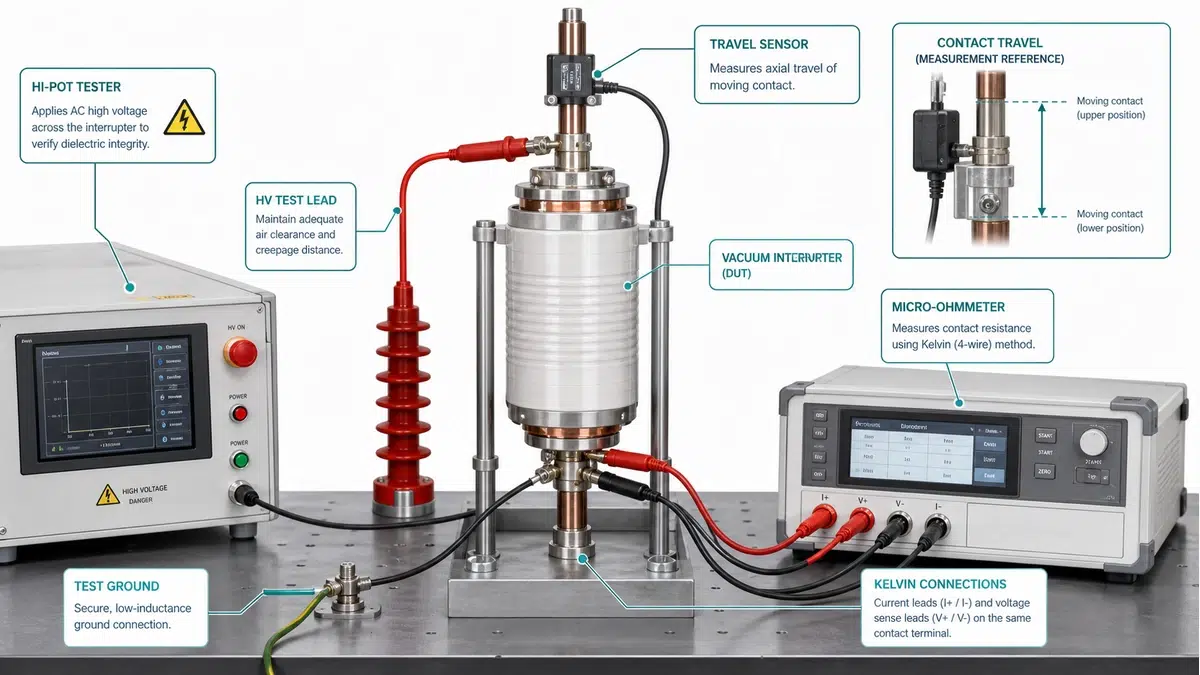
| Высокочастотный тестер переменного или постоянного тока | Вакуумная целостность через разомкнутые контакты | Руководство производителя, контекст IEEE C37.09, спецификация проекта |
| Микроомметр на 100 А | Сопротивление главного контактного пути | Базовый уровень OEM, запись FAT, тенденция технического обслуживания |
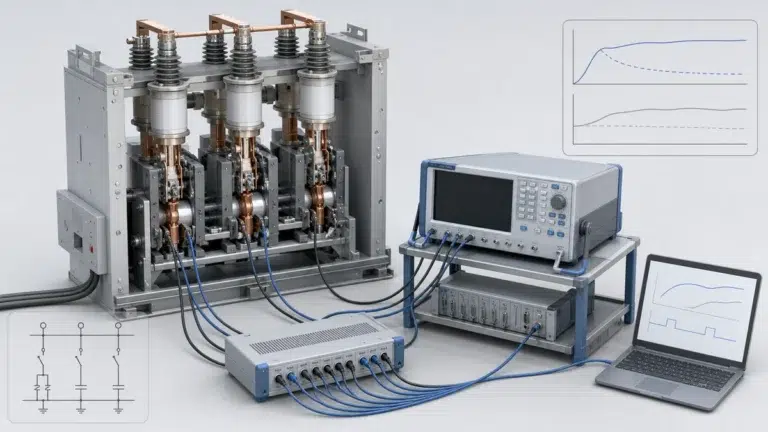
| Путевой анализатор или циферблатный манометр | Открыть зазор, протереть, отскочить и погладить | Кривая перемещения OEM и предел работоспособности |
| Тестер сопротивления изоляции | Экранирование изоляции между полюсами и фазами | Руководство по эксплуатации и спецификация по вводу в эксплуатацию |
| Анализатор времени | Время открытия, время закрытия, отскок, одновременность | Штатная лента синхронизации и пластинка SAT |
| Счетчик операций и журнал событий реле | История дежурств и подсчет перерывов в работе | Журнал технического обслуживания и журнал реле защиты |
Разомкните контакты до указанного зазора, изолируйте и заземлите оборудование, затем подайте испытательное напряжение в соответствии с утвержденной процедурой. Вспышка, увеличение тока утечки или нестабильный результат испытания достаточны для вывода прерывателя из эксплуатации. При подозрении на загрязнение поверхности перед повторным испытанием очистите и высушите внешнюю изоляцию в соответствии с процедурой производителя оборудования.
Измерьте каждый полюс с помощью четырехпроводного кельвинового соединения и достаточного тока инжекции для стабильных показаний. Запишите ток впрыска, температуру окружающей среды, серийный номер прибора и положение фазы. Фаза, которая более чем на 30% выше двух других фаз, заслуживает проверки, даже если абсолютное значение все еще ниже максимального значения OEM.
Измерьте открытый зазор, общий ход, стирание контактов и отскок. Если ход нормальный, но сопротивление высокое, проверьте состояние контактной поверхности и внешних соединений. Если и ход, и сопротивление выходят за пределы допустимых значений, то доминирующим дефектом является эрозия контактов, и следует запланировать их замену.
Внутренняя ВКС 12 кВ была выведена из эксплуатации после того, как реле показало задержку гашения дуги на одном фидере. Во время планового отключения группа технического обслуживания измерила следующее.
| Полюс | Высокий результат | Контактное сопротивление | Измерение протирания | Диагноз |
|---|---|---|---|---|
| A | Пропуск | 32 микроом | 2,4 мм | Исправный |
| B | Отказ, утечка возрастает до истечения времени удержания | 96 микроом | 1,5 мм | Потеря вакуума и контактная эрозия |
| C | Пропуск | 35 микроом | 2,3 мм | Исправный |
Измеренные данные предотвращают принятие неверного решения о ремонте. Полюс B не только изношен, но и не прошел тест на вакуумную целостность, поэтому очистка контактной поверхности или регулировка хода не приведут к восстановлению надежности прерывателя. Корректирующим действием является замена прерывателя полюса B или всего трехполюсного узла, если OEM-производитель не допускает замены одного полюса. Полюса A и C могут оставаться в эксплуатации только после того, как записи об их испытаниях будут добавлены в файл технического обслуживания, а следующий интервал проверки будет сокращен.
Этот пример также показывает, почему одного только контактного сопротивления недостаточно. Если бы полюс B показал 96 мкОм, но прошел проверки hi-pot и перемещения, первым корректирующим действием была бы проверка соединения, очистка и повторное испытание. Поскольку hi-pot не сработал, решение переходит непосредственно к замене.
Замена обязательна, когда нарушается вакуумная целостность, когда ход или стирание достигают предельного износа OEM-производителя или когда количество неисправностей превышает заявленную норму обслуживания. Восстановление целесообразно только в том случае, если рама, механизм, вторичная цепь и интерфейсы полюсов остаются в пределах спецификации.
| Точка принятия решения | Замените прерыватель или полюс | Замените VCB в сборе |
|---|---|---|
| Один полюс не прошел вакуумный тест | Возможно, если OEM-производитель разрешает замену согласованных полюсов | Требуется, если обмен полюсами не поддерживается |
| Несколько полюсов близки к пределу износа | Обычно заменяют комплект полюсов | Рассмотрите возможность полного VCB, если механизм также изношен |
| Механизм передвижения нестабилен | Механизм обслуживания в первую очередь | Замените, если детали устарели или рама повреждена |
| Возраст и рекорды | Допустимо, если записи полные | Предпочтите замену, если записи отсутствуют, а возраст большой |
| Наличие запасных частей | Прерыватель поставляется с протоколом испытаний | Если прерыватель устарел, необходим комплектный выключатель |
Для выбора продукта сравните результат диагностики с Вакуумный выключатель XBRELE страница. Для документации по приемке используйте Контрольный список для сдачи экзамена VCB FAT/SAT.
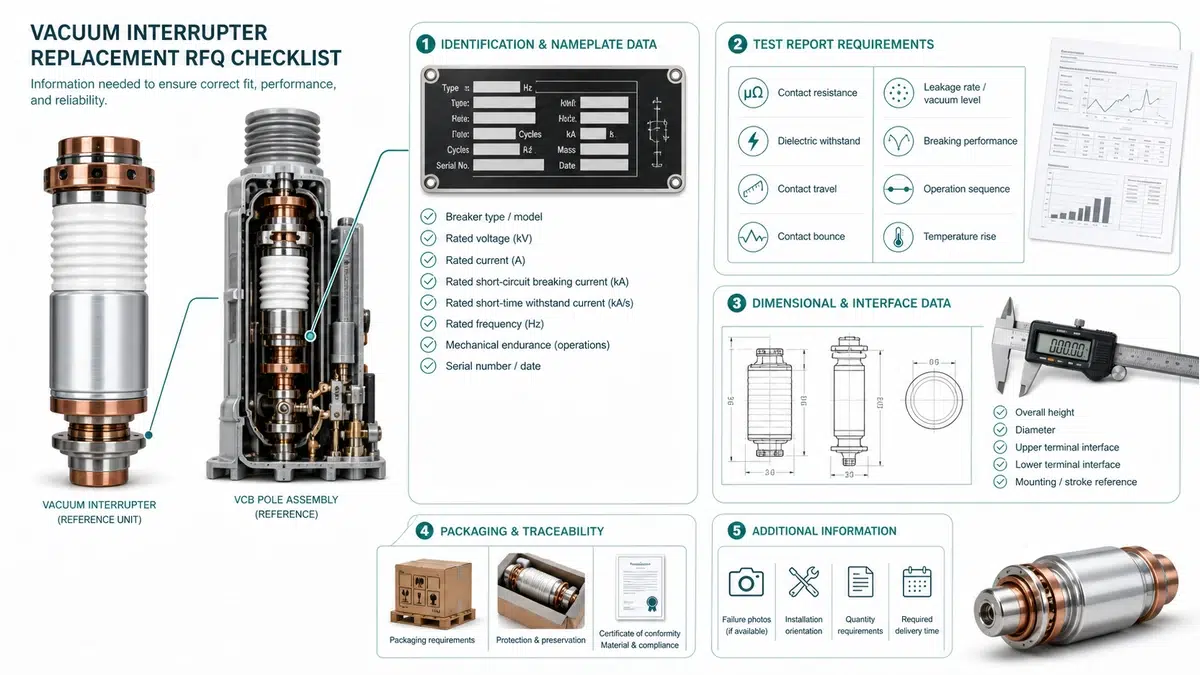
Перед отправкой запроса предложений соберите заводскую табличку, электрическую схему, размеры полюсов, тип рабочего механизма, управляющее напряжение, номинальный ток, ток короткого замыкания и результаты последних испытаний. Поставщик не может подтвердить взаимозаменяемость только на основании класса напряжения.
| Пункт RFQ | Почему это важно |
|---|---|
| Номинальное напряжение, BIL и частота | Подтверждает диэлектрический класс |
| Номинальный ток и ток отключения | Подтверждение теплового режима и режима неисправности |
| Ход контактов и размеры полюсов | Подтверждение механической посадки |
| Управляющее напряжение и схема вспомогательных контактов | Предотвращает рассогласование вторичных цепей |
| Высоковольтные, микроомные и синхронизирующие пластинки | Показывает фактический режим отказа |
| Требуемый протокол испытаний и метод упаковки | Защита качества во время доставки |
Для подготовки котировок используйте Контрольный список запроса предложений VCB. Для получения информации о методе испытания на стойкость ознакомьтесь с Руководство по тестированию сопротивления контактов на микрооммах. Для контекста стандартов используйте Страница стандарта IEEE C37.09 а затем сверьте окончательные пределы с руководством производителя.
Сначала выполните тест на целостность вакуума, затем проверьте сопротивление контактов и ход. Неудачный результат hi-pot указывает на потерю вакуума. Прошедший тест hi-pot с увеличением сопротивления и уменьшением хода указывает на эрозию контактов или проблемы с силой контакта.
Нет. Вакуумный прерыватель с подтвержденной потерей вакуума не подлежит восстановлению в полевых условиях. Замените прерыватель или блок полюсов в соответствии с конструкцией производителя оборудования.
Нет. Высокое сопротивление контакта может быть вызвано ослаблением клемм, загрязнением соединений, малым усилием контакта или ошибкой измерения. Проверьте контрольное соединение, сравните все три полюса и проверьте ход, прежде чем принимать решение о замене.
В качестве основного источника используйте интервал технического обслуживания OEM-производителя. Сократите интервал после перерыва в работе, высокой частоты переключения, загрязнения береговой зоны или отсутствия записей о техническом обслуживании.
Только если конструкция комплектного оборудования поддерживает замену одного полюса, а новый полюс соответствует существующей раме, перемещению, размерам интерфейса и требованиям к испытаниям. В противном случае замените комплект полюсов или выключатель в сборе.
Самая сильная запись сочетает в себе результат работы hi-pot, контактное сопротивление, ход/протирание, время, количество операций и визуальный осмотр. Одно отдельное число слабее, чем последовательная цепочка доказательств.
Возраст сам по себе не всегда является основанием для замены, но он повышает приоритет проверки. Если прерыватель прошел испытания на вакуум, сопротивление, ход и синхронизацию, продолжайте обслуживание только с документально подтвержденным интервалом проверки и стратегией замены.