Precisa das especificações completas?
Faça o download do nosso Catálogo de Produtos 2025 para obter desenhos detalhados e parâmetros técnicos de todos os componentes do quadro elétrico.
Obter catálogo
Faça o download do nosso Catálogo de Produtos 2025 para obter desenhos detalhados e parâmetros técnicos de todos os componentes do quadro elétrico.
Obter catálogo Faça o download do nosso Catálogo de Produtos 2025 para obter desenhos detalhados e parâmetros técnicos de todos os componentes do quadro elétrico.
Obter catálogo
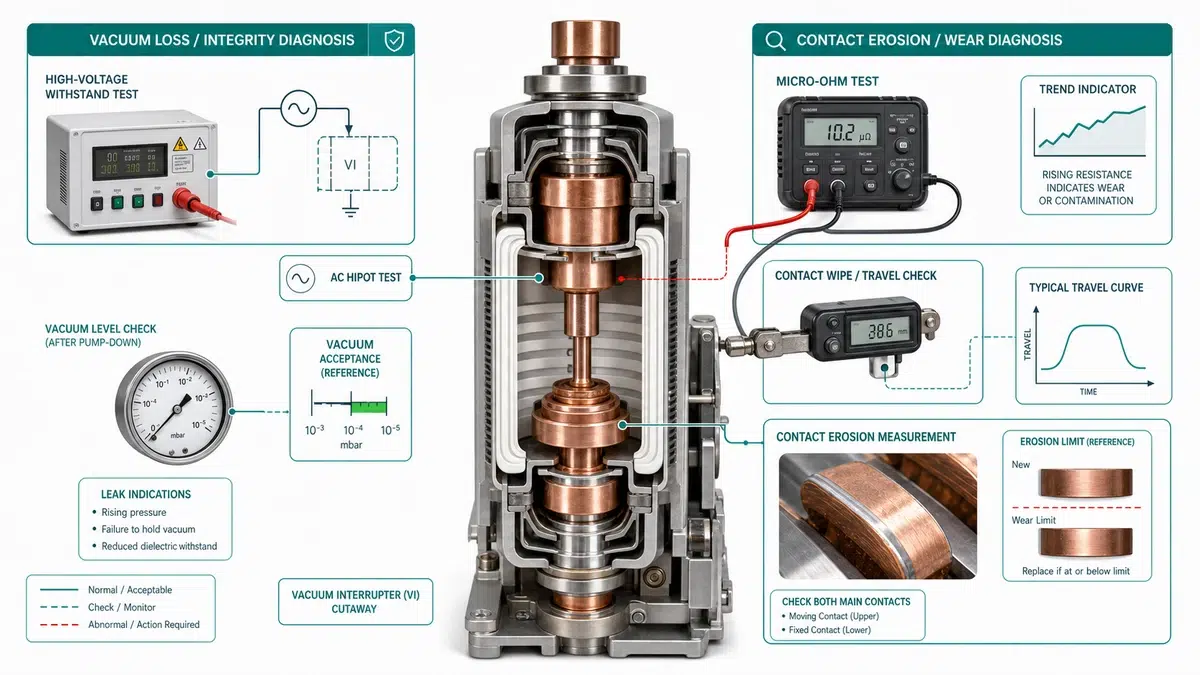
A perda de vácuo e a erosão de contato podem criar sintomas de campo semelhantes em um disjuntor a vácuo, mas não são a mesma falha. A perda de vácuo é uma perda de integridade dielétrica dentro do frasco selado do interruptor. A erosão do contato é o desgaste mecânico e elétrico das faces do contato após a comutação da corrente de carga ou da corrente de falha.
A regra prática é simples: um teste de integridade de vácuo com falha aponta para a substituição do interruptor; a erosão do contato deve ser confirmada por evidências de deslocamento, limpeza, indicador de erosão e resistência de contato. Não substitua um disjuntor completo até que esses dois modos de falha tenham sido separados.
Use esta tabela de solução de problemas antes de desmontar o conjunto do polo. Ele fornece o primeiro teste, a causa raiz provável e a próxima ação para os sintomas de campo mais comuns.
| Sintoma | Primeiro teste | Causa raiz provável | Próxima ação |
|---|---|---|---|
| O Hi-pot falha em contatos abertos | Teste de integridade do vácuo | Perda de vácuo no interior do interruptor | Retirar de serviço e substituir o interruptor |
| O Hi-pot passa, mas a resistência de contato está aumentando | Teste de micro-ohm de 100 A | Erosão de contato, contaminação ou baixa força de contato | Verifique o deslocamento e a limpeza antes de decidir pela substituição |
| O indicador de erosão está no limite | Inspeção mecânica | Erosão de contato no final do subsídio | Substitua o interruptor ou o conjunto do polo |
| A folga aberta é menor do que o valor do OEM | Medição de viagens | Desgaste do contato ou erro de ligação do mecanismo | Compare com o limite de serviço do OEM e ajuste ou substitua |
| Restrição ou interrupção de corrente atrasada | Hi-pot mais registro de tempo | Perda de vácuo ou erosão avançada | Executar a sequência completa de diagnóstico e analisar os dados de eventos do relé |
| Polo quente durante a operação de carga | Imagem térmica e resistência de contato | Junta de alta resistência ou erosão de contato | Aperte/limpe a junta externa primeiro e, em seguida, teste novamente o caminho do contato |
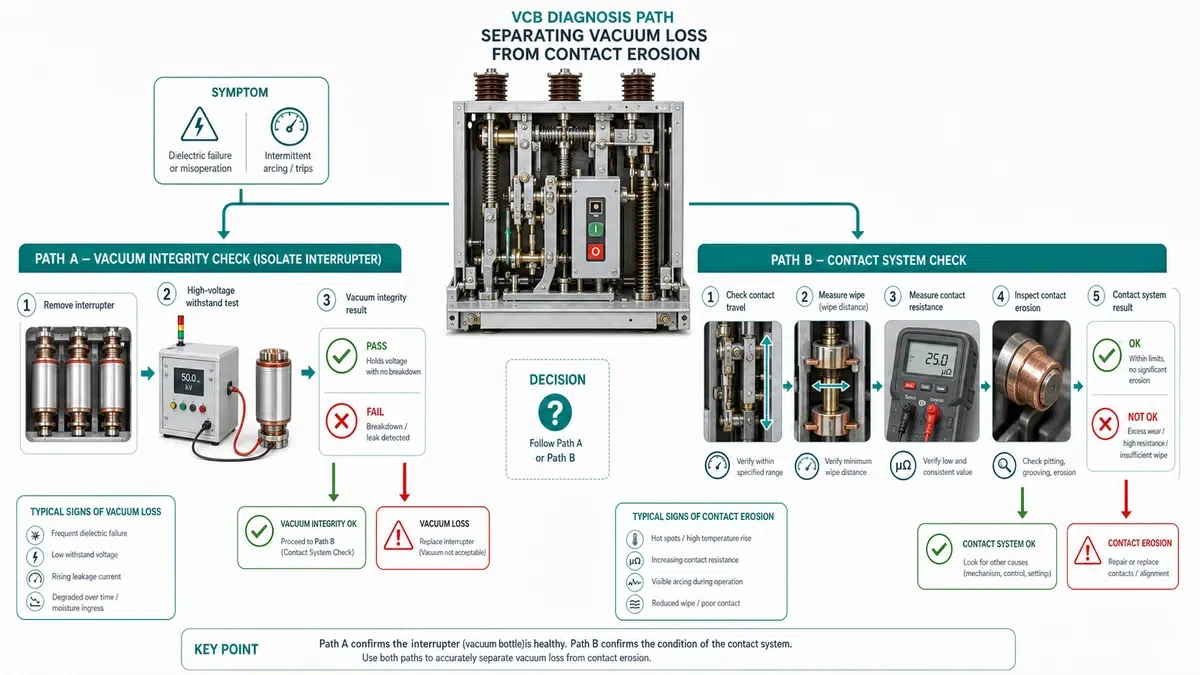
A perda de vácuo significa que a garrafa do interruptor não consegue mais manter o ambiente dielétrico necessário para extinguir o arco na corrente zero. A equipe de campo não pode voltar a abastecer ou reparar a garrafa de vácuo no local. Uma vez confirmada a perda de vácuo, a ação correta é a substituição do interruptor ou do conjunto completo do polo, de acordo com o projeto do OEM.
Os gatilhos típicos incluem danos à vedação, fadiga do fole, falha na junta cerâmica-metal, choque mecânico ou longa vida útil combinada com alta contagem de operações. A falha pode permanecer silenciosa até que um teste de resistência ou um evento de comutação exponha a margem dielétrica reduzida.
A perda de vácuo não prova automaticamente que o mecanismo está desgastado ou que todos os três polos devem ser substituídos. Se apenas um polo falhar no teste de vácuo e o OEM permitir a substituição de um único polo, os outros polos poderão permanecer em serviço somente depois de passarem pelas mesmas verificações de hi-pot, resistência e deslocamento.
O valor de aprovação/reprovação deve vir do manual do OEM, da especificação de teste do projeto ou do contexto das normas aplicáveis. O IEEE C37.09 e o IEC 62271-100 fornecem o contexto do método de teste, mas o valor de aceitação de serviço para um disjuntor específico deve ser confirmado com base nos dados do fabricante.
A erosão do contato é a perda gradual do material de contato causada pelo arco elétrico durante a comutação de carga e a interrupção de falhas. Ela reduz o desgaste do contato, a força de contato e o curso restante. Um disjuntor ainda pode ter boa integridade de vácuo enquanto seus contatos estiverem próximos do limite de desgaste.
A evidência de campo mais útil não é um único número. Combine resistência de contato, deslocamento, limpeza, indicador de erosão visível, contador de operações e histórico de interrupção de falhas. Uma única leitura alta de micro-ohm pode ser proveniente de juntas externas soltas ou superfícies contaminadas, portanto, confirme se o caminho de medição está correto antes de condenar o interruptor.
| Provas | Sinal de erosão do contato | Sinal de perda de vácuo |
|---|---|---|
| Hi-pot em contatos abertos | Geralmente passa até que haja danos graves | Falha ou aumento acentuado do vazamento |
| Resistência de contato | Frequentemente, há uma tendência de aumento | Pode ser normal, a menos que o contato esteja danificado |
| Viagem e limpeza | Reduzido em relação à linha de base | Normalmente normal |
| Indicador de erosão | Na zona de advertência ou substituição | Pode ainda parecer normal |
| Registro de tempo | Possibilidade de salto ou movimento retardado | Possibilidade de reinicialização ou interrupção com falha |
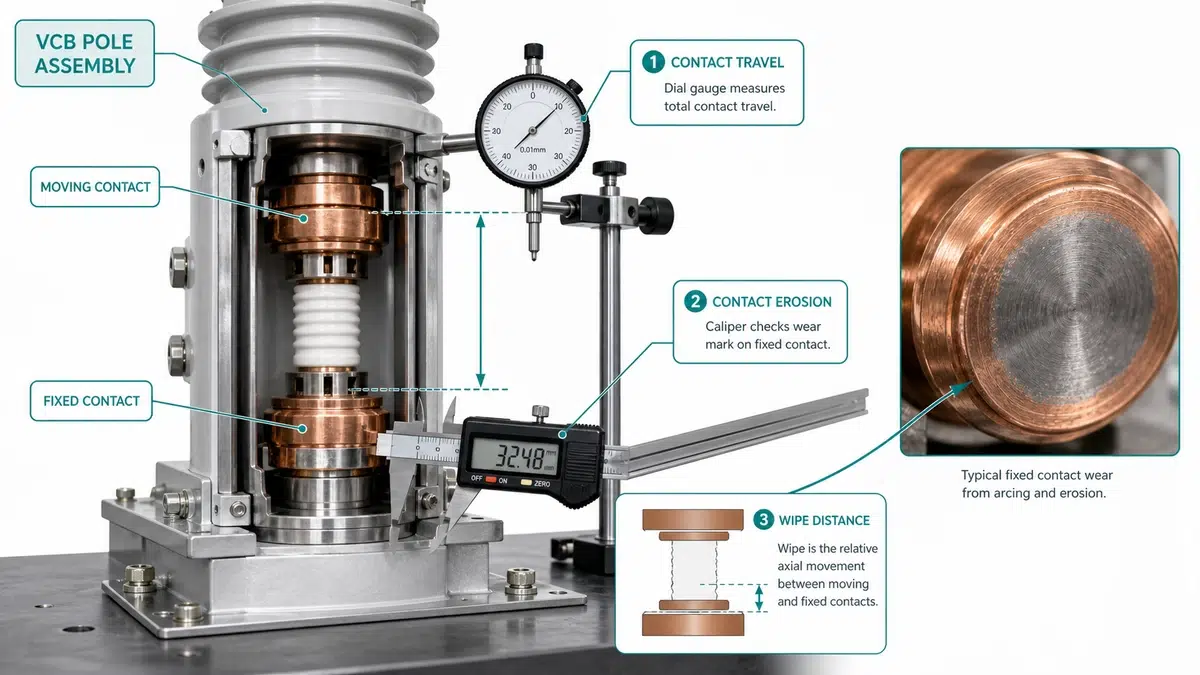
A sequência mais segura é confirmar primeiro a integridade do vácuo e, em seguida, verificar o desgaste do contato e as evidências do mecanismo. Isso evita gastar tempo com verificações detalhadas de deslocamento quando o interruptor já foi reprovado no teste dielétrico básico.
Toda medição precisa de uma fonte de aceitação. Os valores genéricos de artigos são apenas referências de triagem.
| Ferramenta ou registro | O que ele verifica | Fonte de aceitação |
|---|---|---|
| Testador de alto ponto CA ou CC | Integridade do vácuo em contatos abertos | Manual do OEM, contexto IEEE C37.09, especificação do projeto |
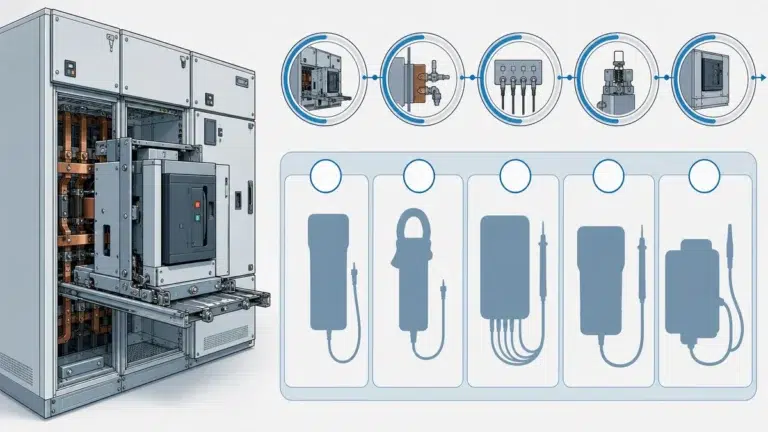
| Micro-ohmímetro de 100 A | Resistência do caminho do contato principal | Linha de base do OEM, registro FAT, tendência de manutenção |
| Analisador de deslocamento ou relógio comparador | Abrir a lacuna, limpar, rebater e dar uma pincelada | Curva de deslocamento e limite de serviço do OEM |
| Testador de resistência de isolamento | Blindagem de isolamento polo a terra e fase a fase | Manual do OEM e especificação de comissionamento |
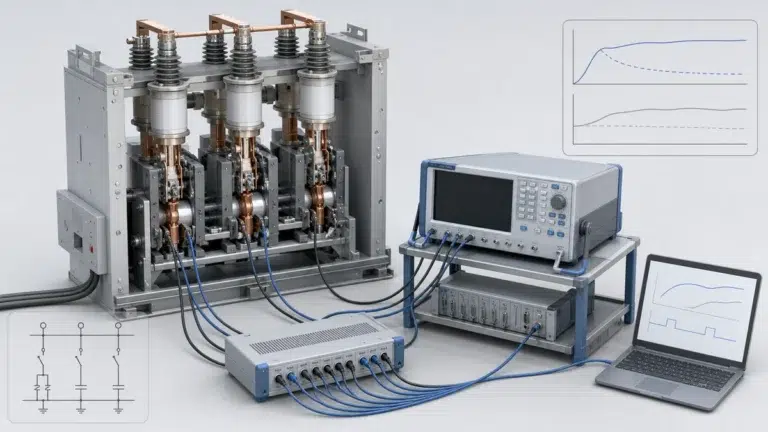
| Analisador de tempo | Horário de abertura, horário de fechamento, salto, simultaneidade | Banda de sincronização OEM e registro SAT |
| Contador de operações e registro de eventos do relé | Histórico de trabalho e contagem de interrupções de falhas | Registro de manutenção e registro do relé de proteção |
Abra os contatos até a abertura especificada, isole e aterre o equipamento e, em seguida, aplique a tensão de teste de acordo com o procedimento aprovado. Um flashover, uma corrente de fuga crescente ou um resultado de resistência instável é suficiente para retirar o interruptor de serviço. Se houver suspeita de contaminação da superfície, limpe e seque o isolamento externo de acordo com o procedimento do OEM antes de repetir o teste.
Meça cada polo com uma conexão Kelvin de quatro fios e corrente de injeção suficiente para leituras estáveis. Registre a corrente de injeção, a temperatura ambiente, o número de série do instrumento e a posição da fase. Uma fase que esteja mais de 30% acima das outras duas fases merece inspeção, mesmo que o valor absoluto ainda esteja abaixo do máximo do OEM.
Meça a folga aberta, o curso total, a limpeza do contato e o ressalto. Se o curso for normal, mas a resistência for alta, investigue as condições da superfície de contato e as juntas externas. Se tanto o curso quanto a resistência estiverem fora dos limites, a erosão do contato é a falha dominante e a substituição deve ser planejada.
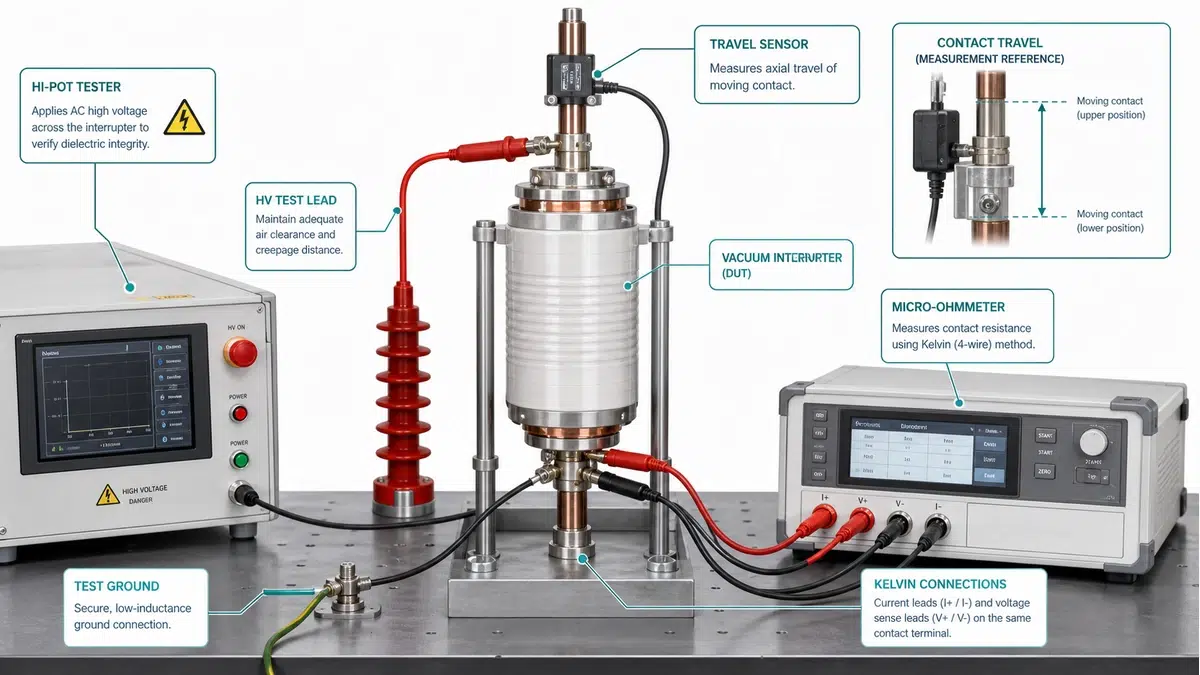
Um VCB interno de 12 kV foi retirado de serviço depois que um evento de relé mostrou uma extinção de arco atrasada em um alimentador. A equipe de manutenção mediu o seguinte durante uma interrupção planejada.
| Poste | Resultado do Hi-pot | Resistência de contato | Medição de limpeza | Diagnóstico |
|---|---|---|---|---|
| A | Passe | 32 micro-ohm | 2,4 mm | Em condições de uso |
| B | Falha, o vazamento aumenta antes do tempo de retenção | 96 micro-ohm | 1,5 mm | Perda de vácuo mais erosão de contato |
| C | Passe | 35 micro-ohm | 2,3 mm | Em condições de uso |
A evidência medida evita a decisão errada de reparo. O polo B não está apenas desgastado; ele também não passa no teste de integridade do vácuo, portanto, limpar a face do contato ou ajustar o curso não restaurará a confiabilidade da interrupção. A ação corretiva é substituir o interruptor do polo B ou o conjunto completo de três polos se o OEM não permitir a substituição de um único polo correspondente. Os polos A e C só podem permanecer em serviço depois que seus registros de teste forem adicionados ao arquivo de manutenção e o próximo intervalo de inspeção for reduzido.
Esse exemplo também mostra por que a resistência de contato por si só não é suficiente. Se o polo B tivesse mostrado 96 micro-ohm, mas tivesse passado nas verificações do hi-pot e do deslocamento, a primeira ação corretiva seria a inspeção da junta, a limpeza e um novo teste. Como o hi-pot falhou, a decisão passa diretamente para a substituição.
A substituição é obrigatória quando houver falha na integridade do vácuo, quando o deslocamento ou a limpeza estiver no limite de desgaste do OEM ou quando o número de operações de falha exceder a tolerância de serviço declarada. A reforma é razoável somente quando a estrutura, o mecanismo, o circuito secundário e as interfaces dos polos permanecerem dentro das especificações.
| Ponto de decisão | Substituir o interruptor ou o polo | Substituir o VCB completo |
|---|---|---|
| Um polo não passa no teste de vácuo | Possível se o OEM permitir a troca de polos correspondentes | Necessário se não houver suporte para troca de polos |
| Vários polos próximos do limite de desgaste | Normalmente substitui o conjunto de polos | Considere o VCB completo se o mecanismo também estiver desgastado |
| Deslocamento do mecanismo instável | Mecanismo de serviço em primeiro lugar | Substitua se as peças estiverem obsoletas ou se a estrutura estiver danificada |
| Idade e registros | Aceitável se os registros estiverem completos | Prefira a substituição se faltarem registros e a idade for alta |
| Disponibilidade de peças sobressalentes | Interruptor disponível com relatório de teste | Disjuntor completo necessário se o interruptor for obsoleto |
Para o contexto de seleção de produtos, compare o resultado do diagnóstico com o Página do disjuntor a vácuo XBRELE. Para documentação de aceitação, use o Lista de verificação de aceitação do VCB FAT/SAT.
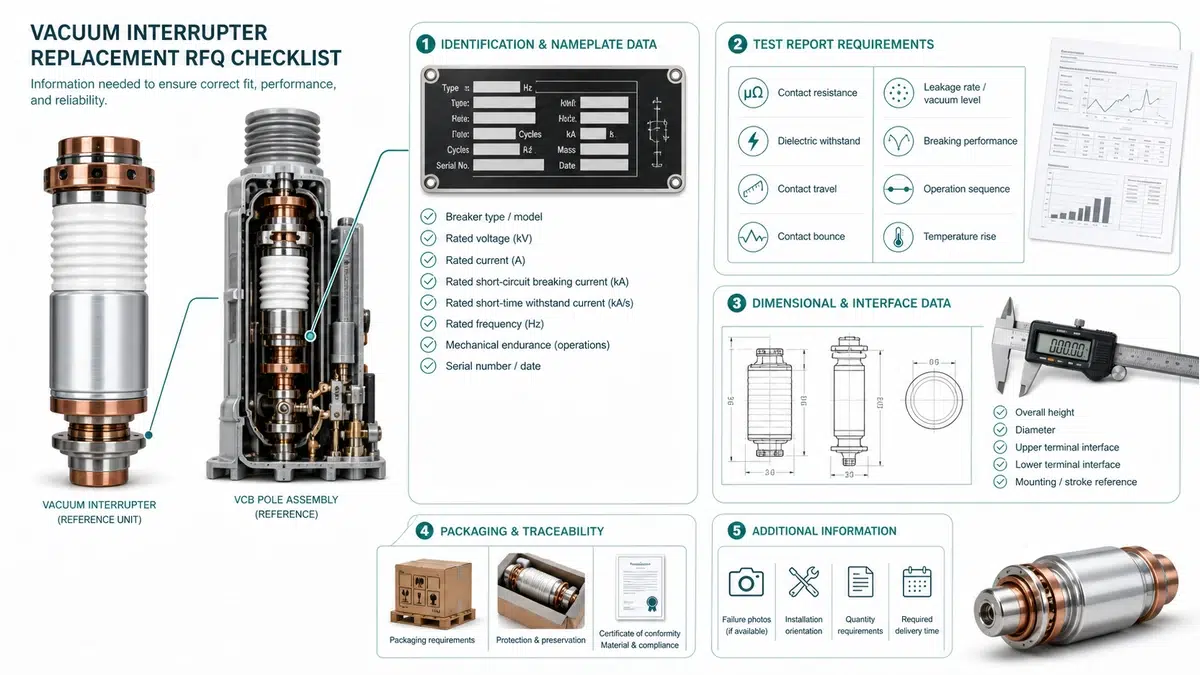
Antes de emitir uma solicitação de cotação, obtenha a placa de identificação, o diagrama de fiação, as dimensões dos polos, o tipo de mecanismo operacional, a tensão de controle, a corrente nominal, a corrente de interrupção de curto-circuito e o registro de teste mais recente. Um fornecedor não pode confirmar a intercambialidade apenas com base na classe de tensão.
| Item da solicitação de cotação | Por que isso é importante |
|---|---|
| Tensão nominal, BIL e frequência | Confirma a classe dielétrica |
| Corrente nominal e corrente de ruptura | Confirma o dever térmico e de falha |
| Dimensões do percurso do contato e do polo | Confirma o ajuste mecânico |
| Tensão de controle e esquema de contato auxiliar | Evita a incompatibilidade do circuito secundário |
| Registros de alto ponto, micro-ohm e temporização | Mostra o modo de falha real |
| Relatório de teste e método de embalagem necessários | Protege a qualidade durante a entrega |
Para a preparação da cotação, use o Lista de verificação da solicitação de cotação da VCB. Para obter o contexto do método de teste de resistência, consulte o Guia de teste de resistência de contato de micro-ohm. Para o contexto de padrões, use o Página do padrão IEEE C37.09 e, em seguida, verificar os limites finais em relação ao manual do OEM.
Execute primeiro o teste de integridade do vácuo e, em seguida, confirme a resistência do contato e o deslocamento. Um resultado de hi-pot com falha aponta para perda de vácuo. Um resultado de hi-pot aprovado com resistência crescente e limpeza reduzida aponta para erosão do contato ou problemas de força de contato.
Não. Um interruptor a vácuo com perda de vácuo confirmada não pode ser reparado em campo. Substitua o interruptor ou o conjunto de polos de acordo com o projeto do OEM.
Não. A alta resistência de contato também pode ser causada por terminais soltos, juntas contaminadas, baixa força de contato ou erro de medição. Confirme a conexão de teste, compare os três polos e verifique o deslocamento antes de decidir pela substituição.
Use o intervalo de manutenção do OEM como fonte principal. Reduza o intervalo após interrupção de falha, alta taxa de comutação, contaminação costeira ou falta de registros de manutenção.
Somente se o projeto do OEM suportar a substituição de um único polo e o novo polo corresponder à estrutura, ao deslocamento, às dimensões da interface e aos requisitos de teste existentes. Caso contrário, substitua o conjunto de polos correspondentes ou o disjuntor completo.
O registro mais sólido combina o resultado do hi-pot, a resistência de contato, o deslocamento/limpeza, o tempo, a contagem de operações e a inspeção visual. Um número isolado é mais fraco do que uma cadeia de evidências consistente.
A idade, por si só, nem sempre é um gatilho de substituição, mas aumenta a prioridade da inspeção. Se o disjuntor passar nos testes de vácuo, resistência, deslocamento e temporização, continue a manutenção somente com um intervalo de inspeção documentado e uma estratégia de reposição.