Need Full Specifications?
Download our 2025 Product Catalog for detailed drawings and technical parameters of all switchgear components.
Get Catalog
Download our 2025 Product Catalog for detailed drawings and technical parameters of all switchgear components.
Get Catalog Download our 2025 Product Catalog for detailed drawings and technical parameters of all switchgear components.
Get Catalog

Compare vacuum contactor vs vacuum circuit breaker to choose the best fit for your medium voltage panel based on switching, load, and protection needs.
You face a critical decision when selecting between a vacuum contactor vs vacuum circuit breaker for your medium voltage panel. Imagine you manage a facility or design switchgear panels, and you must choose the device that best fits your operational needs. Device selection affects not only safety but also reliability and efficiency. Consider these factors:
Proper sizing of power supplies increases efficiency and reduces risk of premature failure.
Planning for spare parts prevents costly delays and emergency repairs.
Thorough commissioning lowers the chance of safety incidents, such as arc flashes.
Evaluate your switching frequency, load type, and protection requirements to determine if a vacuum contactor is the right fit for your application.
Choose a vacuum contactor for applications requiring frequent switching, such as motor control and capacitor management.
Select a vacuum circuit breaker when strong fault protection is essential, especially in substations and critical infrastructure.
Consider the switching frequency and load type to match the right device to your operational needs.
Plan for spare parts and maintenance to avoid costly delays and ensure reliable operation.
Regular inspections and cleaning of vacuum contactors extend their lifespan and improve performance.
Evaluate the total cost of ownership, including initial investment and maintenance, to make an informed decision.
Use the XBRELE CKG Vacuum Contactor Series for high endurance in frequent operations, ensuring minimal downtime.
Always consult equipment specifications and safety standards before finalizing your device selection.
Selecting the right device for your medium voltage panel depends on your specific application. You must consider the type of load, the frequency of switching, and the level of protection required. Here are the most common scenarios where you would use a vacuum contactor vs vacuum circuit breaker:
Motors: You often use vacuum contactors for medium voltage motors that require frequent starting and stopping. These devices handle repeated operations efficiently and extend the lifespan of your equipment.
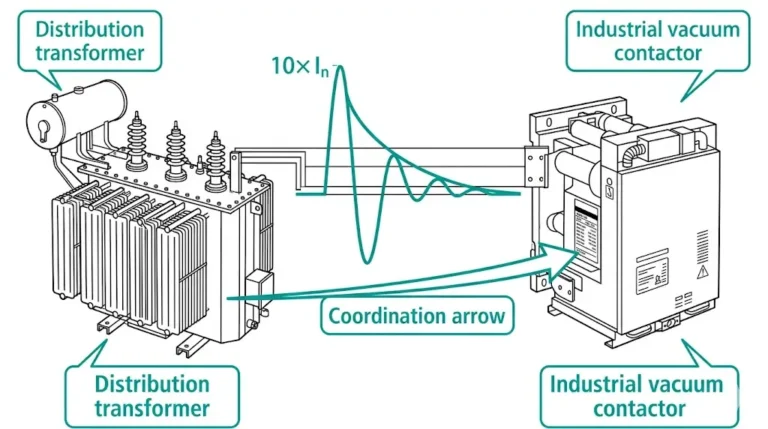
Transformers: For small and medium transformers, vacuum contactors provide reliable switching. Large transformers, especially those in substations, benefit from vacuum circuit breakers due to their superior fault interruption capabilities.
Capacitor Banks: Vacuum contactors excel in switching capacitor banks, especially in power factor correction systems. Their high mechanical endurance supports frequent operations.
Industrial Plants: You rely on vacuum circuit breakers to protect heavy machinery, such as electric arc furnaces and large motors, from overloads and short circuits.
Substations and Power Distribution: Vacuum circuit breakers play a critical role in substations, managing safe power switching and protecting equipment from overvoltages.
Critical Infrastructure: Hospitals, data centers, and commercial buildings use vacuum circuit breakers to ensure a stable power supply for essential systems like servers, elevators, and HVAC units.
Renewable Energy Projects: Wind and solar power plants depend on vacuum circuit breakers to protect turbines and inverters from faults.
Tip: For OEM switchgear panels and retrofit projects, the XBRELE CKG Vacuum Contactor Series offers a modern solution. You can choose models like the CKG3-7.2 for 7.2 kV systems or the CKG4-12 for 12 kV networks. These contactors deliver reliable performance for motors, transformers, and capacitor banks, making them ideal for frequent switching duties in industrial environments.
When you compare vacuum contactor vs vacuum circuit breaker, you need to evaluate several key criteria. The following table summarizes the main factors that influence your decision:
Criteria | Vacuum Contactor (VC) | Vacuum Circuit Breaker (VCB) |
|---|---|---|
Mechanical Endurance | Very high mechanical endurance | Lower mechanical endurance |
Electrical Endurance | Higher electrical endurance for rated load | Lower electrical endurance |
Typical Applications | Medium voltage motors, small transformers, capacitor banks | Large transformers, large motors, feeder circuits |
Short Circuit Interrupting Capability | Limited (5kA-14kA) | High (40kA-63kA) |
Protection Scheme | Overload relay and current limiting fuse | Overcurrent relay |
Switching Frequency | Often repeated as part of process control | Infrequent switching |
You should select a vacuum contactor when your application demands frequent switching, such as motor control or capacitor bank management. The XBRELE CKG series stands out with up to 500,000 mechanical operations and 250,000 electrical operations, ensuring long-term reliability and minimal downtime. You can also benefit from flexible coil options and specialized variants for high-current or capacitor-switching needs.
If your panel requires robust fault protection and high short-circuit interrupting capability, a vacuum circuit breaker is the better choice. You will find these devices essential in substations, industrial plants, and critical infrastructure where safety and equipment protection are top priorities.
Note: Always match the device to your operational requirements. Consider switching frequency, load type, and protection needs before making your final selection.
When you compare vacuum contactor vs vacuum circuit breaker, you notice distinct differences in their core functions. Both devices make and break electric circuits, but their roles in medium voltage panels vary.
Feature | Vacuum Contactor (VC) | Vacuum Circuit Breaker (VCB) |
|---|---|---|
Main Function | Make and break electric circuits | Make and break electric circuits |
Mechanical Endurance | Very high mechanical endurance | Lower mechanical endurance |
Electrical Endurance | Higher electrical endurance for rated load | Lower electrical endurance for rated load |
Short Circuit Interrupting Capacity | Limited (5kA-14kA) | High (40kA-63kA) |
Protection Mechanism | Overload relay + Current Limiting fuse | Overcurrent relay |
Application | Medium voltage motors, small transformers | Large transformers, large motors, feeder circuits |
Fault Current Handling | May not open for fault current above capacity | Capable of breaking load and short circuit current |
You use vacuum contactors for frequent switching tasks, such as controlling motors or capacitor banks. These devices excel in applications where you need high mechanical endurance and reliable operation. Vacuum circuit breakers, on the other hand, provide robust protection against electrical faults. You rely on them for isolating and interrupting fault currents in power distribution systems.
Vacuum contactors are designed for frequent operation and can cut off load current, but they lack short-circuit protection.
Vacuum circuit breakers offer short-circuit and overload protection, making them suitable for protective applications.
Switching frequency and endurance play a critical role in your device selection. You must consider how often you need to operate the device and how long it will last under repeated use.
Application Type | Typical Endurance Rating |
|---|---|
General Utility Distribution | 20,000 operations |
High-Frequency Operations (EAF) | 100,000 – 150,000+ operations |
Vacuum contactors stand out for their ability to handle frequent switching cycles. You can expect very high mechanical and electrical endurance, which makes them ideal for motor control and capacitor bank switching. For example, the XBRELE CKG series offers up to 500,000 mechanical operations and 250,000 electrical operations, ensuring long-term reliability in demanding environments.
Vacuum circuit breakers are built for fewer operations but provide superior fault protection. You typically use them in applications where switching is infrequent, but safety and protection are paramount.
Maintenance accessibility directly impacts long-term reliability and operating costs. You should look for devices with easy access to critical components and available spare parts. Self-diagnostic capabilities can reduce troubleshooting time and specialized tools or training may affect your maintenance capabilities.
Fault interruption and protection are key differences when you evaluate vacuum contactor vs vacuum circuit breaker for your medium voltage panel.
Feature | Vacuum Contactors | Vacuum Circuit Breakers |
|---|---|---|
Fault Interruption Capability | Limited short-circuit breaking capacity; relies on fuses or upstream protection | Designed for interrupting high short-circuit currents; provides complete protection |
Primary Function | Control devices for frequent switching of loads | Protection devices for isolating and interrupting fault currents |
Arc Control | Not designed for high-energy arcs | Equipped with mechanisms to extinguish and control high-energy arcs |
Protection Functions | Lacks comprehensive protection features | Includes overload, short-circuit, and ground fault protection |
Vacuum contactors have a limited capacity for short-circuit interruption. You must rely on external protection methods, such as fuses or upstream circuit breakers, to safeguard your equipment. These devices focus on frequent load switching rather than fault protection.
Vacuum circuit breakers are specifically designed to handle high short-circuit currents. You benefit from complete protection for your power distribution system. These breakers quickly separate contacts to extinguish arcs, ensuring efficient fault management. The vacuum environment provides high dielectric strength, preventing electrical breakdown. Integration with protective relays enhances coverage and response to faults.
You should choose vacuum circuit breakers when your application demands reliable fault interruption and comprehensive protection. Vacuum contactors are best suited for frequent switching tasks where fault protection is managed by other devices.
When you compare current ratings and load suitability, you see clear differences between vacuum contactors and vacuum circuit breakers. Your choice depends on the type of load and the protection your medium voltage panel requires.
Vacuum circuit breakers operate in a wide voltage range, from 6.6kV up to 33kV. You find current ratings from 630A to 3150A, which makes these devices suitable for large industrial loads and power distribution networks. They handle high short-circuit breaking capacities, often between 20kA and 40kA. You use vacuum circuit breakers in substations, ring main units, and industrial facilities where you need to protect equipment from overloads and faults.
Vacuum contactors, such as the XBRELE CKG series, are designed for frequent switching of medium voltage loads. You typically see current ratings up to 1250A, with models like the CKG3-7.2 rated for 630A and the CKG4-12 offering options up to 1250A. These contactors excel in motor control, transformer switching, and capacitor bank management. You rely on them for applications where you need high mechanical endurance and efficient operation, but not direct short-circuit protection.
Here is a table that highlights the main differences in current ratings:
Specification | Vacuum Circuit Breakers (VCBs) | Vacuum Contactors |
|---|---|---|
Rated Voltage (kV) | 6.6–33 | 7.2, 12 |
Rated Nominal Current (A) | 630–3150 | 630, 800, 1000, 1250 |
Short-Circuit Breaking Capacity (kA) | 20–40 | N/A |
Applications | Substations, ring main units, industrial facilities | Motors, transformers, capacitor banks |
You should consider load suitability when selecting between vacuum contactor vs vacuum circuit breaker. Vacuum contactors can cut off load current and perform frequent switching, but they do not provide short-circuit protection. You often pair them with fuses or upstream circuit breakers for complete protection. Vacuum circuit breakers, on the other hand, handle both overload and short-circuit currents, making them ideal for critical protection roles in your power distribution system.
Tip: Always match the device to your load type and required protection level. For frequent switching of motors or capacitors, choose a vacuum contactor. For comprehensive protection and higher current ratings, select a vacuum circuit breaker.
You improve safety and reliability in your medium voltage panel when you select the right device for your specific load and operational needs.
You want your medium voltage panel to run smoothly and safely. Regular maintenance of vacuum contactors helps you achieve this goal. Start with proper installation. This step prevents performance issues from the beginning. After installation, you should:
Inspect the contactor regularly for signs of wear, damage, or loose connections.
Clean the contactor to remove dust and debris that can affect performance.
Perform High Potential (Hi-Pot) tests to check the dielectric strength of the vacuum interrupter.
Measure contact resistance with a micro-ohmmeter. The reading should stay below 200 micro ohms.
Make sure the vacuum interrupter remains completely sealed for reliable operation.
If you find contact resistance above 200 micro ohms, perform a Hi-Pot test and recondition the interrupters.
The XBRELE CKG Vacuum Contactor Series sets a high standard for durability. With up to 500,000 mechanical operations and 250,000 electrical operations, you can count on these contactors for long-term reliability and minimal downtime. This robust design means you spend less time on repairs and replacements.
Tip: Schedule inspections and cleaning at regular intervals. This habit extends the life of your contactors and keeps your panel running efficiently.
Vacuum circuit breakers require a different approach. You need to focus on both mechanical and electrical aspects. The table below outlines the main maintenance practices for vacuum circuit breakers in medium voltage panels:
Maintenance Practice | Description |
|---|---|
Mechanical Operation Checks | Check the spring mechanism, operating mechanism, lubrication, and locking mechanism regularly. |
Electrical and Control Circuit Inspections | Inspect control wiring, protection devices, and auxiliary contacts for proper functioning. |
Vacuum Chamber Integrity | Test the vacuum interrupter for leaks and arc-quenching performance every 5–7 years. |
Cleaning and Maintenance of Insulating Parts | Clean insulating components to prevent contamination and moisture buildup. |
You should follow these steps to ensure your circuit breakers remain reliable and safe. Regular checks help you catch problems early and avoid unexpected failures.
Reliability matters most in industrial environments. You need equipment that matches your operational demands. The table below compares vacuum contactors and vacuum circuit breakers in terms of reliability and application:
Feature | Vacuum Contactor | Vacuum Circuit Breaker |
|---|---|---|
Operational Capability | Handles frequent operations | Protects against overloads and short circuits |
Short-Circuit Protection | Needs external protection (like fuses) | Provides built-in short-circuit protection |
Application | Best for load current interruption | Best for protection and control in industry |
Vacuum contactors, such as the XBRELE CKG series, deliver high reliability for frequent switching tasks. You can trust them for motor control, transformer switching, and capacitor bank management. Vacuum circuit breakers offer robust protection and control, making them essential for critical power distribution and safety.
Note: Choose the device that aligns with your maintenance capabilities and reliability needs. Regular care ensures both contactors and circuit breakers perform at their best.
You must consider the initial investment when selecting equipment for your medium voltage panel. Vacuum circuit breakers often require a higher upfront cost compared to vacuum contactors. The procurement and installation expenses for vacuum circuit breakers can be substantial, especially for smaller utilities or industrial facilities.
The initial procurement and installation costs of vacuum circuit breakers can be substantial, posing a barrier for smaller utilities and industrial players. This high capital requirement may hinder widespread adoption, especially in cost-sensitive projects, limiting market growth potential in certain segments.
Vacuum contactors usually offer a lower initial investment. You may find them more attractive for projects with tight budgets or for applications that do not require advanced fault interruption capabilities. When you plan your panel, you should weigh the benefits of each device against your available budget and the criticality of your application.
Operating and maintenance costs play a major role in your long-term planning. Vacuum circuit breakers require periodic inspections and maintenance, but their intervals are spaced out over several years. You can see the typical maintenance schedule and costs in the table below:
Maintenance Task | Vacuum Circuit Breakers (VCBs) | Vacuum Contactors (not detailed) |
|---|---|---|
Periodic Inspection Frequency | Every 3-5 years | N/A |
Major Inspection Frequency | Every 10-15 years | N/A |
Contact Cleaning Requirement | None | N/A |
Routine Contact Replacement | Not required (20-30 year lifespan) | N/A |
Total Maintenance Cost over 15 years | $1,500 | N/A |
Vacuum contactors, such as the XBRELE CKG series, are designed for minimal maintenance. You benefit from robust mechanical and electrical life, which reduces the need for frequent servicing. Regular inspections and basic cleaning help maintain performance, but you rarely face major maintenance expenses.
Total cost of ownership includes initial investment, operating costs, and maintenance over the device’s lifespan. You must look beyond the purchase price to understand the true value of your selection. The table below compares cost factors for vacuum circuit breakers and SF6 circuit breakers:
Cost Factor | Vacuum Circuit Breakers (VCBs) | SF6 Circuit Breakers |
|---|---|---|
Initial Cost | Lower initial investment | Higher upfront costs due to gas handling systems |
Operating Cost | Reduced maintenance and compliance costs | Regulatory and gas replenishment expenses |
Long-Term Value | Generally better value | Higher total cost of ownership |
Lifecycle costs have a significant impact on your decision. Switchgear, such as vacuum circuit breakers, may have a higher initial cost, but their reliability and lower maintenance requirements can lead to reduced overall expenses in critical applications. Facilities with high downtime costs often benefit from equipment that supports hot maintenance and minimizes unplanned outages. You should evaluate your operational priorities and choose the device that delivers the best long-term value for your medium voltage panel.
Tip: Always factor in both upfront and ongoing costs when planning your panel. A device with a higher initial price may save you money over time through lower maintenance and improved reliability.
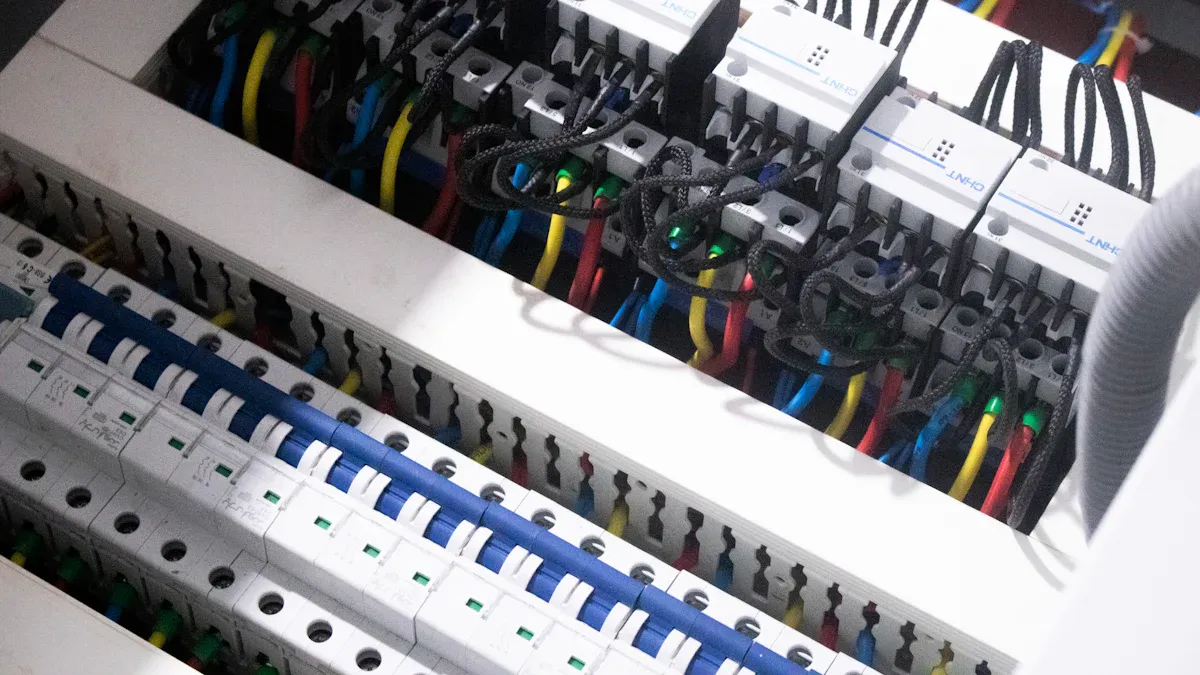
When you need to make a fast decision for your medium voltage panel, a clear side-by-side comparison helps you see the differences at a glance. Use the table below to compare vacuum contactors and vacuum circuit breakers based on the most important features. This quick reference will guide you toward the right choice for your application.
Feature | Vacuum Contactor | Vacuum Circuit Breaker |
|---|---|---|
Main Function | Frequent switching of load currents | Interrupting fault currents (short circuits) |
Operating Frequency | High (great for frequent start-stop cycles) | Low (for rare, critical operations) |
Applications | Motor control, capacitor switching | Grids, substations, main circuit protection |
Protection | No short-circuit protection | Strong fault protection |
Mechanical Endurance | Very high (up to 500,000 operations) | Moderate (20,000–50,000 operations) |
Electrical Endurance | High (up to 250,000 operations) | Moderate (10,000–20,000 operations) |
Short-Circuit Handling | Needs external fuse or upstream breaker | Built-in short-circuit interruption |
Typical Current Range | 630–1250 A (e.g., XBRELE CKG series) | 630–3150 A |
Voltage Range | 7.2 kV, 12 kV | 6.6–33 kV |
Maintenance | Simple, routine inspection and cleaning | Periodic, more detailed checks |
Cost | Lower initial investment | Higher initial investment |
Tip:
If your application requires frequent switching, such as starting and stopping motors or managing capacitor banks, you should consider a vacuum contactor. The XBRELE CKG series, for example, offers high endurance and flexible options for OEM and retrofit projects.
You should choose a vacuum circuit breaker when your priority is strong protection against faults and short circuits. These devices work best in substations, main distribution panels, and critical infrastructure where safety and reliability matter most.
Step 1: Identify your main application (motor control, grid protection, etc.).
Step 2: Check the required switching frequency and protection level.
Step 3: Match your needs to the features in the table above.
This table gives you a fast, reliable way to compare your options. You can use it as a checklist when planning your next medium voltage panel project.
Note:
Always consult your equipment specifications and safety standards before making a final decision. The right device will improve both the safety and efficiency of your electrical system.

You need to select devices for motor control panels based on switching frequency and load type. Motor control panels often require frequent switching, especially in industrial environments. You should size contactors according to the motor’s horsepower rating and voltage. Coil voltage may differ from the motor voltage, so you must check control circuit requirements. Overload relays protect motors from overheating. You should size these relays so they do not exceed 115% of the motor’s full load amps. Consider trip class and sensitivity to ground faults or phase imbalance.
Motor protective circuit breakers (MPCBs) combine short-circuit and overload protection. You find these breakers ideal for motors above 40 HP. They save space and may offer advanced features, such as mobile communication. Variable frequency drives (VFDs) control motor speed and torque. You should select VFDs based on the specific load type and required switching frequency.
Device Type | Recommended Use Case | Key Considerations |
|---|---|---|
Contactor | Sizing based on motor horsepower rating and voltage. | Coil voltage often differs from motor voltage; control voltages may vary. |
Overload Relay | Protects against overload; sizing should not exceed 115% of motor FLA. | Consider trip class, sensitivity to ground fault, and phase imbalance. |
Motor Protective Circuit Breaker (MPCB) | Combines short-circuit and overload protection; ideal for motors above 40 HP. | Offers fewer devices, space-saving, and can include features like mobile communication. |
Variable Frequency Drive (VFD) | Controls motor speed and torque; suitable for variable load applications. | Must be selected based on the specific load type and switching frequency requirements. |
Tip: For frequent motor switching, you benefit from using a vacuum contactor like the XBRELE CKG series. This contactor offers high endurance and flexible coil options for OEM panels.
You must prioritize protection and safety when designing power distribution panels. Arc flash protection is essential. You should look for arc-resistant construction, pressure relief vents, and zone-selective interlocking. Ground fault protection is required for equipment rated at 1000 amps or higher. Adjustable settings help you coordinate protection across your system.
Lockout/tagout provisions keep maintenance safe. You should choose panels with defeatable door interlocks and multiple padlock options. Compliance with standards such as NEC Article 408, NEC Article 409, NFPA 70E, UL 891, UL 67, and IEEE 1584 ensures your panel meets industry requirements.
Safety Feature | Description |
|---|---|
Arc Flash Protection | Includes arc-resistant construction, pressure relief vents, and zone-selective interlocking. |
Ground Fault Protection | Required for equipment rated 1000 amps or higher, with adjustable settings for coordination. |
Lockout/Tagout Provisions | Features like defeatable door interlocks and multiple padlock provisions for safe maintenance. |
Compliance Standards | NEC Article 408, NEC Article 409, NFPA 70E, UL 891, UL 67, IEEE 1584. |
Note: Vacuum circuit breakers provide robust fault protection and are well-suited for power distribution panels in substations and critical infrastructure.
You encounter unique requirements when switching capacitors and transformers in medium voltage panels. For capacitor switching, you must use circuit breakers. Switch-disconnectors do not handle capacitive currents safely. For transformer outgoing feeders, circuit breakers are necessary, especially when differential protection is involved.
Circuit breakers are required for switching capacitors due to the exclusion of switch-disconnectors for capacitive currents.
Circuit breakers are necessary for transformer outgoing feeders, particularly when differential protection is present.
You should select vacuum contactors for frequent switching of smaller transformers and capacitor banks. For larger transformers and critical capacitor applications, vacuum circuit breakers provide the protection and reliability you need.
Tip: Always match your device selection to the specific switching and protection needs of your application. This approach ensures safety, reliability, and compliance with industry standards.
You must choose between a vacuum contactor and a vacuum circuit breaker by focusing on your panel’s switching frequency, load type, and protection needs. Vacuum contactors excel in frequent switching tasks, while vacuum circuit breakers provide strong fault protection. For complex scenarios, reach out to manufacturers or technical experts. Matching device features to your specific medium voltage panel ensures safety, reliability, and optimal performance.
You use a vacuum contactor for frequent switching of loads like motors or capacitors. You choose a vacuum circuit breaker when you need strong protection against faults and short circuits.
No. You cannot use a vacuum contactor for short-circuit protection. You must pair it with fuses or upstream circuit breakers to ensure full protection.
You should select a vacuum circuit breaker when your application requires high fault interruption capacity, such as in substations, main distribution panels, or critical infrastructure.
You should inspect and clean vacuum contactors regularly. Most users schedule maintenance every 6 to 12 months, depending on the operating environment and switching frequency.
You can use the XBRELE CKG series for motor control, transformer switching, and capacitor bank management in medium voltage panels. These contactors fit both OEM and retrofit projects.
Yes. Vacuum circuit breakers require more detailed inspections and periodic testing. You must check mechanical and electrical systems every few years to ensure reliable operation.
Yes. You can retrofit existing medium voltage panels with the XBRELE CKG series. The compact design and flexible coil options make integration straightforward for most OEM and upgrade projects.
You should consider switching frequency, load type, protection needs, and total cost of ownership. Matching the device to your application ensures safety, reliability, and efficiency.