Need Full Specifications?
Download our 2025 Product Catalog for detailed drawings and technical parameters of all switchgear components.
Get Catalog
Download our 2025 Product Catalog for detailed drawings and technical parameters of all switchgear components.
Get Catalog Download our 2025 Product Catalog for detailed drawings and technical parameters of all switchgear components.
Get Catalog

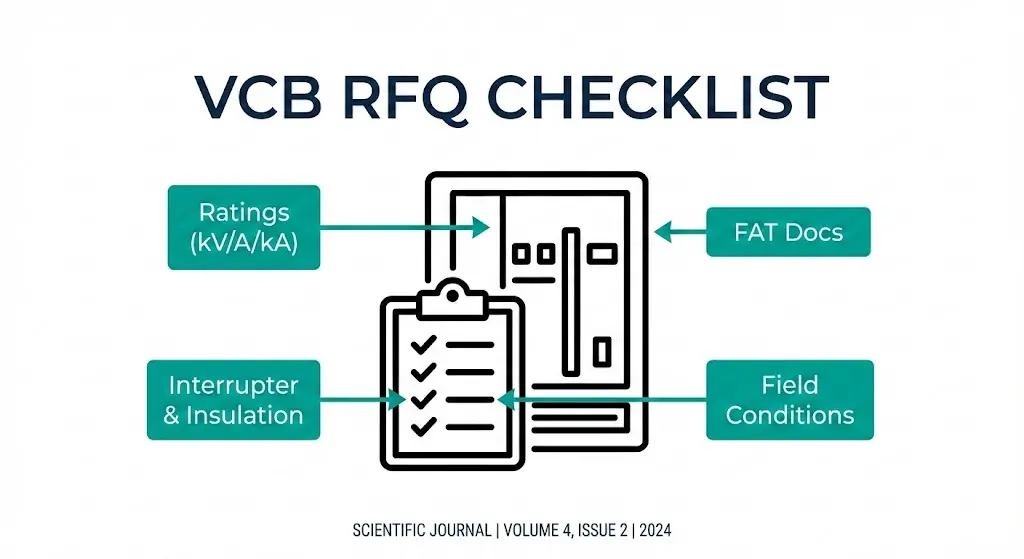
A vacuum circuit breaker RFQ goes sideways for two common reasons: suppliers quote a “standard breaker” that doesn’t match your real duty, or they quote the right nameplate numbers but leave gaps in testing, documentation, and interfaces that later stall commissioning. This checklist is designed to reduce both risks.
You’ll get 12 copy-paste RFQ questions, plus a simple scoring rubric so you can compare vendors without turning your evaluation into a debate.
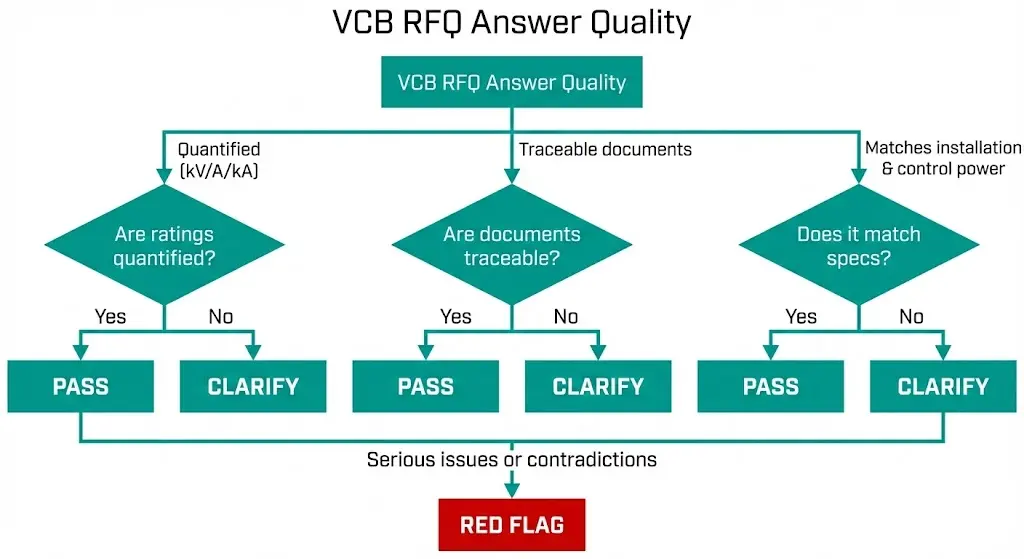
This checklist is for panel builders, EPCs, and industrial/utility buyers who already know they need a VCB, but want quote-ready answers instead of sales language. A “good” answer is measurable, configuration-specific, and document-backed.
Use this scoring rubric on every question:
PASS (quote-ready)
CLARIFY (can proceed, but must close before PO)
RED FLAG (high risk)
Manufacturers can’t lock a correct configuration if your RFQ lacks system context. When you don’t provide it, they’ll often quote a generic build, then re-quote after clarification. That’s where time and scope drift usually start.
Use this “System Data Card” as your RFQ input block.
Q1) What are the required electrical duties (kV class, A, kA, and frequency)?
Include nominal voltage class (for example 12 kV or 24 kV), continuous current (for example 630 A or 1250 A), short-circuit interrupting duty (for example 25 kA or 31.5 kA), and frequency (50 Hz or 60 Hz).
Q2) What is the application duty: feeder, transformer protection, motor duty, capacitor bank, or generator tie?
Different duties change what “electrical endurance” means and what accessories/interlocks matter.
Q3) What installation type are you quoting: indoor withdrawable, indoor fixed, or outdoor cabinet/pole style?
If your team is still deciding, treat this as a gating decision: indoor vs outdoor VCB selection guide
Q4) What control power and interfaces are required (coils, aux contacts, interlocks, SCADA)?
State control power (for example 110 VDC or 220 VAC), required aux contacts (NO/NC count), and any interface expectations (wiring diagram, terminal style, protocol expectations if applicable).
Deliverable: A fill-in RFQ “System Data Card” (copy/paste)
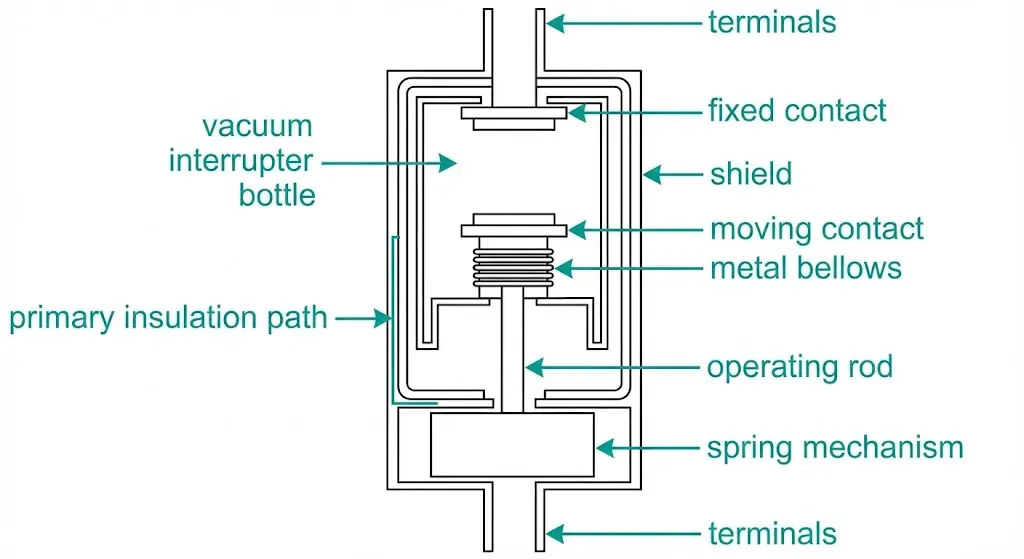
This is your “prove it” section. You’re not asking for a lecture. You’re asking the vendor to show that the interrupter, insulation system, and mechanism are engineered for your stated duty—not simply relabeled.
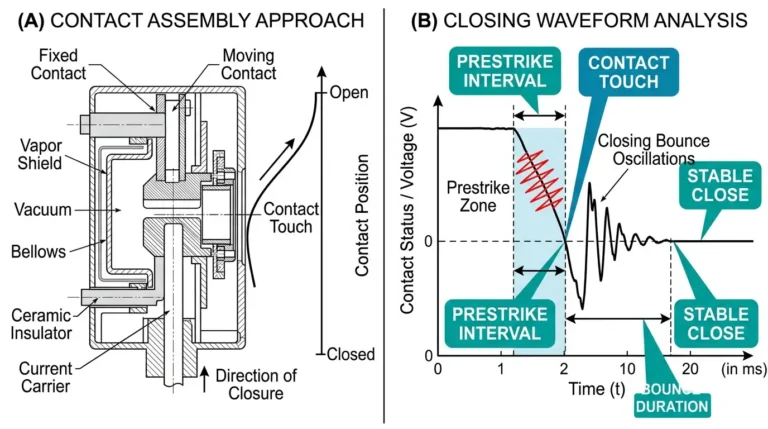
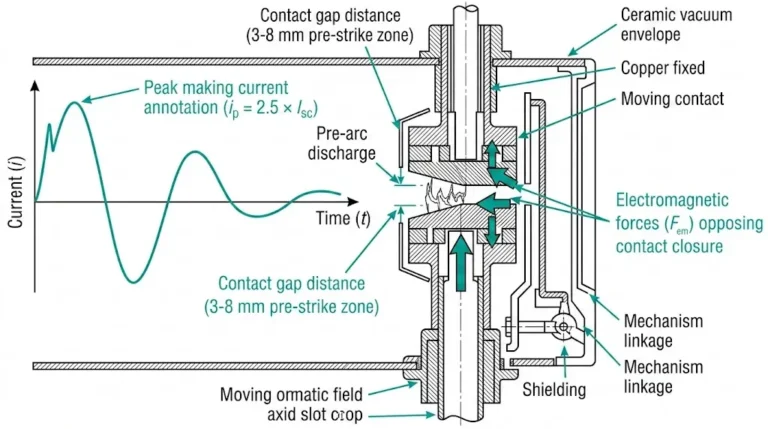
Q5) What is the interrupter duty basis for this exact configuration (not just the breaker nameplate)?
A credible answer restates your duty with units (for example 12 kV class, 31.5 kA, 50 Hz) and confirms the interrupter selection is tied to that configuration.
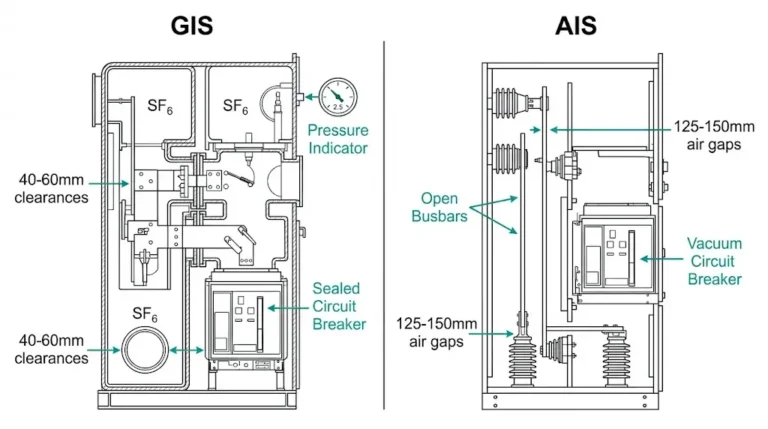
Q6) How is dielectric withstand and insulation margin handled in the assembly (internal clearances, external creepage, interface points)?
Ask them to describe where the controlling insulation path is (inside the pole, across external insulation surfaces, or at the terminal interface) and what conditions it assumes.
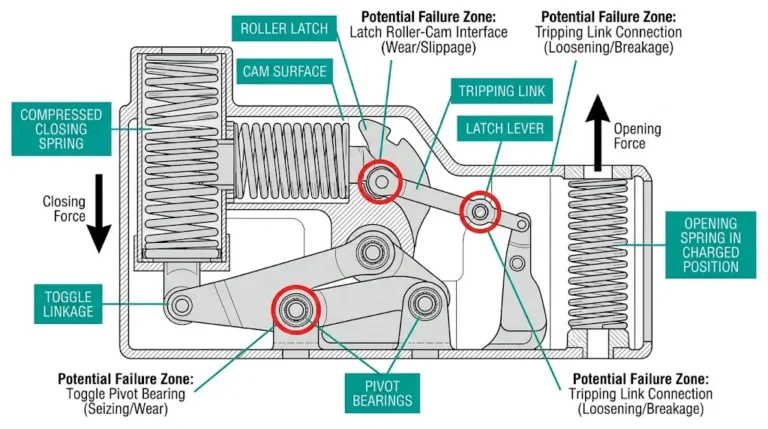
Q7) What mechanism type and operating margin are being quoted for the stated control power?
The vendor should state mechanism type (spring-charged or other) and confirm operation is within the assumed control supply (for example 110 VDC).
Standards anchor (authority link): IEC 62271-100
For quick internal context before you challenge a vendor’s interrupter claims: what is a vacuum interrupter
For nameplate/rating vocabulary that helps you interrogate quotes: vacuum circuit breaker ratings
[Expert Insight]
Lifecycle claims can be real—but only if you force the duty basis into the quote. Two vendors might both claim “10,000 operations,” yet one means mechanical operations with no electrical duty context.
Q8) What mechanical endurance is claimed (operations count), and what maintenance interval assumptions sit behind it?
Ask for the operations number and what inspection cadence they assume (time-based and operation-based). Example: inspections every 12 months, with mechanism checks at a stated operation count.
Q9) What electrical endurance is claimed, explicitly tied to fault duty (kA) and voltage class (kV)?
A credible answer looks like: “electrical endurance: X operations at 31.5 kA, 12 kV class,” plus what duty pattern they assume (rare faults vs frequent switching duty).
Deliverable: Comparison table template (drop into your evaluation sheet)
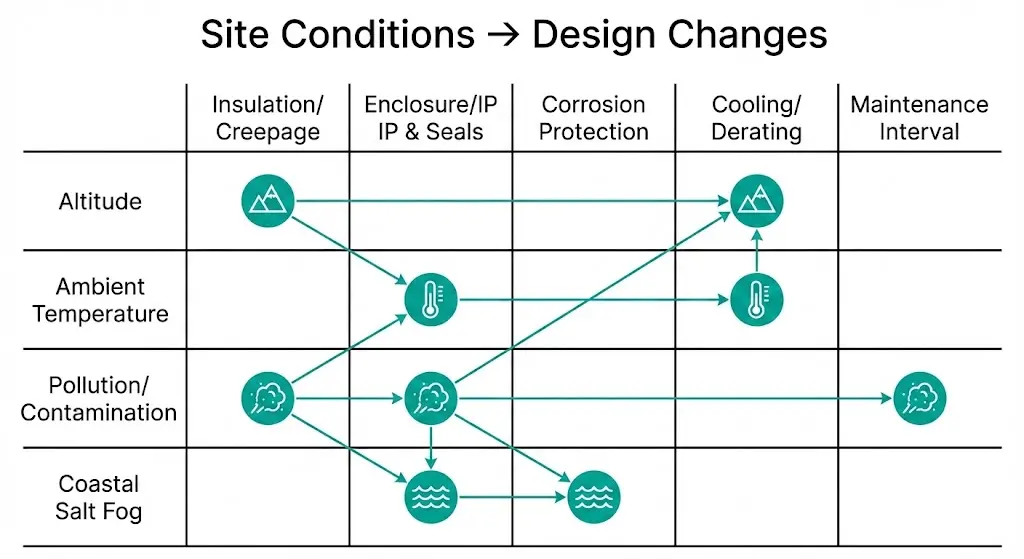
Field conditions are where “same rating” equipment separates into “stable in service” versus “trips, tracks, or corrodes.” Don’t let suppliers answer this with “no problem.” Make them either confirm suitability or quote the adaptations and any derating.
Q10) Given our site conditions, what must change in insulation, sealing, corrosion protection, or ratings?
Provide your site data, then ask them to respond with a specific confirmation or change list.
Deliverable: Site Conditions Addendum (buyer inputs + vendor confirmations)
Buyer inputs:
Vendor confirmations:
[Expert Insight]
If you want fewer commissioning surprises, define the document pack and acceptance flow in the RFQ—not after the equipment ships. This is also how you reduce the risk of “model code swaps” that still carry the same headline rating.
Q11) What is the exact deliverable pack tied to serial numbers (drawings, wiring, test records, as-built set)?
A strong answer lists the deliverables with revision control and ties routine test records to the breaker serial number.
Deliverable: FAT + documentation + traceability deliverables list
Quotation-stage:
FAT package:
Handover pack:
This is the one block that keeps quotes comparable and reduces late re-quotes. Keep it short, but explicit.
Q12) What is the full commercial scope: lead time, warranty terms, spares strategy, packing, and after-sales response?
Make them commit in writing.
Deliverable: RFQ Commercial Block + CTA line
{CTA} If you’d like XBRELE to sanity-check your RFQ before it goes out, send the filled System Data Card plus your single-line and installation notes, and we’ll flag rating gaps and quote-compare traps early.
1) What’s the quickest way to spot a weak VCB quotation?
Weak quotes usually avoid committing to configuration details or deliverable lists, which often shows up later as re-quoting or missing documents.
2) Should I share my protection philosophy in the RFQ?
A simplified protection concept can help suppliers align interfaces and accessories, while still keeping proprietary settings confidential.
3) How can I reduce back-and-forth with multiple suppliers?
Standardize your input block, require a named deliverables list, and ask vendors to restate duty and scope in their first response.
4) What vendor documents are most useful before placing a PO?
A stable model code breakdown, GA drawing, and wiring/terminal list typically prevent scope misunderstandings.
5) When is a factory acceptance test worth the effort?
FAT tends to pay off when schedule risk is high, integration is complex, or your handover process requires serial-tied records.
6) How do I compare two vendors with similar ratings but different prices?
Compare included accessories, documentation/traceability commitments, endurance assumptions, and support response terms; those often explain price gaps.