Request a Quote for High-Voltage Components&Equipment
Tell us your requirements — rated voltage, model, quantity, and destination — and our XBR Electric team will prepare a detailed quotation within 24 hours.
Core Functions: Beyond basic insulation, it acts as the “thermal convection hub” and a critical “messenger” for fault diagnostics.
Fluid Selection:
Mineral Oil: High cost-efficiency, governed by IEC 60296 standards.
Natural Esters: High fire point (> 300°C) and biodegradable; ideal for urban and eco-sensitive zones.
GTL Technology: Zero sulfur and high purity, offering superior oxidation resistance.
Critical Diagnostics:
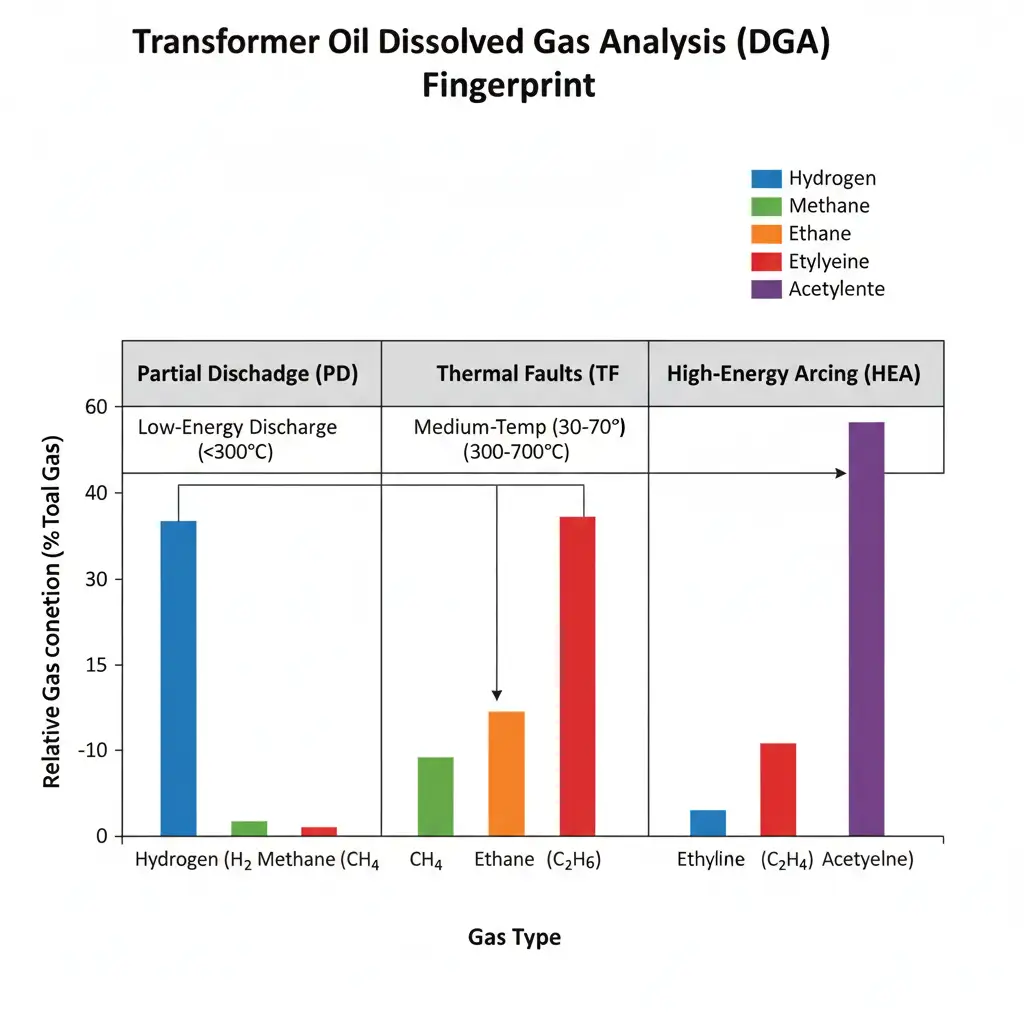
DGA Analysis: Monitoring H2, CH4, and C2H2; Acetylene (C2H2) is the red alert for high-energy arcing.
Furanic Analysis: The only non-invasive method to estimate paper Degree of Polymerization (DP), defining the asset’s end-of-life.
Operational Red Lines: Strict prohibition on mixing different inhibited oil types; vacuum levels for 500kV equipment must stay below 1 mbar during filling.
1. Executive Overview: The Strategic Paradigm Shift
Transformer oil, or liquid dielectric, is no longer viewed as a passive commodity. In the era of High-Voltage Direct Current (HVDC) transmission and decentralized renewable integration, transformer oil has become a high-performance engineered fluid. It serves as the primary cooling medium, a dielectric barrier, and a diagnostic window. For a typical 500MVA power transformer, the oil accounts for only 5-8% of the capital cost but is responsible for over 40% of the diagnostic data used to prevent catastrophic failures.
This white paper provides an exhaustive analysis of transformer oil technologies, shifting from molecular chemistry to life-cycle economic strategies. For a foundational understanding of the equipment these fluids protect, refer to our Electric Transformer Explained: The Ultimate Educational Guide.
2. Molecular Architecture: Hydrocarbons and Additive Chemistry
2.1 The Hydrocarbon Matrix
The performance of mineral oil is rooted in its refining process (Hydro-treating or Solvent refining). The three primary hydrocarbon groups are:
Naphthenics (Cycloalkanes): The industry standard due to their low pour point and excellent solvency for polar aging byproducts. They do not precipitate wax at -40°C, ensuring circulation in cold climates.
Paraffinics (Alkanes): High viscosity index and oxidation stability, but prone to “waxing.”
The GTL (Gas-to-Liquid) Revolution: Emerging iso-paraffinic oils derived from natural gas synthesis (GTL) offer a zero-sulfur, high-purity alternative. GTL oils exhibit superior oxidation stability and lower evaporation loss compared to traditional Group I/II mineral oils.
2.2 The Role of Additives: Inhibitors and Passivators
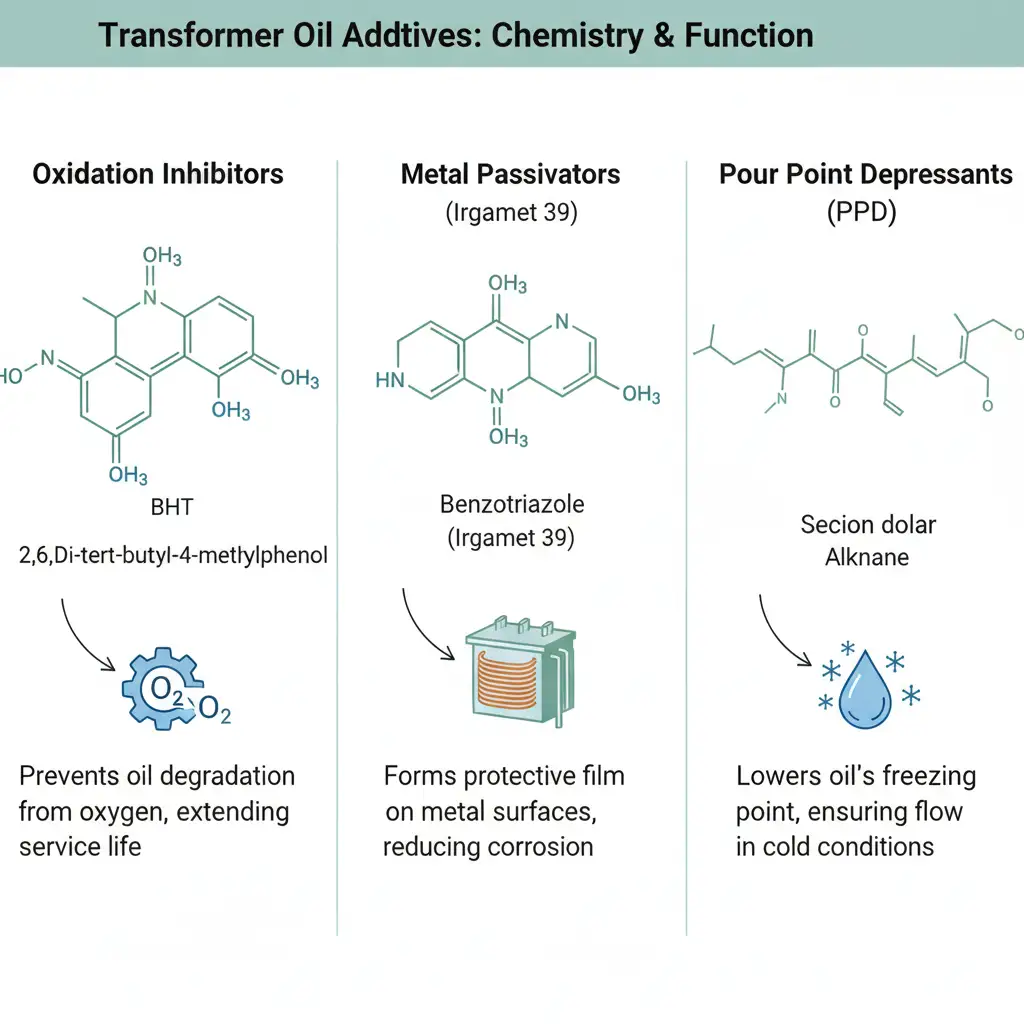
Oxidation Inhibitors: Chemicals like DBPC (2,6-di-tert-butyl-p-cresol) or BHT act as sacrificial antioxidants. They interrupt the free-radical chain reaction of oxidation, potentially doubling the oil’s induction period.
Metal Passivators: Compounds such as Irgamet 39 form a microscopic protective layer on copper winding surfaces. This prevents the catalytic effect of copper on oil oxidation and mitigates the risks of Corrosive Sulfur.
Pour Point Depressants (PPD): Used specifically in paraffinic-heavy oils to improve low-temperature fluidity by modifying wax crystal formation.
3. The “Corrosive Sulfur” Crisis: A Critical Deep Dive
Since the early 2000s, many high-voltage transformers failed prematurely due to the formation of Copper Sulfide (Cu2S) on conductor insulation.
The Mechanism: Labile sulfur compounds in the oil react with copper at high temperatures. The resulting Cu2S is conductive; as it migrates into the paper insulation, it lowers the dielectric strength, eventually leading to a turn-to-turn short circuit.
Detection & Mitigation: Testing via ASTM D1275B or IEC 62535 is now mandatory. If corrosive sulfur is detected, the primary remedy is the addition of a passivator or, in extreme cases, oil reclamation using specific sulfur-removal media. Detailed testing procedures are outlined in the ASTM International standards.
4. Technical Benchmarking: International Standards Comparison
A comprehensive comparison of high-performance insulating fluids based on current global standards:
5. Beyond the Oil: Furanic Analysis and Paper Aging
Transformer oil is the primary carrier of Furanic Compounds, which are byproducts of the degradation of cellulose (insulating paper).
Furfural (2-FAL) Analysis: Measuring the concentration of 2-furfuraldehyde in oil provides a non-invasive estimate of the Degree of Polymerization (DP) of the paper.
The DP Threshold: New paper has a DP of $\sim 1000$. When DP drops to 200-250, the paper loses its mechanical strength, and the transformer is considered to have reached its “End of Life,” regardless of the oil’s condition.
The Ester Advantage: Because natural esters are hygroscopic, they “pull” moisture out of the paper. This reduces the rate of acid-catalyzed hydrolysis, extending the paper’s life by a factor of 3 to 5 compared to mineral oil systems.
6. Advanced Diagnostics: The DGA “Fingerprint” Matrix
6.1 Gas Generation Profiles and Fault Correlation
Different faults crack oil molecules at specific energy levels, producing characteristic gases:
Hydrogen (H2): Low-energy discharge, partial discharge (PD), or “stray gassing” in inhibited oils.
Methane (CH4) & Ethane (C2H6): Low-to-medium temperature thermal faults (150-300°C).
Ethylene (C2H4): High-temperature thermal faults (> 700°C), indicative of core overheating or bad electrical connections.
While the Duval Triangle is effective, the Duval Pentagons provide a more granular view by incorporating all five hydrocarbon gases. These methods are rigorously defined by the International Electrotechnical Commission (IEC).
7. Field Engineering: Rigorous Sampling and Handling
7.1 Avoiding “False Positives” in Lab Results
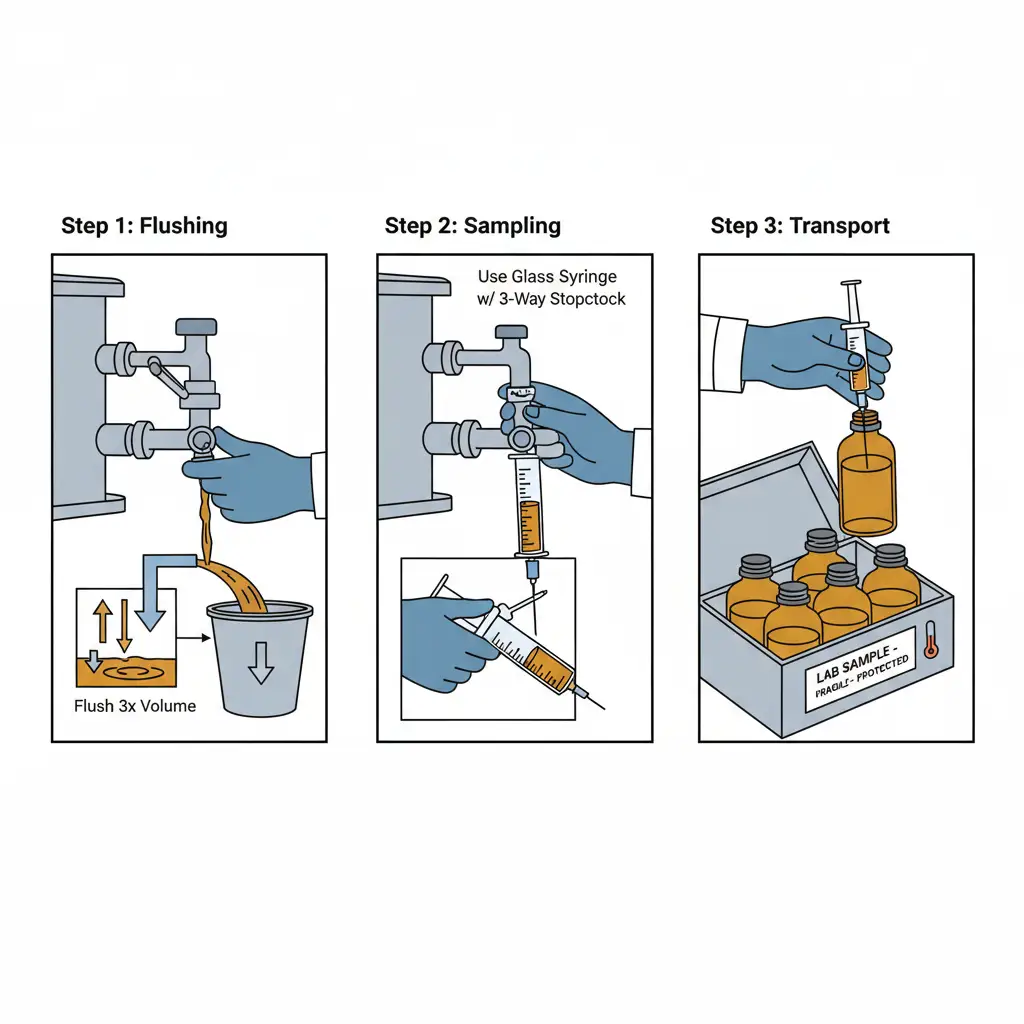
The most common cause of incorrect DGA results is atmospheric contamination during sampling.
Flushing Protocols: Draining at least 5-10 liters of oil to remove stagnant sediment from the sampling valve.
Syringe Integrity: Using precision glass syringes with three-way stopcocks to ensure zero air-bubble entrapment.
Transport Logistics: Samples must be shielded from UV light (using amber containers) to prevent “photo-oxidation.”
7.2 Vacuum Processing and Degassing
For Ultra-High Voltage (UHV) assets, the vacuum level during filling must be maintained below 1 mbar (100 Pa) for extended periods. This is standard practice in the manufacturing of High-Performance Oil-Immersed Transformers.
8. Global Regulatory Landscape: Safety and Environment
Modern asset management must comply with tightening environmental regulations:
REACH & RoHS (EU): Compliance regarding the chemical safety of additives.
Biodegradability (OECD 301): Natural esters must achieve $> 60\%$ biodegradation within 28 days.
PCB (Polychlorinated Biphenyls): Strict international bans (Stockholm Convention).
9. Economic Analysis: Life Cycle Costing (LCC) and TCO
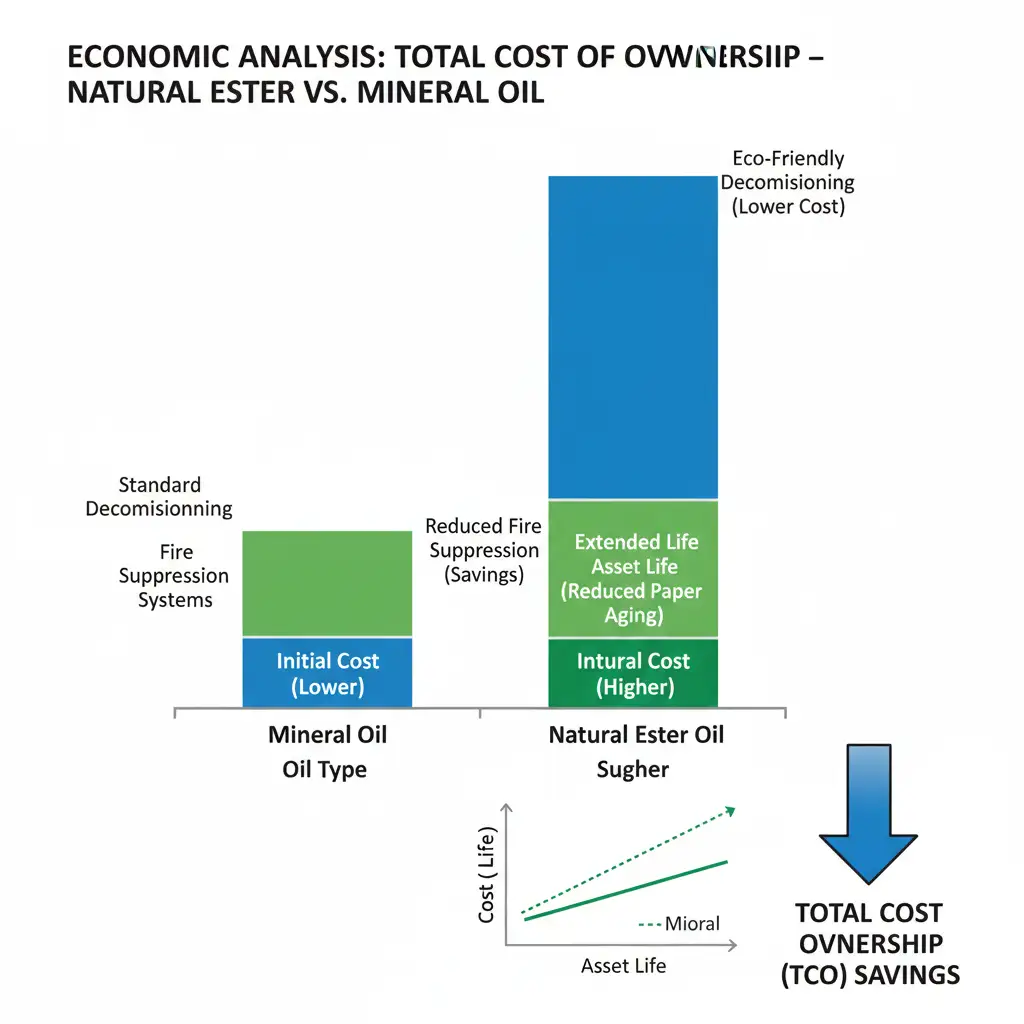
While Natural Ester oil is roughly 3x more expensive than mineral oil per liter, the Total Cost of Ownership (TCO) often favors the ester for specific installations:
Fire Suppression Savings: Elimination of expensive “Water Deluge” systems and firewalls.
Asset Life Extension: Reducing paper aging allows for higher loading (overloading) during peak demand.
Decommissioning Costs: Lower remediation costs for mineral oil spills, which can cost upwards of $200,000 per incident in sensitive areas.
10. Future Trends: The Digital Twin and Real-Time Monitoring
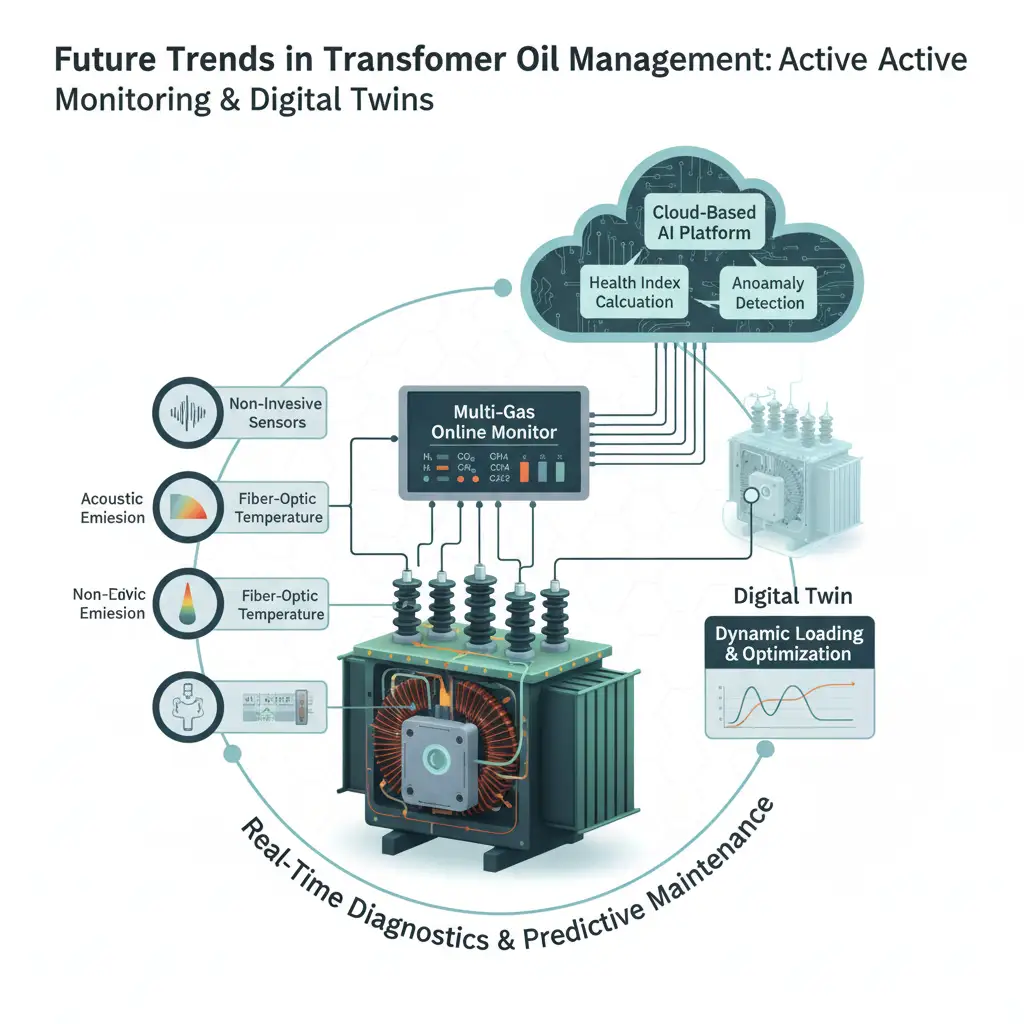
The industry is moving toward “Active Monitoring” rather than “Passive Sampling”:
Multi-gas Online Monitors: Integrated with Cloud-based AI to calculate a “Health Index.”
Dynamic Loading (Digital Twins): Real-time simulation of the transformer’s thermal state.
Non-Invasive Sensors: Development of acoustic emission (AE) sensors and fiber-optic temperature sensors.
11. Frequently Asked Questions (FAQ)
Q1: Can different brands of transformer oil be mixed?
A: Mixing oils of the same type is generally acceptable if they both meet IEC 60296. However, mixing inhibited and uninhibited oils is discouraged. Mixing mineral oil and ester oil should be avoided unless it is a deliberate “retrofill” procedure.
Q2: What should I do if Acetylene (C2H2) is detected in a DGA report?
A: Acetylene is a “Red Alert” gas. Even trace amounts indicate high-energy arcing. You should immediately shorten the sampling interval to 24-48 hours. If the concentration rises, the unit must be taken offline.
Q3: How does moisture content in oil affect the Breakdown Voltage (BDV)?
A: In mineral oil, BDV drops precipitously once moisture exceeds ~ 20 ppm. In contrast, natural esters can hold up to 200-300 ppm before a significant drop occurs.
Q4: Is “Retrofilling” a viable strategy for old transformers?
A: Yes, it can extend the remaining life of the paper insulation and eliminate fire risks, provided the gaskets are compatible.
Q5: Why is Furan analysis necessary if I already perform DGA?
A: DGA identifies active faults, while Furan analysis estimates the Degree of Polymerization (DP), which is the ultimate determinant of a transformer’s end-of-life.
12. Conclusion
Strategic management of transformer oil is no longer a luxury but a necessity for grid resilience. From choosing high-purity GTL base oils to implementing Duval Pentagon diagnostics and ester-based thermal management, the decisions made at the molecular level have a profound impact on the financial and operational health of the power grid.
Technical Reference: This document aligns with IEEE C57.104, IEC 60599 (Interpretation of DGA), and the latest CIGRE D1.01 Working Group reports. For specialized forensic analysis, contact the XBRELE Engineering Laboratory.
Master the essentials of GTL technology, natural esters, and advanced DGA diagnostics. This guide is designed for utility engineers and asset managers seeking grid resilience.
**Format:** PDF Document **Author:** XBRELE Engineering
Hannah is the Administrator and Technical Content Coordinator at XBRELE. She oversees website structure, product documentation, and blog content across MV/HV switchgear, vacuum breakers, contactors, interrupters, and transformers. Her focus is delivering clear, reliable, and engineer-friendly information to support global customers in making confident technical and procurement decisions.