Request a Quote for High-Voltage Components&Equipment

Tell us your requirements — rated voltage, model, quantity, and destination — and our XBR Electric team will prepare a detailed quotation within 24 hours.
Contact Form Demo
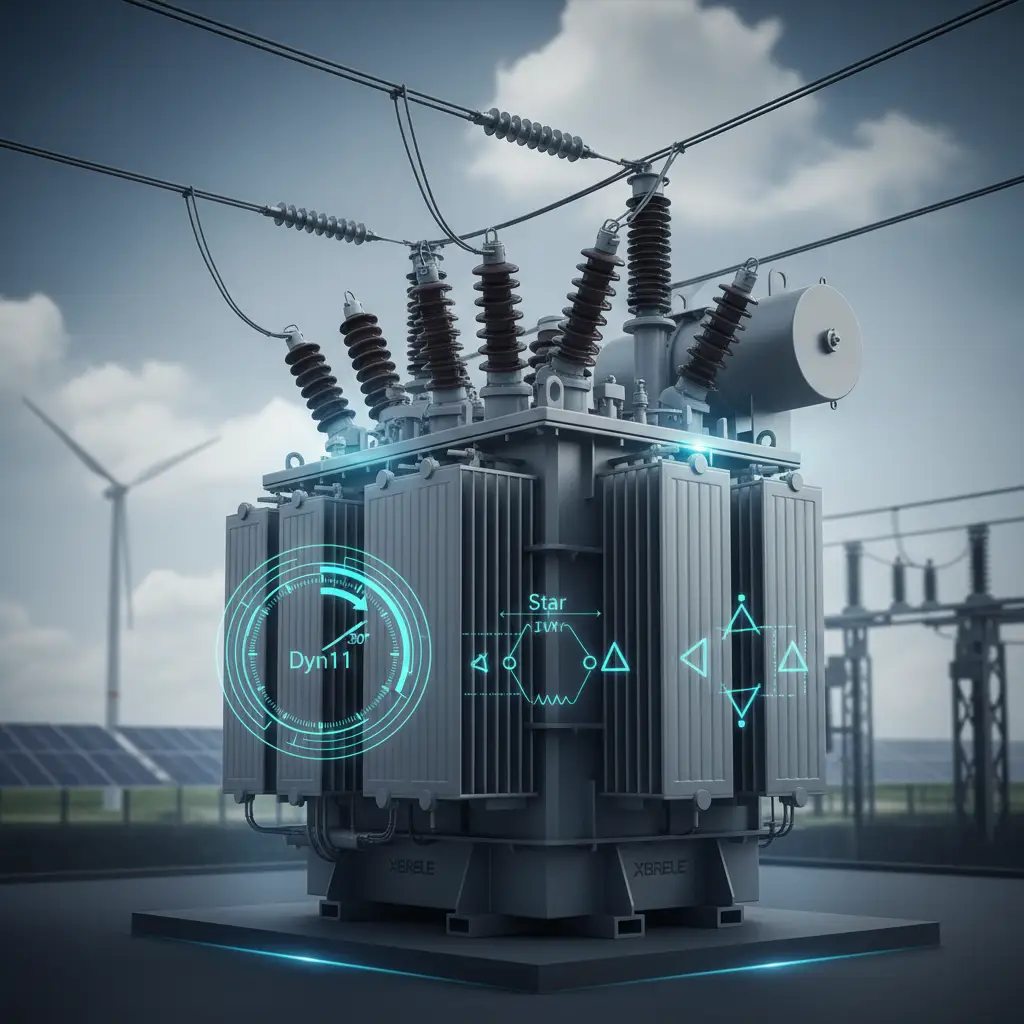
A detailed XBRELE 3-phase power transformer in a modern substation, with subtle overlays illustrating vector group diagrams and winding connections, emphasizing its crucial role in grid integration and renewable energy systems for electrical engineering applications.

The Ultimate Technical Guide to 3-Phase Transformers: Connections, Vector Groups, and Grid Integration

Technical Level: Intermediate to Advanced

Applicable Standards: IEC 60076, IEEE C57.12.00

1. Introduction: The Strategic Role of Transformers in Modern Grids

In the hierarchy of power system assets, the 3-phase transformer is the most critical node. Beyond simple voltage transformation, it acts as a harmonic filter, a tool for grounding strategy, and a robust barrier against fault propagation.

Engineering Insight: As the industry transitions toward Smart Grids and Renewable Energy Integration, specific parameters—such as short-circuit impedance and vector group—directly dictate the performance of Vacuum Circuit Breakers (VCBs) and the sensitivity of protection relays.

2. Quick Takeaways: Core Engineering Summary

  • Core Material: Use CRGO silicon steel with a flux density (B) between 1.5 T – 1.7 T for optimal iron loss reduction.
  • Preferred Vector Group: Dyn11 is the global standard for distribution due to its neutral stability and harmonic trapping.
  • Parallel Operation: Non-negotiable criteria include identical Voltage Ratios, identical Vector Groups, and matched %Z (within ±10%).
  • Maintenance Criticals: Implement DGA (Dissolved Gas Analysis) for oil units and PT100 calibration for dry-type units to prevent thermal runaway.
  • Protection Coordination: Ensure VCBs are rated for transformer inrush (up to 12× In) to avoid nuisance tripping.

3. Advanced Working Principles: The Magnetic Circuit

A 3-phase transformer utilizes a coupled magnetic circuit that exploits the unique properties of balanced 3-phase systems.

3.1 The 120° Phase Displacement and Flux Balance

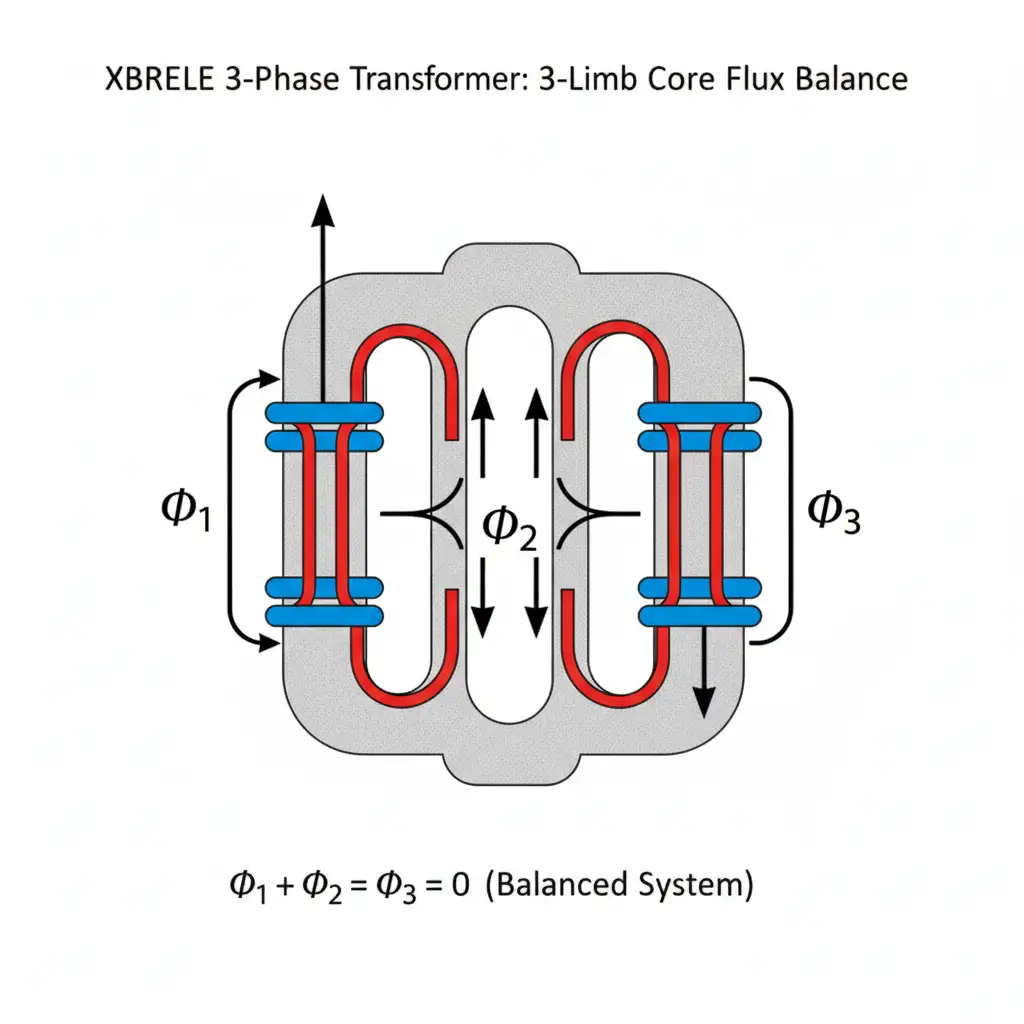
In a balanced 3-phase system, the sum of the instantaneous fluxes at any point in time is zero:

Φ1 + Φ2 + Φ3 = 0

This physical property allows for a 3-limb core design, typically utilizing Cold Rolled Grain Oriented (CRGO) silicon steel. By using the central limbs as return paths for each other, this architecture significantly reduces the material requirements, thereby lowering No-Load Losses (Iron Losses) and optimizing the physical footprint of the unit.
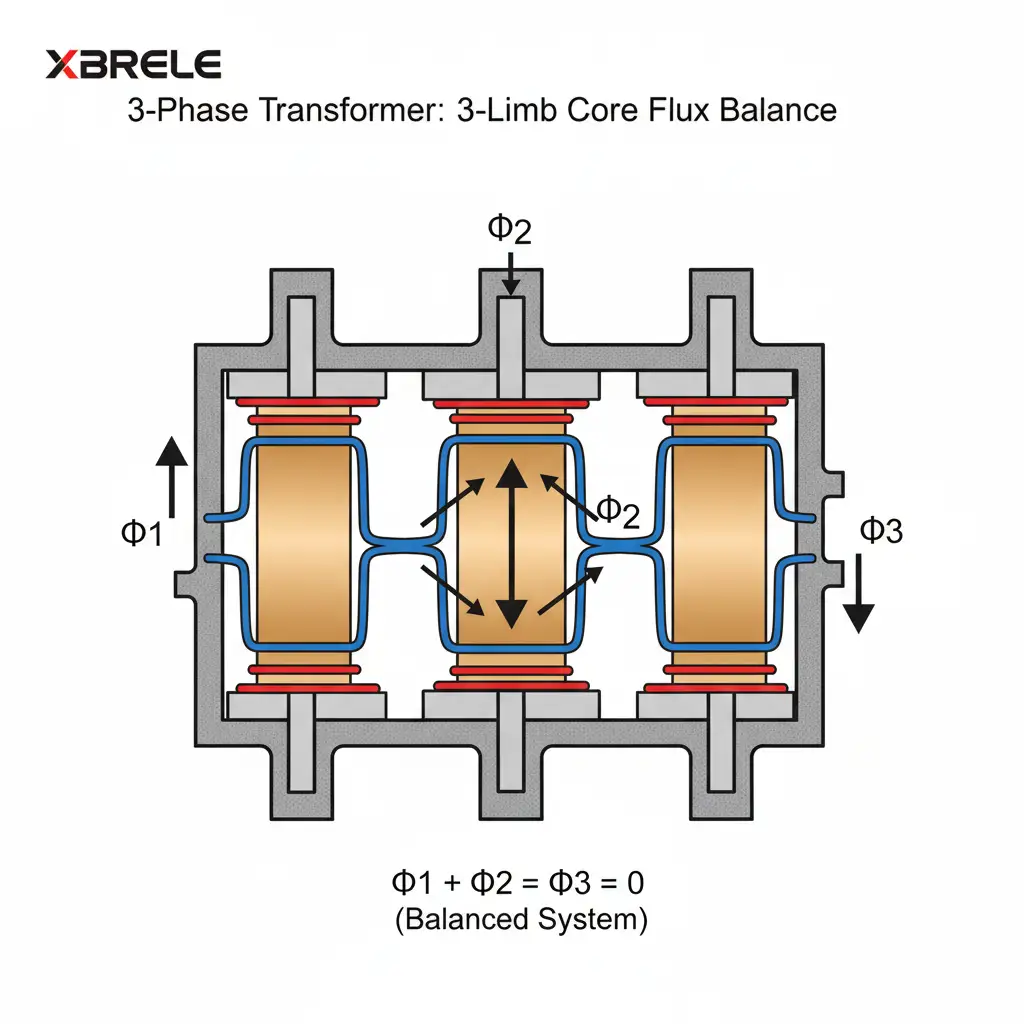
A schematic diagram illustrating the 120 degree phase displacement of magnetic fluxes in a 3-phase transformer core, showing balanced flux distribution.

3.2 Flux Density and Saturation Risk

Designers must carefully balance Magnetic Flux Density (B), typically targeted between 1.5 T and 1.7 T. Over-excitation, often caused by over-voltage or low frequency (an abnormal V/f ratio), leads to significant technical risks:

  • Magnetizing Current Surge: A 10% increase in voltage beyond saturation can lead to a 100% increase in magnetizing current.
  • Harmonic Pollution: Core saturation generates heavy 3rd and 5th harmonics, degrading power quality.
  • Structural Overheating: Localized heating in core bolts and clamping structures due to stray flux leakage.

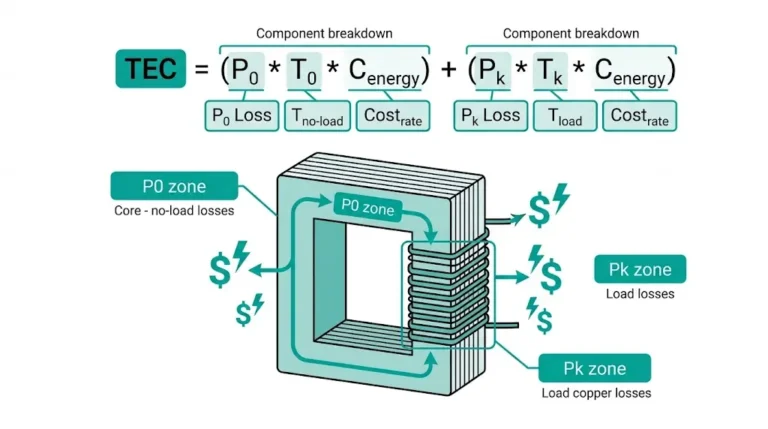
4. Efficiency and Economic Impact: Understanding Losses

For B2B procurement, the transformer’s total ownership cost (TOC) is often more critical than the initial purchase price.

Total Losses = No-Load Losses + Load Losses
  • No-Load Losses (Core Losses): Occur due to hysteresis and eddy currents in the iron core. These are constant as long as the transformer is energized, regardless of the load.
  • Load Losses (Copper Losses): Proportional to the square of the load current (I2R). These vary with power consumption.
Engineering Note: Utilizing Amorphous Alloy Transformers can improve efficiency by lowering no-load losses by up to 70% compared to standard silicon steel units.
A comparative graph illustrating the difference in no-load losses between traditional CRGO silicon steel transformers and advanced amorphous alloy transformers, showing significantly lower losses for the latter.

5. Analysis of Winding Connections

The choice of connection determines the system’s zero-sequence impedance and its response to asymmetrical faults.

Connection TypeIEC SymbolIEEE TermAdvantageLimitation
StarY / yWyeNeutral point available; graded insulation reduces costs.Vulnerable to unbalanced 3<sup>rd</sup> harmonic flux.
DeltaD / dDeltaTraps 3<sup>rd</sup> harmonics; high fault current capacity.No neutral for grounding; full line insulation required.
Zig-ZagZn / znInterconnected StarIdeal for balancing extreme load asymmetry.Increased copper usage (~15% more than Star).

6. Deciphering Vector Groups

<p>Vector groups define the phase displacement between the High-Voltage (HV) and Low-Voltage (LV) sides. This is a non-negotiable prerequisite for <strong>Parallel Operation</strong>.</p>

6.1 Clock Notation and Phase Shift

The vector group (e.g., Dyn11) uses a clock face analogy where the HV vector is fixed at 12 o’clock (0°). Each “hour” represents a 30° phase lag of the LV relative to the HV.

  • Group I (0° Shift): Yy0, Dd0 — Standard for large system interties.
  • Group III (30° Lag): Dy1, Yd1 — Preferred for generator step-up.
  • Group IV (30° Lead): Dyn11 — The global industry standard for distribution networks.

7. Parallel Operation: Engineering Criteria

Critical Safety Note: Connecting two transformers in parallel without verifying the criteria below will result in immediate equipment destruction and catastrophic failure.

The Four Mandatory Rules for Parallel Operation:

  • 1. Identical Voltage Ratios: Prevents circulating currents under no-load conditions.
  • 2. Same Vector Group: Dyn1 and Dyn11 are incompatible (resulting in a 60° phase difference).
  • 3. Matched Impedance (%Z): Must be within ±10% to ensure proportional load sharing.
  • 4. Identical Phase Sequence: Must be verified using a phase-sequence meter before commissioning.

8. Application Spotlight: Renewable Energy Integration

Integrating Solar PV and Wind farms poses unique challenges. These systems often require specialized Step-Up Transformers to bridge the gap between generation and transmission voltages:

  • DC Injection: Inverters can inject small amounts of DC into the AC grid, potentially causing core saturation.
  • Variable Loading: Intermittent renewable sources cause thermal cycling that stresses the insulation paper.
  • Harmonic Resilience: Inverter-based resources (IBR) generate high-frequency switching noise, requiring enhanced electrostatic shielding.

9. Maintenance & Diagnostic Testing

To ensure a 25+ year lifecycle, a rigorous diagnostic schedule is required:

  1. DGA (Dissolved Gas Analysis): Essential for Oil Immersed Transformers to monitor Hydrogen (H2) and Acetylene (C2H2).
  2. TTR (Turns Ratio) Test: To confirm winding integrity and detect inter-turn shorts.
  3. Tan Delta Testing: Measuring dielectric loss to predict insulation aging.
Note: For Dry Type Transformers, yearly calibration of PT100 Sensors is essential, as they provide the primary defense against thermal runaway in the absence of oil-cooling.

10. Switchgear Integration (The XBRELE Advantage)

During energization, transformers draw an inrush current up to 12× the rated current (In). This phenomenon requires sophisticated protection coordination.

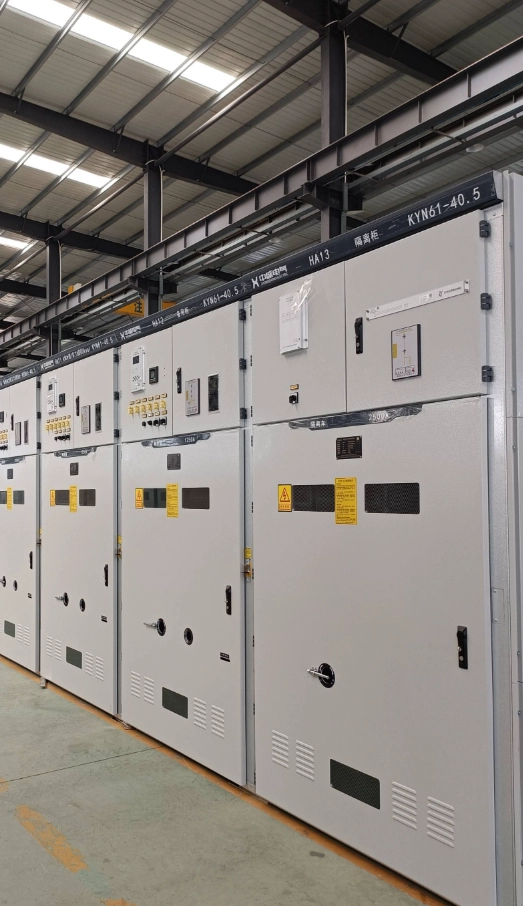
XBRELE Vacuum Circuit Breakers (VCBs) are engineered with specific contact metallurgy to handle these transients. When paired with high-end protection relays using ANSI 87T (Differential) and ANSI 50/51 (Overcurrent) codes, our switchgear ensures that the transformer remains protected from internal faults while avoiding nuisance tripping during normal energization.

11. Troubleshooting FAQ

Q: Why does a transformer “hum”? A: This is <strong>Magnetostriction</strong>—the physical vibration of core laminations due to magnetic flux. Excessive noise usually indicates over-fluxing (high <i>V/f</i>) or mechanical loosening of core clamping bolts.

Q: Can I parallel a Yy0 and a Dd0 transformer? A: Yes, as both belong to Group I (0° shift). However, all other parameters like %Z and voltage ratio must match.

Conclusion: Engineering for Longevity

Precise selection of Vector Groups and coordination with high-quality switching technology is essential for grid resilience. At XBRELE, we provide IEC-certified VCBs and protective components designed to keep critical power assets running safely.

3-Phase Transformer Technical Guide PDF
Official Engineering Technical Guide

3-Phase Transformers: Connections, Vector Groups & Grid Integration

Master the complexities of magnetic flux balance, Dyn11 vector group DNA, and the four golden rules of parallel operation. This IEC-compliant guide is essential for substation design and ensuring grid stability.

**Format:** PDF Document **Author:** XBRELE Engineering
Download Technical Guide
Hannah Zhu marketing director of XBRELE
Hannah

Hannah is the Administrator and Technical Content Coordinator at XBRELE. She oversees website structure, product documentation, and blog content across MV/HV switchgear, vacuum breakers, contactors, interrupters, and transformers. Her focus is delivering clear, reliable, and engineer-friendly information to support global customers in making confident technical and procurement decisions.

Articles: 61