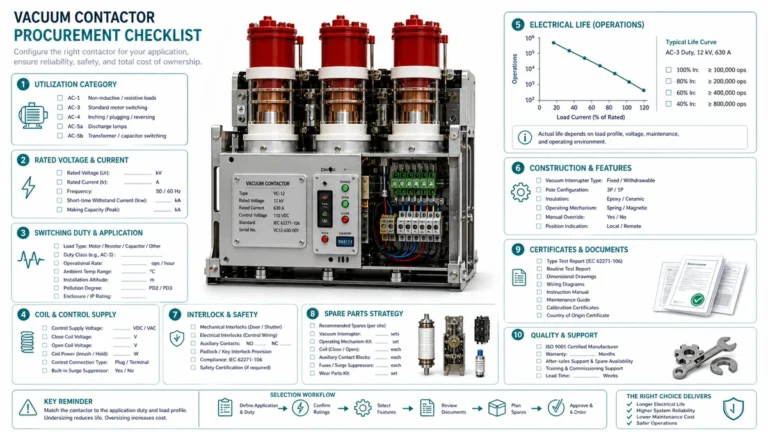
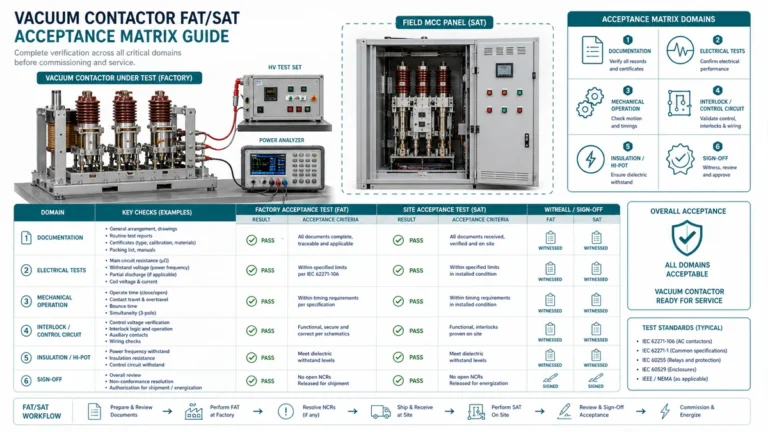
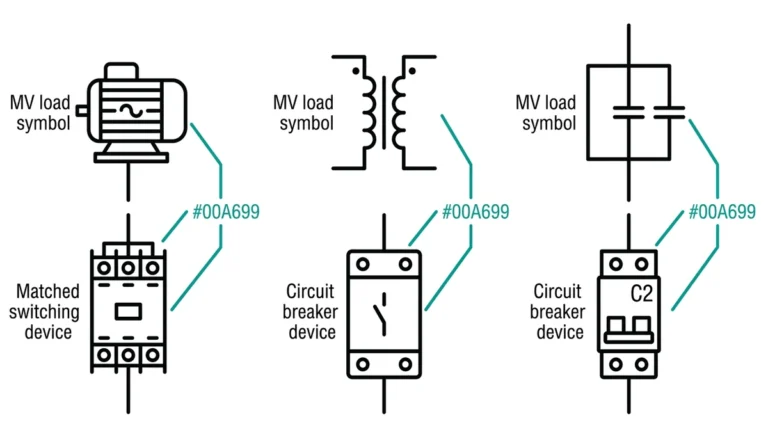
Benötigen Sie die vollständigen Spezifikationen?
Laden Sie unseren Produktkatalog 2025 herunter, um detaillierte Zeichnungen und technische Parameter aller Schaltanlagenkomponenten zu erhalten.
Katalog anfordern
Laden Sie unseren Produktkatalog 2025 herunter, um detaillierte Zeichnungen und technische Parameter aller Schaltanlagenkomponenten zu erhalten.
Katalog anfordern Laden Sie unseren Produktkatalog 2025 herunter, um detaillierte Zeichnungen und technische Parameter aller Schaltanlagenkomponenten zu erhalten.
Katalog anfordern
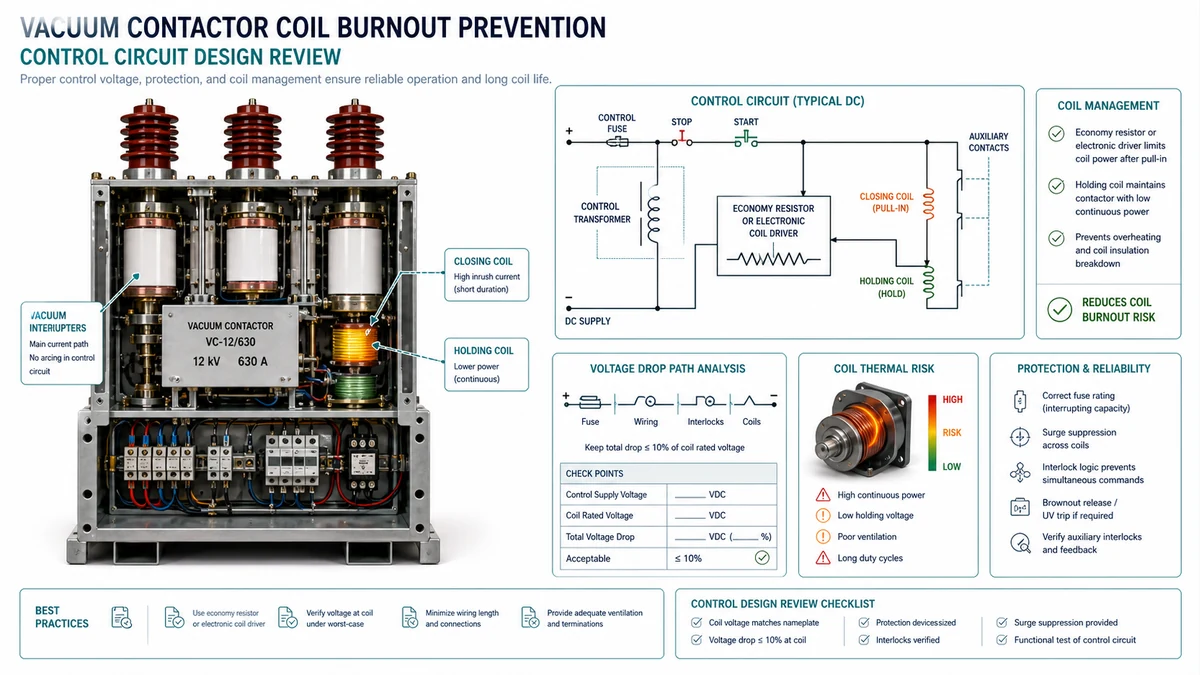
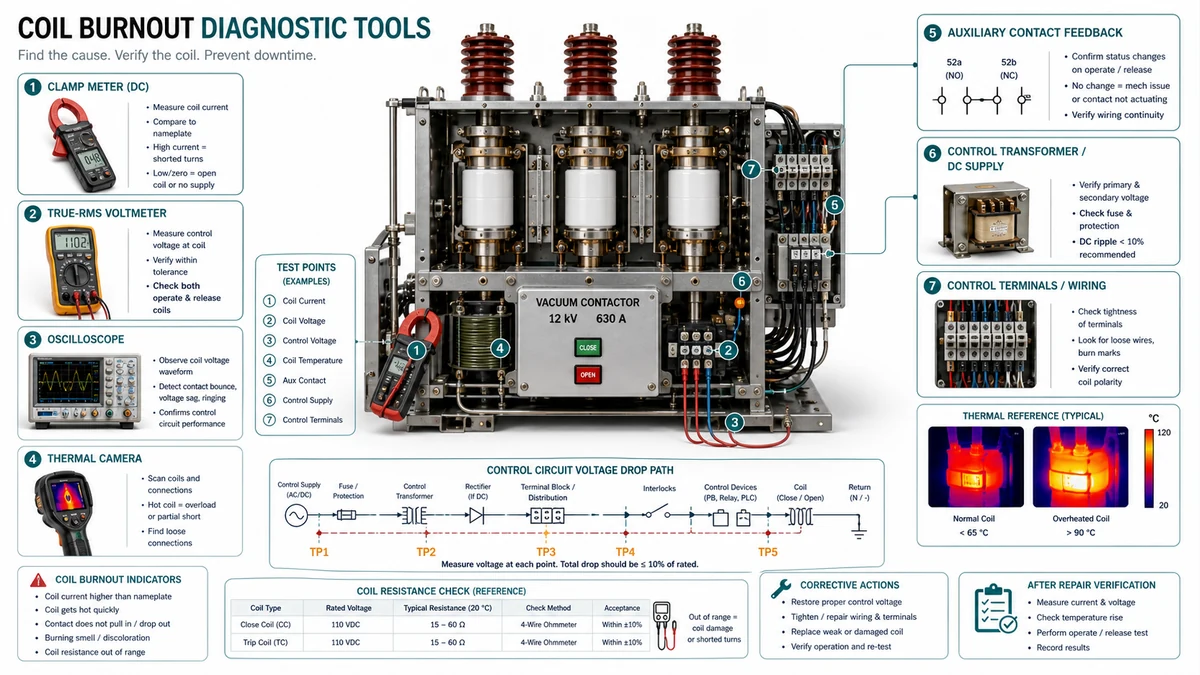
Der Ausfall der Spule in Vakuumschützen folgt einem vorhersehbaren Versagensverlauf: In der Wicklung staut sich Wärme an, bis die Isolierung durchschlägt, Kurzschlüsse zwischen den Windungen entstehen und die Spule ausfällt. Der Auslöser lässt sich fast immer auf einen elektrischen oder mechanischen Zustand zurückführen, der nicht gemessen, bei der Konstruktion nicht berücksichtigt oder bei der Inbetriebnahme nicht behoben wurde. Dieser Leitfaden behandelt die Ermittlung der Grundursache, die Überprüfung der Auslegung des Steuerkreises, die Bewertung der thermischen Umgebung, die Auswahl der Haltestromarchitektur, die Integration von Schutzrelais sowie die Überprüfung der Beschaffung.
Verwenden Sie diese Tabelle als Hilfsmittel für eine erste Einstufung. Wenn ein Symptom in mehr als einer Zeile aufgeführt ist, müssen alle entsprechenden Erkrankungen gleichzeitig behandelt werden.
| Symptom | Erster Test | Wahrscheinliche Grundursache | Nächste Aktion |
|---|---|---|---|
| Die Spule brennt innerhalb weniger Tage nach dem Einbau durch | Messen Sie die Steuerspannung an den Spulenanschlüssen während der Erregung. | Spannungsabfall beim Einschalten unterhalb des Nennwerts von 85% | Den Steuertransformator größer dimensionieren oder die Belastung des Steuerkreises verringern |
| Die Spule brennt nach monatelangem normalem Betrieb durch | Aufzeichnung der Steuerspannung über 24 Stunden | Anhaltende Überspannung über dem Nennwert von 110% | Spannungsregulierungstransformator einbauen oder die Stufeneinstellung anpassen |
| Die Spule ist heiß, aber das Schütz schließt normal | Zählen Sie die Betriebsstunden im Rahmen der vom Hersteller angegebenen Nennbetriebszeit | Hohe Schaltfrequenz | Verringern Sie die Schaltfrequenz oder verwenden Sie eine Spule mit höherer Einschaltdauer |
| Die Spule brennt durch, wobei Rückstände an der Polfläche sichtbar sind | Polflächen und Führungsstifte prüfen | Anker in geöffneter Stellung blockiert | Polflächen reinigen, verschlissene Führungen austauschen, Gehäuseabdichtung anbringen |
| Zeitweise auftretendes Burnout ohne erkennbares Muster | Messen Sie den Spannungsabfall an jedem Segment des Steuerkreises unter Last | Lose Anschlüsse in der Verkabelung verursachen einen Spannungsabfall | Anschlussklemmen nachziehen, zu dünne Steuerleitungen austauschen |
| Der Spulenwiderstand wird vor dem vollständigen Durchbrennen als niedrig angezeigt | Messen Sie den Spulenwiderstand und den Isolationswiderstand gegen Erde | Verschleiß der Isolierung durch Temperaturwechselbeanspruchung | Spule austauschen; vor dem Wiedereinschalten die thermische Grundursache ermitteln |
| Instrument oder Referenz | Zweck der Diagnose von Spulenausfällen |
|---|---|
| Strommessgerät in Zangenausführung | Anlauf- und Halte-Spulenstrom messen; Übergang des Sparbetriebs überprüfen |
| True-RMS-Multimeter | Die Spannung an den Spulenanschlüssen unter Last messen; den Spannungsabfall an den Anschlüssen prüfen |
| Netzqualitätsanalysator oder Datenlogger | Spannungsabfall während des Einschaltvorgangs erfassen; Versorgungsqualität über 24 Stunden protokollieren |
| Isolationswiderstandsmessgerät (500 V oder 1000 V Gleichstrom) | Messen Sie den Isolationswiderstand der Spulenwicklung gegen Erde vor und nach einem vermuteten thermischen Ereignis. |
| Durchgangswiderstandsprüfer (Mikro-Ohm-Bereich) | Den Widerstand des Hilfskontakts überprüfen; erhöhten Widerstand im Steuerkreis kennzeichnen |
| Kalibriertes Thermoelement oder Temperaturdatenlogger | Messung der Umgebungstemperatur im Gehäuse auf Höhe der Spule während der Spitzenlast |
| Infrarot-Wärmebildkamera | Ermitteln Sie Hotspots an benachbarten Wärmequellen; dies ist kein Ersatz für eine direkte Lufttemperaturmessung |
| Zeitmessgerät oder Oszilloskop | Erfassung der Schließzeit des Ankers; Erkennung von Kontaktprellen, die wiederholte Einschaltspitzen verursachen |
| Datenblatt und Bedienungsanleitung für OEM-Schütz | Überprüfen Sie die Toleranz der Spulenspannung, die Wärmeklasse, die Einschaltdauer und die Spezifikationen der Energiesparschaltung |
| Projektspezifikation und Einlinienzeichnungen | Überprüfung der Konstruktionsvorgaben im Vergleich zum Ist-Zustand der Steuerkreise |
Auf diese vier Hauptursachen entfällt der Großteil der Ausfälle im Feld.
Anhaltende Überspannung. Eine Spule mit einer Nennspannung von 120 V AC, die bei 115% der Nennspannung betrieben wird, ist einer um etwa 32% höheren thermischen Belastung ausgesetzt als unter Nennbedingungen, was die Lebensdauer der Isolierung bei monatelangem Dauerbetrieb stetig verringert.
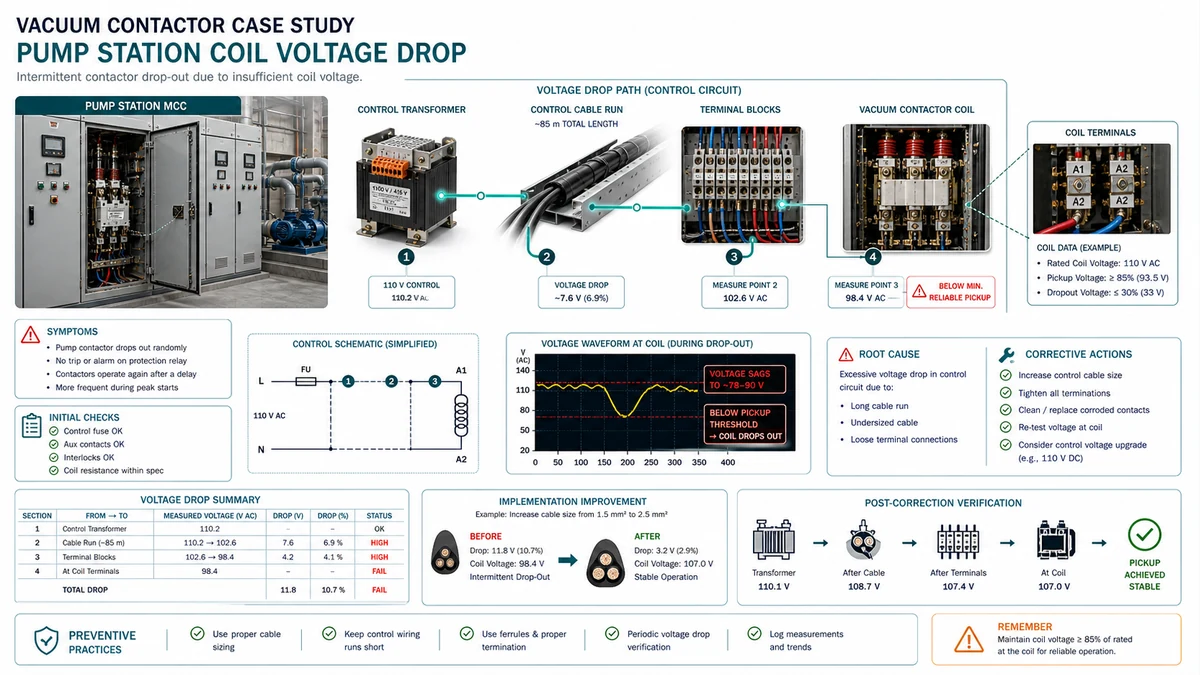
Spannungsabfall während des Einfahrens. Wenn die Versorgungsspannung während des Einschaltstroms unter etwa 85% des Nennwerts absinkt, setzt der Anker möglicherweise nicht vollständig an. Ein nur teilweise angesetzter Anker hält den Luftspalt offen, sorgt für eine niedrige Impedanz und lässt den Einschaltstrom unbegrenzt anhalten – dies ist der häufigste Grund für Ausfälle in Mittelspannungsschaltanlagen.
| Zustand des Feldes | Mechanismus | Ausfallmodus der Spule |
|---|---|---|
| Lange Kabelstrecken zum Schaltschrank | Ohmscher Spannungsabfall unter Last | Chronische Unterspannung an den Spulenanschlüssen |
| Transformator mit gemeinsamer Ansteuerung und Lasten mit hohem Einschaltstrom | Spannungsabfall beim Anlaufen des Motors | Zeitweise Einzugsstörungen, verlängerter Einschaltstrom |
| Unterdimensionierter Steuertransformator | Schlechte Regelung unter Last | Durchbiegung bei Volllast, Aufwölbung bei geringer Last |
| Lose Klemmenverbindungen | Zeitweise Anstieg des Widerstands | Spannungsabfall und Lichtbogenbildung an der Verbindungsstelle |
| Ein alternder Transformator mit verminderter Regelgenauigkeit | Großer Ausgangsspannungsbereich | Überspannung bei geringer Last, Unterspannung bei Volllast |
| Ungefilterte, gleichgerichtete Gleichstromversorgung | Hoher Welligkeitsanteil | Erhöhter Effektivstrom, verstärkte Erwärmung |
Eine Wasseraufbereitungsanlage meldete innerhalb von 18 Monaten drei Spulenausfälle an derselben Vakuumschützposition. Jede der ausgefallenen Spulen wies Verfärbungen auf, die auf eine thermische Überlastung hindeuteten.
Ermittlungen: Der Steuertransformator versorgte außerdem die SPS, die HMI und mehrere Hilfsrelais der Anlage. Bei Volllast der Anlage sank die Sekundärspannung des Transformators auf 101 V – was innerhalb der Toleranz lag. Eine direkte Messung an den Spulenanschlüssen ergab jedoch einen korrodierten Anschlussblock, der einen zeitweiligen Widerstand von etwa 4–6 Ohm verursachte, wodurch die Spannung an den Spulenanschlüssen unter normalen Bedingungen auf 94–98 V sank. In den Sommermonaten, als die Umgebungstemperatur im Gehäuse 45 °C erreichte, stieg der Anschlusswiderstand weiter an, wodurch die Spannung an den Spulenanschlüssen auf 81–84 V sank – deutlich unter dem Mindestwert des 85%. Das Schütz zog zwar bei jedem Zyklus ein, setzte den Anker jedoch nicht vollständig auf, was die Einschaltzeit verlängerte und zur Überhitzung der Spule führte.
Korrekturmaßnahme: Austausch der Klemmenleiste; Einbau eines auf der DIN-Schiene montierten Spannungsüberwachungsrelais, das den Steuerkreis bei Spannungen unterhalb von 88% und oberhalb von 112% der Nennspannung sperrt; vierteljährliche Überprüfung des Anschlusswiderstands in den Wartungsplan aufgenommen. In den folgenden 24 Monaten wurden keine weiteren Spulenausfälle gemeldet.
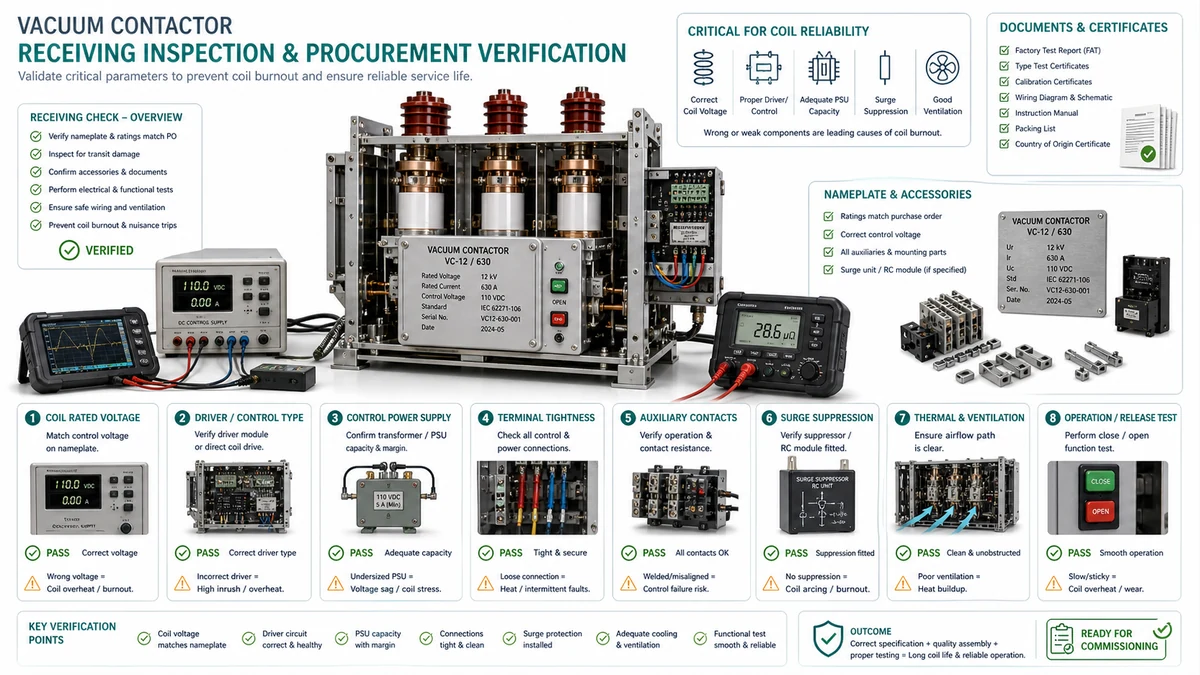
Die Überprüfung der Steuerungsschaltung zur Vermeidung von Spulendurchbränden erfolgt nach einer festgelegten Abfolge. Bei jedem Schritt wird entschieden, ob die Prüfung bestanden wurde, eine Warnung vorliegt oder die Prüfung nicht bestanden wurde.
| Zustand | Zulässiger Bereich | Maßnahme bei Überschreitung des Bereichs |
|---|---|---|
| Wechselstromspule, Nennspannung 120 V | 108–132 V (+/- 10%) | Versorgungsregelung oder Transformator-Stufenschalter prüfen |
| Gleichstromspule, Nennspannung 24 V | 21,6–26,4 V (+/- 10%) | Ausgangsspannung des Gleichrichters und Spannungsabfall im Kabel prüfen |
| Spannung während des Einschaltvorgangs | Darf nicht unter 85% des Nennwerts absinken | Halte-Relais oder Verstärkerschaltung hinzufügen |
| Spannung am Spulenanschluss im Vergleich zur Sammelschiene der Schalttafel | Innerhalb des Nennfrequenzbereichs | Drahtstärke neu berechnen, wenn der Abfall 5% überschreitet |
Bestehenskriterium: Die Spule kann unter jeder Einzelfehlersituation über mindestens einen unabhängigen Pfad stromlos geschaltet werden.
| Unterdrückungstyp | Wo es punktet | Wo es riskant wird |
|---|---|---|
| RC-Dämpfer (Wechselstromspulen) | Kostengünstig, wirksam über einen breiten Frequenzbereich | Falsche RC-Werte können zu einem erneuten Zünden oder einem verzögerten Ausfall führen |
| Freilaufdiode (Gleichstromspulen) | Beseitigt den Spike sauber | Verlängert die Ausfallzeit; in sicherheitskritischen Abschaltvorgängen nicht zulässig |
| Transiente Spannungsbegrenzer (TVS) | Schnelle Klemmung, definierte Klemmspannung | Muss für wiederkehrende Energie ausgelegt sein; unterdimensionierte TVS verlieren mit der Zeit an Leistung |
| Metalloxid-Varistor (MOV) | Bewältigt hochenergetische Transienten | Verschlechtert sich mit jedem Ereignis; keine sichtbare Ausfallanzeige |
| Zener- und Diodenkombination (Gleichstrom) | Schnellerer Abfall als bei einer Freilaufdiode allein | Höhere Kosten; polaritätsempfindliche Installation |
Flagge: In einem Gleichstrom-Spulenkreis liegt keine Unterdrückung vor.
| Schutzvorrichtung | Funktion | Entwurfsprüfung |
|---|---|---|
| Steuersicherung | Schützt die Verkabelung, nicht die Spule | Stellen Sie sicher, dass die Nennleistung der Sicherung die Strombelastbarkeit des Kabels nicht überschreitet. |
| Thermische Überlastung des Spulenkreises | Erkennt anhaltenden Überstrom | Überprüfen Sie, ob die Auslöseklasse mit der thermischen Zeitkonstante der Spule übereinstimmt |
| Elektronischer Spulentreiber mit Strombegrenzung | Reduziert den Einschaltstrom und hält den Strom auf dem eingestellten Wert | Überprüfen Sie die Ausgangsspannung und die Temperaturbeständigkeit des Treibers |
| PTC-Thermistor in Reihe mit der Spule | Begrenzt den Strom bei Übertemperatur | Verhalten beim Zurücksetzen überprüfen – einige PTCs müssen manuell zurückgesetzt werden |
| Ergebnis | Schweregrad | Erforderliche Maßnahmen |
|---|---|---|
| Spulenspannung außerhalb von +/- 10% an den Klemmen | Hoch | Vor dem Einschalten korrigieren |
| Keine Unterdrückung an der Gleichstromspule | Hoch | Vor dem Einschalten installieren |
| Schaltgerät für Einschaltstrom unterdimensioniert | Hoch | Vor dem Einschalten austauschen |
| Dauerbetrieb mit einer für den intermittierenden Betrieb ausgelegten Spule | Hoch | Spule oder Schütz austauschen |
| Unterdrückung vorhanden, jedoch an falscher Stelle | Mittel | An die Spulenanschlüsse verlegen |
| Sicherung überdimensioniert im Verhältnis zur Strombelastbarkeit des Kabels | Mittel | Sicherung austauschen |
| Erhöhter Widerstand des Hilfskontakts | Mittel | Kontaktblock reinigen oder austauschen |
| Es liegt keine Dokumentation über das Datum des letzten Spulenwechsels vor | Niedrig | Prüfintervall erfassen und festlegen |
Die Arrhenius-Faustregel für die Alterung von Isolierungen besagt, dass sich die Lebensdauer der Isolierung mit jedem Anstieg um 10 °C über die Nenn-Temperatur halbiert. Bei einem Isolationssystem der Klasse B (Grenzwert 130 °C) hat eine Spule, die bei 140 °C betrieben wird, etwa die Hälfte der erwarteten Lebensdauer.
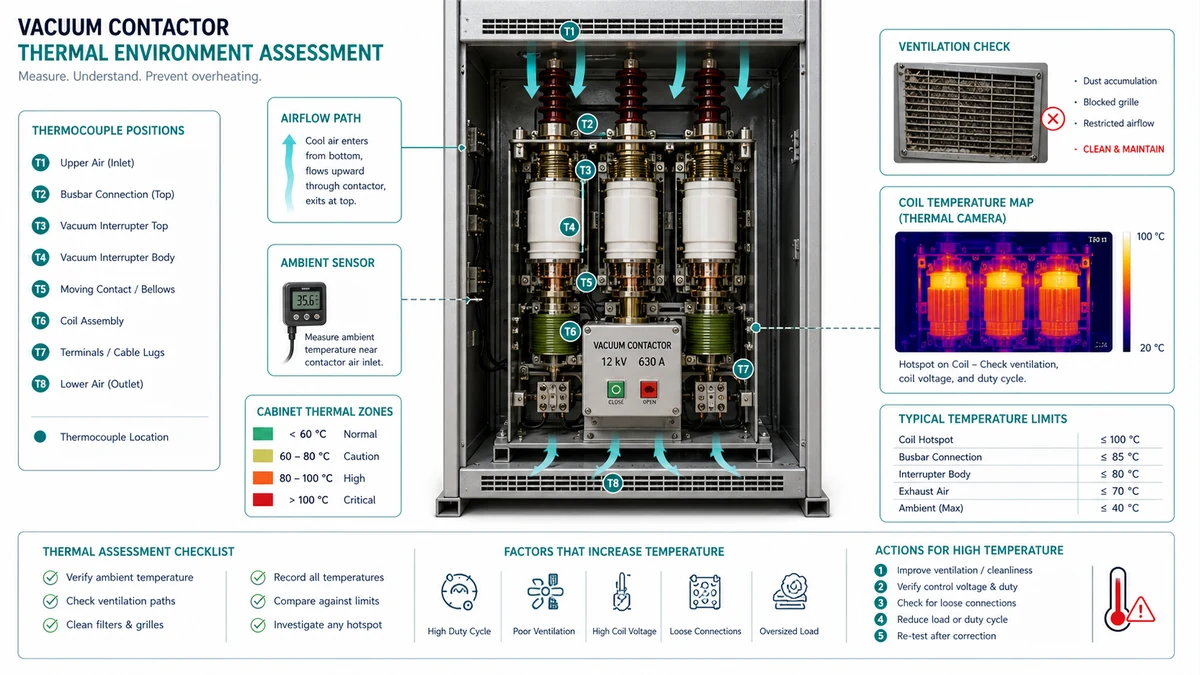
| Thermische Bedingungen | Messbarer Indikator | Risikostufe | Abhilfemaßnahmen |
|---|---|---|---|
| Umgebungstemperatur im Gehäuse <= 40 °C, ausreichende Belüftung | Thermoelement auf Spulenebene | Niedrig | Dokument-Baseline; keine Maßnahmen erforderlich |
| Umgebungs- und Gehäusetemperatur 41–55 °C, ausschließlich natürliche Konvektion | Innenlufttemperatur bei Spitzenlast | Mäßig | Zwangsbelüftung vorsehen oder den Arbeitszyklus reduzieren |
| Umgebungstemperatur im Gehäuse > 55 °C | Gemessene Innenlufttemperatur | Hoch | Schütz versetzen, Wärmetauscher einbauen oder eine Hochtemperatur-Spulenvariante verwenden |
| Benachbarte Wärmequellen im Umkreis von 150 mm | Infrarot-Scan oder Thermoelement an der Gehäusewand | Mäßig bis hoch | Abstand vergrößern, Wärmesperren einbauen |
| Die Spule wird in einem versiegelten Gehäuse kontinuierlich mit Strom versorgt | Protokoll der Einschaltdauer sowie Temperaturanstieg im Gehäuse | Hoch | Auf eine Gleichstromspule mit Sparwiderstand umstellen oder eine Zwangskühlung hinzufügen |
| Höhe > 2000 m über dem Meeresspiegel | Höhenrekord bei der Installation | Mäßig | Leistungsreduzierung gemäß dem Höhenkorrekturfaktor des Herstellers |
| Zyklische Belastung > 30 Zyklen/Stunde | Einsatzzähler plus Wärmebildkamera | Mäßig | Die Nennlast der Spule überprüfen; die Spulenanschlüsse auf Überhitzungsstellen untersuchen |
| Die Isolationsklasse der Spule ist nicht an die Umgebungsbedingungen angepasst | Nennwerte vs. gemessene Umgebungswerte | Hoch | Vor dem Einschalten durch eine Variante mit der richtigen Isolationsklasse ersetzen |
Pass: Die am Spulenanschluss gemessene Umgebungstemperatur im Gehäuse beträgt unter den ungünstigsten Betriebsbedingungen ≤ 40 °C; im Umkreis von 150 mm befinden sich keine ungeschirmten, Wärme erzeugenden Geräte; die Isolationsklasse der Spule übersteigt die Umgebungstemperatur zuzüglich der zu erwartenden Eigenerwärmung; ab einer Höhe von 2000 m wird eine Höhenkorrektur angewendet; der Einschaltdauerfaktor liegt innerhalb der Nennklasse.
Grenzwertig – Bedingte Annahme: Die Umgebungstemperatur des Gehäuses liegt zwischen 41 und 55 °C, es wurde jedoch nachgewiesen, dass die Zwangsbelüftung die Innentemperatur auf ≤ 40 °C senkt; benachbarte Wärmequellen sind vorhanden, eine Abschirmung wurde jedoch bestätigt. Bei grenzwertigen Installationen ist innerhalb von 90 Tagen nach Inbetriebnahme eine thermische Nachprüfung erforderlich.
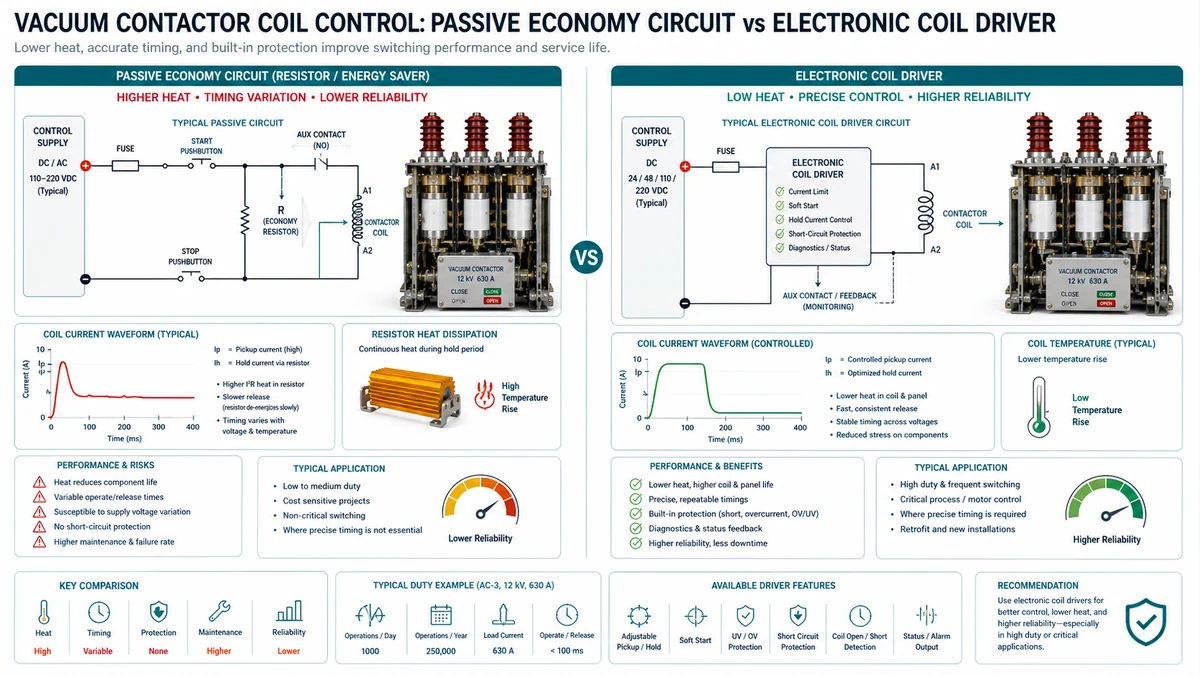
Die Reduzierung des Haltestroms nach dem anfänglichen Anziehen ist eine der direktesten Maßnahmen zur Vermeidung von Spulendurchbränden. Die Entscheidung lautet nicht, ob eine Haltestromarchitektur eingesetzt werden soll, sondern welcher Typ den spezifischen Einsatzbedingungen lange genug standhält, um seine Kosten und Komplexität zu rechtfertigen.
| Kriterium | Passiver Wirtschaftskreislauf | Elektronischer Spulentreiber |
|---|---|---|
| Schaltfrequenz < 10 Zyklen/Stunde | Annehmbar | Wünschenswert, aber nicht zwingend erforderlich |
| Schaltfrequenz > 30 Zyklen/Stunde | Hohes Risiko (Kontaktverschleiß) | Bevorzugt |
| Schwankung der Versorgungsspannung +/- 15% | Risiko einer Untergewichtung am unteren Ende | Die geregelte Leistung steuert den Bereich |
| Umgebungstemperatur > 50 °C | Eine Leistungsreduzierung des Widerstands ist erforderlich | Eine thermische Leistungsreduzierung des Treibers ist erforderlich |
| Höhe > 2000 m | Eine Leistungsreduzierung des Widerstands ist erforderlich | Kondensator-Nennwerte prüfen |
| Starke Vibrationen | Geringes Risiko (wenige Komponenten) | Erfordert eine Schutzbeschichtung und die Einhaltung der Vibrationsspezifikationen |
| Staubige oder verschmutzte Umgebung | Gefährdete Kontakte des Zeitrelais | Vorzugsweise versiegeltes Modul |
| Transienten in der Netzqualität | Im Allgemeinen tolerant | Überprüfen Sie die Stoßspannungsfestigkeit |
| Wartungskompetenzstufe | Grundlagen | Erfordert einen passenden Original-Ersatzteil |
| Anfängliche Kosten | Unterer | Höher |
Passive Wirtschaftskreisläufe In Umgebungen mit geringer Schaltfrequenz und sauberen Bedingungen, in denen die Wartungsressourcen begrenzt sind, kann sich eine passiv geschaltete Schaltung mit einem versiegelten Zeitrelais, deren Nennleistung deutlich reduziert wurde, langfristig als risikoärmer erweisen als ein Treiber, der beim ersten Notfall durch ein Nicht-OEM-Ersatzteil ersetzt wurde.
Elektronische Spulentreiber besonders geeignet für Anwendungen mit hohen Schaltzyklen, variabler Spannung oder hoher Luftfeuchtigkeit. Wählen Sie Treiber mit Ankerpositionserkennung, um zu verhindern, dass der Strom reduziert wird, bevor der Anker vollständig eingerastet ist. Ausführliche Hinweise zur Auswahl für Motorstartanwendungen finden Sie im Auswahl von Vakuumschützen für Motorstartanwendungen – Beitrag bei XBRELE.
Die Integration von Schutzrelais bildet die primäre aktive Schutzebene. Die Architektur muss schädliche Zustände unterbrechen, bevor thermische Grenzwerte überschritten werden, ohne dabei Fehlauslösungen zu verursachen, die berechtigte Fehlerzustände überdecken.
| Funktion | Gebotene Primärschutzfunktion | Wo es punktet | Wo es riskant wird |
|---|---|---|---|
| Relais zur Überwachung des Spulenstroms | Direkte Erkennung von Überstrom über die Wicklung | Hohe Schaltfrequenz, defekter Sparwiderstand | Kalibrierungsabweichung in Umgebungen mit starken Vibrationen |
| Thermisches Überlastrelais im Steuerkreis | Erkennung einer kumulativen Wärmeentwicklung | Häufiges Joggen oder Schleichfahrt | Langsame Reaktion auf ein einzelnes katastrophales Überstromereignis |
| Unterspannungsrelais (27) | Verhindert, dass die Spule bei einem Spannungsabfall hängen bleibt | Standorte mit bekannten Durchbiegungen | Schützt nicht vor Schäden durch Überspannung |
| Überspannungsrelais (59) | Erkennt eine Versorgungsspannung, die über dem Nennmaximum der Spule liegt | Nicht geregelte oder generatorgespeiste Systeme | Kann während der Einschaltung der Kondensatorbank zu Fehlfunktionen führen |
| Logik zur Rückmeldung von Hilfskontakten | Überprüft, ob die mechanische Position mit dem vorgegebenen Zustand übereinstimmt | Erkennung von blockierten Ankerteilen oder verschweißten Kontakten | Erfordert einen zuverlässigen Hilfskontakt; verschlissene Kontakte führen zu Fehlsignalen |
| Wiederholungssperre | Schränkt den Betrieb auf ein definiertes Zeitfenster ein | Anwendungen für Motorstarter mit hoher Wiederanlaufanforderung | Zu konservative Einstellungen verzögern einen berechtigten Neustart |
| Überwachungsrelais für den Sparbetrieb | Überwacht den Übergang zu einem reduzierten Halte-Strom | Alle zweistufigen Spulenantriebsanlagen | Abhängig vom Zustand der Komponenten des Sparmodus-Schaltkreises |
Stufe 1 – Qualifizierung für den Einsatz als Kommandant: Drei Bedingungen müssen nacheinander erfüllt sein, bevor der Erregungskreis der Spule geschlossen wird: Die Steuerspannung muss innerhalb des zulässigen Bereichs liegen (Kontakte von Relais 27 UND Relais 59 geschlossen); der Kontakt des Wiederholungsschutz-Timers muss geschlossen sein; der Hilfskontakt muss die geöffnete Position bestätigen.
Phase 2 – Anlaufphase: Die volle Spulenspannung wird angelegt; das Zeitrelais beginnt mit der Zählung der maximal zulässigen Anzugszeit (typischerweise 50–200 ms). Wenn der Hilfskontakt innerhalb dieses Zeitfensters nicht umschaltet, wird der Spulenkreis unterbrochen und ein Alarm “Schließen fehlgeschlagen” ausgelöst – wodurch der Zustand des blockierten Ankers direkt signalisiert wird.
| Parameter | Zulässiger Bereich | Grundlage |
|---|---|---|
| Schwelle für die Erkennung von Unterspannung (27) | 85–901 TP3T der Nennspannung der Spule | Unterhalb von 85% hält die Spule unzuverlässig; oberhalb von 90% kommt es bei normalen Schwankungen zu Fehlauslösungen. |
| Zeitverzögerung bei Unterspannung (27) | mindestens 1,0–3,0 s | Verhindert eine Auslösung durch vorübergehende Spannungseinbrüche beim Anlaufen des Motors am selben Bus |
| Schwelle für die Erkennung von Überspannung (59) | 110–1151 TP3T der Nennspannung der Spule | Die Isolationswerte werden in der Regel gemäß 110% geprüft; 115% bietet einen Sicherheitsspielraum |
| Überspannung (59) – Zeitverzögerung | 0,5–1,0 s | Die Spannungen bei der transienten Erholung von Kondensatorbänken klingen typischerweise innerhalb von 200 ms ab |
Der Kauf eines Vakuumschützes ohne Überprüfung seiner Spulenschutzarchitektur ist eine der häufigsten Ursachen für einen vorzeitigen Ausfall der Spule. Die folgenden Überprüfungen verringern die Wahrscheinlichkeit, ein Gerät zu erhalten, bei dem es vollständig vom Installationsteam abhängt, Schutzmaßnahmen hinzuzufügen, die eigentlich von Anfang an vorgesehen sein sollten.
| Zustand des Feldes | Was ist mit dem Hersteller zu klären? |
|---|---|
| Höhe über 1000 m | Derating-Faktor für die Spulenkühlung und die dielektrischen Eigenschaften |
| Umgebungstemperatur über 40 °C | Wärmeklasse der Spule (mindestens Klasse F oder H für heiße Umgebungen) |
| Hohe Schaltfrequenz (> 30 Schaltvorgänge/Stunde) | Validierung des thermischen Arbeitszyklus bei tatsächlicher Schaltfrequenz |
| Umgebung mit korrosiven Stoffen oder hoher Luftfeuchtigkeit | Feuchtigkeitsschutzklasse der Spule und Verfügbarkeit einer Schutzbeschichtung |
| Gleichstrom-Steuerspannung aus einer batteriegepufferten USV | Kompatibilität der Spule mit Gleichstromquellen, Welligkeitstoleranz, Polaritätsempfindlichkeit |
| Vibrationen oder Stöße (Pumpen, Kompressoren) | Mechanische Befestigung der Spulenanschlüsse und schwingungsdämpfende Lagerung |
Bestätigungen auf Katalogebene:
– [ ] Economizer oder zweistufiger Heizregisterantrieb sind bei den gelieferten Geräten serienmäßig vorgesehen
Verwenden Sie diese XBRELE-Referenzen, um die Feldentscheidung mit dem richtigen Produkt-, Test- und Beschaffungsablauf zu verbinden: XBRELE Produktseite, XBRELE Vakuum-Leistungsschalter-Programm, VCB-Rating-Leitfaden, XBRELE-Vakuumschütz-Baureihe.
Für externen Methodenkontext vergleichen Sie die Site-Prozedur mit der öffentlichen IEEE C37.09 Normen Seite und wenden Sie dann das genaue OEM-Handbuch und die Projektspezifikation für die gelieferte Ausrüstung an.
Beispiel aus der Praxis: Bei einer Wartungsinspektion wurde bei einer Phase eine Abweichung von der Inbetriebnahme-Basislinie gemessen, während die beiden anderen Phasen stabil blieben. Das Team wiederholte die Messung mit verifizierten Leitungen, überprüfte das Timing und den Kontaktweg und nutzte die gemessene Abweichung, um ein Kontaktdruckproblem von einem allgemeinen Oberflächenreinigungsproblem zu unterscheiden.
Die häufigste Ursache ist ein nur teilweise eingerasteter Anker, der durch einen Spannungsabfall während des Einrastvorgangs verursacht wird. Wenn die Steuerspannung während der Einschaltphase unter etwa 85% des Nennwerts fällt, schließt der Anker möglicherweise nicht vollständig ein.
Überprüfen Sie im Datenblatt des Herstellers, ob zwei separate Nennwerte für Strom oder Spannung angegeben sind: ein Ansprechwert (Pull-in) und ein Haltewert (Sealed). Ist nur ein einziger Spulennennwert aufgeführt, verfügt das Gerät wahrscheinlich nicht über eine Sparfunktion.
Führen Sie die Messungen in folgender Reihenfolge durch: (1) Spulenspannung unter Last während des Anzugs, erfasst über ein Zeitfenster von 200 ms, um Spannungsabfälle zu erkennen. (2) Spulenwiderstand im Vergleich zum Nennwert, um Kurzschlüsse zwischen den Windungen zu identifizieren.